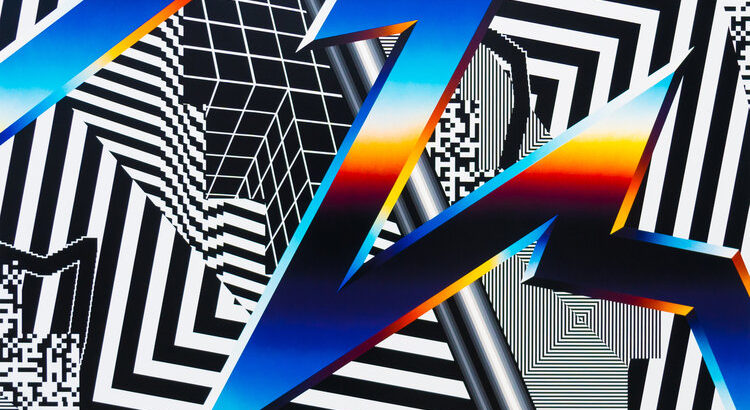
Felipe Pantone, an Argentinian-Spanish artist, creates futuristic, colorful art that breaks the boundaries of art technology. I first came across his work on Instagram, and naturally pored over his intriguing sculptures, described as “a collision between an analog past and a digitized future.” Infused with prisms of rainbow gradients, black and white glitches, and mesmerizing patterns, his art is an invitation to immerse oneself in another dimension.
Pantone acknowledges that he is “a byproduct of the technological age,” an identity that is familiar to we Gen Z’s and millennials. Growing up with the television and internet has shaped the ways in which we interpret visual information, something which Pantone plays with within his contemporary work.
Trained as a painter and graffiti artist, Felipe Pantone now holds shows all over the world and creates murals, sculptures, and paintings that tie together the natural and the digital–some can be read as “glitch art” and alludes to traditions of Futurism. His unique, futuristic, and dynamic works of art are also sometimes kinetic, allowing the viewer to experience different parts of the work as it moves. I find them completely alluring and fascinating–one day, I hope to own some pieces of his configurable art, such as works from the Modular Art System.
(All images from Felipe Pantone).


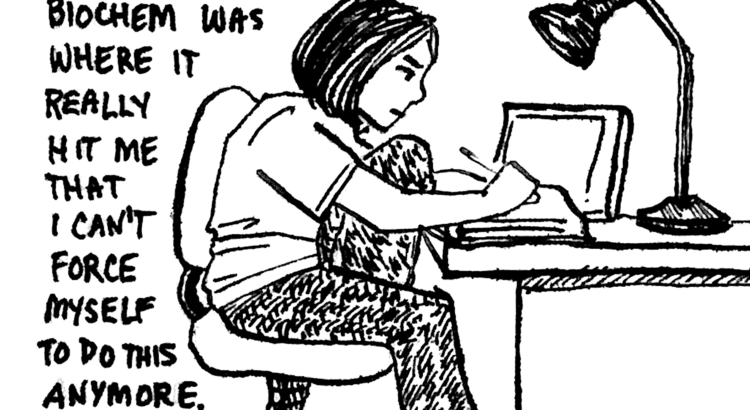
 On Monday, I had the joy of talking with Selene Yang, a senior majoring in Biopsychology, Cognition, and Neuroscience with a minor in Creative Writing. It was one of those long conversations where we got carried away and explored some unexpected topics, so I’m splitting this interview up into two parts. This week is about Selene and her personal journey with creative writing. Next week, we discuss “Writing Twitter.” Stay tuned.