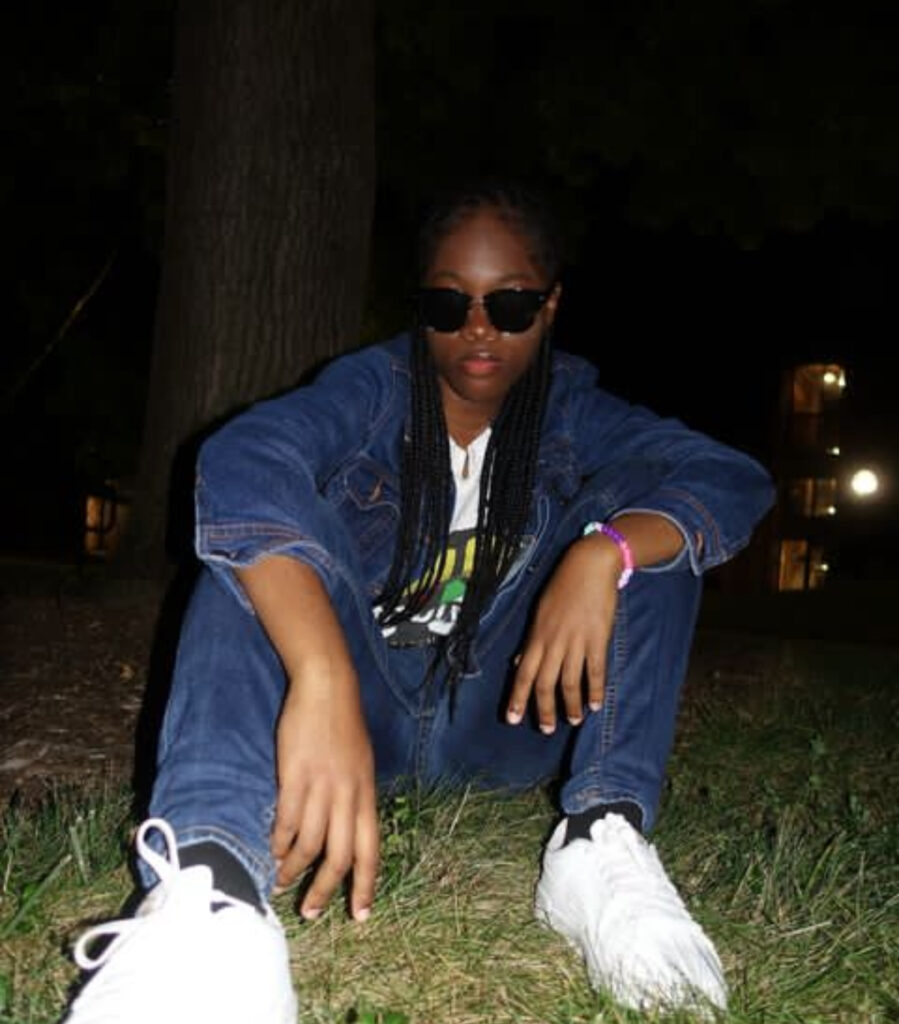
Bursley Bucaneer: Jada “Barbie” Smith

PIRATE SHIP FACT: Captains and higher-ranking members had private sleeping quarters, while common sailors slept in one room.

Friday, October 9th – 2:30 a.m.

The CLC was intended to be a space for community learning, so it was aptly named the “Community Learning Center” of Bursley. Yet, sometime around 12 a.m., the room transforms into what is essentially a medieval tavern. The congregation of computers, whiteboards, and comfy seating flips on its head to reveal the conversations waiting to be verbalized by those who were “studying.” Regardless of the assignments untouched and the essays left not started, laptops become cold to the touch as yapping and DoorDash orders commence. In this setting, after that time, is where Jada shared her story.

As an international student from Trinidad, Jada is one of three students she knew from her country to have gone to Michigan (and one of two Jada Smiths, a name she told me raises eyebrows in a “post-slap” society). During her college application process, even her counselor was unsure on how to help her apply internationally, forcing her on a journey paved by her own volition. As a result, Jada is a person of infinite professions. She truly is a Michigan “Barbie.”

Once the clock strikes twelve, the CLC partially turns into a gymnasium. It starts with a simple “hey dude can you do a cartwheel” and then ten seconds later everyone is trying to do backbends around the computers. In our lounging conversation, gymnastics came up as one of Jada’s activities from back home. She casually dropped that she was a gymnast and children’s instructor back in Trinidad, and that she could do a backflip. Obviously, I collectively rallied for a demonstration, but she said the ceilings were too low. So instead, with true showmanship, she did an aerial (an insane cartwheel with no hands). Meera (another Bursley Bucaneer) took a video that I’ve linked above.

On the theme of showmanship, Jada also included that she was a NATIONAL radio show host in Trinidad for a teens’ station. She would play music, take calls, and post her broadcasts on her Instagram, which went out across the Island. Through her Instagram reels, she showed videos of her breaking it down in the station while wearing the sickest outfits. Imagine yourself in her shoes; the second the microphone light goes red, you’re live in front of your country. However, if anyone is bound to establish a lack of personal pressure from that situation, it’s Jada.

Her expansive resume is only the tip of the iceberg. Here at Michigan, Jada is studying mechanical engineering. Considering every conversation freshman year starts with someone’s major, it was one of the only things I knew about her before our CLC chat. She studies hard, flips high, and radio-hosts (custom verb) powerfully.

In this blog series, I plan on giving each Bursley pirate ship member a nickname that attempts to encapsulate their story. Completely in character, Jada just happened to be wearing a Barbie sweatshirt that early, early Friday morning.

Whether Jada becomes a mechanical engineer, or a gymnast with a radio station about the field of mechanical engineering, I can’t wait to see what step Bursley’s “Barbie” takes next.

Yours sincerely,

Captain Singh

(NOTE: This author is not in any legitimate position of power. They just smugly decided to call themselves the “Captain,” apologies).

From nothing

Joy is, in itself, a worthy cause

But even it needs to be created

We are told that our feelings are somehow superfluous

Not real

Yet they can be altered

Changed

By outside forces

You tell me that this strange spirit on the stage isn’t real

Yet I see

The body move, gesture

Breathe

And is something in me not changed in seeing it?

Bodies moving

With each other, and not

Gesture

Breath

Voice

Move into the light

And that’s already a change.

Move downstage

Change

Ensemble in formation

Grasp onto another

Change

Lament

The gaze moves

Change

Meet an audience member’s eyes

And they are changed

A tear

Change

A laugh

A moment to the next

Draw breath

Maybe the soul on the page has never lived

Or maybe they’ve lived and then moved on

But now they breathe again

Exhale

Once I was you

Someday you will be me.

Are you angry yet?

Sad?

Joyful?

Relieved?

Have you yet been changed?

You will be.

Step into the light

Draw breath

Fill the body

Wake up the spirits

Don’t tell me magick isn’t real

This space is charged with light

Buzzing

Every body overfilled with life

And you are a story made flesh

Move, speak your spells right now

There are even witnesses

Invite them in

Mistakes are easily forgiven

Only one thing really matters:

Conjure.

LOG_032_CITY_OF_MASKS

The second moon of HKC 2901 d is a rainy and rocky one, dreary in climate but abundant in ores and other natural resources. The locals tend to keep to themselves—many have never stepped foot off the moon, let alone traveled to intra-system planets—and they are exceedingly polite but distant toward strangers. Theirs is predominantly a blue-collar community: most are employed in the processes of extracting, refining, and exporting the raw materials of the moon.

Despite this, they hold close-knit ties within their communities. Children, a rare sight, are safeguarded by every member regardless of blood relations. When one falls ill, others shoulder a share of the work and ensure that they do not go cold or hungry. The heart of each town lives in the hearth, where food is shared in communal meals when the day’s work is done.

The strength of their collective identity might also be owed in part to one unique aspect: due to high concentrations of atmospheric ammonia, every human must wear a breathing apparatus when outside of hermetically-sealed facilities. Over the generations, such apparatus have developed meaning in some cultures as both a symbol of practical protection and spiritual kinship. Some are passed down in families, marked by a lineage of workers. To wear their mask is to also belong to the collective, one of an anonymous whole. Among more religious sects, they have also acquired a meaning of modesty, and believers rarely take their masks off in the presence of others. Tourists tend to exaggerate this meaning to wild misinterpretations; planet-hoppers are especially guilty of this, envisioning romanticized lives of simple labor in exotic small towns. The more gauche souvenir shops found on HKC 2901 d tout overly-decorated and often non-functional masks, advertising sacred or magical effects.

– from System HKC 2901: A Primer, First Edition

Sunset Serenade

Hello, and welcome back to Captured Moments! This week, while I was backing back from class, I captured a picture of the sun setting down above the lighted street. With the peaceful mood, I felt when I captured this image, the blend of nature, buildings, and the sky comes together to form a beautiful combination of colors. The street lamps add a glimmering effect as they extend all the way down the street. With the trees changing from dark green to a pretty autumn orange, they match the sunset’s light pink and orange shades to evoke a sense of blending harmonies, much like in music.

One of my favorite pieces, “Claire de Lune” (Claire De Lune) by Claude Debussy, perfectly captures the mood and setting of this image. The calm and fading light of the sunset evokes the same quiet and reflective sounds of Claire de Lune. As the day transitions into night, there is a dreamlike quality, much like the moving melodic lines in Debussy’s piece. At the end of the piece, the notes go up the keyboard and fade away gently. This rise in the musical score can be represented by the crane in the image, as it extends upwards in a gentle progression.

With the sun displaying warm colors, it serenades the peace and tranquility in the moment.

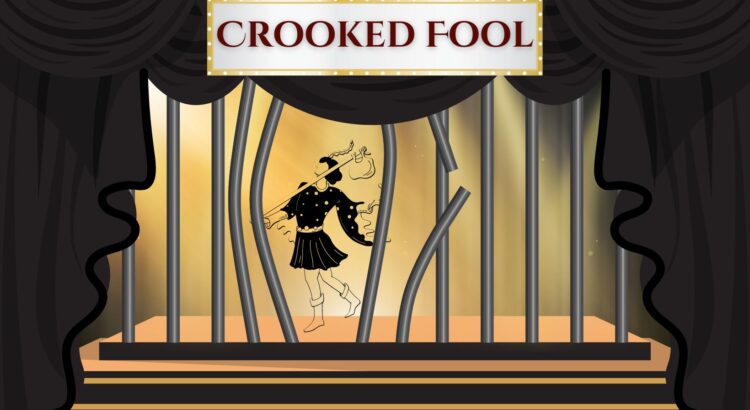
A Crooked, Queer Meditation on The Fool

The first tarot deck I ever bought was the Fountain Tarot, and their description of the Fool reads:

“Suspended between spiritual and Earthly existence, the beautiful Fool is the newly born soul embarking on a bright adventure…Though some find his quest absurd, he is not swayed. With an open heart, he is led by the inner voice of his true Self.”

In the major arcana, the Fool comes first in the deck, before many other archetypes such as The Priestess, Magician, Devil, and so on. The Fool has yet to experience either the highs or the lows of their journey and relies on their inner compass to guide them. Because they don’t have much experience to draw from in their journey, they have to become comfortable living in the unknown.

The Muse Tarot, a favorite of mine, includes a poem at the end of every card description, and for the Fool Chris-Anne writes:

Fearlessly jump into

The sea of the cosmos,

The spinning potentials are calling

maybe a little foolish today

yet better done fool-like

than stalling

Chris-Anne reminds us that sometimes we don’t have the luxury of knowing what’s going to happen or what the right course of action even is, and we still need to act. The show must go on.

One of the greatest steps I took in my artistic journey was embracing the fool. This was both an act of taking the pressure off myself to know everything, and acknowledging the ways in which I’d have to trust myself and my own inner knowing over industry norms that want nothing to do with a Queer, Disabled, Deformed femme actor. The rules as they existed left no space for me.

My own Fool journey was one of coming into deep understanding of the power of transgression. When I was training as a clown, one exercise involved thinking of a common activity, and then coming up with as many ways as possible to screw it up. How many ways can we do the most basic thing wrong? And where is the joy in doing so?

The Fool often doesn’t know how to do things “right” and may not even have any concept of the socially sanctioned ideas of right or wrong, good and bad, acceptable or not even are.

I think back to my childhood self. I was viewed as “crazy” for laughing too loud and too much, or just making weird noises in general, particularly when I wasn’t supposed to. Simultaneously, I was viewed as “angry” because I just couldn’t accept things that I knew deeply to be wrong. Whether it was through laughter or soapboxes, I was calling out absurdity.

Britannica describes the Fool as “a comic entertainer whose madness or imbecility, real or pretended, made him a source of amusement and gave him license to abuse and poke fun at even the most exalted of his patrons.”

The entry goes on to say that the Fool is “often deformed, dwarfed, or crippled…”

You’re telling me…

I spent the first decade of my time in theatre with a 90-degree curve in my spine. This was never meant to be a statement on anything; we perform with our bodies, and this was the body I had.

This Fool asks: Who determines beauty, and why can’t it include me?

Judith Butler said, “Gender is a performance that is repeated and becomes constructed through time.”

In this quote, Judith Butler is addressing the concept of performativity, which they discuss often in their writing on gender. Though it may be tempting to think of performance as something imaginary and fundamentally unreal, Butler argues (as paraphrased by me, a Fool) that performance affects very real change. To perform is to change something. Performing gender makes it real. By taking actions associated with and attempting to look like a given gender, human beings create gender. And it can be recreated anew, and it can look different than before. (It’s worth noting here that the Fool archetype has a long history of breaking down gender norms; my own clown, Pookie Ra Ra, is meant to be a teenage boy, but has noticeable breasts because I don’t like binding).

The Fool asks: What else can be performed differently? How can we change the show? What can we make and remake?

The Fool doesn’t necessarily have the answers. But they are not held back by what is. They remind us that where we lack answers, we can create them.

The Fool reminds us to embrace the unknown.

What the Fool offers us is hope.

“Hope locates itself in the premises that we don’t know what will happen and that in the spaciousness of uncertainty is room to act.” – Rebecca Solnit