REVIEW: Russian Renaissance

Russian Renaissance tuning their instruments while announcing the next piece from the stage. From left to right: Ivan Kuznetsov, Balalaika, Anastasia Zakharova, Domra and Domra Alto, Alexander Tarasov, Button Accordion, and Ivan Vinogradov, Contrabass Balalaika.

On Saturday night, thanks to UMS and M-Prize, the city of Ann Arbor had the privilege of drinking in one of the finest displays of musicianship in the world, ushered in by the quartet Russian Renaissance.

Founded in 2015, “Russian Renaissance performs high-caliber traditional folk music through a modern lens.” As the $100,00 grand-prize winners of the 2017 M-Prize chamber arts competition, they received a spot on the star-studded UMS 2017-18 season and played a diverse and engaging program to an appreciative audience in Rackham Auditorium.

Given the group’s extremely unique instrumentation that is quite unfamiliar to American audiences, many entered the concert hall with no idea what to expect. Others who were in Ann Arbor last summer and witnessed the group’s winning performance couldn’t wait to hear them again. Yet for those familiar and unfamiliar with their work, Russian Renaissance delivered the unexpected.

The program began with a fresh and inviting arrangement of a Bach Fantasia and Fugue. They followed this with the Concerto Grosso No. 1 of avant-garde composer Alfred Schnittke, one of the 20th century’s great mashup artists. They performed music that is often perceived as dissonant and upsetting with true conviction and spunk, and I have yet to hear a livelier rendition of his music.  They also played delicate and heartfelt music from international films, Duke Ellington, Tchaikovsky, and Russian folk tunes. Their dazzling arrangements contained some surprise appearances, including The Red Hot Chili Peppers and Grieg. I was amazed by their dynamic range as a group: their Bach was so delicate you almost wanted to hold your breath for fear of missing a beautiful moment, but their tangos were bombastic and rapturous. Just when you thought that they had exploited every possible color from their instrumentation, they pulled out another.

I’ve been trying to put my finger on what exactly made the performance so engaging and unforgettable for me. Was it the diverse program that spanned centuries of composers from around the world? Was it the fact that they played two hours of music completely from memory? Was it their colorful arrangements? Was it their perfect display of technique, virtuosity, and ensemble playing?

I think my indecisiveness is a testament to the pure musicianship that radiated from these four performers. They were clearly masters, but they were also interested in connecting with one another and the audience. I often felt like a fly on the wall of a delightful dinner conversation among four long-time friends. I felt free to enjoy the music along with them: giggling at their inside jokes, tapping my toes, holding my breath. They had complete control over the sound they made, and it was easy to get swept up in the world of each piece.

This performance made me feel incredibly optimistic for the future of chamber music, lead in part by the innovative minds behind M-Prize. As one of the most intimate and vulnerable performance mediums, chamber music is also charged with the power to bring about palpable and rapid change in the realm of Western classical music. Russian Renaissance is certainly doing their part in contributing to the “rebirth” of instrumental music today.

If you missed the performance, do yourself a favor and watch them here. Or, get excited about their first album, which is coming soon!

The final bow welcomed a much-deserved ovation, after an encore performance featuring pianist, translator, and SMTD-alum Sonya Belaya.

REVIEW: (I Could Go On Singing) Over the Rainbow

This weekend, my roommate and I made our way for the first time to the Stamps Gallery lobby. There we were handed vibrant pink and yellow earplugs and told to wait near the ticketing table. As a small group gathered, sonic noise (there is no other descriptor for it) started up from a cornered off section of the large room. A man came out and in a pleasant shout over the noise told us that if we wanted FK Alexander to sing to us, we just had to hand her our ticket. We were encouraged to move around during the show and assured we did not need to be sung to unless we wanted to be. With that, we entered through the black curtains partitioning us from the sound.

I waited two seconds and then stuffed my ear plugs into my ears; even muffled I didn’t feel I was missing the effect. I sat down on a cushion placed at the very front of the audience line and waited eagerly.

In her artists’ statement, FK Alexander says that she strives for healing and recovery “through sensory overload together with grueling repetition and ritual”. If my experience counts for anything, I would have to say she’s onto something.

By the third person to be song to, I knew her ritual well enough to recite it (for those of you I convince to attend, I won’t ruin it for you). But it’s then that suddenly I remembered I’d been in a community production of The Wizard of Oz when I was in the 4th grade. When the last show was over, I remember clutching a box of my make-up, shoes, and gifts from the cast, and crying into my mother’s shoulder completely heartbroken. I’d had such an amazing time in the show and when it was over I didn’t know what to do.And this memory led me to how my mom and I used to always watch Judy Garland movies when I was little; we’d sing her songs around the house. And that made me miss my mom and realize I hadn’t called her in awhile. Suddenly my eyes were a little watery; I couldn’t tell you how many times FK Alexander had sung the song at that point. I decided to move locations, maybe someplace further from the stage where the base of the noise wouldn’t pound so violently in my chest and make my eyes blink so much.

FK Alexander (Photo Credit: Jannica Honey Photography)

Standing at the back of the space, I was able to watch FK Alexander’s face better as she sang to each individual. Watching her eyes and the slight tweaks of her mouth, I was able to see her form a connection with everyone she sang to; being witness to this was a beautiful experience in itself. So while I didn’t get sung to in that hour, I walked away feeling a little lighter.

I encourage anyone who is remotely interested in the experience I just described to go see (I Could Go On Singing) Over the Rainbow before they leave Ann Arbor. You may be surprised by what you remember about yourself or how overwhelming sound can leave you feeling less overwhelmed.

PERFORMANCES:
Friday, January 26 8pm
Saturday, January 27th, 8pm (This performance is 3 hrs with no intermission)
Tuesday, January 30, 7:30pm
Wednesday, January 31 7:30pm
Thursday, February 1 7:30pm
Friday, February 2 8pm
Saturday, February 3 9pm

Location: Stamps Gallery

TICKETS

PREVIEW: Call Me By Your Name

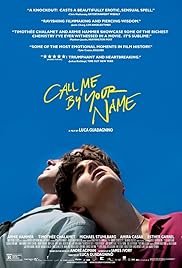
Call Me By Your Name is a beautiful, sun-lit movie starring Timothée Chalamet and Armie Hammer. The movie explores themes of self-discovery and burgeoning sexuality as Elio (Chalamet) falls in love with Oliver (Hammer). The movie has already been hailed as a massive success, making the rounds in the awards circuit, and getting nominated for the Best Picture Oscar. Chalamet has also gotten overwhelming praise for his break-out performance. The film is especially intriguing to me because of the obvious chemistry between Chalamet and Hammer. Romantic films live or die with the passion and commitment of the stars. Chalamet and Hammer’s relationship will certainly be one of the most exciting thing to watch for. Call Me By Your Name is currently showing at the State Theatre. Purchase tickets ($8 for students with ID) online at the Michigan Theater website or at the box office. 

PREVIEW: Russian Renaissance

Tomorrow night at 8pm, Ann Arbor welcomes back the grand prize winners of the University of Michigan’s 2017 M-Prize competition to Rackham Auditorium. Founded in 2015, the virtuosic quartet Russian Renaissance seeks to bring Russian folk music to a wider audience while reimagining popular tunes for a unique and colorful instrumentation.

Check out this video of their final round at M-Prize last summer:

Student tickets are available here for $12 or $20. Come hear music as you’ve never heard it before!

PREVIEW: (I Could Go On Singing) Over the Rainbow

“This sounds so uncomfortable…and awesome.”

This was my verbal reaction to my roommate, as I scrolled through my UMS email newsletter and read the description for (I Could Go On Singing) Over the Rainbow. I clicked on the “Learn More” button; I was intrigued.

FK Alexander

FK Alexander’s performance is 65 minutes of a static recording by Judy Garland singing “Over the Rainbow”; FK Alexander proceeds to sing this song with her over and over again. But she is not alone- she sings it to individual audience members as she holds their hand and stares deeply into their eyes. Uncomfortable, yet?

The Okishima Island Tourist Association, comprised of Lea Cummings and Sarah Glass, add noise and sound to the experience that requires the performance disclaimer to read “This sonically immersive performance features sustained loud noise, strobe lights, and limited seating”. The whole experience sounds overwhelming, strange, and wonderful. Still intrigued and a little apprehensive of what I was signing up for, I bought tickets for me and my roommate- after checking that you volunteer to be sung to and are not chosen randomly for audience participation.

(I Could Go on Singing) Over the Rainbow is part of UMS’ “No Safety Net” series. This is an initiative launched to foster conversations about difficult topics through theater. It’s slogan is “Provocative Theater. Courageous Conversations. Safe Spaces.” It’s purpose is to confront audiences with situations that might be uncomfortable and because of this discomfort, are also awesome art.

To hear more about the “No Safety Net” series, watch this video about other performances coming up. If you’re still curious about (I Could Go on Singing) Over the Rainbow and want reassurance of what you might be getting into check out this preview video.

PERFORMANCES:
Friday, January 26 8pm
Saturday, January 27th, 8pm (This performance is 3 hrs with no intermission)
Tuesday, January 30, 7:30pm
Wednesday, January 31 7:30pm
Thursday, February 1 7:30pm
Friday, February 2 8pm
Saturday, February 3 9pm

Location: Stamps Gallery

TICKETS

REVIEW: Underground Railroad Game

I’m glad I got a warning from my professor before I actually watched the play. “Explicit scenes,” he wrote in a mild-mannered email, “some nudity.”

Some, indeed. The image of Teacher Caroline, in skirt and bra, using a school meter ruler to lift Teacher Stuart’s penis in a sexually charged after-school fantasy is still burnished in my scantily prepared mind.

But don’t get me wrong. While sex plays a big part of the play, it’s not a publicity tool there to generate WTF moments. It’s a crucial sub-theme explored within the context of the modern racism the creators are trying to break down and show audiences.

Stuart and Caroline, leaders of Confederate and Union “soldiers”

Their agents? Middle school teachers Stuart, a “progressive” white teacher and his black colleague/romantic partner Caroline, who are on a quest to teach impatient middle schoolers (i.e the audience) about the silver lining of slavery: the Underground Railroad. Interestingly, while this classroom narrative initiates the play, it’s not the main feature nor the closer. Instead it served more as strategically-placed intermissions that relaxed some of the visual, emotional, and mental overload delivered by the three other interweaving narratives (so that our brains don’t just explode in one sitting).

The first narrative is one where we see Stuart and Caroline outside of the classroom on the street, talking on the way to class. Their conversations turn coquettish at times but uncomfortable in most. Stuart often stumbles around making earnest comments that often sound racist (in discussing the possibility of them becoming a couple, he blurts out that he needs to check with “her people”). Caroline takes them without offense and responds with her own racist jokes (at one point she does a Mean Girl imitation). These scenes point at the obviousness of race in today’s often-termed “post-racial” society.

Slave and Abolitionist

The second narrative is a role play that involves the characters Stuart and Caroline act out for their “students” in class: an abolitionist and the slave he tries to protect. It’s a simplified children’s story that exaggerates the “good parts” of slavery, satirically portrayed fairytale style, with a hero and a damsel in distress. Fittingly, the play cuts this narrative before it comes to a conclusion almost all the time, as if it denies its overstated significance in the conversation about racism.

The third narrative is set in the bedroom (and the couple’s shared fantasyland). It’s here that the play explores a lot of its discussion-worthy themes in racism. One of the most memorable scenes in the play happened in this setting. What was initially a “Meet a Slave” lecture (Stuart interviewing Annabelle/Caroline the slave for the students) turns increasingly sexual FAST after Annabelle/Caroline starts complimenting Stuart’s body. But this is no ordinary sex scene.

A/C (in an elevated curtain-like dress): “What do you like about me, Teacher Stuart?”

S: “Your voice.”

A/C: “What do you like about it?”

S: “It feels like it-”

A/C:”Comes from the Earth? Rolls…over my body?” (starts unbuttoning her blouse while motioning for Stuart to come over. She starts to hum a spiritual, haunting tune.)

With Caroline’s torso fully naked, Stuart comes over, suckles her breast, then crawls under her ballooned dress. Yep, its definitely R-rated.

But it takes an interesting look at race relations. A slave, bound and reduced to her manual labor, is at the same time glorified (she is much bigger than Stuart on top of invisible stand), and fetishized for her association to the Earth. She becomes a form of enslaved Mother Earth that is treated as an object but at the same time, enshrouded by a primeval form of energy that attracts and fascinates white men.

These interesting investigations on race were sprinkled throughout the play. During my class discussion after the play, we touched on things like Stuart’s “progressive racism” and Caroline’s “revenge” fantasy that explore racial relations from two sides of the divide. Overall, Underground Railroad Game is definitely one of those plays that you will remember for a very long time. Now, I’m gonna get back to figuring out how they did it all.