
REVIEW: Knives Out

Knives Out is fantastic. It’s funny, clever, well-written, and well-directed. None of the humor is forced, cringy, or cheesy. Many of the jokes reference present-day trends and politics, but it never seems like writer-director Rian Johnson is trying too hard to make the film relatable to the audience. Although the film does follow a classic whodunit formula – discovery of the crime, interviews with the suspects, the following investigation – its premise is very original. The way the events pan out are creative and unexpected. The story itself is very tight and clean; there are no gaping plot holes as the film literally explains everything. Everything that happens was previously hinted at, but everything is very subtle and keeps the audience engaged as a result.

The film would not have been nearly as good if it weren’t for the actors. Every member of the Thrombey family is unique – distinctive – and they all shine in their own ways. Chris Evans came across as over-the-top in the trailers, but in the context of the film, he fits right into the ridiculousness of the Thrombey family. The family dynamic is so fun because all of the characters are so eccentric. Jamie Lee Curtis plays the eldest of three who all benefitted from their father’s tremendous wealth, and her character insists that she started her company from the ground herself, and that her husband works for her. The two youngest members of the family, a juuling feminist and an active member of alt-right twitter, provide underrated and entertaining interactions. My personal favorite member of the family was Toni Collette as a lifestyle guru and essentially Gwyneth Paltrow.

The biggest standouts of the film were the two leads, Daniel Craig and Ana de Armas. Craig plays Detective Benoit Blanc, who has a strange southern accent that somehow works. His character has some of the best lines, including a comparison between a will reading to a tax return by a community theater and a long monologue relating donuts and donut holes to missing evidence. On the other hand, de Armas’s character is much more unassuming, but rather than being a stereotypical Latina maid, she is the heart of the film. Marta is charming, sweet, sly, and ruthless all at the same time. De Armas’s performance shows that she is an actress to be on the lookout for. Since moving to Hollywood where she immersed herself in English lessons, she has starred alongside Robert De Niro, Jonah Hill, and Ryan Gosling. De Armas has spoken about her being able to relate to the character of Marta – both wanted a better life for themselves and their family.

It’s clear that writer-director Rian Johnson took great care in creating the character of Marta, and into allowing a newer actress to shine alongside some of the biggest names in the movie industry today. It’s clear that all of the actors had a blast on set, and it’s impressive that Johnson was able to create a film that is both character and plot driven. Johnson could have easily channeled his efforts into one aspect or the other, but instead he was able to weave absurd characters into an outrageous storyline, resulting in a film that is nearly, if not flawless.
REVIEW: Black Christmas (1974)

Before seeing Black Christmas (1974), I thought that the market for Christmas-themed movies was already saturated with titles. Having seen this film, I’m convinced that Christmas scripts face far less scrutiny than their non-holiday affiliated counterparts. Scary Christmas? You got it. Action hero Christmas? Easy. Low budget Thanksgiving-Christmas-New Years romcom with live action reindeer flights and pyrotechnics? Why not. As far as holiday movies go, Black Christmas, without a doubt, is one of the strangest and most unique titles that I’ve ever seen.

Initially, I decided to see the movie because I was very, very curious to see how Bob Clark blended two seemingly opposed themes: slasher violence and Christmas cheer. I didn’t really expect a masterpiece in Black Christmas, but the film pleasantly surprised me. Instead of getting the wacky, shocking-for-all-the-wrong-reasons hodgepodge that I’d thought the film would be, Black Christmas turned out to be a palatable slasher film with great acting and thoughtful set design.

Although the title of the film is Black Christmas, the character of the picture is truly that of a horror movie, as the plot could absolutely stand on its own legs without the help of holiday synergies. Further, the film truly embodies the spirit of the classic 70’s Slasher: the deranged killer constantly calls the landline to make threats to his victims, the murders are overwrought with gore, and the real identity of the maniac is concealed throughout the entire film. If you enjoy the unsophisticated rampages of Jason Voorhees and Freddy Kreuger, then you’ll surely appreciate Black Christmas.

Additionally, the film contains a few genuinely hilarious moments that occur at very well-timed intervals: the script actively provides for moments of levity, usually using supporting characters, while retaining the emotional gravity of the situation. As such, the movie has a great balance of different character types: instead of relying on the protagonist or the antagonist to provide moments of emotional color outside of their respective arcs, the supporting characters Black Christmas are able to provide humor without compromising the suspense of the plot. I especially appreciated the film’s usage of mischievous characters and painfully cringey situations.

While Black Christmas didn’t disappoint, it didn’t really impress. No single aspect of the film fell short of my expectations, but the overall lack of originality in the movie served to significantly constrain my opinion of it. I was hoping that Black Christmas would have integrated more “Christmassy” paradigms into its plot, but essentially, the movie is a standard Slasher-horror film neatly wrapped in gingerbread wrapping paper. Instead of drawing inspiration from both thematic centers to create a completely original idea, the film just, albeit cleverly, mixes the two distinct film styles. It’s weird, kind of scary, kind of funny, and a great conversation starter. If you have time, give Black Christmas a go, but if you don’t, you’re not missing out on a whole lot.


6.3/10

REVIEW: Star Wars: The Rise of Skywalker

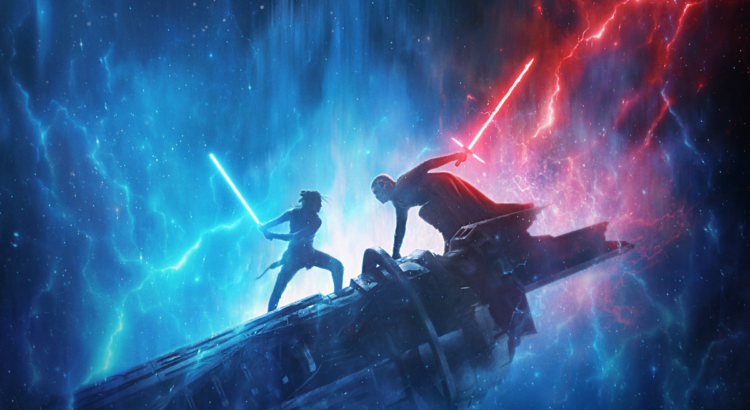
The final installment in the Star Wars sequel trilogy starts where The Last Jedi left off, meaning it starts off where The Force Awakens left off. I’m no The Last Jedi hater, but if I’m being honest, not much happened in that movie. At this point, Rey is still figuring out her powers and who she is, Kylo Ren is still figuring out if he’s completely evil, and Leia has again enlisted the help of Finn and Poe to thwart whatever diabolical plan the First Order has just set into motion.

The Rise of Skywalker has terrible reviews. It has a 58% score on Rotten Tomatoes, compared to The Last Jedi’s 91% – the same The Last Jedi that is perhaps the most polarizing episode in all of Star Wars. Still, The Rise of Skywalker does have an 85% audience score. Going into the movie, I thought, “There’s no way it can be that bad.” And I was pleasantly surprised! As a whole, I truly enjoyed The Rise of Skywalker. That being said, I did have some issues with it.

First, there is one spoiler that made me turn to my friend in the theater and ask, “Was that really necessary?” It is just one thing that the film doesn’t linger on for very long, but at the same time, that just goes to show how unnecessary it was. Crossing out of spoiler territory, it should come as no surprise that there are some fights and action sequences that involve the use of the Force. Unfortunately, these battles aren’t always terribly exciting as they just involve people pointing their hands at each other. It’s kind of the same deal as Harry defeating Voldemort in The Deathly Hallows – hair is being blown back, clothes are rippling, the two sides are clearly straining with effort… but they’re also just standing there. Overall, the action isn’t this movie’s strongest point – the last battle is mindlessly chaotic and difficult to follow.

Perhaps one of the strongest aspects of the film is that we finally get to see the main trio come together. Unfortunately, up until this film, the main trio of Rey, Finn, and Poe didn’t really feel like a trio. In the prequels, it was clearly Anakin, Padme, and Obi-Wan, and in the original trilogy it was clearly Luke, Han, and Leia. Even though there were pairings within the trios – Anakin and Padme and Han and Leia as the couples, Anakin and Obi-Wan and Luke and Han as the close friends, and Luke and Leia as the twins – it was clear from the beginning that there was a main trio. In the sequel trilogy, there was a bigger emphasis on Rey and Finn in The Force Awakens, which makes sense as Poe was supposed to be killed off initially. Still, Rey is separated from the other two throughout nearly all of The Last Jedi, which is a shame as her character didn’t even get much significant development from her solo quest. Furthermore, the sequel trilogy established strong relationships between Finn and Poe and Finn and Rey early on, but Rey and Poe don’t even meet until the end of The Last Jedi. But, in The Rise of Skywalker, they do have a unique relationship full of banter and a mutual love of BB-8, and as a result, it’s clear both characters and Finn have a place in the main trio.

Ultimately, The Rise of Skywalker is not a bad movie. Sure, I had my issues with it (I didn’t get to talk about the criminal underuse of Lupita Nyong’o!!), but it is still a fun film. I don’t feel an immediate need to re-watch it like I did with The Force Awakens, but I think it’s still worth seeing in theaters. I would just recommend going in with an open mind.

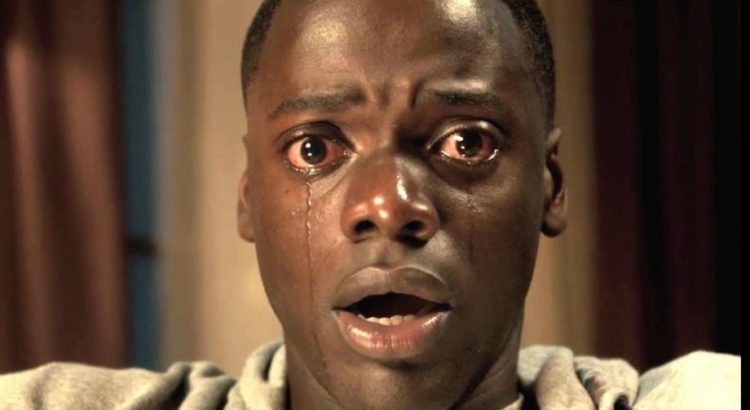
REVIEW: Get Out (2017)

For me, the name Jordan Peele will always be synonymous with clever sketch comedy. In the early stages of my adolescence, Key & Peele (2012-2015), a Comedy Central series created by Jordan and his frequent collaborator, Keegan-Michael Key, was held, amongst the likes
of South Park and Family Guy, in the highest echelon of my pantheon of teenage television. However, in 2017, Peele left behind his comfortable niche in the realm of buddy-comedy shorts and made his directorial debut with Get Out, a psychological thriller neatly wrapped in astute social commentary. The film has been met with a significant amount of positive attention from a diverse pool of critics (98% on Rotten Tomatoes), and for the past two years, I have waited eagerly to see Get Out for myself. Unfortunately, I left the State Theater a bit
disappointed.


From a purely cinematic perspective, Get Out falls flat on a number of fronts, but most glaringly, I found that the film was far too stylistically ambivalent. Over the course of 104 minutes, Get Out oscillates between moments of dramatic tension, over the top slasher violence, sci-fi absurdism, and yes, nostalgic, Peele-esque humor. Independent from one another, the scenes of Get Out are strong, but the way in which the greater project incorporates the footage is detrimental to the emotional gravity of the film. Additionally, the thematic elements of the film are focused mostly on the serious and relevant issue of camouflaged racial tensions between Black and White Americans, and with such a dynamic narrative structure, some of the film’s more nuanced messages are greatly obscured by the spectacle of it all. Again, Get Out was Jordan Peele’s directorial debut, and at times, the film feels like a somewhat disjointed string of shorts – eerily reflective of Key & Peele.


My concerns about the stylistic coherence of Get Out aside, I found that the dramatic climax of the film was set far too early in the story. The first hour of the film is fantastic, but after the second act, the previously riveting tension of the film felt, well, cheapened and manufactured, and as such, the third act of Get Out features far more moments of the stylistic inconsistency that I took issue with in the previous paragraph. From the perspective of the viewer, it almost seems as if Peele directed two entirely separate films: acts one and two of Get Out were bold, chilling, and intellectual, whereas act three felt slightly unbelievable, goofy, and rushed.


All things considered, Get Out is slightly above average, but the film’s narrative structure was somewhat flawed. On a positive note, I thought that the cinematographers and set designers of Get Out made exceptional use of both dark and light landscapes, props, and clothing to highlight and reinforce some of Peele’s more abstract messages. Similarly, I also thought that the audio mixing of Get Out was remarkable, as the occasional interjection of shrill, dissonant violin strokes sent my fellow moviegoers out of their seats in fear.


6.2/10                                     


REVIEW: Parasite

It would be too easy to say that Parasite gets under your skin. That turn of phrase feels light and obvious. Parasite doesn’t just lie underneath the surface, it digs deeper. Like a crawling feeling that turns into a stabbing pain, this film begins as a superficial sensation and ends leaving an indelible impression. It shifts and transforms, becoming something else before your very eyes. Or rather, the pleasure and terror is that you don’t see the transformations occurring before they are irreversible. There is something light and obvious about Parasite. Yet, the lightness and laughter don’t detract from the film’s obvious interest in heavier topics. It is a remarkable balance that the film maintains over a spectacular two hours.

Image result for parasite movie

The members of the Kim family are used to precarious balances. Jobs in the city, when they can be found, barely pay the rent for their semi-subterranean apartment as it is. Prospects are scarce, especially for those who don’t have college degrees. The children of the family, Ki-woo and Ki-jeong, are reaching the prime of their lives, young-adulthood. Yet, it seems as if their lives have stalled exactly when they should be speeding up. Youth means nothing with the pressure of financial troubles relentlessly bearing down on them. Ki-taek (Song Kang-ho), the patriarch of the family, is similarly helpless in the face of these circumstances. Emblematic of this powerlessness, he can only watch from the window as drunkards pee on their very doorstep. These daily humiliations are to be endured by the poor, not overcome. For, it doesn’t seem to matter what the Kim family does. Their efforts are insignificant, weak battering at a system with an entrenched hierarchy of wealth. The Kim family are part of the ignored thousands. Part of those who live below others, forever ignored, forever treated as lesser. They become indistinguishable bodies to be crushed slowly under gleaming skyscrapers of the rich. Yet, in a most humiliating and ironic turn, the rich are absolutely dependent on those they would ignore completely. They need the masses to be their smiling housekeepers, their stoic chauffeurs. Every aspect of their lives is handled by dozens of faceless servants. It is this reliance that finally gives the Kim family an opportunity to climb out of poverty. Ki-Woo’s friend, Min-hyuk, asks him to become a tutor in the wealthy Park family household. When Ki-Woo protests that he doesn’t have the credentials for such a job, Min-hyuk with a lighthearted air, tells him to fake it. And it seems like a small enough lie for such a great reward. For, once Ki-Woo gets the first foot in the door, the rest of the family is eager and ready to follow into the cavernous Park compound.

Image result for parasite movie park family

At first, it seems as if the Parks with their obliviousness and piles of money, are the perfect marks for the Kims. While the Kims work in perfect unison to enact their plan, the Parks are dysfunctional and distant with each other. Yeon-gyo is a naïve housewife who invests all her extra time and care in her children. Da-hye is the envious older sister, jealous of all the attention her younger brother, Da-song receives from her parents. Even Dong-ik, the otherwise competent head of an IT company, pays only the required, cursory attention to his family. The Parks are a family because they are expected to be. The Kims are a family because none of them would survive on their own. Out of necessity, there is love. The interactions between the two families are the most intricate of the film. Each character is full of a brilliant inner life. Their history is expressed in action, not needless exposition. Their behaviors are consistent, as all well-rounded humans are, but that consistency doesn’t lead to boredom. Instead, the predictability is part of the delight of watching the film, seeing how familiar characters react to unfamiliar situations. Sometimes, these confrontations are hilarious. Sometimes, they become deadly serious. Director Bong Joon-ho varies these beats according to his own rhythm resulting in a film where the jolts form a sort of thrilling harmony.

Besides the inventive plot and characters, Parasite also benefits from a cohesive design. The Park mansion is beautifully filmed. Its design is all smooth concrete and glass expanses. It is in this space where the battle of the wills take place between the Kims and the Parks. For, in this space, it is impossible to ignore the differences in status and situation. Everything the Kims have ever strived for is here, in easy reach. In this space, it is easy to dream of the possible life where wealth falls into their lap as inevitably as it has fallen for the Parks. Ultimately though, this house, this life, belongs to other people. The house, then, becomes a symbol for all that is unattainable. All that should be theirs but isn’t. It is a cruel taunt in a film that never shies away from how arbitrary and unkind the world can be. Some people get deliriously lucky. And some get crushed.

REVIEW: The Lighthouse

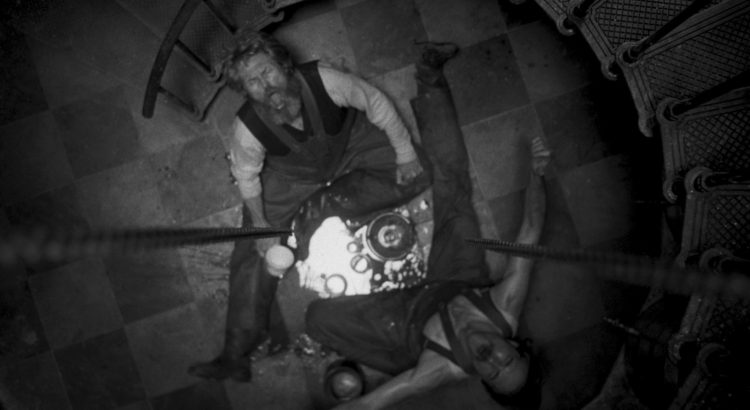
A24’s newest film follows two lighthouse keepers in 1890s New England. Director Robert Eggers chose to shoot with vintage cameras and a constricted aspect ratio, all in black and white. To further enhance the setting, Eggers took great care to ensure all of the dialogue was period-accurate. As a result, the audience truly feels like they are on the island with the two characters. The Lighthouse is unique in the sense that it is more about the viewing experience rather than its technical elements.

That being said, while the film successfully brought the audience into the story, it was almost too successful. As the film progresses, the characters spiral more and more into madness, and it is easy to feel lost and overwhelmed. The film feels stagnant while Robert Pattinson and Willem Dafoe spout pure lunacy at each other and envision inexplicable and disturbing images. It is clear that the characters are developing more and more towards insanity, but it feels like the story is not progressing at all.

The issue with the pacing and plot development largely arises from the fact that the film is very predictable. Dafoe’s character often speaks in cryptic superstitions and warnings that are actually not at all cryptic, instead laying out what will happen in the film. The viewer knows exactly in what direction the story will progress, but it takes the film a while to build up to the climax. The viewer is left feeling restless and impatient, and the just-under-two-hour runtime feels much, much longer.

Simply put, watching The Lighthouse is exhausting. I personally would rather be exhausted by a film because I was emotionally invested in it rather than because I was also being driven towards hysteria. Still, it is very impressive that Robert Eggers was able to craft such an engaging and enthralling experience. Both Dafoe and Pattinson give masterful performances as well, as Dafoe expertly weaves comedy with authority and intensity. He starts at 100%, and ends at 100%. On the other hand, Pattinson starts with a more subtle performance, one that hints at an edge to his character. It is how he is able to underplay what is deep inside his character that makes the moment when his character snaps so enrapturing.

Ultimately, The Lighthouse is not for everyone, but I would still recommend seeing it. It is a very unique kind of experience, and it would be a shame to miss out on it.