PREVIEW: The Lighthouse

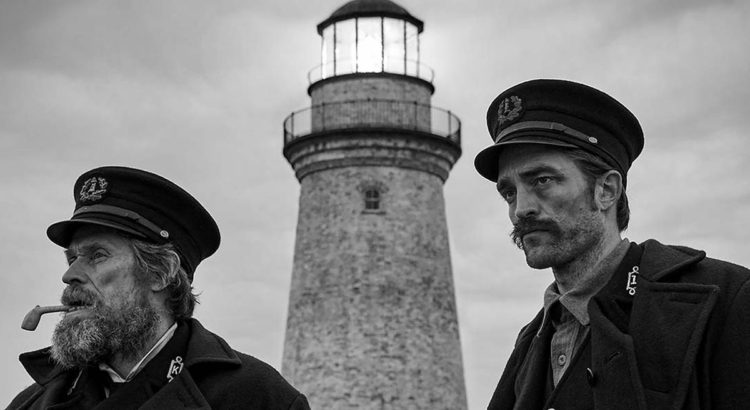
A24’s newest film, The Lighthouse, stars Willem Dafoe and Robert Pattinson as two lighthouse keepers in the 1890s. The film follows their descent into madness after a storm strands the two on an isolated, mysterious island. The film has received critical acclaim, particularly towards both performances by Dafoe and Pattinson, the black-and-white cinematography, and the direction by Robert Eggers.

I have been looking forward to this film ever since the first trailer dropped. I am already aware of Dafoe’s range as an actor, having seen him in both Spider-Man and A24’s The Florida Project. But, this will be the first time I have Pattinson in anything besides Harry Potter and Twilight, and I am interested in seeing how he will showcase his own range.

Eggers’s directorial debut, the Witch, is available to stream on Netflix.

PREVIEW: International Studies Horror Film Fest


Halloween, though it has already been upon us for months, is now extremely upon us. Somehow the most important holiday in the universe does not warrant a day off of school (meanwhile, some still legitimately celebrate Columbus Day), so we must do all we can to work around our schedules to properly honor this spiritual time.

Thank the Unholy Lord of the Dead that the International Studies program is continuing horror film fest. In its seventh year, the free program will include three foreign films (subtitled in English) for all to be terrified by. Come by the Hatcher Graduate Library Gallery (first floor) between classes, or if you’re especially dedicated, skip them all and stay for the whole time. And I better see you all in costume, or else.

The movie schedule is as follows:

10:00–11:30 a.m. — Face (2004, Korean)
11:30 a.m.–1:00 p.m. — The Lure (2005, Polish)
1:15–3:00 p.m. — Dogtooth (2000, Greek)

https://events.umich.edu/event/68410

REVIEW: Ad Astra

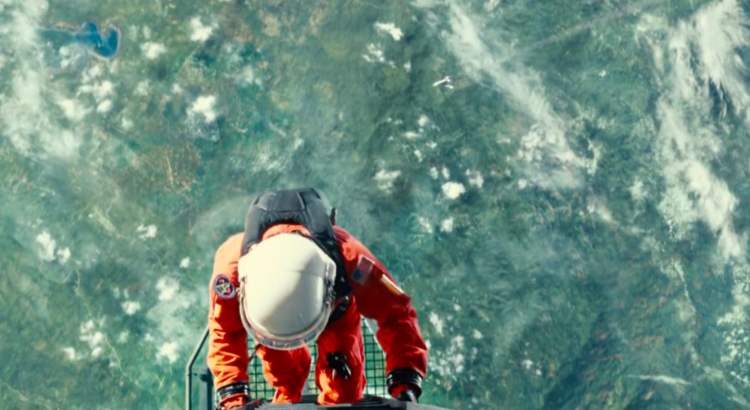
In the near future, commercial flights take passengers to the moon, babies are born on Mars, and power surges have begun to wreak havoc across the solar system. Astronaut Roy McBride is sent to investigate these surges, and to discover the truth about his father, a famed and presumed dead astronaut. Ad Astra is an adventure film, with chase scenes on the moon and zero-gravity fight sequences. Although the action is exciting, the film’s strength lies in subverting the genre. Rather than being a film about a tough action hero racing against the clock to save the universe, Ad Astra is about a hero whose strength lies in his humility and emotion. He is a hero who does not consider himself a hero; he is just someone searching for human connection.


To a certain extent, Roy does fit the mold of a typical action hero: he always comes out on top in any impossible situation. But, Roy is better defined by how humble and gentle he is. He knows that Major Roy McBride is a highly esteemed public figure, but he does not view himself in that way, even though he proves again and again that he is worthy of the praise he receives. He even goes so far to call himself selfish for jumping at the possibility that his father might still be alive. Roy reacts in this way because he was never really allowed to express his emotions – he is praised for focusing on his missions and for never having a heart rate over 80 bpm regardless of how severe a situation is. Roy has a very gentle nature, but he has been repressing this side of himself his entire life. When he contemplates why he wanted to become an astronaut like his father in the first place, he realizes he never wanted to be famous. He was motivated by his desire for human connection: he saw becoming an astronaut as the only way he could reach his father, who was absent throughout his childhood and disappeared when Roy was sixteen. As Roy becomes more invested in his search for his father, he realizes he has been harboring bitterness and anger towards his father for leaving him. This prompts him to realize that his anger has been driving his search, pushing him away from a stable life on earth, where he will disappear into the stars like his father.


It is advantageous for the film to make Roy more human and therefore more relatable rather than the perfect model action hero. Anyone can connect with the idea of wanting to live and to love. This idea ties into Ad Astra’s central message: it is easy to look so hard for something that you can miss what is right in front of you. It is only after getting closure about his father that Roy realizes he had let himself be consumed by searching for his father, unknowingly pushing away his loved ones in the process. Ad Astra could have pushed Roy down a dark, obsessive path, but it guides him towards self-realization instead. Ultimately, Ad Astra is a surprisingly optimistic film about human connection, and it is a reminder that there is strength in emotion.


Image source: https://filmschoolrejects.com/ad-astra-imax-trailer/

REVIEW: The Goldfinch

I fell in love with The Goldfinch by Donna Tartt this summer. I’ve said this many times after reading her first and cult favorite novel, The Secret History: that I am convinced Donna Tartt is the best novelist of our time, if not only my favorite. The intricacy of her genius is mind-blowing. The Goldfinch has every Fareah-esque theme a book could possibly have: large, sprawling, ambitious plots, a character we see grow and mature and break, glittering prose, an attention to the everyday, philosophical underpinnings, an incredible (!) best friend figure, unrequited love (not essential, but definitely a perk). I love The Goldfinch so much. I’ve reread some of the passages religiously. 

The story follows Theo, a bright and thoughtful young boy who loses his mother to an attack in an art museum in New York City. In his fervor, he takes a painting with him: Fabritius’ The Goldfinch. We follow him throughout his life, the secret possession of this painting threading its way through every milestone. The story is about a lot of things: love for objects, for art, for people; a search for meaning and value, and sometimes the crushing absence of meaning and value. It is a stirring and riveting story.

The narrative of the book is inexplicably tied with words, with prose, with life given form by language. It’s essentially part of the logic of the story, the central thrumming aesthetic question. Without the craft of language, the narrative seems lacking. I used to be a book purist– someone who believed that books were always better than their movie counterparts. I don’t believe this anymore, because I think that movies and books are two essentially different modes of storytelling, and so a movie adaption must be judged differently than the book. This being said, however, my heart still flinches at the injustice inflicted upon many a good book by horrific and painfully bad movie adaptations. The fact that The Goldfinch relied on language as an essential part of the structure of the narrative and in the history of Hollywood movies with bestsellers, I was incredibly weary of the film adaption. This, I believed, was one of the kinds of stories that movies could not capture. 

I went to the film with my friend who had not read the book. It was a nearly three-hour movie, dense and rich with images and motivations, trying too hard to encapsulate the plot of intricately woven nearly thousand-page novel. It is almost adorably endearing to me that any filmmaker would even attempt to grapple with the magnitude of this novel. It’s uncontainable! I wonder how Donna Tartt does it herself! Three hours is not enough! The psychologies of the characters are too complex, the relationship too deep, the philosophical underpinnings too expansive to capture in the form of film. Perhaps it is unfair of me to say this, and perhaps I am being unfair to the form itself, but they were much too ambitious. I think the film would have worked much better if they had focused on a particular aspect of Theo’s life and developed that carefully rather than trying to explain his relationship with Pippa, and Boris, and Hobie, and Mrs. Barbour, and Kitsey, and drugs, and artwork, and depression, etc etc. Choose one! You don’t have enough time!

Thus, in my opinion, the movie feels like a dilution of plot points, racing to the end. I cannot imagine the movie being successful as a standalone; without the book, it withers. Moreover, the images feel artificial to me, too constructed, and obviously symbolic– all in the varnish of a blockbuster-type style with oversaturated gray skies and all-brown and gray tones. I’m not entirely sure how to explain this, probably because I don’t have the proper film vocabulary, but it felt to me like the images were trying too hard to mean something. I would have liked it to all be scaled back, broken down into the elements of its true nature; not glamorized and made larger-than-life. I felt like I was watching a fantasy, like Harry Potter– and this was, intuitively, the wrong feeling for the story. 

My friend, who had not read the book, loved the movie very much, so perhaps this review is irrevocably restrained by my opinion. However, I did love that the movie reminded me more of my love for the book; when I got home, I sat down on the floor of my apartment with our dim lights while my roommates slept and re-read my favorite passages. If it could do that– spark joy and love, and remind me of what I loved– I am still grateful.

REVIEW: Tigers Are Not Afraid

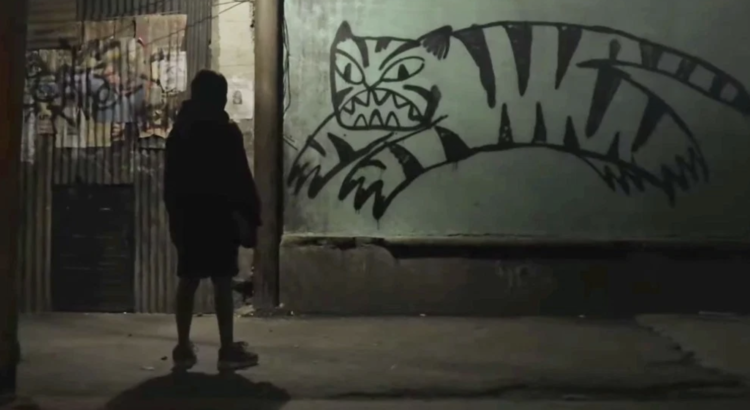
It’s hard to describe this movie. It feels like it was made a while before its 2017 release, reminiscent of ancient fairy tales and old westerns. Fantasy blends with the supernatural with cowboy kids and unspecific wars that rage eternally.

The whole film had a strange feeling to it, a dark beauty made all the more sinister by the twisting of youth into a violent survival. Sandwiched between scenes of children killing to live–pistol large and awkward held in their small hands–we witness a lavish mansion, a beautiful koi pond, the sun laying warm orange hands upon the earth.

In various scenes I drew a similarity to the 2010 adaptation of Alice In Wonderland, whose creators favored the duller, harsher, rotting side of marvelousness. The blueprint to this wonderland is reflective of that, its color scheme made up of romantically bleak sandy expanses and pastel paints faded by time under the watchful eye of the sun. Dust covers all in a show of a strangling embrace, clouding the landscape in an attempt to dilute its horrors.


What was unclear was the lack of explanation of the adverse effects of making wishes. This seemed an uneven piece of the plot, as Estrella’s mother and the other victims of the gang are seeking justice for the violence through which they’ve suffered. Perhaps they recognize some need for balance, granting wishes being too disruptive an act unless it was accounted for by some random tragedy. But this concept is not corroborated by any other behavior by the dead; they seem motivated only by the rage from the injustices committed against them, and in this basically solely self-interested. Adhering to a lawful cosmic order does would not seem to be an overly pressing concern for them.


But beyond this confusion, there is at least some dark beautiful justice to mingle with tragedy. All the conflicting directions involved in the film makes it difficult to process, but truly this is what film should do: confuse, make us process at once all it’s trying to communicate. There is no movie of any quality that does not frustrate.

I don’t know exactly that any romance should be juxtaposed with real, current violence. I have some creeping sensation that its beauty, however clearly dark it may be, is dangerously placed. Perhaps this movie is only this way as it’s shown through the eyes of children. Though hardened by their circumstances, they still possess the imagination of the young, and need to cope somehow with their orphaning. They seek shelter in each other, yes, but must see something else in the world that can distract them from what they’ve lost.


PREVIEW: Tigers Are Not Afraid

With Halloween well upon us, we have descended into scary movie season. While horror isn’t for everyone, there’s something about the graying skies and the melancholy cold that brings out at least a little bit of enjoyable frightfulness in us all.

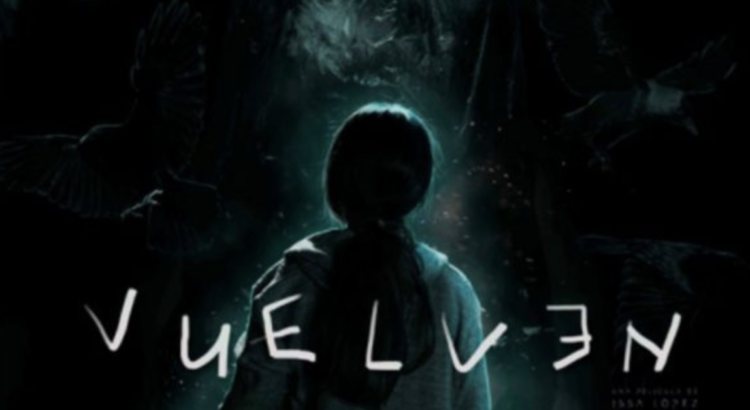
For lovers and haters of horror alike, Tigers Are Not Afraid is a must-see movie. In it, a ghost haunting is shown from the perspective of a 10-year-old child. Part fantasy fairytale and part creepy supernaturalism, Issa Lopez’s film will amaze everyone in the audience.

There are several showtimes available at the Michigan Theater in the coming days:

Wednesday, October 9: 5:00, 7:30, 9:55 PM

Thursday, October 10: 7:30, 9:55 PM

Monday, October 14: 12 AM

Hope to see you there! Wear something spooky…