
Dismissed Off the Bat: “Unfriended” and “Magic Mike XXL”

There were two movies that came out this year that both got the same Rotten Tomatoes score: 62% of critics gave them positive reviews (Metacritic gave them scores of 59 and 60). Now, technically 62% counts as positive on Rotten Tomatoes, and they’d be labeled as ‘mixed’ on Metacritic, so I shouldn’t say no one liked the movies. Still, there’s a significant enough gap between the movies’ quality (in my opinion, of course) and their critical reception that there’s something worth thinking about.

Let’s start with “Unfriended,” my favorite horror movie of 2015 (keeping in mind I haven’t seen the extremely acclaimed “It Follows” yet), better than “Krampus,” “The Visit,” “The Gift,” and even “Goodnight Mommy.” Almost all of those movies lacked a little in their first halves, choosing to very slowly build up creepiness and wait until the climax to really unleash the violence. The problem is that so much of this buildup is predictable. In “The Visit,” for example, the scary grandma and grandpa do a lot of weird things in the first half, but nothing explicitly violent happens until pretty late on. As a result, I was just bored for a lot of the movie. “Unfriended,” though, unleashes the violence early, and from that moment on, the movie is just so fun.

I want to address some of the complaints I’ve seen about the movie, and some that I anticipated. First: the characters are unlikable. Well, sure. Of course they are. Maybe there’s some truly great version of “Unfriended” out there that manages to make the characters likable despite playing a hand in the suicide of a teenage girl, but no, this is very much the kind of horror movie where the characters being unlikable is the point. And I think that’s the right call. This isn’t the kind of story where you should be really deeply emotionally engaged in the inner moral struggles of the characters. This is the kind of movie where you should be having fun watching them die in horrifying ways, and “Unfriended” certainly provides that. Besides, there’s a certain catharsis earned from watching these terrible people get killed. I mean, who doesn’t want to see some guy they hate shove his own arm in a blender, then use the blender blades to slice his own throat?

Another complaint: the movie isn’t scary. This one is kind of subjective. I’ve read a lot of reviews saying that the movie is genuinely scary, but a lot of people don’t think it is. Personally, I wasn’t really scared while watching it, but I hardly ever get scared watching horror movies, so that was to be expected. With most horror movies I’m hoping to be horrified and shocked by what I’m watching, not truly terrified to go to sleep afterward. So I didn’t mind the lack of real scares.

But the biggest reason a lack of scares isn’t a problem is that the whole movie is so compelling and exciting anyway! It uses the Skype format to brilliant effect, unfolding as if the whole movie is one long take in real time. It’s such a unique and great idea, and I’d call it borderline pioneering except Skype will probably be dated in a few years (unlike, for example, the legendary found footage influence of “The Blair Witch Project”). Still, what does it matter if the movie dates itself? If you’re watching it at this moment in time, the movie is frightening in the familiarity of its details. Skype’s layout is well-known, but the movie also uses so many other subtle computer references smartly. I was particularly impressed with the movie’s sly approach to doling out exposition: main character Blaire (Shelley Hennig) watches the video of Laura’s suicide on LiveLeak, so we get to see it instead of the movie abruptly flashing back. Even cleverer is the instance when Blaire types out a message to her boyfriend Mitch (Moses Jacob Storm) and then backspaces, both mirroring her guilt and giving us the information we need to know. I also like the way the movie uses Chatroulette when Blaire is desperately trying to connect to someone who can alert the police. All this social media is so familiar to us that the movie feels extremely authentic, real, and smart, even when the characters are stupid and the threat is supernatural.

And those little smart touches don’t stop coming, especially when it comes to Blaire’s Spotify playlist serving as the movie’s soundtrack. That produces some of the biggest laughs of the movie, like when Laura takes over Blaire’s computer and plays “How You Lie, Lie, Lie” while the characters are refusing to accept blame. There’s also a great moment of comic relief—a different kind of comedy than laughs earned from over-the-top violence—when something starts beeping and Blaire is terrified until she realizes it’s just her alarm clock, reminding her to rest up for her test in school tomorrow. She and Mitch both laugh at the ridiculousness of considering school in the midst of the mayhem and murder, and it’s one of the few moments of the movie when the characters are self-aware.

Honestly, the only real flaw I can find in the movie is in the last ten seconds. The perfect ending was right there: Laura reveals that she knows Blaire recorded the ‘Leaky Laura’ video, Blaire gets bombarded with hate mail, and Laura’s spirit disappears, leaving Blaire alone and guilty…then Blaire closes her laptop and, of her own volition, kills herself. Instead, Laura’s spirit comes back and kills Blaire, cementing “Unfriended” as a great horror movie, but not one that can transcend its appearance and become truly meaningful or tragic.

Still, being a greatly entertaining and horrifying horror movie is at least worth a positive rating, at least a B+. So I’m not quite sure why people have disliked “Unfriended.” Maybe the lack of scares seriously bothers people, though the whole movie is fast-paced and thrilling, so I can’t imagine being super bored during it. Maybe the unlikable characters bother people, though that’s inherent to the plot.

But I think at least a portion of the audience (including critics) dismissed the movie off the bat. They dislike the movie because they feel like it’s the kind of movie they should dislike. After all, the trailer is pretty shitty, making it look like most other mainstream horror movies today, filled with two-dimensional unlikable characters, cheap jump scares, and unintentional hilarity. And for those people, watching the movie and seeing these stupid and cruel main characters (complete with frequently stilted dialogue, though that fits their personalities to a tee) only confirms their preconceived notions they got from the trailer.
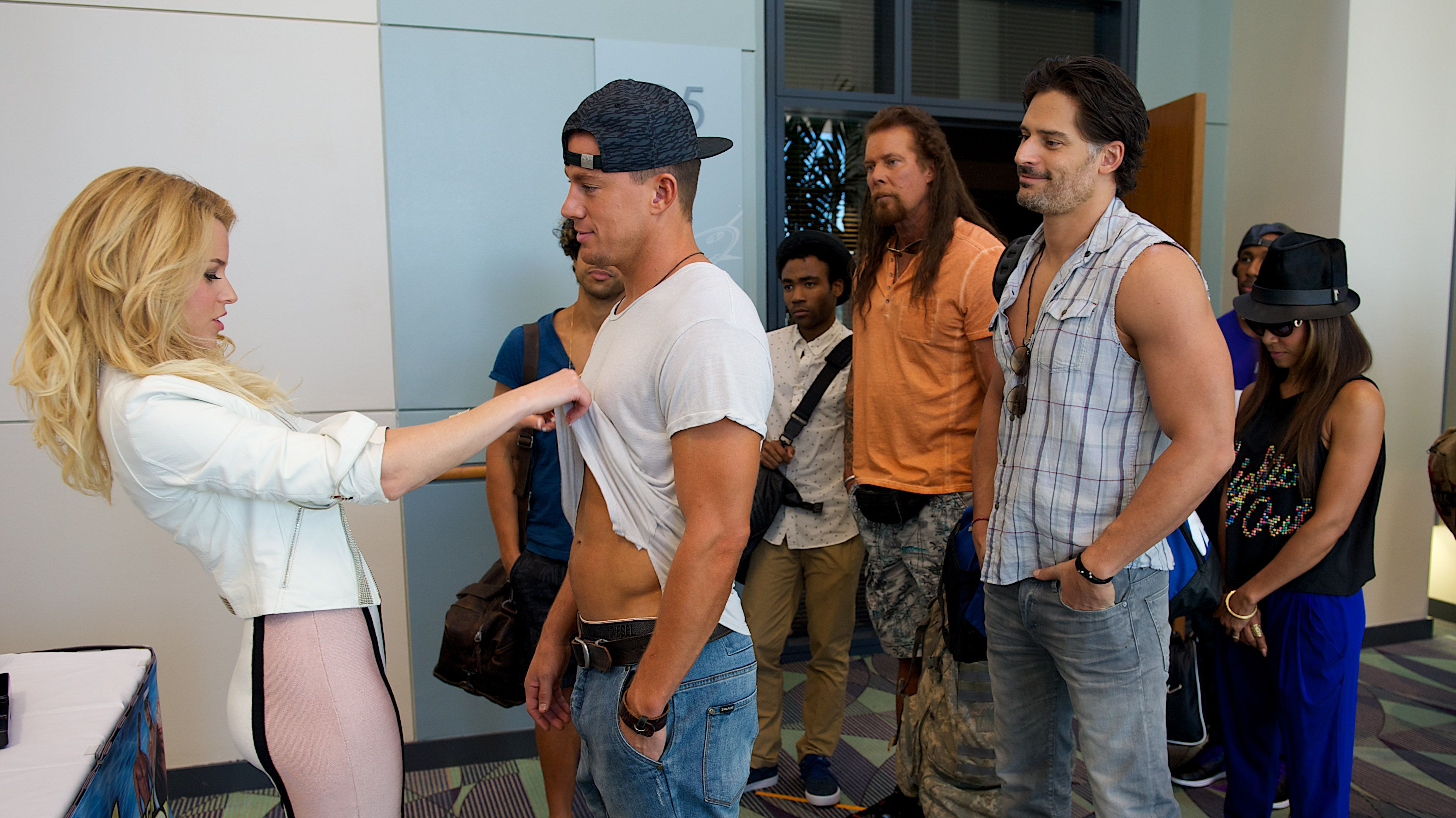
Another movie that likely served only to confirm many preconceived notions this year was “Magic Mike XXL.” To many, the first movie, “Magic Mike,” was a surprise, a fairly serious “Boogie Nights”-esque drama that dealt with the corruption in the male entertainment industry. Protagonist Adam (Alex Pettyfer) may find the prospect of stripping both financially and sexually rewarding, but with those perks comes the potential for drug addiction, and Adam’s new life of excess becomes sickening as the movie goes on. “Magic Mike XXL,” on the other hand, is exactly what “Magic Mike” isn’t, undoing the expectation-subverting of the first movie and indulging audiences who wanted nothing more than an entertaining stripper comedy with writhing, toned male bodies.

To many people, the idea of this new movie, less daring and more focused on dumb, sexy fun, seemed like a big step back. AV Club commenter beema commented on the review, “I heard an interview with Joe Magnelillioinienieoo where he basically said that this sequel was focused on the ‘fun’ aspects, because they got all the requisite serious/emotional stuff out of the way in the first one in order to have it appeal to discerning critics and the indie scene. The implication was now they are unburdened from having to make a compelling movie and can just do a stupid summer male stripper movie. Which made me go ‘oh, so this is just some boring schlock. Got it.’”

Regardless of what Joe Manganiello may or may not have said in the interview, this comment essentially shows what audiences were expecting based on the trailer and based on the overall premise of the movie, with Mike joining back up with his stripper friends to go on one last road trip of debauchery. That’s what I figured the movie would be, especially when it got mixed reviews, and when I saw that Steven Soderbergh was only sticking on as cinematographer, not director. But this movie is so much more than that.

The argument can be made that “Magic Mike XXL” eschews the nuance, drama, and suspense of the first movie. I would agree that this one is much less suspenseful, as there really isn’t any main conflict. It’s very much a lazy road trip comedy, with occasional heart-to-hearts and summery lounging sessions between the dancing set pieces. The movie’s unqualified praise of the male entertainment industry, the idea that it’s a system that seriously improves the world, is slightly questionable after the last movie exposed all the horrors that can come with seemingly innocent fun and games. It’s strange to think about these two movies as having the same characters occupying the same universe. In fact, I suspect that many critics who did dismiss “Magic Mike XXL” did it because they failed to grapple with that bizarre duality. This movie does seem reductive, in that sense, asking far fewer serious questions about the industry than its predecessor.

But “Magic Mike XXL” doesn’t fail to find something to say. It replaces the industry corruption and exploration of addiction in the previous movie with a kind of feminist treatise, an ode to female desire and female self-respect. The lesson that women are worthy of respect, the lesson that men should ask for consent and ask women what they want, isn’t inherently a complex one. But it’s one that, sadly, so few men understand, even today. So in the scene when Mike and the boys convince Nancy (Andie MacDowell) and her friends that they’re beautiful and deserve the best, I couldn’t help but be surprised. I couldn’t help but smile goofily as Ken (Matt Bomer) called Nancy’s friend beautiful and advised her not to take herself for granted, to take a stand against her unappreciative husband.

As Film Crit Hulk said, about 96% of the tickets sold were to women, but men should really watch this movie. Of course, the feminist message is what men really need to hear, but it’s also a really enjoyable movie for guys even outside of the message. After all, what is this movie if not a bro bonding sex comedy? There are so many scenes of guys just hanging out and shooting the shit and saying they love one another. I especially enjoy the scene with Ken and Andre (Donald Glover, who I wish had a bigger role beyond the scene of him singing to the girl) talking in the front of the car, discussing career prospects and why they enjoy being male entertainers. In a way, the scene is superfluous to the plot of the story, but it effectively works as a calm pause before the climax, a moment for the characters to reassess their priorities and passions.

Oh, also, there’s the scene of Big Dick Richie (Joe Manganiello) dancing and performing a striptease in the gas station to “I Want It That Way” in an effort to make the cashier smile. It’s one of my favorite scenes of the year, I think, especially because it cuts to show Mike and the boys happily cheering him on, another warm and fuzzy moment of bro bonding. I was just smiling the entire time, and when the girl eventually does smile, I was so happy.

I do have some problems with “Magic Mike XXL.” As Tasha Robinson pointed out in her article about “Magic Mike XXL” for the Dissolve, in reality, would every woman be as entirely ecstatic to take part in the simulated sex scenes that occur onstage at the big stripper convention? Also, as much as I love the scene with Nancy and her friends, I couldn’t help but think, Do we really need this whole movie to just be men explaining to women why they deserve respect? (I was really not expecting my complaint with this movie to be that it was ‘too preachy.’) Luckily, there are some female characters who seize their own agency and show that they know they deserve respect, most notably Rome (Jada Pinkett Smith), but there’s a certain note of condescension in the idea of needing men to tell women they’re pretty. Even aside from the slight weakening of the film’s progressive message in its constant focus on men empowering women, the main characters consistently being in the right isn’t the best option narratively. The male main characters are basically flawless. They’re sex gods, but respectful, charismatic, funny sex gods, and movies shouldn’t make all their main characters gods.

“Magic Mike XXL” isn’t concerned with these potential issues; this is a movie where no woman ever doubts a man’s intentions, where no woman ever really feels uncomfortable being thrown around, and every man’s excessive dancing and sex simulation is meant to indicate his desire to make a woman happy, not to prove his masculinity. Still, I can’t fault the movie too much for being too tidy and optimistic about gender roles. Like the racially themed episode of “Scandal,” “The Lawn Chair,” it might be reductive and too fantastical. But maybe we need to see a fantasy world, a world where the white cop who shot the black kid doesn’t get let off the hook, a world where every man is not only gorgeous and talented, but kind and respectful to women. It might be a little reductive, but it’s not any less progressive. Maybe this is the kind of world we should aspire to.

“Unfriended” and “Magic Mike XXL” certainly have nothing alike in terms of genre, but what they do have in common is a tendency to be viewed by critics as what they appear, not what they actually are. Both movies have relationships to the past that they must overcome—“Unfriended” has the same tone as many mainstream horror movies, with terrible and annoying main characters, and “Magic Mike XXL” is naturally compared to its predecessor, seeming shallow on the surface. It’s at least partly this relationship to the past that has hurt critical reception for these two films. But when you look at them as their own entities, with no set expectations and an open mind, they’re more than able to overcome those challenges and become fun, worthy creations of their own.

Awful Library Books

When I was in England this past summer, a good friend and I took the train to the quaint town of Canterbury for a short day’s excursion. While we moseyed along the ancient cobblestone streets, we found ourselves drawn to one of the thousand Oxfam second-hand bookshops sprinkled around the country. Not only do I love a good bookshop to while away a rainy day, my friend and I were there for a particular purpose, too. She and her boyfriend had created a game in which the rules were simple: one had to find a “weird” or “unusual” book (it didn’t have to be secondhand, but vintage self-helps and children’s books are always good places to start!) and give it to the other to read. The book that my friend had just acquired was a children’s book entitled: “My Big Sister Does Drugs.” Case in point.

Image via Amazon

I always thought this was a hilariously fun idea, but never really followed through with it. But apparently, my friend is not the first to have had this idea of coveting the weird, the unusual, and the downright horrible gems of the literary world.

Meet the folks of Awful Library Books, a website mediated by two Michigander public librarians who have made it their life goal to hunt down the worst, sexist, racist, scary, suggestive, satanic, appalling, and questionable books that somehow ACTUALLY EXIST in this world. They accept submissions from people all over the world who have joined the fun and sent in their findings.

Some examples:

Satan for Kids

Glorious Macrame

The Man Who Loved Clowns

Even Men Can Cook!

Not only is this website a treasure trove for vast emotional responses and historical and cultural discoveries, the entertainment comes from the blurbs that site owners, Holly and Mary, write up about each book. Each book is also categorized, so like YouTube, ‘related titles you may be interested in mocking’ appear before you and supply you with endless hours of curious enjoyment. (Is it bad to say enjoyment? Awe, maybe? Shock? You decide!)

So what’s the point of this website? Well, firstly, it’s a collection, just like a library itself. But it’s also a time capsule – to remind us of past prejudices and cultures, and recommend that we try our best not to replicate them! This blog is a project of entertainment and education. It’s an ongoing work of preservation, just like any digital archive. Its goal is to cultivate a community of nostalgics and bibliophiles, who think that all books are worth taking a look at, even if you might not want to read their story. Sometimes, the worst books are, ironically, the ones that begin the most important conversations of current events, issues, and ethics!

Remember: Some pretty astonishing things are out there, if you keep your eyes open! And for all you writers out there, like me, who wish to be published one day, this site, Awful Library Books, at least gives you some hope!!

P.S. Submit your own Awful Library Book findings at http://awfullibrarybooks.net/submissions/.

Looking Back at MLK Day 2015

As we near Martin Luther King Jr Day and the yearly symposium that the university plans in his honor, I believe it would be beneficial to look back at last year’s and at one particular event. I attended this event and it was perhaps one of the hardest things for me to sit through, and not in a good way. This event was Erik Wahl’s Embracing the Art of Change.

When I first read the seminar planned for the 2015 symposium, I was excited to possibly attend many of them. In particular, I was most interested in an event discussing queerness in our prison system and Erik Wahl’s event where I hoped they would be discussing the intersectionality of art and Black culture. While the prison system one appealed to me slightly more, I decided to attend the Erik Wahl event as a few friends were planning to go as well and I believed I should be spending MLK Day learning about race and racism, which I thought would be discussed more at this event.

The day started off great as I also attended the keynote presented by Marc Lamont Hill. This was an extremely powerful speech as he unashamedly discussed the hard topics that we should focus on during MLK Day and throughout our lives. I was lead to believe that the university’s annual MLK Day Symposium was an effective force of positive change and that the university was actively trying to educate it students on the intrinsic racial disparities in our society. My opinion changed after the Erik Wahl event.

Let me first start off by saying that I cannot put too much blame on Erik Wahl. Yes, he was very clumsy and ineffective in altering his standard motivational speech to try and include social justice, but we should place more blame on the event planners who believed (for some ungodly reason) that a white “grafitti artist” who spent most of his time working in corporate America was a good fit for the MLK Day Symposium. Perhaps it’s my fault for believing I would see something poignant and intelligent about the criminilization and debasement of Black art without looking into who the actual speaker was.

Now luckily this event was packaged with it’s own perfect metaphor to explain the inappropriateness of this event for this symposium. Throughout the event, Erik Wahl would take time out of his speech to paint his “graffiti”. The last one was the icing on the cake as he flashily painted Martin Luther King Jr. in white on a piece of black canvas. He literally whitewashed one of the most important social activists in American history in front of hundreds of people. Looking back on it, it’s pretty humorous.

But we should focus on the particulars as to why this event was such a dark cloud over MLK Day. First, let’s discuss how absolutely trite the motivational speech was. This was clearly one of Erik Wahl’s most popular speech and the one that he always has in his back pocket in case he needs to give one. This would be fine if it was original, but it wasn’t. Everything he said was just a rewording of phrases that I have heard from hundreds of other motivational speeches, only this time he peppered in a few social justice buzz words. It was one of those substandard “get out of the box, get creative” speeches that have been drilled into all of our heads by now.

In addition to this, the multiple paintings that he did, while fitting the theme of diversity, were unfortunately misutilized. I don’t remember specifics, but I remember he painted two famous athletes and finally MLK Jr. in white. While these could have been great points of access into discussions as to why these people are idolized and the barriers they had to break in order to become successful, he instead used them as talking points into how they affected his privileged childhood. He preferred to discuss why they were some of his heroes, but shied away from the racism they overcame in his shallow anecdotes.

All of these aspects came together to present me with a pandering, purposeless event that had me writhing in my seat from frustration. It was clear that Wahl didn’t feel comfortable actually discussing race and instead preferred to discuss his famous sports stars, his pretentious music, and his hollow philosophy. The part that continually plays in my head when I think about this event is the Q&A portion. A homeless woman came to mic and wished to talk about the affect of homelessness on the Black community. Instead of taking this opportunity to actually learn something, Wahl instead decided to climb off stage and hug the woman in a perfect display of this event’s pandering nature.

It’s clear that the Business & Finance Convocation simply used “graffiti” as a connection to Black culture, when all they really wanted was a another white guy to discuss business practices with. This could have a been a great event with an actual Black artists who could discuss the nuances and depth of Black art and Black culture, but instead we got Erik Wahl and his whitewashed Martin Luther King Jr.

Little Girl from Waitlist

Before I was accepted to University of Michigan’s School of Music, Theatre and Dance I spent six months on the waitlist. I auditioned in January (unaware that U of M was not simply good for music, rather, that it was and is one of the top music schools in the country), placed on the waitlist in March, and told in May that there absolutely was no room for me – there simply were too many sopranos. However, my name was kept on the waitlist for the summer in the unlikely event that some soprano got cold feet and gave up their spot. Two weeks before my freshman year I received a call and suddenly I was a music major.

I began freshman year knowing that I was the worst one in my class and to some extent I have carried that shadow of doubt with me throughout my entire time here at the University of Michigan. Yet this doubt has fueled my desire to prove myself to the faculty who saw potential, if not promise, in the performance of a 17 year old that could not sing below G4. It motivated me to audition for every show possible and resulted in me performing in over 25 operas, musicals and plays in 4 years. It convinced me not to change my degree to a Bachelor of Musical Arts from Bachelor of Music even though a BMA is more dual degree friendly and it hung it the back of my mind reminding me that I needed to work harder than everyone else to earn the opportunity which I had been given.

On December 21st, the voice that has hung in the back of my mind finally disappeared because on that day I sang in the preliminary competition of the University of Michigan’s Concerto Competition and won. After years of doubt and determination, the same professors that placed me on the waitlist decided that was fit to represent the voice department at the Concerto Competition Finals where I would compete with 6 instrumentalists and another vocalist for the opportunity to perform my piece with symphony orchestra.

While I did not win the Concerto Competition Finals, the opportunity to sing at Hill Auditorium with a real audience was the culmination of everything that I have been working for these past four years. Granted, 17 of the audience members were faculty members sitting with pen and paper (some even following along with the music) actively judging the quality of my instrument and preparation, however, in the twenty minutes where I stood center stage at Hill Auditorium I felt the deepest sense of accomplishment. Here I was a twenty-two year old soprano singing on the same stage that Rachmaninoff, Joan Sutherland, Elton John, Leonard Bernstein, Audra McDonald, Yo-Yo Ma and so many others have rehearsed and performed on. It was a bit overwhelming! In those twenty minutes that I sang Previn’s Honey and Rue, the chip on my shoulder vanished. Part of me will always be the little girl from waitlist worrying that she is not doing enough and that she is falling behind her peers, but the little voice constantly casting a shadow of doubt has vanished, all because I refused to listen in the first place.

Saying Goodbye

Although there’s many things that I could write about this week for my post, and I went through all of them in my head, trust me, my heart wasn’t in any of them. Why? Because today, I feel like I lost a friend.

For those of you that don’t know, Alan Rickman passed away today at the age of 69. If you don’t know Alan Rickman, though I will be very surprised if you don’t, he is known for his iconic roles in Die Hard, Love Actually, Robin Hood (yes, the terrible one with Kevin Costner), and, the one closest to my heart, Severus Snape in all of the Harry Potter movies.

When I was younger and watching Harry Potter for the first time, I had no idea who Alan Rickman was. But when I read the books, I realized that he was the embodiment of Snape, straight down to the hair and nose. He was just menacing, and you knew it, and yet for all his one-dimensionality, you knew Snape wasn’t all bad. That was Alan Rickman, and his brilliant acting.

Only when I got older did I realize this, though, and the respect he was given. I learned about Dame Maggie Smith, and I looked up to these figures, as I was dreaming of becoming an actor, and realizing that the roles these people played were the ones I wanted to play. I respected them, and I’d even say I loved them.

I still remember when I went and saw the last Harry Potter movie at midnight. It was the end of an era for me, and for millions of other teenagers. But I didn’t cry about it, because while it was an end, I knew the books and the movies would always be there for me, just as they had in the past. I knew I might cry during the movie, but not for that.

Instead, when I saw Snape curled around Lily, crying himself, unable to face the truth, I started crying as well. I’m not even that big of a fan of Snape, but that loss, that pain – you could see it all. And that was Rickman. That was what he made people felt.

There comes a time when you have to let go of something when you’re in a fandom. That’s what happens when you become a fan of something. You watch it, you read it, you hold it dear, and when it’s gone, you mourn it. And today, we mourn Alan Rickman.

Rest in Peace, Alan. Always.

An Ode to Dance

Sex and the City's Carrie Bradshaw dances in her closet.

This semester, my last semester, I decided to take all of the classes I always wanted to take before graduating. Therefore, every Monday and Wednesday I wake up, put my hair in a bun, and head to dance class. At first, I thought dance would just be a fun way to exercise and move around twice a week, but after my first class I knew it would be much more than that.

My instructor starts off every class with all of us sitting in a circle. Then, he has us introduce ourselves to someone new. We don’t go around and say our names with a fruit that starts with the same letter or anything like that, but we smile and wave and awkwardly shake hands. It might sound strange, but it feels kind of nice to be explicitly told to interact with the people you’ll be seeing the rest of the semester. I’ve had far too many classes where that just doesn’t happen and it’s kind of sad to go through life interacting with people whose names you don’t even know.

Then, my instructor has us stand up and feel the weight in our feet, center ourselves, and wake up our bodies. He doesn’t stop there, though. While we stand, eyes shut tight so no one feels like they’re being judged; he helps us discover different things about ourselves. Yesterday, he asked us to think about something that is stressing us out, and then he walked us through a scenario where we let go of that stress and fill ourselves up with a positive green light. It’s a great way to start the morning and it really did make me feel a little better about what was stressing me out.

After that, we warm up. That means there’s a lot of movement and a lot of finding your way through a mess of sweaty students. My instructor always makes sure to add some improv to the routine because it makes people feel strange and uncomfortable and free and expressive. And here’s the best part: you can’t really be bad at improv! As long as you try and you go through the steps confidently, you’re doing it right. Sure, you might not know what you’re doing as you move one foot in front of the next and you might be nervous you’ll bump into someone or look silly, but guess what? That’s what life is like—one big improvisational dance move!

This class has helped me realize that there’s something so intrinsic about dance. We’re born with the need to move. When you put on music, even little babies start to tap their feet and sway their hips. It’s what we do when we win a game or get a good grade. It’s how we celebrate marriages and birthdays. Dance is what we do when we think no one is watching, or sometimes, when we think someone is. It’s beautiful and fun and exciting and expressive. So, while I took dance as a fun way to get moving, I’m starting to think it’ll be one of the most important classes I take before graduating. It will teach me to be confident, even when I don’t know what I’m doing. And, it’ll teach me to have fun. Because who wants to kick-ball-change with a frown on their face? “Not I,” said the duck!