
Month: February 2022
Cyrene Update

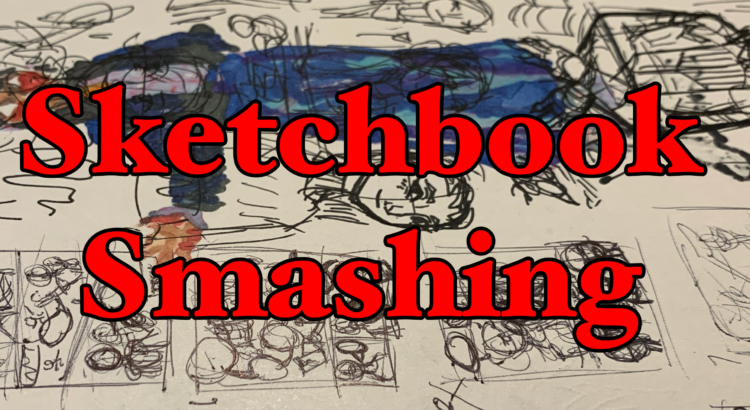
Modified Cyrene a bit. I change how her hair frames her face. I made her tattoo artist apron into one of those full body aprons too. All the more to store ink with. She looks more disarming this way.
I haven’t been doing a lot of development stuff this week. Which is odd because I got two dnd one-shots sprung at me for spring break. I had fun making my new PCs but something awesome came up during my last session that I had to draw.
Fine Art Fables: The Story of Isis and Osiris

In the early 2nd century CE, Plutarch wrote a complete ancient account of the Story of Isis and Osiris, and several other Egyptian religious beliefs. However, the oldest known depiction of Osiris dates to about 2300 BCE. Because of his status as a god of death and the underworld, his worship was widespread across all of Egypt, and even spread to other parts of the Mediterranean.
In Egyptian Mythology, the god Osiris came to Egypt to rule as its King and brough isis, his wife and goddess, with him. He was wise, and kind, allowing humans to flourish. However, his brother Set (Seth, spelling varies) was jealous, and set out on a plan to kill him and take his place. Set was able to trap Osiris in a chest as a form of competition at a party, then threw him in a river to never be found again. Isis, his wife, went to the river and searched until she found the chest. However, Osiris was already dead. Distraught, she went to get the necessary religious supplies to pass his spirit on to the afterlife. Set was enraged at this, and cut Osiris up into fourteen pieces so that he could never come back in the afterlife as one piece. Despite this, Isis was able to heal him with her magical, godly powers and wrapped him as a mummy. This allowed Osiris to come back briefly, however he was unable to stay on Earth. This is how he became King of the Dead.
Here is a longer summary and translation of the story. It will download a PDF file.

My image depicts Isis using her magical powers to heal Osiris back into one piece. I used the classical pose of the mummy, or a pharaoh, with arms crossed over the chest for Osirus. I tried to keep their iconography similar to the hieroglyphics which describe them. The border is inspired by hieroglyphic symbols as well, but does not have any real meaning. I wanted to keep the pieces of this series (Fine Art Fables) similar to each other visually in order to have a body of work that is all cohesive. Because of this, I used more desaturated colors for the piece, as well as the repeating border motif to make it look similar to my previous post about Snow White.
Evolving Emotions: Blizzard
My legs are like columns of sheeted glass
They burn with an anger
I have neglected them
Left them to be battered
By a blizzard, hardly forgiving
My hands chip like old plaster
Revealing the life underneath
The pain of red
Numbed in the cold
My hair discourages logic
Protests order
And wreaks havoc
In front of my eyes
Shielding my face
Enough to obscure
But not enough to warm
A cry inside
Screaming for
Something
Anything
To feel again
To know that all will calm
The ice sets in
Hardening the bones
Congealing their marrow
Hindering the joints
Straining the throat
The blizzard takes hold
Despite my hope
For a light flurry
Following the storm

Art Biz with Liz: UMMA Exhibition Spotlight
It’s quite amazing how, at the University of Michigan, we have several fantastic museums right on campus. One such museum is the University of Michigan Museum of Art (UMMA). I like going to the (free!) art museum every so often to see the rotating exhibits, but prior to last week, it had been over a year since I visited the UMMA in person. I had the opportunity to visit the museum with my art class last week, and I enjoyed my visit so much I went again today.
Walking into the Marvin H. Davidson Gallery, my initial impression was that much of the art seemed similar in style and focus. Variations of painted portraits featured a range of white, wealthy individuals staring back at me. The art was part of an exhibit called “Unsettling Histories: Legacies of Slavery and Colonialism.” One sculpture, Untitled (bird cage, re-lynching) by Tyree Guyton, diverged from the portraits surrounding it. At first glance, it appeared to be a simple birdcage, but the longer I stood in front of it, the more I took away from it.


According to the sculpture’s description, the artist, Tyree Guyton, “frequently uses found objects to explore social and political themes.” Standing on its own, the birdcage is covered in paint and contorted, the metal jutting inwards and outwards in several directions. The movement of the main birdcage is contrasted by the stillness of its stand. At first, I thought it represented being “trapped,” but there could be other interpretations on the use of a birdcage. For example, there is duality in thinking about who was likely to own birdcages and what they represented, such as wealth and aristocracy. I perceived the birdcage to reflect not only the potential wealth of such slaveowners, but their view of slaves as property and less than human. Although not exactly on the topic of lynching and castration, the metal bell, another found object inside the birdcage, again reminded me of slavery. According to sources such as the Louisiana Digital Library, collars with bells might have been used to deter slaves who had previously tried to run away from doing so again. The United States flag, the last object in the birdcage, links the abominable practice to our country and its origins.
While the piece itself is untitled, the description of the art provides context in that it was common to castrate the Black men being lynched. Lynching itself was a horrifying and despicable practice, and castration added a physical attack on Black masculinity. The sculpture’s label also noted that castration was particularly common for those accused of sexually assaulting a white woman, perpetuating stereotypes of Black men being predatory.

This piece isn’t quite as abstract or unclear in meaning as some of other works I saw at UMMA, but there are certain aspects that even after reading the description could be up to interpretation. The purpose of the splatter of colors, for example, is unclear. To me, they reflect a kind of chaotic energy, and the red reminds me of shed blood. Still, even without knowing the information on the sculpture’s label, it’s possible to infer similar symbolism given the exhibition title and the sculpture’s combination of a United States flag, metal bell, and replica human phallus all trapped within the birdcage surrounded by portraits of wealthy white individuals.
This piece is powerful in its reflection on historical events, especially those that pertain to dark parts of our country’s history. My identity has made me privileged in that I cannot even begin to fathom what it is like to experience or fully relate to the themes and history reflected by this art, but the sculpture attracted me to it from both an emotional and intellectual standpoint. One of my first thoughts seeing this piece was, quite honestly, “is that a penis?” I think provoking such responses works in the artist’s favor, engaging the viewer and being upfront with topics that some might consider difficult to acknowledge or discuss
I’m not the only one who was interested in the exhibit, and I won’t be the last. If you’re at all interested, I encourage you to visit the UMMA, whether online or in person, or read more about the “Unsettling Histories” exhibition here.
Industrious Illustrating #1: References
Hello, and welcome to Industrious Illustrating! This is a new weekly column updating on Fridays which will show process pictures, sketches, and sometimes finished works that show what goes into making character designs, illustrations, and the like.
This week we will look at two different pieces I created based on photographs I took on a 2019 summer trip to England.

Last night, I digitally painted this piece of two girls hanging out in an alcove on the University of Cambridge campus. I directly painted over my photograph for the background, but I took liberties in the exact details and drew two figures who weren’t present in the original picture. I had to construct the lighting and proportions on the two characters based on my own understanding of how lighting and scale would work in that environment.

I traditionally painted this piece with watercolors and alcohol-based markers in the fall of 2020 based on a photograph I took at the Bridge of Sighs in Oxford. I had to eyeball all the proportions and perspective and then draw the environment by hand, albeit while referencing a photograph. In retrospect, I think some of the details and perspective look a little off. But that was the best I could do at the time without the ability to directly paint over the original photograph.
For both paintings, I had to rely on my own understanding of lighting and perspective to construct the scene. The original photographs were also unquestionably my work. Since I wanted to depict real places in the United Kingdom, I couldn’t just rely on my own imagination to recreate existing scenery, and it wasn’t practical for me to return to the UK in person every time I wanted to paint a real-life scene. So my best option was to use photographs as a tool for inspiring interesting illustrations.
Digital art programs make image adjustments such as brightness, contrast, and saturation much easier, and they also have the blessing known as the undo function (ctrl-z). They also have the ability to directly integrate photographs into paintings for textures and references, which professional concept artists and illustrators often use so that they can finish detailed paintings on a timely basis for their clients. Using these tools isn’t cheating, as no amount of fancy tools can compensate for a lack of artistic skill. Rather, digital art programs enable artists to speed up their workflow and create finished works faster for both professional and hobbyist purposes.
I’m still proud of both pieces, and I think they both have their own merits. But this comparison should hopefully show that while digital art programs didn’t teach me the fundamentals or my current skills, they do help smooth out the process as a tool akin to a paintbrush or a pen.
