It’s always a joy to walk around a building and look at all the little drawings and posters scattered around. Often times, the little notes that I find around campus are positive acts of kindness that remind me to take a step back and take a breath once in a while, although the hashtag causes me to take a double take in a different way. Either way, there’s something special about the anonymity of the sender, knowing that they took the time to leave the note for everyone else to see. And, the fact that the message resonates deep within you when you stop and take a look indicates a deeper understanding about a shared human condition. While this post may not be anonymous, I hope you all take care regardless, and I’m sending good energy your way!
When it comes to music theory, I’m at a little bit of a loss. I can read notes and rhythms, but I struggle with things such as the nuances between types of chords. I was a little bit nervous, then, when it came to arranging my own piece of music, particularly for the carillon, of which I’m still a beginner at. Luckily, I had a plethora of resources at my fingertips and chose a song I was already familiar with, “All I ask of You” by Andrew Lloyd Webber. The song already works well on its own, and it’s recognizable if you were to play it on a piano or hum the melody. It has a strong melody with existing movement and shape, which made my job a lot easier.
A huge part of arranging the piece was considering the instrument I was arranging for, the carillon. I referenced several existing resources, like “Composing for Carillon” by Joey Brink in NewMusicBox magazine and “Arranging for Carillon” by Rachel. I also referenced existing piano scores. Doing so made me think about the physical limitations of playing the song the carillon. For the most part, when playing on the piano, it’s easy to traverse across different areas on the keyboard. With the carillon, on the other hand, quick jumps between octaves or otherwise maintaining a large gap between the hands or feet can be challenging. It may be difficult to play an interval of more than a tenth in the feet, for example, or more than two octaves in the hands due to the spacing of the keys, which are farther apart than those on a piano.
Another interesting aspect of arranging for the carillon is acknowledging that once a bell is struck, it stops on its own accord. There are several things to consider related to this. For one, it can be difficult to play repeated notes in the lower register, as the heaviness of the clapper can make the batons for lower bells take longer to return. Additionally, the inability to dampen the bells can make it difficult to write sudden harmonic changes, which can sound blurred. As the carillon produces rich, thick sound and lower notes can be sustained for quite some time, it’s advised to spread out harmonies and reduce thick cords. This includes avoiding unnecessary repetition of chords and combining two voices into one. The bass register isn’t the best for busy rhythms and chordal accompaniment, but I learned that you can play around with moving them up an octave or two or reducing some notes/rhythms for simplicity. These sound properties of the carillon are different from some other instruments and are worth considering when arranging a piece. For my arrangement, this meant removing some harmonies from the bass clef and considering ways to incorporate them elsewhere.
Carillons are also interesting in that each instrument is different. Some carillons have 2-3 octaves, while others might have 4.5+ octaves (such as our two carillons at U of M). I arranged my piece with the Baird Carillon in mind, but if you want to ensure that your song sounds okay on all instruments, Perfecto notes that the safest choice is “to avoid keys with more than three flats or sharps” (Arranging for Carillon). Historical carillons were often tuned in meantone, which means the intervals were tuned to sound best in C major. Key signatures with more than 3 flats or sharps, depending on the instrument, can sound out of tune. The original “All I Ask of You” was in D-flat major, but I arranged my piece in D major, which I later transposed to F major.
As I mentioned earlier, “All I Ask of You,” already has a well-defined melody. The simpler musical texture and limited number of independent voices allow for greater clarity when playing on the carillon. This made it easier to choose which elements were absolutely essential to the piece early on in the arrangement process. After creating a skeleton score, I received feedback from my carillon instructor each week until other elements such as dynamics were added.
This was my first time arranging something, and it was actually quite fun! Now onto playing the piece.
References
Perfecto, Rachel. “Arranging for Carillon: An Online Guide.”
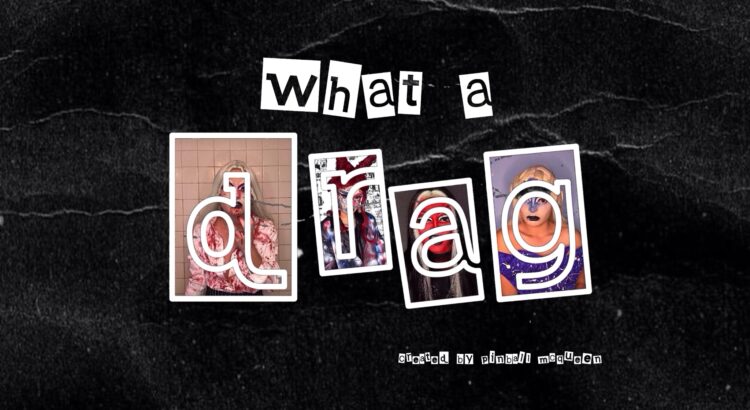
I saw a post recently about how clowns have a union (which is true) and how strange that is, and how drag queens don’t have a union. I’m no expert on unions and economics, so I’m not going to try and sound smart talking about that here. But the connections between clowns and drag queens certainly interest me. I mean, what really is the difference between them? We both wear a ton of makeup, often try to look a bit ridiculous, and we’re both entertainers– just for slightly different age groups.
According to firsthand.co, the profession of clown is as follows: “Clowns dress in outlandish costumes, paint their faces, and use a variety of performance skills to entertain audiences. They work in circuses, amusement parks, schools, malls, rodeos, and hospitals, as well as on stage, in films, and even on the street. Clowns are actors and comedians whose job is to make people laugh.”
According to Wikipedia, drag queens are people who “use[] drag clothing and makeup to imitate and often exaggerate female gender signifiers and gender roles for entertainment purposes… People partake in the activity of doing drag for reasons ranging from self-expression to mainstream performance. Drag shows… occur at events like pride parades, carnivals, drag pageants, and in venues such as cabarets and nightclubs.”
Clearly, there are distinct differences here. But when it boils down to the details, there are a lot of similarities too. Drag queens and clowns work in a wide variety of different locations and events and utilize a variety of performance skills to entertain audiences. I’ve seen a drag queen fix a computer as part of her act before, so there’s really no performance skill that hasn’t been utilized as a part of a drag show. They both wear outlandish costumes and paint their faces, and as drag moves further and further away from regular gendered norms, outlandish and bizarre makeup is a more normalized part of what we expect with drag. Some queens even actively choose to paint more like clowns, myself included many times.
So then what really separates drag artists from clowns? Is it just because we don’t have to go to school for it? If I start making balloon animals, will I suddenly switch from being a drag artist to a clown?
I think what defines drag artists from clowns, or makeup artists or gogo dancers or burlesque performers or any of those other performer types is truly the artists themselves and what they make of their drag art. Drag is what you make it, it’s a performance of self-expression. There’s no real rules to drag, certain way things have to be done. It’s all up to the artist themself. Also, we don’t need degrees to do drag. Sorry clowns.
So it doesn’t matter if I’m dressing in a clown-themed drag look if I’m making balloon animals or riding a unicycle or pulling handkerchiefs out of my sleeve. I’m still a drag artist, I’m still doing my drag in my own expressionist way. But we still don’t have a union as drag artists. Maybe that is something that could happen in the future. Who knows!
Before I flood you with all the snow photos from the last couple of weeks, here is a reminder of the warm seasons in the form of flower photos (also, especially because Valentine’s Day was just there a couple of days ago and all these bouquets are still on your desks!)
The name David Lynch typically calls to mind dark, surreal depictions of dreams and fears. From Eraserhead to Twin Peaks: The Return, Lynch has masterfully crafted worlds that force us to consider what might happen if our nightmares came to life. For the most part Lynch seems loyal to his motifs, but there are a few cases in which he follows a more straightforward story — Elephant Man, The Straight Story, and the romantic black comedy Wild at Heart. Lynch films tend to age like a fine wine, initially receiving negative responses from critics and later becoming cult classics. Wild at Heart was no exception upon its controversial win at the 1990 Cannes Film Festival, but I’m inclined to agree with the jury: this film is one you can’t miss.
Based on the 1989 novel of the same name, Wild at Heart stars Laura Dern as Lula, an energetic Southern belle, and Nicholas Cage as Sailor, an Elvis caricature with a criminal background. Lula and Sailor are separated by prison bars after Sailor is arrested for murder (although technically in self defense), but nothing can separate these lovestruck hooligans once Sailor is up for parole. Lula’s mother Marietta (Diane Ladd) decides to take matters into her own hands by hiring two hit men to kill Sailor, so the couple goes on the run. As they venture on a cross-country odyssey they run into no shortage of violence, from a fatal car crash to a robbery gone wrong. Things take a turn for the worst when Sailor joins forces with gangster Bobby Peru (Willem Dafoe), and it seems as though the sun has set on this magical, thrilling romance.
This film is melodramatic to the core, but don’t mistake this for a bad thing. The soap opera acting of Cage and Dern is delightfully over-the-top, as are the side characters. Lynch has a way of distilling a character to their essence, the isolated thing that makes them unconventional, and Wild at Heart expertly shows how this can be utilized to elicit every emotion. There were moments in the film that made me tense or uncomfortable, but there were also moments that made me laugh out loud. Then, there were moments like Lula and Sailor stopping on the side of the road to dance to thrash metal: goofy, perhaps unrealistic, but sincere. Despite Lula and Sailor living in a world entirely built around extremes, their love feels genuine. When Sailor returns from more time away, he initially rejects the idea of returning to Lula, but after a fight and a Wizard of Oz hallucination, hops over traffic to get to Lula, finally able to sing to her again. Therein lies the charm of Wild at Heart: tragic backstories, traumatic experiences, and rash decisions amplify the chaos surrounding this couple, but they can tune it all out through their love. In this film, every feeling is a grand gesture. Whether it’s the eerie feeling that something is about to go horribly wrong or the rush of being reunited with your soulmate, Lynch makes it feel as though we are witnessing the full range of human emotions in a two-hour trek across the southern U.S.
Not only is the film entertaining to watch because of the characters and plot, but it is stylish as hell. If I wasn’t already enthused by the melodrama, Cage’s snakeskin jacket and pop culture references were sure to hook me. Laura Dern’s fabulous 80s rocker outfits, a jazz-rock soundtrack by Angelo Badalamenti, and the stunning usage of color are just as aesthetically pleasing. Lynch himself described the film as “a picture about finding love in Hell,” and also described it as “truthful in some way.” Although it may be campy, Wild at Heart shows that in a world filled with violence and disaster, real love is still out there. Sailor’s willingness to fight for Lula, and her unconditional loyalty to him, are the bright spot in a story that should end terribly. The dynamic between all of the characters is what drew me in — between Sailor’s bluntness, Lula’s passion, Bobby Peru’s predatory nature, and Marietta’s lost grip on reality, the film also reminds us that sometimes humanity really can be absurd. This is the truth that Lynch describes, found under layers of comedy and fear, juxtaposed against one another with a heavy dosage of style. The film is just as Lula describes the world: “wild at heart and weird on top.”
Wild at Heart can also be categorized as a road movie, and I believe it’s a ride everyone should take. For those who are already familiar with Lynch’s work, there will be plenty of familiar faces, such as Grace Zabriskie, Sherilyn Fenn, and Harry Dean Stanton. If you’re new to the director, however, this film is the perfect introduction to his particularly strange method of storytelling. Unfortunately the film isn’t available to stream, but if you can get your hands on a physical copy it is absolutely worth the watch.
“If you are truly wild at heart, you’ll fight for your dreams”