Technology in Entertainment

New technology can change an entire industry.  In the entertainment industry, the invention of the camera, and then the video camera changed the way that people consume there entertainment.  The most popular form of visual entertainment used to be plays, until the video camera came along and people became fascinated by movies. Technology has changed the way that people consume media throughout time.

For a long time the most popular form of live entertainment was plays, and operas.  People would go to a theater to have a day of entertainment of long plays by Shakespeare or other famous playwrights.  Once the video camera was introduced, plays and operas declined. The general public was fascinated with the new medium of entertainment that the video camera brought.  Plays and operas eventually found their niche audience, and have stayed in the spotlight. The niche group that plays and operas found was an elite group of people. Plays were for the highest class of people and not very accessible the general public.  This stigma is still attached to plays and operas, but it is smaller than it once was. Now plays will travel around the world so that everyone has an opportunity to enjoy their work.

Video cameras were a huge development in the entertainment industry.  Movies became very popular for the entire public, not just one demographic.  Movies popularity grew with the number of movie theaters that were added around the world.  Movies were much more accessible than plays were because people only had to travel to their local movie theater and not the nearest performance theater.  Movies were also much less expensive than plays so all types of people had the opportunity to enjoy them. With the innovations of video cameras also kept movies in the limelight.  From silent films to speaking films, then from black and white to color, and then the video quality continually improving, and finally with the introduction of the 3D movie. These innovations kept the movies new and exciting for everyone.  The theater didn’t have as much innovations as movies, which could contribute to why its popularity did not grow like the popularity of movies did.
Playlist Poetry

Like many people, I take a lot of pride in my playlists.  It’s a great feeling when you find songs that sound delightful together, despite them being pretty different.  It’s like finding two puzzle pieces from different puzzles that somehow match up perfectly.  While I’m a total believer in listening to albums in their entirety, I also think there’s a beauty in strolling home from class listening to a combination of different sounds that you curated, kind of like your own personal life soundtrack.  So, naturally, when I was trying to think of what to write about today, I turned to my new playlist.  Its a very short, 5 song playlist, but I thought I would walk you through it, and share some new and old songs that I have completely fallen in love with.

TRACK 1

To start off, I have a song that has been in my favorites since this summer called “Dog Years” by Maggie Rogers.  Ok, I admit, the only reason I initially listened to this song was because she has the same first name as me.  Sorry, I guess I’m vain!  But, she has become one of my new favorite artists.  Her songs blend electronic and folky sounds, two things that would not seem to fit, but somehow in her music it makes perfect sense.  I fell in love with this song initially by watching the music video.  Anyone who has spent time Up North in Michigan will totally connect with this video as she walks by lakes and through forests.  This song achieves the paradigm of being peaceful yet so incredibly free spirited at the same time.

TRACK 2

Next, we go to a full on folk song (my jam to say the least).  I was so excited when I found this song, because I feel like I’ve spent my whole life looking for a modern Joni Mitchell type.  She’s my absolute favorite, and it seems there are very few like her today.  But the song “30” by the Weather Station perfectly encapsulated that style.  The lead singer, Tamara Lindeman, has a high and soft tone that Mitchell is so famous for, as well as her amazing ability to pack what seems like a million poetic words into a song and still not have it sound rushed or too jammed.  They are not identical to Mitchell though, they do they’re own spin on the style, and definitely differ from her with the amount of electric guitar they use.

TRACK 3 

Of course, we always need an oldie in a playlist.  I chose Simon and Garfunkel’s “A Most Peculiar Man”, the 1967 live from New York version.  I chose the live version because I lover hearing Paul Simon talk about it in the beginning; I’ve listened to it so many times that I know the words he speaks before hand as if they were lyrics in the song.  This song is just perfectly sweet and melancholy. There’s beautiful guitars and harmonies, and Simon’s lyrics are completely enticing, as always.  Enough said!

TRACK 4

José González has been a favorite of mine for a long time, and when I realized he had a new EP out this year, I was ecstatic.  The song “Afterglow (with the Brite Lites)” is my favorite of his new songs.  All of his music, especially on this new EP, is incredibly rich and layered, with many guitar and singing tracks that create beautifully haunting harmonies.  Its hard to describe why I love his music so much, but I just feel like it has a heavenly aura that I absolutely love.

TRACK 5

I always like to finish it off with an instrumental.  So lastly, we have “Sunflower River Blues” by John Fahey.  I really have no idea how I came across this song, but it is perfection.  I just love the simplicity of a person and their guitar, and how just that can make a complex song.

If you would like to listen to this playlist click the link below and enjoy.  Or, take a good 30 minutes to make your own playlist that is the musical definition of you.


Commercializing Art

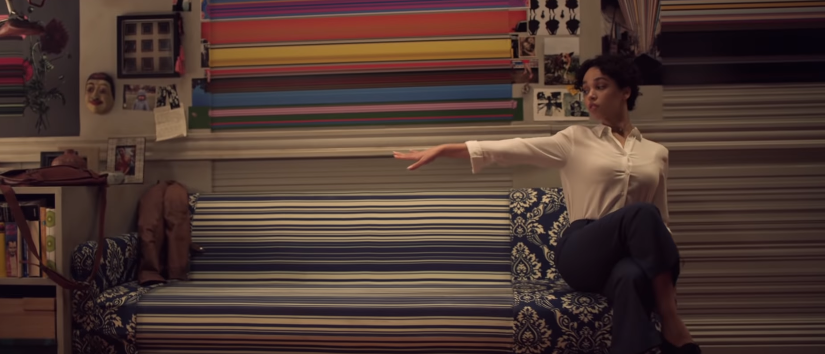
Last Monday evening, with the Oscars already fading from memory, one of the best films of the year was released. Spike Jonze’s four-minute movie is beautifully smooth and full of captivating color. Featuring FKA Twigs dancing to the new single “Till It’s Over” by Anderson .Paak, the video’s kinetic energy is endless. It is impossible to ignore, impossible to watch only once. Every image speaks to a careful attention to detail, down to the impression of an umbrella handle that stretches into eternity. Too bad it’s an ad. Too bad it’s just another commercial urging us to buy and buy. All this artistry, wasted, by devoting it to selling the newest Apple HomePod. At least that is what some believe. But I’m not sure that this is entirely true.

Art has always had a commercial aspect and it is impossible to separate art from the practical necessities that motivates artists to make it. Mozart and Beethoven were commissioned to compose, paid to produce beauty. Yet, their concertos and sonatas are still regarded as classics. Money doesn’t invalidate the works being created. Instead, by making the creating of art valuable, money contributes to the continuous creation of new and imaginative work. Without the massive coffers of Apple, Jonze might not have been able to invest in a massive practical set or attract the talents of two brilliant artists.  Does it matter, then, that its entire premise is convincing you to buy one plastic, cylindrical speaker over another? Perhaps the video’s aesthetic beauty is enough to cover for the shallowness of its purpose. It is enough that Jonze creates imaginative visuals of an apartment stretching and lighting up in perfect tandem with the flowing music. It is enough that I have discovered the charming abilities of FKA Twigs and Anderson .Paak. It is enough that one of my favorite filmmakers, the director of Her and Being John Malkovich, has created another masterpiece that I will watch again and again until his next movie appears in theaters. Perhaps this capitalist society of ours, it is necessary to accept art however it comes.

In the end, the commercial has done its job. I have shown it to all my friends. I have found my eyes drawn to it whenever it appears: before my YouTube videos, after my favorite television shows, at the Buffalo Wild Wings.  Now, I have devoted a blog post to it, joining the numerous others singing its praises. In fact, I am complicit in spreading its touch, like a careless, flu-addled cougher. I can’t help myself. Perhaps I will never buy a HomePod. But I certainly have the product’s name ringing in my ears. Even worse I will forever associate “Till it’s Over”, Anderson .Paak, and FKA Twigs with the product. These are problems that simply arise when art is so closely associated with a clear monetary purpose. Although, I have enjoyed the video, I will always be reminded by Apple’s classic sleek white lettering that this masterpiece is for the HomePod. Mozart and Beethoven, nowadays, would have been commissioned to write the new jingle for Amazon’s Alexa. It is a dilemma that does not invalidate art, but certainly complicates our understanding of it.

When Art and Culture Clash

Art in culture usually go hand in hand. Yet sometimes there are times when elements don’t line up, and conflict ensues. For instance: artist Barbara Kruger and the appropriation of her artwork, namely the Supreme brand.

Barbara Kruger is known for her anti-capitalist, anti-authoritarian collages, full of witty platitudes and irony. During the 60’s-80’s, she developed her personal style, working with Conde Nast and other publications. Most significant is her iconic text treatment, the Futura Bold Italic font on a red box–the “inspiration” for the streetwear brand Supreme. The interesting thing is that Supreme, a cultish symbol of wealth and consumerism fraught with mostly young skaters, contradicts directly with Kruger’s feminist, subversive messages which question oppression and institutions. And yet, the brand has grown from a skate shop in NYC to a globally-recognized powerhouse, stemming from the use of the infamous “box logo” appropriated from Kruger’s artwork.

In 2013, Supreme founder James Jebbia launched a $10 million lawsuit against the brand Married to the Mob for its “Supreme Bitch” t-shirt which also appropriated the box logo style. Kruger commented in an email, “What a ridiculous clusterf*ck of totally uncool jokers. I make my work about this kind of sadly foolish farce. I’m waiting for all of them to sue me for copyright infringement.”

After years of controversy, Kruger decided to respond to Supreme, by introducing her own line of merchandise in collaboration with Volcom, featuring MTA cards, hoodies, and skateboards at Performa17 in November. Evidently, appropriation and who copies whom will remain a pertinent issue in our changing age of art and design. It is important to remain critical and conscious.

English Elitism

We live in a culture and a world in which English is seen as the tentpole to the entire universe. It dominates spheres of social media, film, and internet interactions– if you don’t know at least a little bit of English, a whole world of knowledge and privilege are completely inaccessible to you. This Western leverage has manifested itself not in more diverse education, but the ugly opposite: A kind of linguistic elitism and exclusionism.

I recently watched an Indian film called English Vinglish where this idea plays out. The main character Shashi is a homemaker in India and runs a small sweet-making home business. She is constantly backhandedly belittled for not understanding English by her white-collar husband and academically accomplished high school daughter. She cycles between emotions of inferiority and inadequacy. Shashi gets the chance to visit New York City when her niece, who grew up in the US, is getting married here; and, in a fit of exasperation and impulse, Shashi secretly enrolls in an English class in the city before the wedding. She gains confidence and pride in herself, not just by learning English, but by defining herself apart from as well as with her family. This is a woman’s self-discovery of her worth, independence, and intelligence– but it is also a profound social commentary on the toxic way linguistic elitism has negatively affected non-Western countries.

There is a heartbreaking scene in which Shashi is trying to order some food when she first arrives at New York City. She is tripping over her words, unable to understand the pace of the words, and made to feel worthless and stupid. The impatience and maltreatment of the store clerk is explosively unjust– and why, because she cannot speak a language that is not her own? A language that she truly has no need to know? It would be an outrage to any American to even think of being disrespected in that way if we were in a foreign country.

(You can watch the clip of the scene below from YouTube)

Imagine a white man visiting a rural village in India, trying to order a coffee without speaking the local language. I’d assure you that it is highly unlikely that the store clerk would even think to treat him the way Shashi had been treated for being an influent foreigner in the movie.

It is important to realize the privilege with which we stand in this country, and to strip it down when we see ourselves misconstruing our undeserved advantages. Knowing English is not a mark of intelligence. Speaking English fluently is not a mark of education. Living in an English-speaking country does not make us better. And if we want to make all people feel welcome and included in our nation– people like Shashi, who have so much wisdom, culture, and art to offer us– then we must eradicate any notion of linguistic elitism.

If anything, I’m sure we can spare a few seconds while punching in someone’s order for coffee.

Museums

The University of Michigan is a large campus composed of many buildings with diverse purposes.  While the majority of the buildings on campus are used for lectures and discussions, some are there for everyone-even non university students- to use.  A good example of these is the many museums that the University has on campus.

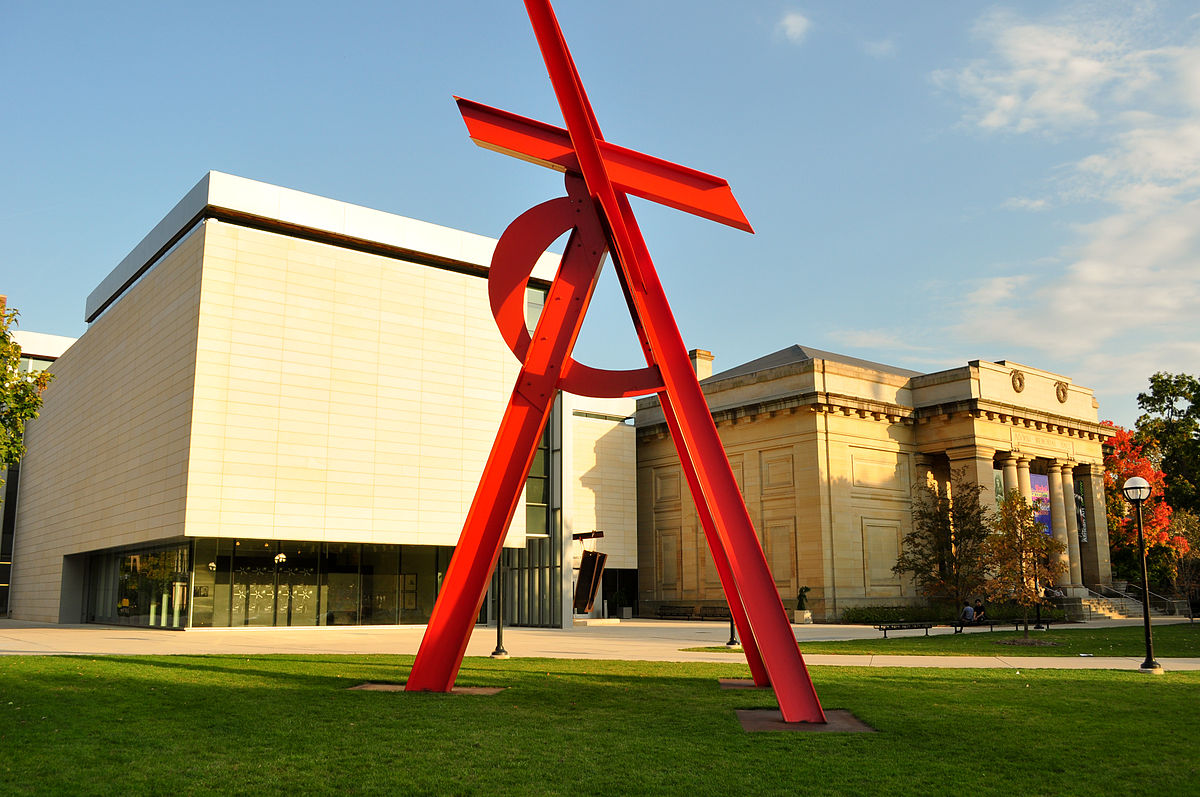
This most popular museum on campus is the University of Michigan Museum of Art, or better known as UMMA.  Art museums are common throughout the world.  Some art museums are specific to a type or subsection of art, for example photography or sculptures. Major cities often have multiple art museums of different sizes.  Chicago has dozens of art museums, the two most popular being the Art Institute of Chicago, and the Museum of Contemporary Art. Apart from that, most of the Universities have their own art museums as well.  College art museums tend to be smaller than the others that are found in big cities.

Another popular museum at the University of Michigan is the Museum of Natural History.  The museum has exhibits that show dinosaur bones and the process of evolution. Just like art museums, there are natural history museums in most of the big cities throughout the world.  Unlike art museums, there is generally one big natural history museum per city, this could be because natural history is not up to interpretation like art is. Most of the natural history museums have the same general information with different bones and animal exhibits to show the history of that area or others in the world.  These different bones and exhibits are what make each natural history museum unique.

The University of Michigan has an archeology museum that showcases artifacts from places in history like bowls and other artifacts that people of the past used to use.  Archeology museums are more uncommon than art and natural history museums. Some very large natural history museums have an archeology section in the museum that will give guests a small taste of how people of the past used to live.  Full archaeology museums are just larger versions of the small sections in natural history museums.

The University of Michigan has a Museum of Dentistry.  This is somewhat unique, most cities do not have a dentistry museum.  Museums of trades and specific events and places are common all over the world.  These types of museums have a niche audience for people who are very interested in the topic that the museum spotlights.  For example: the Museum of Dentistry at the University of Michigan is at the School of Dentistry at the University. So this museum has its audience of people that would enjoy the museum right on campus.

Museums are wonderful places to find to new interests and to learn about a variety of topics.  There are so many different categories of museums to learn about, and small museums are great to harvest that curiosity.  College museums are great to investigate topics on a small level and form curiosities that one can apply and go to larger museums to continue looking at and discovering their interests.  The museums at the University of Michigan are no different. People should utilize them and further their interest in a variety of things from dinosaurs to paintings.