Build to Prosper or Destroy to Conquer

I have fallen deeply, madly, and irrevocably in love. There have been many before her, coming and going as I progressed through the years. Early on, they taught me the basics, they introduced me to their world. I enjoyed interacting with them, playing with them. As I matured, I began to realize what I cherished in them. Each time I formed a relationship with a new one, I could pinpoint the characteristics I adored and the aspects I despised. I found myself displeased with them, settling on the fact that I would never discover one that met my expectations of perfection. But then I found her. She was German in origin. A true beaut, I might add. She came in a sturdy cardboard box, unlike the cheaply unstable boxes I had grown so used to. She had many pieces, beautifully simplistic and made of solid wood. Her cards were tastefully designed and easy on the eyes. Her board was adaptable and unfixed to a predetermined vision. It changed with every iteration of our intercourse. She was not a board game I would grow bored of.

Throughout my life, I have been a lover of games. My first love was Go Fish. I loved the animal pictures on the cards and the simplistic concept. It was an early introduction to the wonderful world of time-killing and my jumping off point for future endeavors of this sort. Soon after Go Fish, I delved in Sorry! and Candy Land. The colorful board and pieces fascinated me, so many hours of my youth were spent piddling with these games of luck. As I grew older, I learned to play Monopoly. I grew in love with accumulating wealth and properties and building houses and hotels. If only the money was real. As stereotypical for young boys, I was fascinated by the idea of war and combat, and soon became an addict of Battleship, Stratego, Risk and anything with a possibility of conquering imaginary lands on a cardboard surface. Before long, I grew sick of the aspect of luck and became irritated with dice-rolling. Chance could make or break a game. So I eradicated it entirely and became a self-taught student of chess. Years passed in mastering the openings, tactics, and endgame. I had thought I had found a true love. I was in control of my own destiny. Every aspect of the game I could control and master. I was a king.

But no matter how sweet the victory, I still became bogged down with the losses I would endure on the path to conquering. My pieces would be sacrificed in lieu of a greater cause. It was a vicious game, cutting down an opponent until he was at my mercy. Or I at his. Victory was sweet, but the path was riddled in misery. It was not perfect. My longing for an unbreakable love in board games was dying.

And then I found her. In the past few weeks, I have entered a seemingly eternal honeymoon that rekindled my love for board games. Perfection came in the form of Settlers of Catan. She was so unlike all those other games. The American board games I had grown up with promoted domination (like Risk or Battleship), favored chance (like Sorry! and Candy Land),  glorified gluttony (Monopoly), and were disgustingly dramatized (Clue). Settlers of Catan was different. Like most German board games, she minimized luck and emphasized strategy. She did not aim to marginalize or eliminate her players. She allowed for a small group of 3 to 4 people to play, encouraging interaction but minimizing conflict and direct competition. As opposed to the militaristic nature of many American games, she was more economic in nature. She wanted players to build and prosper, not destroy and conquer.

Settlers of Catan more realistically mirrors actuality. It teaches us that there are many roads to success and stomping out opponents will not lead us there. Rather the structure of the game allows one to work with opponents and form mutual arrangements, as there are limited resources necessary to build and no one person can do it alone. The goal of the game is to accumulate 10 Victory Points, which can achieved in a variety of ways. Players can build roads, settlements, cities, and development cards, which are each worth point values. Considering there is no currency in the game, the accumulation of resources cuts out a middleman in the construction process and allows a more direct connection with the adaptable board which provides those resources. In the lack of money, a ‘thief’ piece is present to punish gluttony and the hoarding of resources. This encourages the players to be more clever in their moves and thoughtful of the limited resources. The game encourages trading and agreements, which involves social interaction and strategy. With the variety of ways to win, the game pushes players to be adaptable, changing their the strategies as the game progresses, reminding us that, unlike chess, we can never fully be in control of situations. While dice-rolling is minimal, the small insertion of luck keeps the game interesting and more representative of life, where we must take risks and factor in chance. The game length itself is ideal in length (approximately 90 minutes) as it allows for the game to still remain fresh and interesting without getting tedious. It is relatively easy to learn but supports strategy so more experienced players can earn what they deserve. The theme of the game gives it character but does not control the game itself, making it both original and elegant.

For true lovers of board games, Settlers of Catan is the perfect fit. It is a design of pure masterpiece.

My praise Klaus Teuber.

I tried the McBaguette for those who cannot

While I was studying in Paris last year McDonalds introduced the “McBaguette;” this is my revue of their bleak attempt to pander to the refined French tongue:

But first, a disclaimer: I am not what you would define as a “foodie;” I care not for the finer dishes that Paris has to offer so I feel that my lowly and unrefined state only makes me fit to review a food group that I know well.

Webster’s Dictionary defines the “McBaguette” as nonexistent, but a semantic revolution is upon us.  Just as Greek mythology held that whoever consumed the food of the Underworld was doomed to spend eternity there, the McBaguette will entomb you within the walls of McDonalds and shame will be your proverbial sepulcher.  But it will be worth it because, unlike the Underworld, the McBaguette is great and only 4.50 Euros! So, dear reader, take a stroll with my palette…

When you first taste the McBaguette a certain sensation will grip you; this is the taste of two peppered steaks (TWO! Because why not!?), nestled between mustard, lettuce, cheese, and of course, a baguette.  Welcome to the sandwich of the future.  No more will you have to deal with the troublesome food of peasants that is the sesame bun.  You are better than that.  With the McBaguette a whole new era opens; finally, a food from McDonalds that you don’t need to be ashamed to eat in public because the thing is that whichever marketing genius decided to create this hydra of flavor was acute enough to make the McBaguette visually resemble your average French sandwich that can be bought in a boulangerie.  Maybe the reason the McBaguette is not being marketed in the U.S. is because this appeal wouldn’t stick.  In any case, I must bid adieu to this seraph in bread form and, like bats returning to their cave, I will adjust back to the darkness.

NO UGG BOOTS! NO LONG ISLAND!

Gabriel Kahane is one of those musicians that I’ve been following for a while. I think I first found his existence through his song cycle, Craigslistleider. As just as ridiculous as it sounds, Craigslistleider is a cycle of songs for voice and piano that takes its text and inspiration from strange strange craigslist ads. The assless chaps for sale. The (possibly very ill) gentleman who can’t stop putting ice cubes down peoples shirts. You’ve got it all. Perhaps my favorite song is about a man begging for the name of a relish he found two years ago (he doesn’t know the name of the relish because, as the name of the song tells, “Some Dipshit Through [sic] My Bottle” of it. I think the “sic” is what kills me there). But enough talking. Listen to the man himself!

The whole song cycle is quite a gem- a great example of a composer taking an absurd text and making something really valuable out of it. I have a bit of a problem taking contemporary poetry and setting it to music, because it seems like the music isn’t really adding anything to the text. If anything, the music is forcing the music of spoken language into a constrained box of singing. But all of this is to say is that I think Gabe Kahane gets it very right here. He takes a moderately amusing text and turns it into a hilarious and very successful song cycle.

But Gabe Kahane is not one to be put in a box himself. In addition to his work in *ahem* contemporary classical music, he’s also a pop musician, and a damn good one at that.

But this is trying to put a label on something that he does, and I really don’t like that. When Kahane comes up in the media, he seems to be always billed as that guy who is stretching the boundaries of genre and bridges a gap between pop/rock music and classical music. I don’t find a lot of redeeming qualities in that argument, save the unlikely scenario that you are ever held at gunpoint and demanded to describe Gabriel Kahane’s work in a phrase or less.

That line of thinking seems reductive, it seems to put classical music as this thing that is diametrically opposed to popular music (and that just isn’t true), and it seems to put his music in a box of mixing genres (if you shake the box enough, all the classical dressing will get around to everything for the optimal music eating experience).

I think the really engaging thing about Kahane’s work is that it exists simply as very intelligent music. It is emotionally and intellectually satisfying, and that’s really all I need. The lyrics are some of the most resonant that I’ve encountered in a long time. It’s lyricism that is smart (“Modern’s a stillbirth/that was born before it died/in 1939/or was it ’45?”) and tragic (“Our hotel room was too small/For our luggage and our arguments/So we left them in the hall/And went to bed. Went Straight to bed.”), but above all, true. And that truth is what resonates the most with me, not the sense that he is referencing classical music, or that he uses traditionally “classical” instruments, or that he uses pop (or classical) rhythms in his classical (or pop) music. To misquote Gertrude Stein, An art is an art is an art is an art. Check out his music (two albums and a musical!) here.

And you should go see this man perform, it will be well worth it. UMS is bringing him here this Thursday and Friday at the Arthur Miller Oddslot Theatre. Grab tickets! Yours truly will be there Thursday night in the back live-tweeting the experience, so if you wanna jump on that, my twitter will be anxiously awaiting you. See you there!

A Balancing Act

Live at the Metropolitan Museum of Art is “Stag by Sharkey’s,” (1909) perhaps George Bellows’ (1882-1925) most famous painting.  Filled with action, movement, and perfect lighting, the painting depicts a boxing scene that is as graceful and beautiful as it is raw, real, and violent.

Bellows died at the young age of 43 as a painter part of the Aschan School. The artistic school was known for its rejection of French impressionism and glorification of the American West in favor of portraying the real disarray of new American cities. Bellows in particular depicted the “grittiness, violence, and masculinity” of New York City.  However, throughout the remainder of his career, Bellows experimented with other painting subjects, varying from standard portrait types exhibiting piercing and frightening eyes, to landscape and an extreme use of light contrast, perhaps to portray his perspective on the disparity between light and darkness within the new city.  In personal opinion, his earliest works of the budding city are his most invigorating and impactful on the viewer.

The scene of “Stag by Sharkey’s” depicts a turn of the century illegal fight club in New York. At the time, prize fighting was illegal, so men turned to underground alternatives for prize fighting.

Upon live view, Bellow’s painting is a hundred times more powerful than its digital replica. The command of Bellow’s rough and thick brush strokes reach out to the viewer and pulls him into 1909. The painting places the viewer in the third row of the fight, amidst the crowd, the noise, and the sweat. While both men are fighting each other, their grace in movement resembles a choreographed dance. The man on the left’s leg is extended, almost at point, and

scoruri live fotbal rezultate live fotbal rezultate live la fotbal

continues through the arch of his back. The man on the right reflects a mirrored curve to his back, as they meet in collision in the center.  These lines are also present in the muscle detail of each man; strong and graceful pieces that work together to generate a force much larger than the individual.

Standing in front of this painting elicits real emotion. It is the perfect balance between light and darkness, roughness and grace, detail and ambiguity.    It tells the story of a dirty and real New York, filled with excitement and uncertainty. While the city faces accusations of gentrification and a loss of its once gritty backbone, Bellows reminds us of the raw backbone of the city, and how it is perfectly balanced and beautiful in all of its glory.

A Little Nostalgia

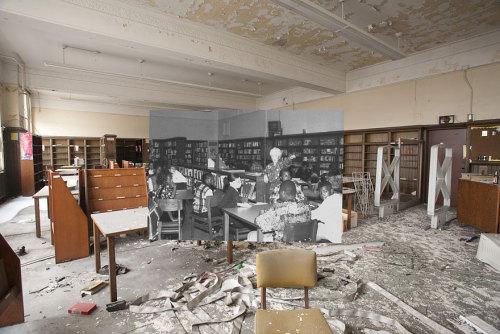
With a new year beginning, feelings of nostalgia are bound to arise in place of past events, people, and art. As the years go by we are graced with new and upcoming artists and artwork that brings about change within how we view certain aspects of life and ourselves. With the start of a new year, it becomes a question of what will be created or discovered this year, that will completely trump anything we’ve ever seen before? What will challenge our views or enlighten our minds? Yet, there will always be a deep appreciation for what art has done to get us where we are today.

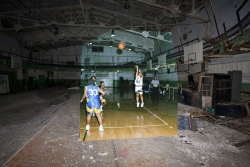
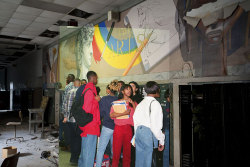
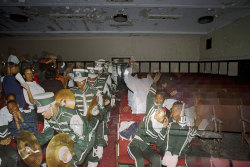
Take these photo sets for example:

School Break (Detroit)

Photo Credit: BoredPanda.com

A New York Minute

batmanpride.tumblr.comMacauley Culkin in Home Alone 2: Lost in New YorkTom Hanks and Meg Ryan in You've Got MailPatrick Swayze and Whoopi Goldberg in Ghost

Photo Credit: PandaWhale.com

I loved these photographs because they elicit feelings of nostalgia for the past and greater times, especially when it comes the time for new beginnings. What I also loved was the artistic quality of them and coupling two eras of moments that are completely different from each other.

In art there should always be reverence for artistic history, and what got us to where we are today, but let’s also keep our minds open to whatever creativity can bring us in the future.

Bronwyn Lundberg and The Lesbian Supper

Another artist this week!

This time, artist Bronwyn Lundberg who recently grabbed headlines for the following piece of art she composed. Yes, ladies and gentlemen. It is indeed The Last Supper and the lovely Ellen DeGeneres in the  infamous Bjork swan dress is indeed the Jesus of the table.

The Lesbian Last Supper by Bronwyn Lundberg

Lundberg, a lesbian artist, upon having a discussion with a friend about how to decorate her bed, came up with the idea of redoing The Last Supper with a lesbian theme. Yeah, I don’t get how she got that idea either…

Needless to say, this piece has ruffled some feathers. Lundberg’s response:

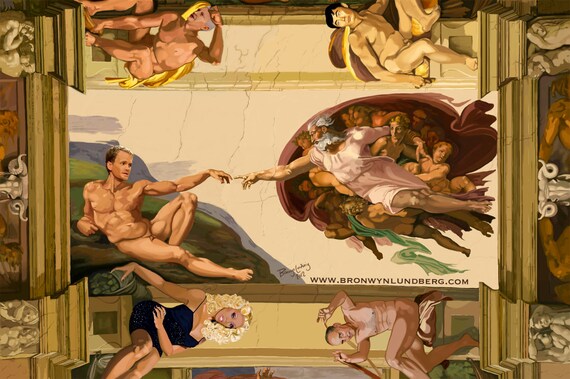
I personally don’t think this is sacrilegious in the least but of course, there are those who would see Lundberg dead for defiling a classic religious piece. Hey, humorless nitwits will always be humorless nitwits, eh? Another Lundberg piece: The Creation of Neil.

The Creation of Neil by Bronwyn Lundberg
Piss Christ by Andres Serrano

And what’s an article about potentially blasphemous art without Piss Christ, the Andres Serrano photograph of a crucifix submerged in his urine? Here’s a copy for good luck.

When I came across this piece a few years ago (thanks to Wikipedia, I’m sure), I didn’t know how to respond. I’m not Christian yet there was still the shock. A crucifix…? In… pee…?! At the same time, I didn’t really see anything offensive about this picture (read: not Christian). To me, it was clearly Serrano making a statement on what the organized church had become and its values compared to Christ’s values, etc, etc. It was a statement of fact to me. Like a number or a scientific truth I learn in class. It did not strike me as the statement of a (very controversial) opinion, most likely because I shared that opinion, thus making it no longer an opinion but a concrete truth in my eyes.

Is it the same thing again? Am I being cray cray when I think Lundberg’s isn’t offensive in the least? It’s fun. And cute. Ellen as Jesus? Ha ha. It captured my attention for, like, an entire five minutes. I wrote a blog post about it.

Religion + politics + art = volatile beauty

In case you wanna check out Lundberg: here’s the Huffington Post interview with her about the Ellen painting. And here’s the link to her  website.

Peace.

Piss.

Ha ha. Okay. Bye.