Chroma #3

Halloween’s tomorrow! Hope everyone’s having some fun this weekend and dressing up. This week, I ended up generating this palette:

I decided to incorporate the colors from the palette mostly in the background with the trees, sky, and moon/sun(?), with the woman in the foreground being based loosely on a picture of a woman I saw online, but can’t remember the name of. I also recently played Hades, a great dungeon-style game that I’d really recommend! It has beautiful art that utilizes some color-blocked, black shadows, which I decided to experiment with a little with the woman and the trees/branches in the background.

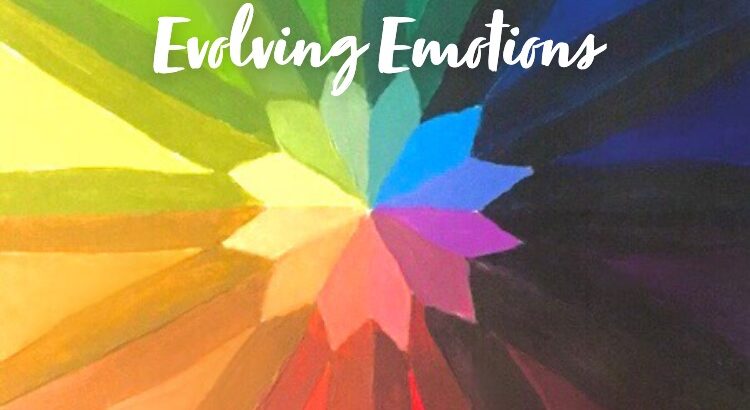
Evolving Emotions: Fear- Photography

the horseman’s head

This is an assortment of pieces I created to celebrate the fall season. I hope you all have a tremendous (and equally horrifying) Halloween!


unintentional brooding (The sun was in my eyes. I swear I’m nice! >:)


diseased and deceased


hell on earth


Fable Friday: Oshun

Oshun, in the Yoruba religion, is the goddess associated with water, purity, fertility, love, and sensuality. She is also called the river orisha, which means goddess. She is also reminiscent of a mother earth/nature type figure, and is the nurturer of humanity. Her myth involves that she was sent to Earth to populate the land by their supreme god Olodumare, and sixteen other gods/goddesses. She is also one of the wives of Shango, the god of thunder. While she is able to give life, she can take it away easily through drought and floods when angered. She is usually depicted wearing long gold robes in some fashion. The Yoruba religion’s homeland is in the southwestern region of Nigeria, but is practiced throughout the western region of the African contingent.

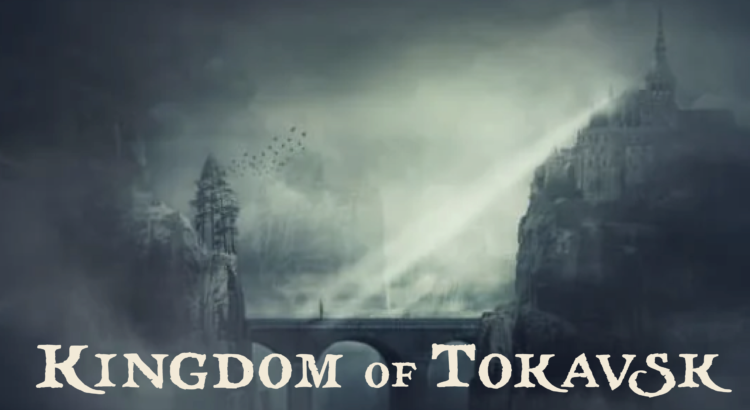
The Kingdom of Tokavsk, Session 4: The Golden Hawk, Part I

The following is a myth of how the Kingdom of Tokavsk was founded.  The text has been translated and supplemented with footnotes to clarify certain phrases for modern readers.

A hundred generations after the Melting of the Sun1, there lived a young chief.  He assumed power in the midst of a famine that had stricken the tribe.  Having lost his father to the famine, he was determined to find a steady food source and save his people.  Now the chief was a very devout man, and he lit his torch and bowed to the trees2 every morn and night.  One night, as he was beseeching the Great Sky, he heard a hawk call from outside his dwelling.  Afraid to break his prayer, he continued with the mantra, only to be interrupted by the hawk again.  He resumed once more, and a third time the hawk called.  Sensing this was more than the caws of a wild bird, the chief rose and set out into the forest in the direction he had heard the cry.


He soon came to the cusp of the woods, where the firs abruptly ended and snowy hills rolled outward into the great beyond.  He had never traveled far beyond the trees, but he was unafraid and had faith in his heart.  The clouds above him gathered dark and gray, but before long a soft glow formed from behind them.  A soft wind blew from the south, and thusly the clouds parted to reveal an infinitely gray sky and down swooped the Hawk.  He had the body the size of a tree and wings winder than ten men, and his feathers, beak, and claws were of solid gold.  His eyes gleamed as burnished gems, and his formed gleamed like a sheet of stars.  He floated high above the chief’s head, not needing to alight for the winds that heeded his call.  “Chief,” boomed the Hawk in a voice a hundred times deeper than the lowest voice of a man, a hundred times louder than tumbling walls of snow.  “Heed my call.”  “I hear you,” responded the chief.  “You are to lead your people west,” said the Hawk.  “There, you will find an abandoned settlement upon a river.  This is to be your new home.  Stay there, and your people will never go hungry.”  The chief, understanding the Hawk was a manifestation of the gods3, promised to lead his people there with his life.  “Be warned,” said the Hawk, “for a life-swearing can never be broken.  Your life is now tied to the finding of this new home, and upon its discovery so shall your life end.”  “I am not afraid,” the chief replied.  And the Hawk stretched upward into the clouds and became the orb in the sky.


  1. The ancient Tokavskan creation story describes the world as having been formed from a great celestial cataclysm. This resulted in parts of stars and planets dripping (in some versions, “weeping”) downward to form the ground, water, trees, and snow.  The entrails of the Sun formed light by which to see and the first living beings, hence why the dripping, or melting, of the Sun was considered the most important.
  2. Referring to ancient customs of the Tokavskan folk religion. A torch or branch was lit outside every home to welcome benevolent spirits and signal faithfulness; similarly, bowing to the trees was a way to pay homage to nature and perhaps to spirits or ancestors.
  3. The early Tokavskan religion did not have a pantheon in the traditional sense. They were monotheistic in that they believed in one God, yet they also believed in spirits both good and evil that could control nature and fate.  The use of “gods” here may be an error in translation.

S2 Scribble #4: No Gods No Masters

“The things we do, the things we don’t,”

Recently, I have been very busy – so busy that I’ve been scheduling specific time to be with friends and occasionally viewing it as something I have to do instead of an exciting privilege to spend time with people I love. While I used to be excited to see a friend, now I almost feel guilty – like I should be spending my time on school, work, or other urgent tasks instead. 

“The things we love, the things we lost.”

With midterms well underway, I am constantly asking myself one question: “Am I doing enough?” Am I studying enough? Am I working on my essays enough? Am I sleeping enough? Am I spending enough time with my friends? Am I spending enough time taking care of myself?

“Where the wind blows, runnin’ ’round in circles…”

In my most overwhelming moments, I remind myself that I am always enough, regardless of what I am doing (or not doing). I am doing enough, regardless of what I might hear or see others doing. It’s not easy to balance school, work, a social life, and my own physical and mental health. It’s natural to be overwhelmed, and I’m handling it and making it through the best I can.

“The future is mine just the same,”

Midterms will come and go, but I refuse to spend my time questioning and doubting myself, my work ethic, and my ability to succeed – academically and otherwise. I’m in control. I’m doing my best, I’m doing enough, I’m going to get all these essays and exams done, and I’m going to be alright. 

“No master or gods to obey.”

Listen to No Gods No Masters by Garbage here: https://www.youtube.com/watch?v=CxyIBF3ljrY