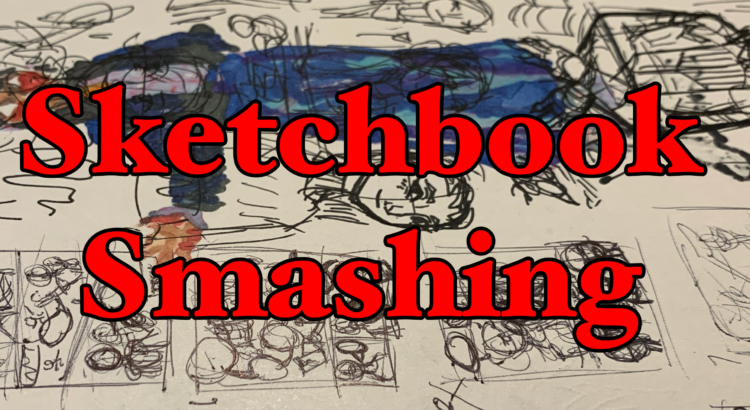

So uh, Taya gets more than a hairstyle change now, she’s got a full makeover.
To sing sonnets about the sun
I can’t.
My sentences have been chopped
Into stanzas into phrases into statements
Until there only is.
I think there can be
Beauty in bluntness
Imagination in reality
If my lived experience
Is scholarship
Then I create dissertations
With every
Enjambed
Line.
You perfect the seams that line your cloak
Each stitch integrating
Holding
Concealing
Your emotions
So well that they are invisible
Even to yourself
Inevitably
The perfection wears
Little bursts rip the work
You toiled over
Hours spent
Patching, pressing, folding, weaving
A snag
A tear
You are convulsing now
Crying a trail of irresistible emotion
Exposure from the separation
Naked feeling
Composure lost
Pouring out
Paralyzing fear persists
The judging eyes are harsher now
Lying mouth
Shameful eyes
Sore heart
Unrelenting
The great flood lays waste to your
Once perfect work



Creator’s Note: This week I wanted to explore how slides are typically used to present information and tell a holistic narrative in a clean and decisive manner to an external audience. However, in this case, the information is presented to the presenter, Ava Lou Chen herself, reminding us that it’s important to make sure that we address how we are feeling in the present and take the time to truly understand where these emotions originate from to avoid feeling overburdened to the point where it prevents us from taking action. After all, when all the information points one way, it’s hard not to miss the clear signals that disorganized thoughts obscure.
I hope you all enjoyed this week’s presentation, and until next time, I shall see you all in next week’s article.
A tad different from the usually me playing. I think it would be nice to listen to someone other than me play and I was choosing repertoire anyway. I’m not familiar with the Toccatas and was curious about them since I am playing the toccata from the e minor partita. I listened to the recording by Laurent Cabasso of all seven Bach toccatas. Listening to them I was struck by how the variety of textures and modulations. I think my favorite one was the Toccata in c minor, BWV 911. It opens with such a grand improvisatory gesture that sweeps through the listener. The figure in the first line has a telephone ring vibe to it (I think due to the repeated figures). It is also seen in the main fugue subject due to the repeating nature of the head of the subject. I think I was most drawn by this type of figuration that this toccata employs throughout. There seems to be two fugues in this toccata; a short adagio fugue followed by the real (expansive) real fugue. There are recits interspersed throughout the fugue with intricate runs and grand cadences.
The entrance of the first adagio fugue really seems to have no connection to the previous material. I think the idea of the toccata is really exemplified in this piece. Toccata means “to touch or to play” and it stems from this Italian tradition of virtuoso playing. This is obvious in the virtuosic improvisatory runs yet not quite so obvious in the fugal writing. The more I listen to it though, the more driven it seems. The writing is so antithetical to the singing style with the extremely large ambitus and the continuousness of the fugue. It seems to go on forever; there are cadences yet there isn’t time to breathe, it is merely used to denote sections. Perhaps the toccata is also used to exemplify the nature of the instrument as a machine, something clearly and fascinatingly inhuman.

Queer people love fantasy. That blanket statement may not be entirely true, but I, as a queer person, love fantasy. There’s something so enticing about magic and inhuman creatures, the aesthetics of elves and dragons and sword fighting. There’s certainly something about escapism into fantasy worlds, for certain. Fantasy hasn’t always been the most queer-friendly genre, especially considering a lot of the classic, aggressively heterosexual examples that populated many of our childhoods. However, queerness in fantasy (and science fiction) dates back to Virginia Woolf’s “Orlando” from 1928, which featured a queer relationship and a transgender character. But what really introduced queerness into the fantasy genre were Tolkien and “Lord of the Rings”. While not overtly queer, there’s certainly a lot of queer subtext in a lot of the books, particularly noticeable in Frodo and Sam’s relationship.
Today, thankfully, the fantasy genre has become a lot more welcoming for queer stories and characters. The past decade has seen authors such as NK Jemisin, Nisi Shawl, Rebecca Roanhorse, Rivers Solomon, and many more who have stories including and centering on queer characters and relationships, and arguably more important, on non-white queer characters particularly.

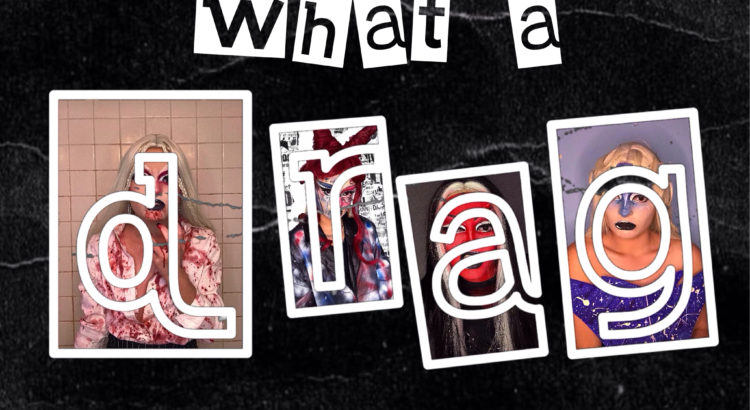
For myself, my love of fantasy comes more from tabletop RPGs such as Dungeons & Dragons and the shows surrounding it, such as Critical Role. While these were my reintroduction to the fantasy genre as a young adult, my interest has certainly grown from there. For a lot of my more fantastical or magical-inspired drag looks, I play into the fantasy elements that come with creatures from worlds like Tolkein’s or Gygax’s (the original creator of D&D). I draw a lot of inspiration from fantasy for a lot of what I create.

The look featured in this post is what I wore to the Michigan Renaissance Festival a few weeks back. My inspiration for it came from D&D, specifically the tiefling creatures who are half-demon spawns. There’s a certain safety I find in painting myself to look a ridiculous color or simply not even look human, because even if I play into being a more femme version of myself, I don’t have to be under the constraints of being something cis or “normal”. Walking around the Renaissance Festival, where many people were dressed up in similar, bizarre costumes like mine, my drag felt like it fit right in with the scene.

