Lessons from Alan Watts

Alan Watts is a British philosopher who made the Eastern philosophy popular for Western audiences. He introduces the concept and makes it easier for us to understand it, whilst drawing parallels and examples so we can better relate to Eastern philosophy such as Buddhism. In an excerpt about happiness being in relation to misery, he says:

“Without exception, everything that we attain or create, even the memorials that survive our death, must perish without trace, and that our quest for permanence is pure futility. Because furthermore, happiness exists only in relation to misery, pleasure in relation to pain, the perceptive man does not try to separate them. The relation is so inseparable, that in some sense, happiness is misery and pleasure is -because it implies it- pain. Realizing this, he learns to abandon all desire for any happiness separate from misery, or pleasure apart from pain.” -Alan Watts

An important note to takeaway from this excerpt is that it isn’t wrong to desire happiness. It would just simply be a mistake to yearn for it while forgetting that misery comes as its pair. After all, how are we to recognize that happiness is indeed feels joyful had we not have a comparison? To yearn for pleasure also implies that we too, want the pain along with it. Perhaps we’ve done well to forget that.

I suppose instead we could try feeling at peace, no matter if the tides are calm or unforgiving. To enjoy when the sun shines on us one day, and to quietly let our minds reflect when drab skies arrive on another.

Alan Watts makes another claim:

“But there is no Way. Nobody knows the Way. The only way that there is the path of the bird through the sky – now you see it, now you don’t. Not a trace left. Life is not going anywhere; there is nothing to be attained. All striving and grasping is so much smoke in the clutch of the dissolving hand. We are all lost – kicked off into the void the moment we were born – and the only way is to fall into oblivion.” 

After making this bold claim, Alan Watts goes on to say:

“What happens now? You find yourself in what is perhaps a rather unfamiliar state of mind. Just watching. Not trying to get anything. Not expecting. Not hoping. Not seeking. Not trying to relax. Just watching without purpose.”

Watts later describes that just as “the watched pot never boils” and that we must allow for things to happen. According to him, things that are induced to happen simply wouldn’t be it.

So what really should we do? Read the book, know that it isn’t the solution and think. Find our own answers. Accept that we might not agree always agree with him but he’s certainly has a point.

And live.

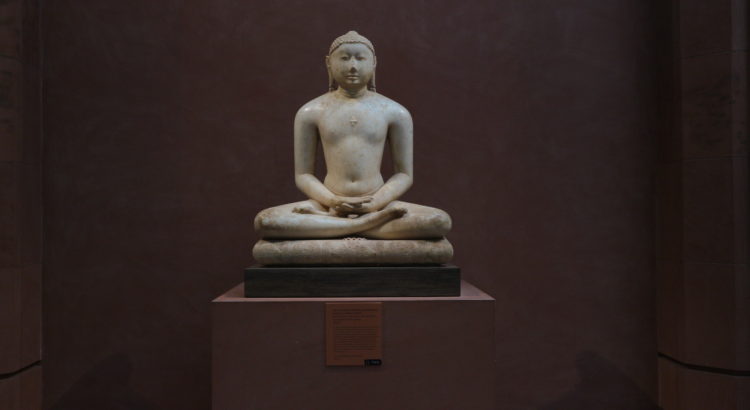
(Statue of Buddha: taken from The Metropolitan Musuem of Art, Image credits: Google Images)
 

Navigating the White Gaze

I’ve been thinking about the representation of marginalized communities in the arts a lot lately. My thoughts on the underrepresentation of POCs in American popular culture is slowly turning into an understanding of the misrepresentation of POCs in the little space we do get in the creative sphere. People with any understanding of popular “liberal” discourse are always pushing for more strong, leading, and nuanced characters on the big screen and in the bestselling novels– and so we get a black lead in Star Wars, a half-Korean teanager in To All the Boys I’ve Loved Before, and all-Asian cast in Crazy Rich Asians, a way to offset Islamophobia with a relatable Arab f-boy in Ramy. But something about this all still feels grossly unsatisfactory to me. Something is essentially off about these representations of POCs. 

To me, they still seem to be obviously whitewashed, catered to suit the image of POCs that white people are comfortable seeing, an image that sinks down to the level of a white audience and lays identity out on the table: this is what it means to be in an interracial relationship, this is what this foreign word means, this is how benign POCs are– see! They’re just like us! In an effort to be palatable, I think artists of color often water down their work and cater it to the whims of a white gaze. 

I think, of course, that it is important that we’re getting narratives about people of color made by people of color, of course– I cannot belittle the importance of all the works I’ve mentioned and they are continuing to complexify our politics of representation. We need a multiplicity of representation, so many that it mirrors our own complex and diverse experience, and dispels our monolithic perception– we need good, bad, poor, rich, suburban, inner-city, gendered, intersectional stories. Not one work of art can possibly do all the work to end racism or discrimination, because not one person of color is perfect. 

But sometimes, I think even artists of color have a hard time making their work authentic. I think they often perform authenticity as a way to prove to a white audience that they are equals to the WASP. For instance, Ramy, a show about a confused, hilarious, and relatable Egyptian-American Muslim in New Jersey tracks the highs and lows of his love life and his relationship with himself and his faith. But for a show that was so widely well-received, it made me cringe with annoyance. It was trying so hard to appease a white audience, trying to make Muslims seems “human” and “normal”– both of which de facto meant whitewashed. In the first episode, we see Ramy on a date with a girl who his mother set him up with, and he says, flirting, as they walk through the city sharing ice creams, her laughter interspersed throughout the monologue: 

Look, I know it was terrible, but the day the Muslim ban happened, I had a really good day. Like, personally, you know? It was just, like, one of the those days. Remember– the weather was great. I killed it at this meeting. I found a Metro Card that had $120 on it. That doesn’t happen! It was wierd, ‘cause I’m watching the news and this guy on TV is like, ‘this is a terrible day for all Muslim.’ I’m like, ‘well… not all Muslims.’

It’s certainly not outside the realm of possibility that a Muslim would say this, and it’s certainly not unfathomable that this is a likely scenario. But what makes it so lauded is that it seems to normalize Muslims, when in fact it just whitewashes them. 

I think we may have set the bar too low by being satisfied with POCs creating works of art. Though I don’t personally like Ramy and I think it actually damages perceptions of Muslims, I also think it needs to exist– but I believe ardently that it’s not enough to just have POCs make works of art and call it good. The white gaze is ever-present, even in works by artists of color, and it’s exactly the kind of work that gets picked up. There are so many movies, books, poems, songs that don’t get recognition, and that’s because those artists are entering their spaces as their own rather than formulating them based on the perception of white people. I think we should actively seek those out as a way of undermining the system from within.

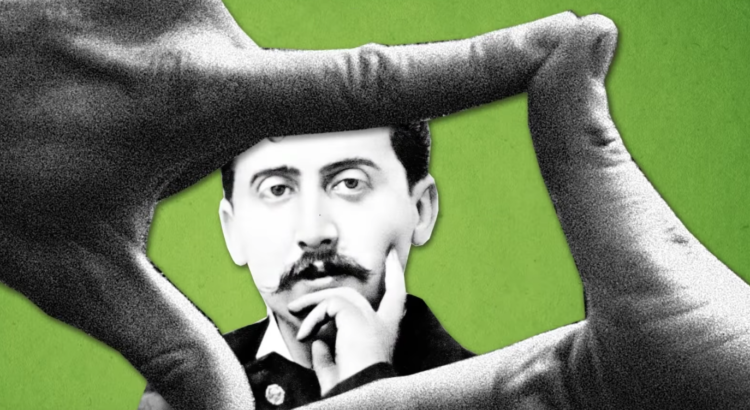
3 Possible Sources of the Meaning of Life – Proust (Part 2)

In continuation of last week’s post:

…In his novel “In Search of Lost Time,” Marcel Proust searches for the sources of true happiness. He explores wealth and love, but those pleasures fade. Finally, he discovers art and its capacity to restore life to new glory, taking pleasure in simple things. Using the lens of art, he finds appreciation in existence…

Let’s take a closer look at why money and love are not fulfilling sources of one’s happiness. I will use the terms happiness and fulfillment synonymously in this article.

Money has instrumental value, meaning that its worth is based on its usefulness. Money in itself does not bring us fulfillment. It is only the vessel to “happiness.” We can use money to buy luxuries like a convertible mustang or experiences like tickets to Outside Lands. And though we may be convinced the results of money bridges us to things that will make us happy, what would be without such a bridge? If the money bridge burns, are we forever separated from happiness? No.

Love has subjective value, meaning its worth is based on someone’s desire for it (e.g. watching the Michigan game, alcohol, or relationships). I grappled with this one for a while. What about romantic love with a soulmate? What about unconditional love between a mother and a child? Neither of these are the source of fulfillment? For this entry, I will focus on romantic relationships as they tend to evoke intense emotions thus more confusion in their fate on the road to fulfillment.

Love shared with another person is one of the most mysteriously incredible experiences we can have in a lifetime. Sometimes love works out. Sometimes love doesn’t. What if you realize that you and your partner have grown in different directions at different rates? Or that you two were only meant to be in each other’s lives for an isolated passing of time? What if you recognize the relationship is not healthy? You are presented with a choice: to stay in the relationship or to end it.

If you stay, probably nothing will change. Fine, stay in your comfort zone. Is this fair to you or your partner? To be stalling each other’s fulfillment and perpetually faking contentment? By the way, your comfort zone isn’t necessarily a safe place.

If you end it, life will change. Brace yourself for a journey of self exploration, a journey to fulfillment by taking this first step of courage. Trust that you have the capacity to make decisions that are good for you. Does breaking up with someone mean that you are breaking up with your happiness? No. You may feel sadness for some time after, but hey, welcome to territory outside of your comfort zone. 

Courage and creativity have a complementary relationship with each other. Here is where art fulfills its role.

Art has intrinsic value, meaning that its worth is based on its inherently virtuous properties. Seeing intrinsic value in the everyday allows for a new perspective through the lens of childlike eyes. This inspires an undertone of excitement as you rediscover the everyday as a child does. Though painful it is to watch your money wasted or to break up with someone you love, you control your perspective on this pain. Is this the end of the world or a catalyst for profound personal growth? Cry about it, welcome the feeling of pain as it scrapes the walls of your heart. If you don’t welcome it, well, it’s coming anyway. Then take a moment to realize, you’d never thought about the inside walls of your heart until such pain had you? Look closely at those walls! Hang up some photos of all the people who have been here, maybe string some lights. Use a creative lens to see how beautiful it is. This is art allowing you to see the depth of emotion as a discovery within yourself. Money and love are great, but substantial meaning of either can only be found through art.

In conclusion, we return to Proust’s conception of happiness. While you are no longer driving that convertible mustang or no longer in love with that person, you saw those as road signs on your way to happiness. You will find fulfillment in recognizing your own strength and creativity, surely leaning into family/friends along the way (thank you to Tiana, Lily, and Mom, my soundboards for this post and to Casey for introducing me to Proust). Ultimately, you will find fulfillment in altering your perspective on existence as an entity comprised of challenges. Once you are courageous AND creative enough to face them, life becomes astounding.

The Backstage Experience

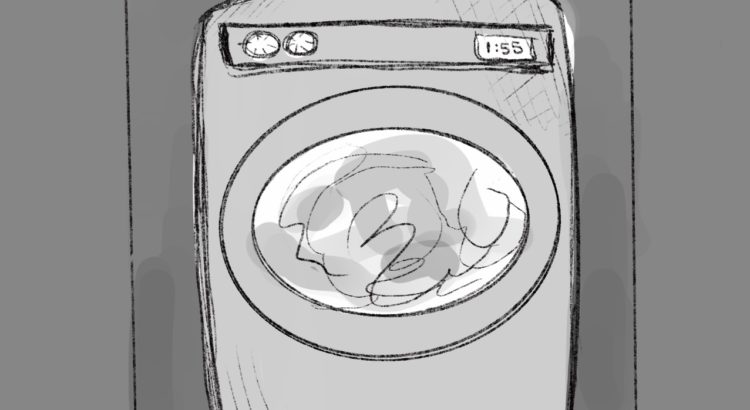
You would think backstage work in theatre would be energetic and fun, and it usually is from my experience.  But for the past week my backstage work has consisted of doing laundry.

It’s been load after load, monotonously putting in the performers clothes. I’m working on the opera, La Boheme, and since hardly anyone changes costume during the acts, the only thing I have to do is get everyone’s laundry from the past act in intermission and put it in the washer.

And then we wait for it to finish, and wait for it to finish in the dryer. In between I get to work on homework though! Or today I’m writing this in one of the breaks.

It sound’s like it would be quite a boring way to spend 5 hours each night for the last 8 days. But it’s actually been quite the opposite. It’s been a really good experience. I’ve gotten to know the other 5 members of wardrobe crew pretty well, through listening to Beyoncé, ordering pizza’s backstage at the end of the night, learning about the magic of coconut water, having conversations about how our academics are different and more.

Most of them are in the vocal performance department, so it has been really cool getting to meet so many people in that program that I wouldn’t have ever interacted without doing this.

I’m really glad I decided to try things again. Last time I was on a wardrobe crew I hardly enjoyed it and I thought I wouldn’t want to do it anymore. This time around however, it has been a really good experience that I honestly greatly enjoyed. Even though it’s only laundry it has turned out to be the typical fun backstage experience. Maybe I just had to look at it with a new mindset. Whatever it was, now I’m looking forward to doing this more times in the future. Though maybe on a show that has more fast paced changes and activities. For now, it’s back to doing the laundry!

Performing at YKB’s Bravado

“America: a melting pot where values are shared and cultures are blended. But not every town or city in the U.S. is inherently diverse, and I’m always going to look different than my friends back home.”

This is the start of a monologue titled: Half-Asian, All-American. The monologue was written and performed by yours truly as part of YKB’s fall showcase. Why this title? The monologue touched upon my identity as someone of mixed race. My mother is Chinese-Filipino, and my father is Caucasian. While I’ve learned to be proud of who I am, I wasn’t always.

I grew up in a predominantly white neighborhood. The racial and ethnic representation at my small Catholic elementary school was equivalent to a white canvas with a few pinprick dots of color. The representation at the public school I went to for middle and high school wasn’t much better; the school was yet another small institution nestled in a small town, where kids rode their tractors to school during homecoming week and you had to drive far from town to find a mall or movie theater.

While I’m grateful for the memories and friendships I formed at these two schools, they lacked the diversity that I’ve been blessed with at U of M (which isn’t even very diverse!). This meant that I had to break down barriers, answering questions that often reflected stereotypes. No, I wasn’t adopted. Yes, I was actually born in Michigan. No, I don’t speak another language. Yes, I eat french fries and ice cream. No, I don’t eat cats.

The monologue I presented reflected these experiences and the growth I’ve undergone to feel more comfortable with my identities. Growing up, coming from mixed race ancestry resulted in having feelings that I didn’t belong anywhere. Small eyes branded me as an outsider from the only country I’ve ever called home, but cultural differences divided me from my family in the Philippines. I never really talked about this before because I felt that no one in my small communities would understand, but coming to college has encouraged me to confront my fears and reach out to others. I’m currently developing a piece on “being mixed” with a peer in my drama class on race, and the YKB performance was a big step towards discussing the topic.

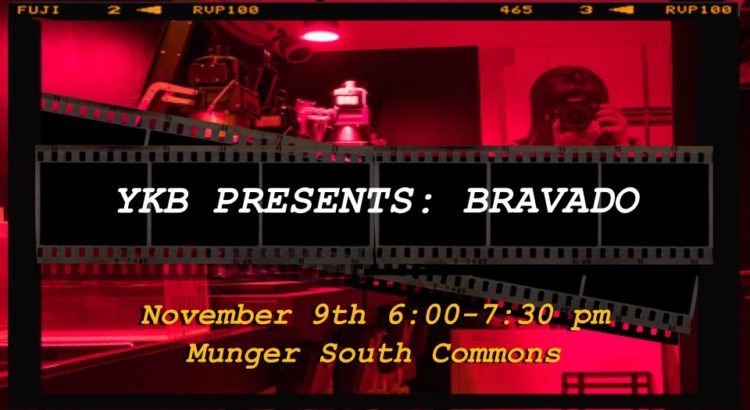
The show, Bravado, was YKB’s second ever fall showcase. Yoni Ki Baat (YKB) was founded as a U of M organization in 2006 as a platform for women of color to challenge various forms of oppression and share their stories through self-expression. Unlike the annual spring monologue show, the fall showcase featured a capped audience and “intended to create a platform for self-identifying Women of Color to be able to share vulnerable narratives in a more intimate environment.” This allowed for the sharing of highly personal or culturally taboo topics without the pressure of a gigantic audience. Besides giving me the opportunity to share my own work, the event allowed me to hear emotional and powerful stories from a variety of wonderful actresses and writers.

https://www.facebook.com/events/450697128901573/