Rennovating the Self

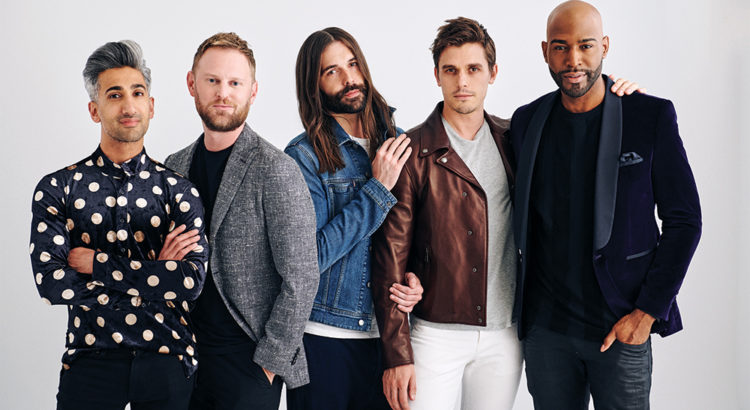
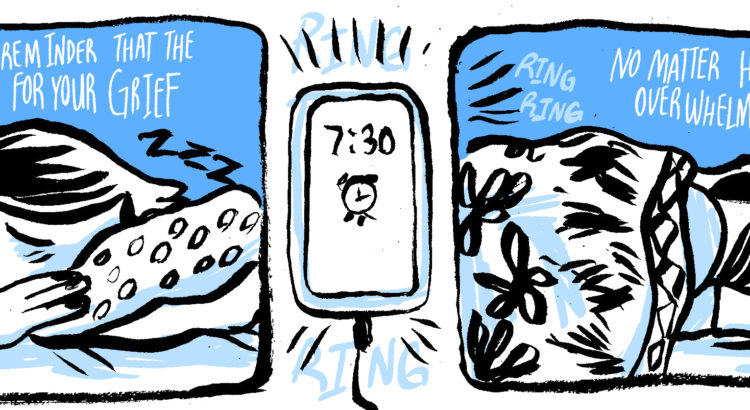
“All things just keep getting better”. This is the optimistic proclamation of the show, Queer Eye, whose third season was recently released on Netflix. It is an optimism that, at first, is a little hard to swallow. In each episode, the Fabulous Five, five uniquely talented gay men, endeavor to change someone’s life. In this way, each episode is a little bit different, but also comfortingly similar. The Fab Five blitz into a messy house, into a messy existence and find solutions within their disciplines. Jonathon cuts away at hair to reveal the inner beauty within. Tan emphasizes the need for one’s style to match one’s personality instead of the current trends. Each repainted cabinet, each tailored suit, each seemingly minute change reveals a life that could be perfect if only we willed it to be. It really is that easy.

Self-care is the oft-proffered advice and the show’s thematic core. Each transformation is drawn from the inside first and foremost. Certainly, the Five’s methods may seem a little intrusive at the beginning, but they do so with care for the subject. The person at the center is exposed, made vulnerable so that they can grow in more than a superficial way. And it is refreshing to ask why a young man may have left his closet overflow instead of rushing to judge him for the mess. Perhaps the best quality about the Fabulous Five is their adaptable curiosity. Like any human beings, they rush to judgement and speak in generalities. But they are also willing to listen and participate in a conversation of differing perspectives, educating themselves and others simultaneously.

But even as I have re-watched episodes, eagerly sought out the countless charismatic interviews with the Fabulous Five, I have had my nagging doubts. Maybe it’s the show’s obsession with intimacy clashes with the performative nature of television. I cannot help but feel the cameras, subtly offscreen, urging certain storylines forward. For example, visual transformations are always pronounced, with sweeping room changes and dramatic hair reveals. Change happens fast, too. With only one hour allotted per episode and one week of filming allotted per subject, there is no time for a slow gestation. Everyone is encouraged to change as fast as possible, as dramatically as possible. But real life doesn’t move at a quick pace. The stagnation of each day, one after another, is a looming threat behind every episode’s happy ending. It seems too easy to revert to old habits once the cameras are gone. The show’s belief in change is its constant, but you must believe it too.
SHORT observation on my perspective of lyrics

I don’t know if this is extremely unusual but when I listen to a song, I tend to be initially attracted to it based off of its beat and sound rather than words. I listen to feel some sort of connection inside of me. I imagine water inside of me doing a dance. It crashes and swirls as the beat drops and picks up again. I also enjoy the feeling of a speaker playing music. Some of my friends have cylinder speakers that have circles on the ends of them, which move to the beat of the song. I can’t remember how it happened, but one day we started placing the speaker on our chest to feel the thud of the circle. My heart and chest were pounding, and all I wanted to do was dance to the “pound” of the beat instead of worrying about the lyrics.

For Arts Ambassadors this week, we hosted Omar Offendum, a Syrian American hip-hop artist, designer, and poet, for Dinner With An Artist. Throughout the dinner we talked about his unique cultural story and his career but what struck out to me is when he made a comment about how, “Music isn’t just that lyrical today.” As a hip-hop artist and performer, he creates music to inspire not just with his beats but with his words. At the end of his dinner he showed us his music video for, “Close My Eyes”, which “is a lyrical / visual reflection of immigration, fatherhood, mortality, Syria, America, & Mother Nature” (https://www.youtube.com/watch?v=_o4hVgPnFpE). He is an artist who seeks action with telling his story mainly through words. The formulation he creates helps him come to terms with what is happening and has happened in the world, as well as giving him ideas to create change.

In addition to his music video, we watched him perform live for us. Both the video and performance were incredible and mesmerizing poems. His tempo and annunciation of some words while fading or talking quickly over others allowed the audience to hear what he wants us to pinpoint. Furthermore, his imperfect rhymes and story he chose/chooses to tell make the song absorbable. While watching him perform his art, instead of listening to the beat first, I listened to the words to carry me through.

Our Dinner With An Artist event with Omar Offendum enlightened me with his story but also about how I need to be more aware of what I am listening to. That is not to say I am completely drawing back from my usual listening style, but instead, I am going to try enjoying and appreciating the song for both its lyrics and “pound”.

P.S. Please check out Omar Offendum’s music. Click here to view, “Close My Eyes”.


Rainbow Capitalism

Rainbow capitalism, also called pink capitalism or gay capitalism, is when businesses use the LGBTQ movement in order to profit off it. The rainbow color scheme and themes of queerness are incorporated in marketing materials or products. Although rainbow capitalism in theory sounds empowering and supportive within the new era stepping closer to equality, it may also be detrimental to the true goals of the movement by falsely marketing companies as LGBTQ friendly, capitalizing off of consumers.

Having attended my first two Pride events in New York City, I could definitely view the difference between now and then. Pride marches started in the 1970s after the Stonewall Riots, in which LGBTQ patrons at the Stonewall Inn protested constant mistreatment by police. Now, Pride has become more of a consumerist event that overtakes spaces meant for queer people. Corporate sponsors boast large floats of celebrities and rainbow merchandise, effectively erasing queer oppression and turning Pride into a party that ignores current issues of homophobia. While Pride can and should be celebratory for LGBTQ people, corporations have recognized the wave of allyship that is profitable and exploitable for their own purposes.

Part of the reason why rainbow capitalism has been celebrated is because it’s easy–it’s much easier to slap a rainbow sticker on your laptop than it is to address institutional problems such as the exclusion of of queer people of color from LGBTQ spaces or homeless queer youth.

So the next time Pride rolls around, I urge you to think about and educate yourself on the history of Pride and what it means. Are you supporting LGTBQ people and spaces? If you’re an ally, are you helping queer people or treating Pride just as a party? Wear your rainbows proudly, but always remember the fight for equality.

CAO in the Studio!

Every Thursday night, me and about 20 other musicians come together and improvise, or as my teacher says, compose in real time. In this space, we feed off of each others feelings, voices, and sounds. We are called the Creative Arts Orchestra. If you are familiar with my column, you know that I have written about the group a few times before. It has been one of the most valuable parts of my music education since coming to school here.

CAO usually only gets one chance to perform per semester, but this last week we were lucky enough to perform in a new space! Wednesday night we were featured on WCBN, the University of Michigan student-run community freeform radio station in Ann Arbor. A few of us packed ourselves into a small studio and played a 9-11pm set on the local music show. It was definitely one of the more memorable experiences that I have had playing with CAO, and in my opinion, it featured some of our best improvisation work ever! I’m curious to know what listeners thought as they tuned into 88.3 FM on Wednesday night and heard our wackiness. Being in the studio was a real treat, especially because they had really nice microphones that picked up every detail of our playing. And it was uploaded on to Soundcloud so we can listen to the wackiness forever! I have included the links below: the first improvisation was around 42 minutes, and the second was around 19 minutes. My personal favorite is the second set. Have a listen, and support local musicians on WCBN every Wednesday from 9-11pm!

First set: https://soundcloud.com/wcbnlms/2019-03-20-creative-arts-orchestra-pt-1

Second set: https://soundcloud.com/wcbnlms/2019-03-20-creative-arts-orchestra-pt-2


The Double: An overlooked film and novella

The Double is a short novella originally written by Fyodor Dostoevsky, first published in 1846. If the name sounds familiar, you’ve probably read Crime and Punishment, arguably one of his most popular works. If it doesn’t sound familiar, you aren’t alone: his writing style is notorious for being dense and tiresome to read, meaning you won’t find his works on any coffee tables. The novella was adapted into a movie of the same name, which was released in 2011 and stars Jesse Eisenberg. I actually saw the movie first, which inspired me to read the book, so I’ll be discussing them in that order.

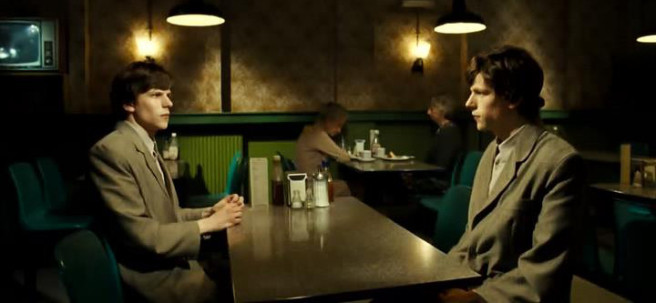
The first time I watched The Double, I thought it was complete nonsense. It was weird, the ending didn’t make any sense, and it was so boring that I almost fell asleep. I was disappointed, considering the concept looked interesting and it starred Jesse Eisenberg, who I’ve always loved in other movies. I wondered what I was missing; who would be pretentious enough to pretend that they liked it? Evidently it festered in my mind, because I ended up re-watching it over a year later when I saw it on Netflix. This time it was a completely different experience; I don’t know if maybe my tastes had changed, or if I was just paying more attention, but I absolutely loved it. It was entirely unique in every way; incredible acting, visually interesting scenes and filming, an absolutely gorgeous soundtrack which I highly recommend listening to, and an atmosphere that kept you on the edge of your seat. Out of these, I want to focus on the strange atmosphere that the film has, since I find that to be its most unique and defining element. Now if you’ve been reading my last few posts, you might have a feeling of where this is going: Surrealism. This movie is a prime example of Surrealism in film, and is a testament to the power of film as an art form.

I recognize this film as surreal because it has the same atmosphere as any other surreal work of art: a dense fog, a feeling of semi-nostalgia and anxiety, and an unexplainable otherworldliness. This is developed in the movie mostly through the use of its color palette, which includes yellows, browns, beiges, and other grimy colors. It’s odd to say the least, and it makes this universe seem like some parallel universe where everything is drab and lifeless. Also contributing to this surreal atmosphere is the vagueness of the whole movie. I can’t really say what time period it takes place in, what the setting is, or what the main character does all day. Every place seems so disconnected, which is so contradictory to normal life. The closest thing to experiencing this is going to North Campus after 9pm on a weeknight and walking to a bus stop. The towering brick walls, strange architecture, and the complete emptiness of life is similar to some abandoned dystopian parallel world, much like the universe of The Double. Another key element of the surreal atmosphere is obviously the story; the idea of the doppelganger, somebody who is identical to you in almost every way, induces anxiety in itself. Watching the main character Simon as he falls into madness at the hands of his doppelganger is terrifying, and it defines the universe of the movie as much stranger than ours. Finally, I think even the soundtrack contributes to this atmosphere, much more than your typical movie score. It’s mostly composed of string music and piano, with dark and heavy chords that create a tension throughout the film. Listening to the soundtrack by itself induces anxiety, and in the context of the film, it is the soundtrack of madness. Overall, this movie is a work of art in almost every way, and is fascinating to me as a lover of surrealist art. It’s just an unforgettable, personal experience that challenges what you think about traditional media.

This brings us to the novella, which I read promptly after finding out that it inspired the movie. It was the first thing I ever read by Fyodor Dostoevsky, and I can definitely understand why people say his books are a challenge. After forcing my way through it however, I was glad I did: not only is it an incredibly well written story, it is a great companion to the movie. While they aren’t exactly identical, as they aren’t meant to be, reading the book further revealed the true genius of the movie. The movie perfectly matched the atmosphere of the book, so much that it’s eerie. Maybe I was influenced by watching the movie first, but the book is a work of surrealism itself: it has the same bizarre atmosphere, which is developed through the writing and the events of the story. The way Fyodor Dostoevsky writes is so dark and heavy that it creates the same feeling of anxiety and fear, which is absolutely fascinating. I highly recommend watching the movie and reading the book, although I don’t suggest any particular order. I’d love to hear other people’s thoughts on it to see if people see what I see, or if I just sound completely crazy.

(Image Credits: Google Images)