
Why Separating Art from the Artist Doesn’t Work at Award Shows

Relatively speaking, this year’s Academy Awards were kind of great. La La Land (which I liked, mind you) didn’t sweep like I feared it would. Arrival got a much-deserved sound editing award, Kenneth Lonergan won Best Original Screenplay, and most importantly, Moonlight won Best Picture (along with a Best Adapted Screenplay win and Mahershala Ali’s Best Supporting Actor win). It was the first year ever that my favorite movie of the year won Best Picture. Even most of the wins I didn’t agree with I could grudgingly accept; I love Emma Stone in general, and I loved Damian Chazelle’s work on Whiplash, so I didn’t mind their wins too much.

But there was one category where I really couldn’t figure out what I wanted to win and how I felt about the outcome: the Best Actor category.

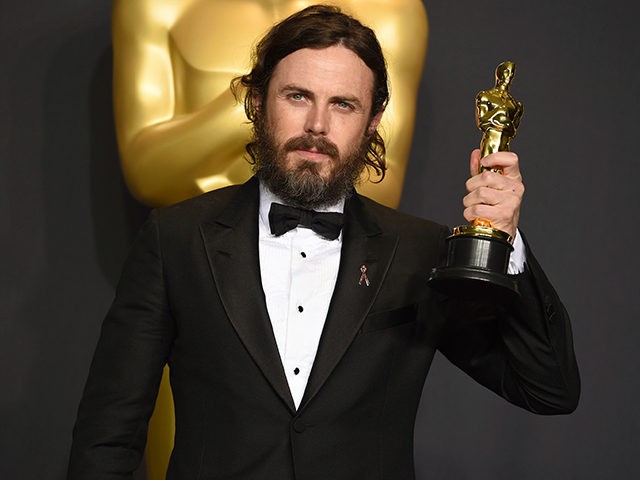
To be fair, I haven’t seen Fences or Hacksaw Ridge. For all I know, if I’d seen those, I’d be rooting for Denzel Washington or Andrew Garfield (probably the former). But when I saw Manchester by the Sea, Casey Affleck blew me away. If we’re awarding the best performance of the year, I’d say he deserves it (though I was personally pulling for Trevante Rhodes, who didn’t even get nominated—he’d probably get classified as a ‘supporting actor’ anyway).

The thing is, the situation is more complicated than that. Controversy has been swirling around Affleck for the past few months due to multiple allegations of sexual harassment.

Normally, separating the art from the artist is fairly simple to me. I’m easily able to enjoy pieces of art I enjoy that were created by terrible people; Orson Scott Card’s views about homosexuality are pretty gross, for example, but Ender’s Game is one of my favorite books. I can love Annie Hall without thinking about Woody Allen sexually abusing his daughter, and I can enjoy Mel Gibson’s performances in Mad Max and Lethal Weapon without fixating on any number of the horrifying things he has said. I understand why people would draw the line with those cases, but I’ve always had no problem overlooking behind-the-scenes happenings to appreciate the art itself.

Of course, that doesn’t mean that I necessarily support these artists continuing to have long, fruitful careers, free of serious consequences. Sure, I can enjoy Annie Hall and Vicky Cristina Barcelona, but I’d have no problem with Woody Allen being blacklisted for the rest of his life (I guess it doesn’t hurt that most of his more recent movies aren’t great). Sure, Johnny Depp in Pirates of the Caribbean is one of my earliest favorite performances, and I continue to enjoy Christian Slater’s work on Mr. Robot, but their repeated acts of domestic violence should prevent them from finding work. And sure, Casey Affleck was amazing in Manchester by the Sea, but he shouldn’t have been offered the role in the first place. Besides, it’s not like there’s any shortage of talented actors in Hollywood. I’m sure Matt Damon and Kenneth Lonergan could’ve found other actors capable of matching Affleck’s talent.

My point is that I can sit back and enjoy these performances and works of art for what they are, but when it comes to the artists’ careers, I support serious consequences. If you asked me to choose between Nate Parker having a long, fruitful career ahead of him and never making a movie again, I’d kill his career. Same goes for Casey Affleck, or Woody Allen, or any of the countless actors with a history of sexual violence. (And, just to clarify, I don’t mean to equate acts of sexual harassment with rape, but they are all lumped into the category of sexual violence—and repeated perpetrators of any kind of sexual violence clearly deserve consequences for that.)

And award shows like the Oscars complicate the whole dilemma. Because even if acting awards should be based only on performance alone, that’s not the case. There are so many other factors that go into who wins, and the outcomes of each competition carry unintended connotations outside the merit of the art.

Because winning Best Actor doesn’t just acknowledge that the performance was good; it acknowledges that the actor himself should be praised, that he should continue to receive more work and high-quality roles. Sure, awards recognition doesn’t always correlate with future success; the pattern of having a lackluster post-award career has been unofficially termed “F. Murray Abraham Syndrome,” after F. Murray Abraham failed to follow up his Best Actor win for Amadeus with many major roles.

But winning an Oscar is generally a pretty big thing for your career. Aside from the obvious prestige that an Academy Award brings, Oscar wins also correlate with higher box office revenue, higher DVD sales, higher paychecks later in your career, and higher visibility (many millions of people watching the award ceremony will do that). Jennifer Lawrence’s insane success the past few years isn’t entirely due to her 2012 Oscar win for Silver Linings Playbook, but that certainly contributed. Lawrence has been the highest-paid actress in the world since 2015, and you don’t get there just from starring in an (admittedly lucrative) young adult science fiction franchise.

So when you win an Academy Award for Best Actor, you’re probably looking at a very successful career ahead of you, especially if you’re relatively young (Casey Affleck, at 41, definitely falls into that category, especially since roles for older men are much more widely available than roles for older women).

What’s more, when a sex offender wins the Best Actor award, it implicitly sends the message to general audiences that you can get away with things like sexual assault and still be rewarded for it. When I see Casey Affleck win Best Actor, and when I see people like Mel Gibson, Woody Allen, and Donald fucking Trump continue to prosper despite the heinous things they’ve said and done, I know that it’s easy to get away with practically anything. If you’re a white man, anyway; if anyone in the film industry was actually hurt by allegations of sexual assault, it was Nate Parker, and race was almost certainly a factor.

Look, I’m all for separating the art from the artist when it comes to evaluating the quality of the art. But it’s different when our decisions actually affect the careers of the artists we’re evaluating. It’s not as simple as separating the art from the artist when rewarding the art actually rewards the artist.

abstract

I’ve always understood the abstract in a superficial yet simple way – something that looks simple. That is a lie. I didn’t always perceive it as such. Initially, I had a more philistine perspective, considering each abstract art piece as something elementary or unable to be understood. This obviously wasn’t true at all, those pieces were understood and that was why they were in a gallery, a magazine, or on whatever medium it graced.
This failure on my part was largely due to my working definition of abstractionism: something immaterial. The dots and color blocks were just things to me. They are still things. But they are different things.
I’m still working through this because I’ve found that, although I haven’t studied abstract art specifically, I’ve gained a greater awareness of it just by living. And it is perhaps my awareness of this development that I find abstractionism so interesting. Perceivably, I will die without ever having understood it at all.
At the moment, I am considering the abstract as a method of extraction: to portray the core essence of something via some other thing. And this loss of detail in the process of extraction, I believe, mirrors the human process of collecting images so accurately. It spits the contours of our visual database back at us – and if done properly – we get it immediately. Perhaps this is why it lends itself to be understood via experience, rather than depending on the learned knowledge of an art critic or professor. As my visual database extends, so to do the contours.

Check your fridge!


I have a lot of stuff in my fridge. Most of what I have in there I don’t recall buying and I certainly don’t plan on consuming it at any time soon. Yet I know I am incredibly lucky to have so much, that I can choose not to consume and still have a balanced diet. Often, I grab the coke instead of the water, the pudding instead of the fruit and the ice-cream instead of the vegetables. Why not, right? If this is what makes me happy then, dammit, I should be able to do it without feeling guilty. I am set in my ways. I know what I like and that’s what I’m sticking with.

I have my bread. I eat bread every day. It gives me what I need: A sufficient foundation for the day. It is reliable, cheap and always there. It gives me a sense of comfort. It seems to adapt to my moods and it definitely has a huge effect on my well-being. Or at least I think so…

My meat is very important to me. It is red, it is juicy and goes along great with the bread. I eat all kinds of meat. that is all the variety I need in my life.

And then, there’s the jelly. Oh yes, the jelly. I can just smear it on anything and it’ll fill in the gaps. It always fills in the gaps. That’s what makes it so convenient.

A pickle I don’t have every day… but on some days, I do, even though I have to eat them at school a lot.

Now, let’s think of the fridge not as a fridge but more as your life in general. The bread is the small arts you consume every day. From your funny Facebook-feed to your tantalizing Twitter tweets. From the childish chalk on the sidewalk to the annoying ads anywhere and everywhere. Think of the meat as the music you listen to… in the shower, on your way to class, during your runs and after hard days of studying. Think of the jelly as videos on YouTube, sitcoms and basically every sort of visual art you consume more attentively, but only in small chunks and between things. The pickle is the brilliant book you read from time to time.

And that is basically it. That is the art we usually consume between classes, studying, homework and maintaining a presentable body shape so your parents won’t be too concerned when you come back for spring break. This routine isn’t too bad, is it? It can even help me to keep my life together, right?

I sometimes think this way. I sometimes think that by consuming the same products, the same services and the same art, I can keep a balance in my life. But most of the time it’s the things that shake this balance, which make living fun and which, paradoxically, balance your life most effectively.

Just like mixing up your diet, mixing up your art consumption isn’t only fun but also healthy. We have so much going on on Campus. Go to the theater and have a laugh, go to a concert and be moved, visit exhibitions and galleries and let the art take you away. Away from the daily stress, away from the sorrows in your life. Maybe just try a new type of meat (that was my metaphor for music, remember?).

Discovering new art is like discovering new worlds, created within and through this, our very own world. It is a lot like having a thorough look into the depth of your fridge. You will find things that you didn’t know were in there and it will take just a little step out of the comfort zone to try them. Who knows… your favorite food might be in there somewhere… you just haven’t found it yet.

Stay up to date about art events: http://artsatmichigan.umich.edu/


PS: Remember to be as weird as you can possibly be.

What Book Should I Buy?

When I was little, when Borders was still around, I loved buying books. Dad would tell me I could buy one book, and I’d take so long looking around, trying to decide between all the different books I wanted. I wanted everything.

In recent years, as I’ve had to start thinking about saving money, I haven’t bought nearly as many books. Most of the books I get now are presents for my birthday or Christmas. Aside from buying textbooks, the only real time I spend money on books is when I get a gift card.

Well, I got a gift card for Christmas this year, and I’ve been debating what to spend it on since. Here’s the thing: there are countless novels I’ve been meaning to read, but I don’t really want to spend money on a random novel unless it’s one I’m going to revisit. Otherwise, I could just check it out from the library, right? If I’m going to buy a novel, I want it to be one of my new favorites, you know? I don’t regret owning I Am the Messenger by Markus Zusak or The Perks of Being a Wallflower by Stephen Chbosky, because I’d like to reread those one day, and it feels good to own your favorite books. When people are visiting, they see the books you use to represent yourself.

In the end, with the help of my friend Kháhn San, I settled on two books. The first was Cloud Atlas by David Mitchell. There’s no guarantee it’ll be one of my favorite books or anything, but it’s very long, complex, and difficult, so I’ll want longer than the standard library loan period to read it. I’ll probably want to go back and revisit earlier chapters late in the book, and really get into the experience of decoding the complex web of narratives. The other I chose, on my friend’s recommendation, was Bluets by Maggie Nelson. I’m told it’s a relatively accessible book of poetry, and that’s what I’m looking for. I figure a book of poetry is another good choice for buying, since poems are the kind of writing you want to revisit a lot. You don’t really read them as narrative; rereading a poem is different from just reading the same story over again.

Even if I don’t buy many books anymore, there’s still something so magical about bookstores; even if I don’t want to buy every book, I still want to read every one. Once everything is in ebook form and bookstores are less populous, this is what I’m going to miss.

It is Always Sunny in Ann Arbor

……Just kidding! But when the sun does burst out from behind the grey clouds, it is not only the sky that seems to get lighter. Even my daily walk to the dining hall was shorter with the sunshine streaming down. Every breath becomes a phenomenon, a spectacular gift from nature. Then there is the increased awareness of motion. Up and down, left and right. I am suddenly aware of the motion of my arms and my legs as I stroll along the sidewalk. How am I doing it? When did I learn this? Half of my hazy memories stem from static ridden home videos alone. My path to South Quad leads me past the Cube and the people populating the square. The children are reveling in action too. Their joy illuminates the complete lack of fear to their movements. Their parents move in a completely different manner, following different rules. They move their cameras up and down as helpless as I to capture the complete transformation that has occurred before our eyes.


As a person that has always loved winter, it feels like a betrayal to admit that I love this weather. But as much as I like the coziness of a knit-wool sweater and the warmth in the bottom of my stomach after a cup of hot chocolate, all of that is manufactured as a response to the weather. You can never truly embrace winter without keeping at least two layers in between you and the cold. Everything is open and free under the sun. We expose ourselves in t-shirts and shorts without concern. Our fears evaporate in the clear air and leave us with minds liberated from responsibility. Perhaps that is why I can move in such child-like wonderment today, all those adult burdens have simply vanished.

This is not an altogether original observation. When I proposed this blog post to my roommate, she may have rolled her eyes, and responded with a “duh”. But I think she unintentionally proved my point. This weather unites us, tempting us to all come out of our separate houses and dorm rooms. Sunshine is universal. Even on the coldest day in Ann Arbor, when the wind temporarily robs you of the ability to breathe, it must be sunny somewhere. Then, there is the comfort, that in a few months the sun will return with all its suffocating, summer humidity. Wherever you turn, you cannot escape the influence that the sun exerts. It is a constant reminder of life, fueling the processes that allow everything on Earth to bloom. I glance at a shrub and am reminded of eighth grade biology without the boredom of the classroom. Thousands of little pancake-like granum are hidden in that leaf, unconsciously saving the world by using the power of the sun to fix CO2 from the air. I feel the heat on my skin and think of the expansive, cold space that surrounds this tiny planet. Out of millions of floating rocks, this is the one with the star at the correct distance to create life, rather than burn it out of existence.

The sun has become more than simply the physical fuel for our lives, but also the inspiration of art and mythology. Every day, Apollo traverses the sky in his glowing chariot. Every night, Ra enters the Underworld and fights his eternal battle against Apophis, the god of Chaos. In Aztec legend, Huitzilopochtli is the sun and the moon is his sister’s decapitated head. Again, the sun is universal from one end of the hemisphere to the other. Akycha hails from the Inuit mythology and Inti from Incan legend. It is not just ancient history either. One of the most enduring symbols of America, after all, is the Washington monument, an enormous obelisk. Everything is built to optimize the sunlight, even the new buildings currently being constructed built for the University of Michigan business school. Its influence is omnipresent. You would have to move the Earth out of the orbit of the sun to escape its presence.

It is hilarious to think that the Earth was once considered the center of the solar system when our lives so clearly revolve around the sun. The warmth of the sunshine is always there even when it is not sunny in Ann Arbor.