
If you tell me all about the spotting deer: its sexual aqueduct, caudal mucus pit, and depressive tendencies, just to name a few; then you so lead me on to say that all is all. But my own skepticism of your own taxonomical work on the spotting dear, rests not in the dead skin cells on the creatures back, or in the polyps that feed on it, rather it stems from your own bibliography – that of a book inside a comic inside a book. Who are you to suggest that this is all about the spotting dear? Who are you to suggest, Mr. Author of the author, overseer of the all abouts. Oh Kay Figgle, Levan Rumble, and Buffalo Luck; you made it in black, cardboard, and ink. You brought me meat that can change to whatever it is I want to eat. Flankpalin alongside my prosthetic antler, so hand in hand I stand with you, as I forge this response to a comic so true. Spotting deer, it sniffs the book it lives within, because the spotting deer is you and I, walking bits of necrotic tissue, leaving ink spots wherever we choose to meet. (Capreolus Vulgaris), so oily black – you say it is that youohme, the terrestrial slugs, twist and form together. To you Deforge.
Things That Stick
On the 10th of January, the Hatcher Graduate Library housed a gallery called Boundaries and Belonging at the University of Michigan.

Of all the pieces in the room, this one spoke the loudest. You couldn’t see it until you trekked all the way to the back of the display.
On a blank slab lies hundreds of different stickers, different colors, different sizes, different feelings, different messages. People decorate their belongings with these stickers to express themselves. Each sticker could represent an experience they had, awareness, or perhaps be a simple little memento. It takes an ordinary object and adds a dollop of what makes you, you. They are like two dimensional capsules for a memory. Whether or not there is a climatic story attached, it marks an encounter that perhaps you share with people or sets you apart.
The stickers could be like the people we meet throughout our lives. We start with a blank slate. As we begin to make connections with people, they stick. When we lose touch with people, their stickers slowly peel off. When we find one we like, we preserve it. Over time, some are basically inscribed on the slate.
One sticker may be your mom, the first one on the board who you can’t always see underneath all the chaos of new people, but you know she’s there.
Others could be those best friends who may not be the biggest stickers, but they are the brightest and most visible in the larger scheme of things, the waiter that made you laugh so hard you couldn’t breathe, that cute boy with the New York accent who you finally got a chance to know.
We learn a thing or two from these people. Together, they create a collection of memories and a mural of your past. It’s the entire collection that tells your story, not just a single sticker. Do these “stickers” define you? Think of it as a foundation. Your past may not define who you are; your past may prepare you for who you are to become.
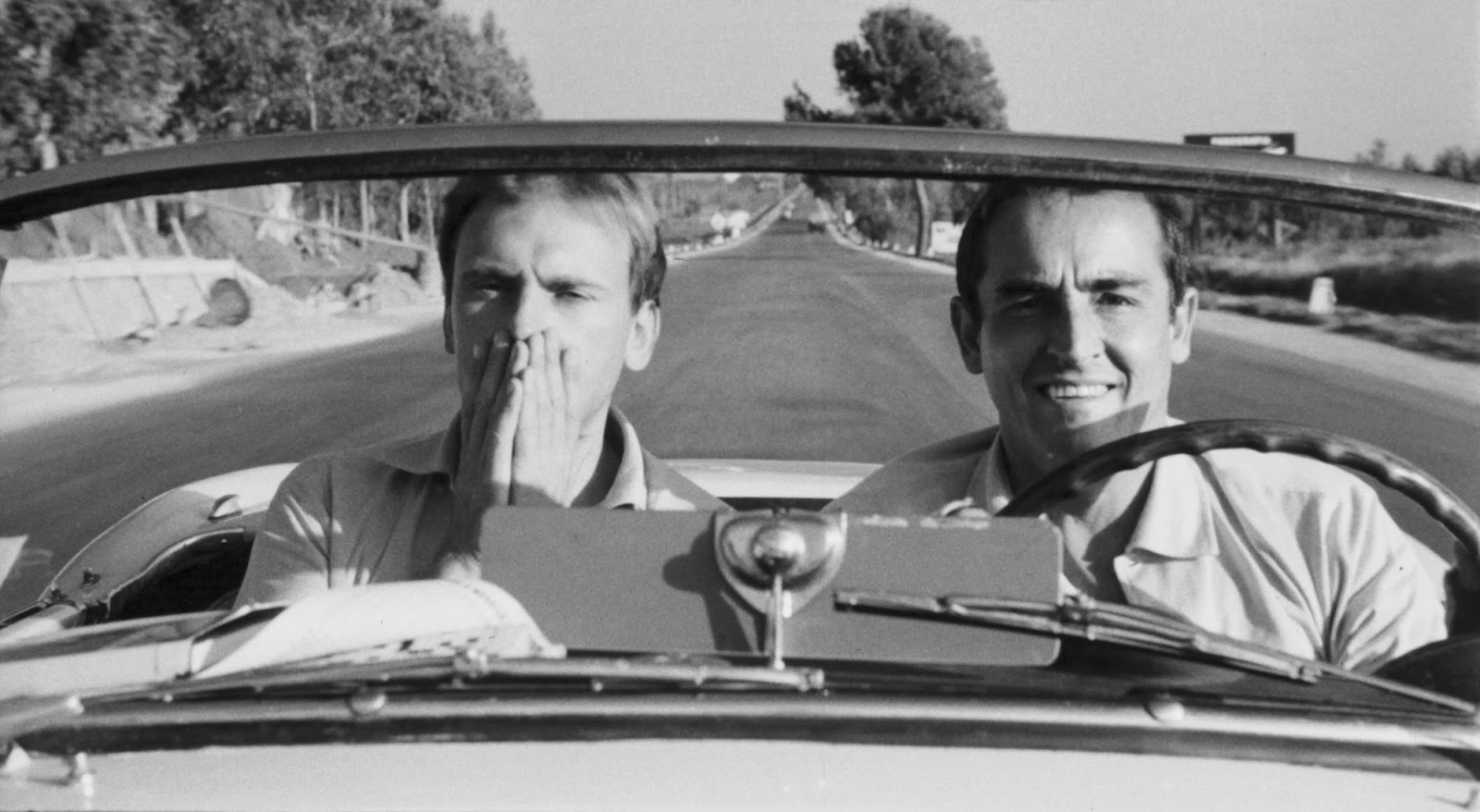
Reaffirming your Passion – On English Classes vs. Film Classes
There’s something I remember hearing throughout high school English classes. Whenever we’d read some classic work—Animal Farm and Of Mice and Men in ninth grade, Jane Eyre and Hamlet in twelfth—I’d hear people complaining that they couldn’t enjoy the books because we were being forced to read them. Something about the simple fact that we had to read To Kill a Mockingbird made it unenjoyable to some students, who might’ve enjoyed it a lot more if they’d chosen to read it on their own.
I can sympathize with this view, but I don’t share it when it comes to books. Reading books for school and having the opportunity to talk about them in class has always been something I loved; I don’t think I would’ve liked Animal Farm as much, for example, if I hadn’t discussed it in class with Mrs. Robinson. Same goes for The Giver, which I read in seventh grade. That class, with Ms. Fifield, was maybe my favorite English class that I ever took before college; I distinctly remember the feeling of actually loving going to class, because it meant we could uncover the mysteries of The Giver’s strange society together.
When I got to the University of Michigan, and as I got more into TV and movies—even spending my spare time watching TV more than reading—I was attracted to the idea of a Screen Arts and Cultures department. There were no film classes in high school, and suddenly I was able to replicate the experience I’ve always had with English classes, except we’d get to talk about movies instead.
Oddly enough, though, my experience with film classes has always been different than English classes. While English classes have always enhanced the experience of reading, SAC classes inexplicably seem to make the experience of watching movies…maybe not worse, but not better. The same way students wouldn’t want to read The Great Gatsby for the simple reason that they were being forced to, I’ve resented being forced to watch movies like Citizen Kane or Chinatown. It’s weird, because I think I’d genuinely enjoy these movies if I watched them on my own. But sometimes having to go to screenings at set times (often when I’m either really hungry for dinner or tired after just eating) makes me resent the movies we have to watch.
I’m not sure why this is; maybe Michigan’s film department is just crappy, but I don’t think it is. I’ve enjoyed most of my professors here, and I know theoretically that talking about movies in class should be just as stimulating as talking about books in English classes. And to be fair, I’m learning to enjoy the movies themselves more; this semester I’ve watched The Rain People, The President’s Analyst, and Il Sorpasso, and all of them I’ve either loved or just enjoyed watching. I haven’t come close to falling asleep during the screenings like I have in previous classes. It’s just that talking about them during lecture and discussion isn’t enlightening for me like it is talking about the books I read for English classes.
Maybe, in the end, the answer is just that I prefer books to movies. There was a time earlier in college when I was a little worried that I’d been wrong all along about my great passion in life; maybe I was supposed to move out to L.A. and work in the film industry instead of the publishing industry. But over the past couple years, taking both English and SAC classes has reassured me that, despite any new interests, my original passion is still the one I’m meant to pursue. Sometimes it’s nice to remember how much you love the thing you’ve chosen to study.
Literati
The first time I went to Literati Bookstore was in November with some of my friends. It was a Saturday evening and we had decided to explore downtown Ann Arbor, but started to regret it when the cold temperature almost became unbearable. We started to walk back towards State Street, abandoning our exploration for a warmer day, when we saw literati on the corner of Washington street. It was busy- people were coming in and out and though the windows we saw the small space crowded with people. In a different situation the crowd would have kept my out, but we were all so intrigued (and freezing) by the little book store that we had to go in.
The sea of people surrounded the small islands of books. We made our way to the “Holiday Favorites,” but couldn’t stay long as it was a popular spot for early holiday shoppers.
We walked along the perimeter, the walls lined with shelves filled with books and illuminated from spotlights above. Handwritten index cards were placed beneath some displayed books. The cards were handwritten and had personal reviews from the employees who wanted to share their favorite reads from that month.
We headed to the basement, passing by the window display featuring a tree made of stacked books and decorated with twinkly lights. The basement was less crowded, but still tightly packed. Sections of books lining the walls were distinguished by chalkboard signs. The “Travel,” section lured me to the corner of the room in the far right. I sat on a stool, overwhelmed by the selection. My friends were making the rounds, stopping every once and a while to pick up something that seemed interesting or read an employee recommendation.
I finally tore myself away from the travel section to meet my friends at a type writer by the stairs. It was placed on an antique table with an invitation sit down and leave a message. It had already been used several times that night- the paper was almost full. My only experience with type writers has been in antique shops that were always displayed with a harsh “Do Not Touch,” sign. So, we seized the opportunity to leave a message to commemorate our inaugural visit to Literati.
We left the warm and cozy atmosphere of the bookstore and returned to the harsh bitterness of a November night in Michigan. We cross the street and looked back to the corner store, the crowd still visible through the window but silent from a distance. With the glow of the store behind us, we walked back to campus, already planning a return trip.
A Cup of Tea

The tea blooms before me. Tendrils of color deepen the previously clear water until it reaches a comforting mahogany. Everything about a cup of tea seems to have a softening effect on my being. Even sensation fades as if the steam from the cup has enveloped everything. My eyes, which had been stinging with tiredness from a late night study session, felt rejuvenated for a few moments. All before I took a single sip. In a day with a thousand and one tasks, it was a fleeting event, but somehow, the most memorable. Most of my days flash by minute after minute. I wake up to the jarring screech of my alarm clock and the overcast light creeping its way through the window. I fall asleep when it gets dark. Class, homework, class, sleep. Sometimes to break up the monotony, I sleep during class. I do so much, but seem to get nothing done. So as I stare down at the simple cup of tea, I feel a strange sort of peace that only comes with reflection and a little bit of silence.

The world has become very noisy. There are a thousand things calling for our attention. Even now, while I’m writing this very blog post, I have four other screens open, not including the Spotify player pumping music through my earbuds. The three other people in the room are plugged into their computers as much as the computers are plugged into their electrical outlet. Even when I walk down the street, I do so in a bubble of artificial sound. I get to hear people from across the country talk about pop culture, politics, and my personal favorite, sports. The effect is distancing. I walk past people without seeing them, I eat food without tasting it, and it is never silent. There is no awkward chit chat or even an acknowledging nod. The earbuds are a signal as glaring as a flashing red light. Don’t approach.
Ironically, filling our worlds with endless noise has become a type of sedative. The constant blare is a distraction from deeper reflection. Doing twenty things at once becomes a parody of usefulness, a way to feel fulfilled but to fulfill nothing. Often, I find myself sitting in a chair for hours on end, clicking, stopping for a moment, clicking again. When I do look away, I am surprised at what I find. It usually includes an endless number of people, with faces I can barely recognize, clicking away. It is usually lonely. But I think it would be the same even without the screens. When all is silent, all you have left is yourself. And all that is left of yourself is a scheduled routine, a set number of tasks to do in a row.
The best type of silence, then, is the one in the morning. It is when the day is still full of endless potential. I still think about all the tasks I need to complete though, all the places I must go at a certain time. But perhaps while I’m walking to those places, I may see something new. Maybe before I finish those tasks, I will stop for a cup of tea.
Is Complete Immersion the Way?
There is something terribly wrong about the quest for immersion. By which I mean complete and total immersion, eradicating any partial possibility to have a single toe or hair in the world you just stepped out of. Perhaps my bias towards immersion rests upon a nugget of ignorance regarding the exact motivation one may have in order to accomplish virtual reality – the application of which may find suitable use in realms of scientific enquiry, operating as a form of total interactive simulation. It can act as a training mechanism for athletes or pilots in training perhaps. So it becomes necessary for me to isolate the topic to immersion for entertainment processes.
Probably the modern medium with the most literal pursuit for immersion is the video game. However, before virtual reality devices started to get marketed, from gaming devices to headsets where you attach your phone to act as a screen, there was James Cameron’s Avatar. It must be stated that I am not a fan of James Cameron (I enjoyed Terminator 2 however), so some bias will follow. The film, as we undoubtedly all remember – either having seen it or heard of it from the countless articles and friends that came out of the newest and most innovative 3-D movie going experience to date – as “it seems awfully similar to Pocahontas.” Indeed, the fundamental silhouettes of the two stories are similar – a storytelling error seemingly more noticeable in the recent catalogue of summer blockbuster films (but truthfully, it is not a problem isolated to the current state of the entertainment industry). “But the CG and the animation were so beautiful. And the 3-D! It was like I was actually there!” That is fine, but if you take it away, say you watch it at home with that old CRT your parents refuse to throw away. Then is it the same? Obviously no. The primary visual gimmick is lost. Of course you can argue that that destroys the work as a whole. Disjointing the work from its observable context. This is fair, so let’s consider as it was meant to be, in the theater.
I watched this movie about two weeks before its run in the theaters concluded. At first, I was amazed. That bubble…But then that bubble burst, because the narrative kicked in. The point is, you can fill the world with as many CG animals, plants, lights, blue people, mechs, battles, airships, floating islands, waterfalls, and bubbles as you want, it can feel immersive, surrounding us in a spherical visual dome, like the silver screen is surrounding us, (although this is not the case with Avatar if we are to assume that the immersion is total – meaning we can’t tell the difference between our world and the fictional one) but eventually this new world will just become a world, and like our actual world, we will get bored. We will want entertainment, and hence, we hypothetically need a movie inside the movie for us to stay invested. Or perhaps we need a game inside a game. Essentially, it is back to square one.
Avatar gave me nothing past the visuals; hence I came out of the movie fairly bored. I did not care about the main characters, or the blue people, or the hair lovemaking.
I do not think immersion is bad in conjunction with well-developed narratives. But I do believe an isolated drive to make the best graphics possible is just silly and frankly a formal dead-end. This is because immersion does not have to occur physically – through visual, sonic, and physical construction. Rather, it can occur through a good story. Something Avatar lacked.
