The Way I See It: Thoughts on Albums Part 1

It seems fair, to me, that the same week as the Grammy’s I should be talking about music. Even though I haven’t quite yet gotten to watch the Grammy’s (it’s on my DVR I promise I’ll watch it soon), I’ve seen words flying around my news feed throughout the past week, artists like Kendrick Lamar and Taylor Swift at odds with each other.

Bu that’s not what I want to talk about this week. We all know that the Grammy’s aren’t necessarily the be-all-end-all, and oftentimes don’t represent the music community as a whole. So instead, I want to talk about something a little bit more personal.

If you run in any type of circle that cares a lot about music, especially alternative/indie/rock music, there’s a conversation that is bound to happen. What is the best album of all time?

That’s quite a heavy burden for someone to bear, to pick the best album of all time. This is more than just a hi, nice to meet you, what’s your favorite song? kind of question. This becomes especially difficult, too, since people who claim to like “good music” often bow down to the rock classics, to The Beatles, The Rolling Stones, Nirvana, U2, etc. And a lot of times these albums are picked as the best of the best of the best.

But it’s always seemed to me that this question is a thinly veiled disguise aimed at probing if you are “worthy enough” to be considered a true music fan. To navigate this exchange, you have to simultaneously pick something old, perhaps pretentious, highly acclaimed but perhaps not widely known by a general music fan, someone who listens to the radio (because who does that…besides most of the US population).

That’s not how I see this question, though. No, this may not be a first date, could-I-actually-like-you, I’m curious tell me kind of question, but I think asking about someone’s favorite album can be a lot more telling. Something they can listen to over and over again. Something that fits every mood, every whether. Their go-to for when their music runs dry. Not necessarily an album that they listen to constantly, but, even after a year, two, or three of not hearing one song on that album, they can go back to it.

To me, that kind of answer speaks volumes more about who a person is rather than asking them to nominate only one album as the greatest of all time. I think this week’s Grammy’s showed us that there can be vastly different opinions on how to choose an album of the year, much less of all time.

So that’s my version of that question. Simply modified, perhaps not easily answered (can you pick just one?). But I wonder: what’s your favorite album of all time?

Midnight Book Release Parties

Four children sit on a bench each reading their own copy of

Recently, one of the greatest announcements of my generation was made: there will be another Harry Potter book! Well, sort of. The announcement came earlier this month that the new play, Harry Potter and the Cursed Child, will be made into a script book available to everyone this July. JK Rowling didn’t exactly write it, but the giddy excitement of anyone who has ever taken the magical journey to Hogwarts and fought Voldemort beside Harry, Ron, and Hermione is still palpable.

Excited? I haven’t even said the best part, yet. Along with a new Harry Potter book comes new opportunities to celebrate literature with people who care at midnight release parties! Remember those? Dressing up in your dark cloaks and coke bottle glasses and boasting to anyone who would listen that you were a particularly good finder so it was okay you had the yellow and black scarf. Stuffing your face with chocolate frogs and cauldron cakes? Playing games and standing in long lines all to do what? Be the first to read the newest Harry Potter book!

Now, it’s been a while since I had the good fortune of going to a midnight release for a book. Movies, sure. All the time. There are so many that have midnight releases, complete with dressing up, long lines, and the mad rush when they open the doors to the theater (Harry Potter, The Lord of the Rings, anything Marvel, The Hunger Games, Twilight, etc.). But books are different. Books rarely get as much attention as movies. Even incredibly popular books, like Rick Riordan’s Percy Jackson series, haven’t had any release parties (at least in my area). That makes me sad.

Being able to commemorate the release of a book is one of my favorite things to do. People of all ages and all backgrounds come together for one reason—to get excited about reading. Inside that book store, you’re surrounded by other people who love the book just as much as you do, who are so excited to read the next book, to touch the next book, that they can’t imagine waiting even a few hours. There’s dressing up, games, food, and excitement. Then, there’s something even more special. There’s silence. Everyone has his or her book. They’ve found a place to read and sat down with their noses almost touching the freshly turned pages. They’re feverishly reading and they’re not stopping until they’ve finished. It’s pure magic. And soon it’s coming back; hopefully not as a one-time event.

Sean Murphy: The Ink Master

Sean Gordon Murphy is a comic book artist/writer who has worked on famed ongoing titles like Batman and Hellblazer, but the title he created on his own, is Punk Rock Jesus; a comic about a clone of Jesus Christ who then rebels and becomes a punk rocker. Ya.

The first time I encountered Murphy’s art was when I picked up Tokyo Ghost, a new Image series he developed with Rick Remender (Deadly Class, Low, Black Science). His art melted my eyes, so I wanted to share some of it with you.

Splash page from Punk Rock Jesus
Splash from Tokyo Ghost

Needless to say, Murphy is technically excellent and a remarkably talented artist. But it’s his ability to lead the eye via black and white ratios that really amazes me. Just looking at his art, you realize, he gets it (he explains it in the video). Oh, and that understanding of the elliptical. Beautiful.

Weighing Realism Against Entertainment

Everybody knows that realism is overrated when it comes to art. Even focusing on the genres of realistic dramas and comedies alone, even without elements of fantasy or science fiction, we typically don’t want to watch something realistic. Aaron Sorkin’s movies and TV shows are popular partly because all the characters are intelligent and witty and think quick on their feet, and you get to have fun watching them all shoot comebacks back and forth at each other.

Of course, some people don’t like ultra-stylized dialogue. My roommate Julie told me she thought John Green’s acclaimed book “The Fault in Our Stars” (one of my favorite books) was extremely overrated, and one of her reasons was that teenagers don’t actually talk like that. They’re too clever, she argued, too quick at thinking on their feet. It seems like John Green, at least when it comes to witty banter, is like a YA form of Aaron Sorkin.

“You had three weeks. The universe was created in a third of that time.” “Well, someday you’ll have to tell us how you did it.”

I think it all boils down to what the given story is trying to achieve. “Steve Jobs” and “The Social Network” don’t strive for realism when it comes to speech, but they each have beating emotional hearts—Steve’s denial about being a parent and Mark Zuckerberg’s contentious relationship with his friend Eduardo Saverin, respectively. The same goes for “The Fault in Our Stars,” which deals with death, grief, and the innate human desire to leave a mark on the world. You can bring out those sophisticated themes without having dialogue that necessarily bears a great resemblance to real speech.

And then there’s the mumblecore movement, films that luxuriate in all the mundanity and awkwardness of real life. Dialogue is filled with “um”s and “uh”s and “kind of”s and “sort of”s. There are often no scripts, leaving actors to struggle to find the words that make the most sense to them. It’s like a modern form of the neorealist films that populated Italy after World War II. These are movies that purposely portray the day-to-day lives of people who feel real, with little sensationalist conflict.

The strange, anticlimactic ending of Red Desert (Antonioni), which might not technically be neorealist, but has a similar fizzling-out ending.

Mumblecore movies are still fairly overlooked when it comes to mainstream filmgoers, though, possibly because they’re anti-climactic by design (just like the Italian neorealist films). It’s only natural that movies like “Drinking Buddies” fly under the radar, even when they have stars like Jake Johnson, Anna Kendrick, and Olivia Wilde. Crowds have the rightful desire to want to be entertained, or at least engaged. Sometimes unconventional endings—like the romantic leads never actually acting on their desire in “Drinking Buddies—leave you unsatisfied. Sometimes I feel like happy endings are underrated, not overrated. There’s nothing inherently wrong with the guy and the girl ending up together in the end if that’s the ending that feels right for the story.

Still, I think part of film’s gradual evolution should be a greater willingness to challenge audience expectations and force people to ask themselves why some movies feel so unoriginal. Maybe sometimes a movie doesn’t have to have a satisfying, conclusive ending to be worth watching. Sometimes giving a disarmingly accurate portrayal of life is enough.

I wrote about this before, writing about “Boyhood” and “The Strange Little Cat.” “Boyhood” has no conventional plot, conflict, or arc; it’s just an authentic portrayal of a boy growing up, and it’s enormously affecting despite lacking a climax or conventional path of rising and falling action. “The Strange Little Cat” is far more challenging, instilling mundane reality with a sense of mysteriousness. There’s almost a sense of spirituality in the movie the way characters tell minor stories about things that have happened to them over the course of their day. The movie makes every seemingly insignificant anecdote seem indicative of some higher power, some nebulous force we can only barely sense and never comprehend. As I wrote in my article, “Sometimes it seems like we always think of life in such broad terms. When we watch our movies or TV and read our books, we look for commentary on big, important concepts like love, hate, God, war, success and failure. It makes sense that we’d want a movie to give us a new perspective on something important, but too often, that makes us forget everything else. Things like a stranger’s foot or the white side of an orange peel may seem inconsequential, but they become important through the sheer amount of space and time they take up in our lives.”

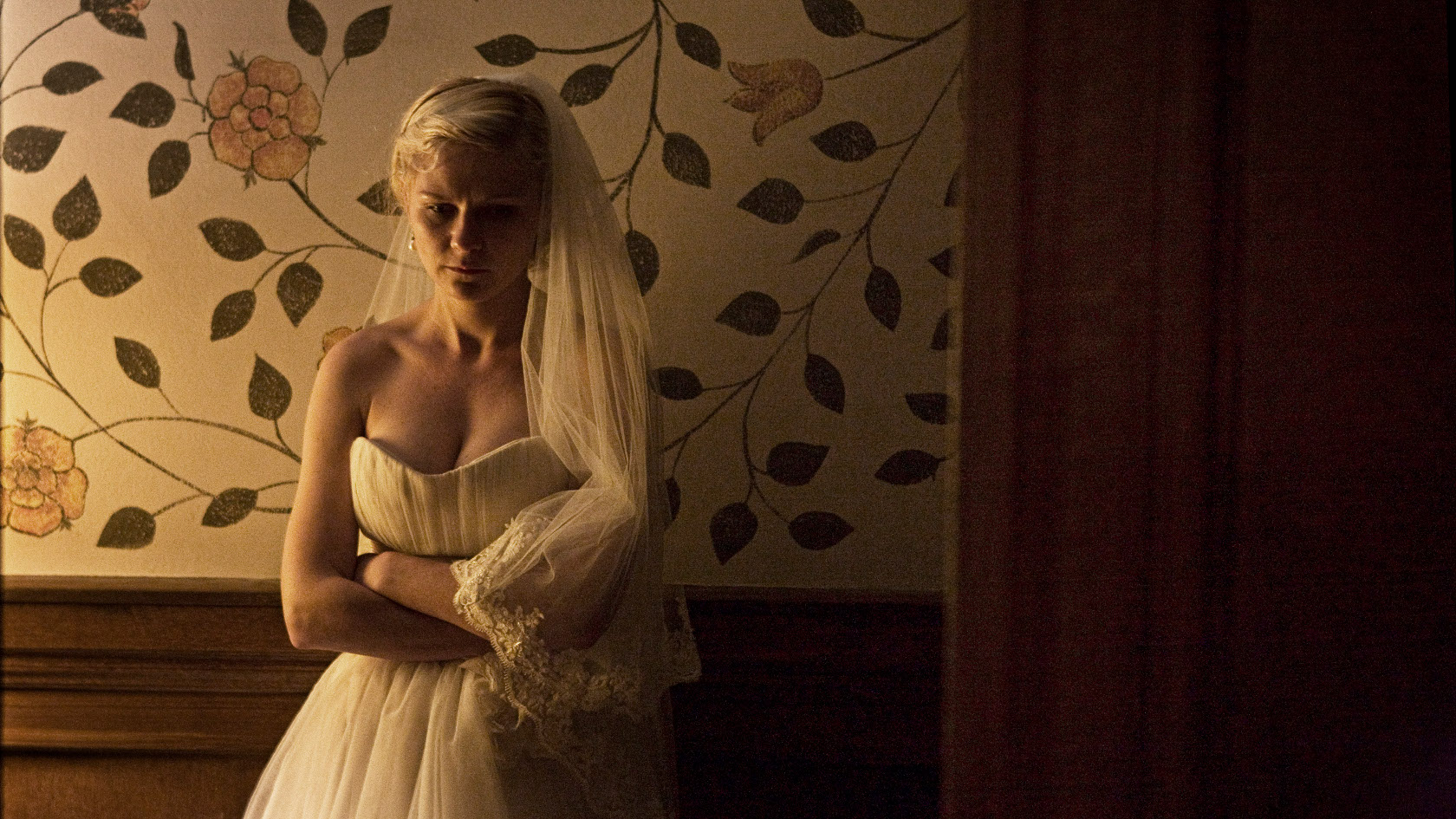
Another unconventional portrayal of reality is Lars von Trier’s “Melancholia,” the first half of which is dedicated to a psychological exploration of Justine (Kirsten Dunst) on her wedding day. Justine has depression, and despite her loving, patient husband and the perfection of her wedding, she just can’t be happy. She collapses, sobs, wanders away from the wedding into the cold night, and has sex with a random guest.

I’ve only watched “Melancholia” once, and I came away from it thinking it was okay, but not great. Maybe the depiction of depression was accurate, I thought, but I had to admit that it got boring simply watching her be depressed for an hour or more. Movies are defined by change, by things happening, and no character should only play one note for the majority of the movie. In the second half, “Melancholia” becomes about how depressed people sometimes feel a sense of peace and calmness when faced with exterior catastrophe, so the lack of change isn’t much of a problem anymore, but still, it was hard for me to get through that first half, so humorless and dour and…well, depressing.

But “Melancholia” has stuck in my mind. I don’t have any plans to watch it again—it’s really hard to watch from its darkness alone, and I still stand by my belief that it was a little too one-note in the first half—but I remember it sometimes, its rawness, its realism. I don’t have depression, but I somehow know that there’s something unspeakably real about it. There’s something about the image of Justine’s face, completely apathetic and dead while she looks at her husband, or the image of Justine’s sister Claire (Charlotte Gainsbourg) helping carry a naked, despondent Justine to the bathtub and bathing her. Again, this isn’t how every depressed person acts. This is how Justine acts. But Dunst’s utter vulnerability and the honest imagery of her experience shows that these experiences don’t belong to Justine alone. “Melancholia” is perhaps the most unrelentingly grim yet accurate depiction of depression I’ve ever seen, and it’s stuck with me. I never would’ve seen it if I was only concerned with conventional crowd-pleasers.

Maybe “Boyhood” is a better example to use than “Melancholia”; “Boyhood” was received warmly by mainstream moviegoers, and I doubt most people would love “Melancholia” if they had to watch it. But my point is that movies like these don’t necessarily need to be loved, to have beautifully cathartic endings or naturally escalating first acts. Not every movie you watch should be one of your new favorite, most satisfying movies. Sometimes, challenging us emotionally is enough.

Pushing Daisies S01 E07: Smell of Success

Summary:

W start the episode in a similar situation to the Halloween special. Ned is at school and can’t sleep because he misses his old life, specifically his mother’s. This prompts Ned to go to the kitchen and bake a pie. Since he can’t reach the fruit, he revives the rotten ones for the filling. Even though he can’t taste it, the smell of the pie is enough to make him feel loved again. This causes us to skip to the present where he is planting more flowers for the bees in the hopes that it will make Chuck feel loved. Meanwhile, Chuck is looking across the skyline, searching for roofs to expand onto. Ned is concerned though, as he believes the bees are more safe and comfortable in the small area.

We then move to kitchen with Olive bumping into Ned and causing awkwardness to ensue. Even though they discussed, neither is comfortable yet with the romantic feelings that Olive clearly still has. Olive then starts a conversation with Chuck about the aunts, confirming to her that they’re not getting better. Chuck believes that getting the aunts into the water would be the best medicine.

Chuck goes into the kitchen to talk with Ned. She wants to add cup-pies to the menu, with crust made with her honey. Ned disagrees, not willing to change. Chuck argues that adventure and excitement are important, but Ned just wants to keep his simple life.

Meanwhile, the mother of Anita Grey calls Emerson, hoping to hire him to investigate Anita’s death. Before her death, Anita worked in olfactory science with her mentor, Napoleon LeNez. Anita fell in love with LeNez and devoted her life to his work after he shared with her the scent of her grandmother’s unfiltered cigarettes. The two worked on a self-help scratch-and-sniff book.

The trio go to wake Anita, whose body is burnt to a crisp, with amazing make up for a television show. Anita only remembers the smell of her grandmother’s cigarettes before dying. They learn that while using the book, Anita was killed in an explosion. They come to the realization that the book was booby-trapped.

They then leave the morgue to visit LeNez at his apartment. LeNez shows surprising skill as he smells his guests and is able to give a short summary of their characteristics. Interestingly, he smells death on Chuck, but assumes that it is only her perfume. LeNez shares with them that the book is still being released and Emerson finds that his release date was actually moved up.

The scene changes to the aunts’ house where Olive is trying on their old mermaid costumes. Olive, as per the request of Chuck, is trying to convince the aunts to return to the pool, hoping that seeing their old costumes and reminding them of the money will get them into a pool. The conversation changes, though, as Olive finds an old sweater mixed in with the costumes. She learns that it was Chuck’s mother’s and Lily forces Olive to take it with the costumes, going to her “dark place” as the show calls it.

Back at the Pie Hole, Ned and Emerson are sitting at a booth. Emerson shares his belief that a rival author, whose book release was cancelled, had attempted to murder LeNez. Chuck interrupts their conversation and forces Ned to confront his aversion to change. She asks about his exes and Ned, very uncomfortable, reveals that he had had previous girlfriends, but they always drifted apart. Olive then takes Chuck from the booth and explains Lily’s situation. Chuck insists that Olive pushes harder. Ned, looking from the booth, is worried about the quick bonding of Chuck and Olive. While this is happening, Emerson comes to find who the cancelled book author was .

Ned and Emerson go to the author, who is revealed to make adult pop-up books. They grab one of the books and find that is contains steps to making various bombs. While this seems like evidence, the author explains the absurdity. Who would write a book about bombs, then try to kill someone with a bomb? In addition, while the two originally believed the change of publishing was a good thing, the pop-up book author reveals that LeNez was actually moved from a prime holiday spot to no mans land.

Back at the Pie Hole, Olive and Chuck continue to discuss the aunts. Olive goes to fix a clogged sink while Ned enters. Ned unclogs the sink and finds a sock with a threat against LeNez on it. They take the sock to LeNez, and after a sniff, finds that the sock came from the sewer and therefore from his old rival, Oscar Vibenius. In flashback, we learn that the two were lab partners with differing ideas. Oscar believed that people needed the bad smells along with the good, whereas LeNez thought that people should only surround themselves with good smells. LeNez tells them that Oscar works in the sewers.

At the same time, Olive is at the aunts’ house, hoping that the smell of chlorine (an idea that Chuck had) would brighten their spirits. At first it seems to work on Lily, but she brushes it off and hides her feelings.

The trio then go into the sewers to find Oscar. After a few hours of following the “yellow thick tube” and Chuck sharing the story of CHUDs (cannabalistic huanoid underground dwellers) they find Oscar with a hose leading up to the street. Oscar yells at them to run, while LeNez’s car explodes on the street above. The three return to Ned’s apartment while a reporter is discussing the investigation and revealing that sales of LeNez’s books are skyrocketing. Chuck finds the entire situation suspicious. How can Oscar keep missing his target?

After this, we see a short scene shared between Olive and Chuck. Olive gives Chuck her mother’s sweater and begins to cry.

While Emerson and LeNez are interviewed, Oscar shows up at the Pie Hole. While talking with Chuck, Oscar repeats something she said earlier, word-for-word, revealing that he was spying. Oscar then tries to explain that he was actually trying to stop the car bomb. During this conversation, Oscar also smells the death on Chuck, but realizes it is something more, something he’s never smelled before. He also tells them that the gas in the explosion shouldn’t smell like rotten eggs, but it does. Oscar believes that LeNez was faking the attempts on his life in order to raise sales of his book.

Moving to the aunts’ house, we see Vivien confronting Lily about their swimming. Lily is still holding back, not wanting to admit that she quit swimming for more reasons than they told their fans. While Lily still refuses to swim, she is still affected by the smell of chlorine.

Back at LeNez’s apartment where the interview is taking place, Ned searches around. He finds evidence that LeNez was actually the one to leave the threat in Ned’s sink. Emerson and Ned then confront LeNez about his actions. LeNez traps them in his decontamination chamber while poison, explosive gas fills it. LeNez reveals that he never meant to hurt Anita, but her death still caused sales to rocket so he continued to fake attempts on his life. Chuck, Oscar, and Olive then appear, revealing that they had reversed the pumps of the chamber, actually filling LeNez’s apartment with the gas. Once LeNez is incapacitated, they arrest him.

In the ending scenes, we find the aunt’s back in the pool after a stirring song by Vivien, Emerson replacing his knitting needles with pop-up book design, Ned putting cup-pies on his menu, and Oscar being obsessed with Chuck’s scent.

Pros:

-This episode has a mystery that you can actually try to solve before the protagonists.

-Bonding between Chuck and Olive is great.

-The mystery behind Lily’s “dark place” sets up a nice character arc for her.

-Revealing Ned’s reasoning for becoming the Pie Maker is poignant and greatly done.

-The cinematography during the scene when the aunts swim is stunning and some of the best work in the entire show.

Cons:

-Ned and Chuck’s argument for the episode is too easily solved.

-The weekly argument style between Ned and Chuck could be becoming stale for certain audience members.

Overall:

This was never really an episode I remembered all that well, but rewatching it, this has been the best episode that I’ve seen so far. For the most part everything works. The mystery is extremely creative. In addition, they have actually clues hidden in the show for the audience. This is a rarity and most of the clues in other episodes are actually just red herrings. This makes it one of the only episode where the audience can correctly solve the mystery before the protagonists.

In addition to the mystery, the time spent between Olive and Chuck is really special. Showing them bonding and becoming more than just two dimensional rivals is exactly what one hopes to see when presented with two strong female characters. Their friendship may still be rocky and early, but seeing them slowly open up more to one another very realistic and relateable.

Finally, I cannot ignore the last scene between the aunts in this episode. It is really what puts this episode over the top. It is beautifully shot with Vivien running outside in the rain singing and Lily sitting inside with the shadows of rain drops running down her face. It is a beautiful metaphor for the different personalities of the characters. Vivien is heartbroken, but optimistic and willing to move forward, whereas Lily refuses to directly show sadness and doesn’t want to move on. When Lily finally broke and the two swam together again, it felt amazing to watch. There was so much catharsis built into the scene that it was deeply affecting. I have seen this episode multiple times, but this is the first time I ever really noticed the beauty of this scene. I almost cried watching it.

Rating:

10/10 Daisies

P.S. I Lo…

Image via speechfoyosoul.com

A love letter is one of the best pieces of paper you’ll ever hold in your hand. It’s more personal than a clothing accessory, more enduring than an edible sweet or a five-second Snapchat, more secret than a wink and a cheery clink. These written declarations of affection have been touching hearts since Ancient Egypt. But times indeed have changed – keyboards have replaced quills, and ‘thee’ got thrown out for ‘u’. The love letter now teeters on the cliff of extinction. If I could, I would make a campaign badge: SAVE THE LOVE LETTER! Help protect this rare species this Valentine’s Day by penning one of your very own to anyone you want to share your words with: whether it’s your best friend, your grandma, your SO, or your neighbor. A letter says that you’ve taken the time to think and write thoughtfully and reflectively on your love for this being that you share the planet and your life with. And who doesn’t love getting mail??

Not sure where to start? Here are some tips to write the most heartfelt and genuine letter without being too cheesy, cliché, or Hallmark-y.

  1. Think ink. A real paper letter gives the recipient the sheer pleasure of opening up an envelope. It allows you to be a little cheeky and hide it where they least expect it. Your one-of-a-kind handwriting technique flavors the text in a way that no one else could accomplish. Plus, why risk the chance of an overzealous spellcheck  and spam filters? You want to be sure that the exact letter you write is seen by the person you love.
  2. Address to Impress. “Dear” is so overrated. This isn’t an email to your professor (at least I hope not!!). Make your greeting unique and get your reader smiling from the get-go. “Dearest Duck,” said Lady to Lord Byron. “My dear little lunatic,” wrote the actress Juliette Drouet to Victor Hugo. When in doubt, get a little wacky, get a little retro, get a little silly.
  3. Flavor it with details. Make sure to flag all the quirky things you like about your reader. Let them know you didn’t copy the default template for “How-To Write a Love Letter.” Think both physically (“the lines on your face that crinkle when you smile”) and mentally (“how you’ve literally memorized the whole Tim the Enchanter scene from Monty Python and the Holy Grail”). Let glimpses into your own daily life color your paper: “As I sit here writing to you in the Diag, people must be wondering why I’m smiling so much.” Recollect the first time you met, your favorite shared experience together, ponder about the next thing you want to do together to knock something off your bucket lists.
  4. Avoid clichés. That’s right. If you’re being paid to write cards for Hallmark, then by all means, bring on the cheesiness. But, for real? None of this “two souls entwined” crap. Gush too much and the game is over. Find the perfect balance between authentic feeling and hearts-for-eyes emoji.
  5. Intertextualize. Perhaps you have really tiny handwriting and you’re worried that you don’t have enough to say to appropriately fill the entire paper (at least two-thirds down the page is adequate). Think of your reader’s favorite movie, song, book, or play. There isn’t one out there that doesn’t include some romantic love. It will show that you really have paid attention to what they love. And gives your brain a moment’s rest, but still packs all the same punch. Alternatively, you can…
  6. Include a poem. But not a “how do I love thee? Let me count the ways.” Everyone knows that. Instead try something a little more obscure to add to the uniqueness. Try Frank O’Hara’s ‘Animals’ or Pablo Neruda’s ‘I Do Not Love You‘ or Simon Armitage’s “You’re Beautiful.”

7. PG-13, please! Remember these letters are a kind of artifact. When you pass, you never know who will find them. And you don’t want to win a posthumous Bad Sex (Writing) Award, do you? So let’s keep it clean please, and let E.L. James do all the dirty work.

8. Sincerely… “Believe in me” (Juliette to Victor again) is heartstopping. Henry VIII’s “No more for fear of annoying you” to Anne Boleyn is awkwardly endearing. Dump the dreary “Yours truly” for something a little more creative.

9. Handle with Care. Send love letters only to those you can trust with them. Remember, these words are fragments of your soul. Mark the envelope as “FRAGILAY.” Likewise, treat any letters you’re so lucky to receive with kindness. Keep these paper relics – from past flings and present flames – for yourself and your mental scrapbook. Now that’s so much more than …

Image via people.com

P.S.  Interested in reading famous people’s love letters? Check out: http://thoughtcatalog.com/rachel-hodin/2014/01/the-16-most-beautifully-touching-love-letters-from-famous-writers-and-artists/.

Happy Valentine’s Day!