
The Artful Sharer

We are in need of a revolution. No, I’m not talking Bernie Sanders; no, this is a revolution in creativity. To remind ourselves that art is a vital aspect of hope and that we must utilize it if we want to change the way that we view the world.

It seems like every time I open a new webpage these days, I’m flooded with Facebook fights over colors of coffee cups, posts of people taking pictures of their cell phones in dingy bathroom mirrors, presidential candidates talking talking talking without any action, and terrible acts of hatred pockmarking this earth, scarring it, destroying it.

Keep scrolling and it’s a wonder why we’ve all become so cynical of the world.  Yes, it’s important to keep a finger on the news, but when we get so bogged down with it, is there any hope of returning from the deep end?

I believe there is, and so I’ve decided to start bringing hope to the world in my own little way. And that way is through art.

At the beginning of the school year, I stumbled upon a few blogs that dedicate themselves to exploring art and other visual cultures, such as photography, design, animation, painting, installation art, architecture, drawing, and street art. These blogs, such as Colossal, My Modern Met, and Laughing Squid to name a few, are already doing what I want to do: they are hunting down all of the amazingly innovative and passionate and beautiful things that people globally  are creating and sharing with the world.

I want to bring it closer to home, and share these little nuggets of inspiration and hope with my world. About once a day, I try to share at least one link to Facebook, highlighting anything from:

...The Largest Art Festival in the World: The Echigo-Tsumari Art Triennale

to

Giant Urban Flowers in Jerusalem That Bloom When Pedestrians Pass Under Them

and sometimes natural art, produced by no one other than Mother Earth –

The Crooked Forest: A Mysterious Grove of 400 Oddly Bent Pine Trees in Poland

Throughout the constant scrolling of anger and suffering and irritation at the world, I hope that these posts remind my friends that art can be powerful. It can lift us up, it can bring us together, it can confuse us and spur heated conversations in their own way, it can be magical, it can be an escape. But most of all, it is a way to communicate with the world in a non-violent way. It’s a way to tell people that they have the ability to create beauty, to change people’s thinking, to challenge the way that they see the world. To remind people that among the bad, there is good stuff happening, too.

Take the events that happened Friday night in Paris. Jean Jullien’s simplistic image of the Eiffel Tower holding up a circle of peace went viral within 12 hours.

Peace for Paris – Jean Jullien

In an interview with NPR, Jullien says, “I turned on the French radio. I heard that there was an attack, and my first reaction was to draw. It’s this sort of moment where you don’t necessarily try to understand everything coherently. It’s more of a state of shock and sadness and anger and all these very sort of raw feelings. So for me, it’s just sort of trying to summarize these feelings in one image with my way of reacting,” Jullien says. “I shared it online as a reaction, not really thought through at all.”

What’s interesting is that he didn’t want it to be viral. He felt uncomfortable being in the spotlight as the “creator,” benefitting from exposure during this time of tragedy. But, his reaction achieved the revolution that he had hoped.

Jullien says, “The idea was just for people to have a tool to communicate, and to respond and to share solidarity and peace. It seems that’s what most people got out of it. So in that sense, if it was useful for people to share and communicate their loss and need for peace, then that’s what it was meant to be.”

The takeaway? The size of the action doesn’t matter: it can be a larger-than-life fabric flower that lights up at night; a powerfully minimal black and white peace sign, or a simple Facebook share. All that’s important is that the art brings people together, it makes them notice what’s going on around them, it makes them feel agency in the world, that they can make a difference by doing something. This Earth is amazing, yes in a tragic way that it can be so self-destructive, but mostly, because of the billions of people who have the power to share a little art with the world in any way or form that they can.

P.S. Sharing art is wonderful and definitely can lift people’s spirits and hearts. But, generous donations can also provide resources and necessities that human beings require. Please if you can, support the French Red Cross, Doctors Without Borders, or Friends of Fondation de France, Inc. Thank you!


Rewatching: Pushing Daisies

“Pushing Daisies” is a murder-mystery comedy television show created by Bryan Fuller that I think everyone should watch and enjoy. It is a two season, 22 episode long series starring Lee Pace, Anna Friel, Chi McBride, and Kristen Chenowith. With this short runtime, amazing cast, and leading by one of the most critically acclaimed television creators of our time, I am amazed that more people have not watched it.

I started watching the show first when it started airing in 2007. The comercials made it seem like a quirky, funny, vibrant show and Bryan Fuller was able to deliver that flawlessly. This is exactly what I was looking for from television at this time and I fell in love. The story was engaging, the sets were gorgeous and the actors were beyond compare. So rarely do these three factors come together so amazingly like they did for this show. I will admit that I was little concerned that maybe I had built the show up too much, but when I started rewatching the box set again recently, all my emotions and love for the show came rushing back.

Lets first look at the design and aesthetics of the show. Bryan Fuller is known for his inventive use of color and using it to portray the themes and mental states of the characters. Look towards “Hannibal’s” amazing uses of reds, blacks, and whites to see an example of this. “Pushing Daisies” also does this, but with a lot more vibrancy. It mostly utilizes greens and yellows, but all the colors in this show are splendid and surprising. From the bright orange morgue to the intense cherry red lights in the Pie Hole, the colors really help to create the universe. From the very first look into the show, we know that this is a different, more colorful universe and the situation within it will be far from normal. This sort of universe building through colors is an expertise that we don’t often see right now as TV likes to now focus on dirt and grime.

Now onto the characters. I have never found characters that I have loved more or had more fun with than the characters in this show. I still have a crush on Lee Pace because of his portrayal of Ned, the Pie-maker. His character is awkward, endearing, and intensely caring. Lee Pace was perfectly cast as he was able to perfectly mix these characteristics into a believable and likable three-dimensional character. In addition Charlotte “Chuck” Charles was also an amazing character. She eventually became the backbone and heart of the trio that was formed between her, Ned, and Emerson Cod (portrayed by Chi McBride). In a great deconstruction of the trope of being the female and heart of the group, she also the strongest, most inquisitive, and most daring member as well, becoming a true center for the show to revolve around. And finally, I would be remiss if I did not discuss Olive Snook, portrayed by Kristin Chenowith. This character is the underdog of the show, but also one of the favorites. She is not a part of the trio that forms, but she is a secondary character that helps when needed. Much of the great comedy from the show comes from Chenowith’s amazing acting and the few musical numbers that they sprinkle in really bring the character to life.

While all of this is great, the story is also something to behold. The story is about Ned, the Pie-maker who has the ability to bring back the dead, with some few restrictions: if they are back for more than 60 seconds, someone else has to die in their place, and if Ned touches them a second time, they are dead forever. While this sounds like the beginning to a dark drama, the show is amazingly bright and humorous. Emerson Cod, a private detective, learns about Ned’s ability and ropes in to his business. Ned wakes the dead long enough to find their murderer and Cod collects the money. Eventually, the victim is Ned’s childhood love, Charlotte “Chuck” Charles. During this investigation, Ned can’t bring himself to kill Charlotte and so she lives with him (with no touching) and comes to help Ned and Emerson with their investigations. As you can probably tell from the description, this is a wildly inventive show and something I can guarantee you have never seen before.

If you have the free time to start a new series, I highly recommend this one. It is something that I have just started rewatching myself and I am still as in love with it as I was when I first started watching it. With only 22, 42 minute long episode, you could finish it in a weekend.

Plugged In

I have never been the type of person to walk around with ear buds buried in my ears, barely aware of the noises of the world that surround me. I have subscribed to the belief that the need for constant stimulation is not a sign of boredom but fear – the fear of being left alone with ones thoughts and where their mind might go if they allow it to wander. Yet, following the rediscovery of my iPod nano (a first generation vintage classic which was never lost, rather stored in a really, really safe place) I have found myself reaching into my pocket nearly every time I leave a building, unwrapping my earbuds from around it and hitting play as I make my way to my next destination.

A year ago, I barely ever had an iPod on me and since my phone has only enough memory for a maximum of two apps and a few texts at a time, I have never used my phone to listen to music. Yet, as I began to drive to between Ann Arbor and Chicago on a biweekly basis this past summer, I tired of the Top 40 hits that were played over and over and over again on the radio. So, switched to hooking up my iPod to my car’s stereo allowing me the ability to listen to something other than “Can’t Feel My Face” and “Cheerleader” for four hours straight.

I fell in love with listening to the free Freakonomics Podcasts and feeling productive during those hours with my hands on the wheel. When school started, I figured why not continue using that typically unproductive transportation time to learn something. I found myself first using my iPod only with my car’s stereo as I drove to school, then on my ten minute walks from the Orange lot to the EECS building, and now I find that it has become a habit, that more often than not I am walking with earbuds unwrapped, inserted and allowing my podcasts and music to flow from my iPod to my brain.

While it has been a more productive use of transportation time, I must wonder what I am giving up. Those moments of quite respite between classes and homework that allow my brain to recharge – what effect has losing those had on me these past few weeks? I don’t have an exact answer to that question, but I feel that this constant state of being “plugged-in” has to negatively effect me in some manner – that the constant bombardment of my brain with music or words with no time to recharge hinders my creativity and my ability to function at a high level academically and musically. Perhaps it doesn’t, and I’ve bought into too many studies that have made wild and inappropriate conjectures from there result, but just in case I think now is a good time to unplug and store my iPod in another super safe place.

Bringing Classic Rock to Millenials

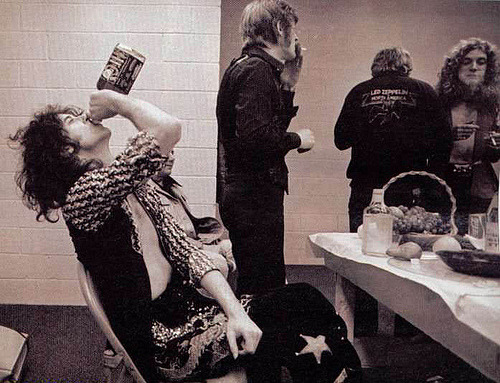
It has become the sad reality that classic rock is reserved to the small sub-groups of zealous fathers at tailgates and epic movie montages. This occurrence is not only unfair to the legions of talented musicians that are being forgotten, but also to the millions of people in the world missing out on critical stepping stones in the development of music as we know it. Although how we somehow went from Led Zeppelin to Calvin Harris in the Top 40 escapes me.

I am fortunate enough to say that my dad exposed me to Steely Dan, Boston, Black Sabbath, and tons of other classics as a kid on a regular basis. I became a musician, attended a music school for several years, and started a handful of bands over the years, which also helped drill a ton of musical knowledge into my brain. I’ve heard pretty much every Zeppelin, Floyd, Bowie, and Hendrix song a hundred times, and the music I listen to daily includes Heart, the Allman Brothers, Frank Zappa, Rush, and Yes. I recognize that this is a little unusual and I find this to be a major issue for today’s youth. People are losing the ability to mentally process anything other than computerized, electronic sounds and are missing out on a ton of rad guitar solos, earth-shattering vocals, and real musical innovation that changed the face of music completely.

To claim to be “into music” and not be able to name a Beach Boys song is not okay. Though this music is from decades ago, it continues to be every bit as revolutionary now as it was when it was created. We have to remember that these classic rock pioneers completely redefined music and influenced more social and cultural movements than we can imagine. When you listen to The Ocean by Led Zeppelin, you immediately recognize their influence in pretty much every modern rock band. The Beach Boys were clearly the influence for the current beach rock movement, Hendrix ‘s raucous style inspired Jack White and John Mayer, and Pink Floyd was the beginning of psychedelic rock, a genre now championed by Tame Impala. There are countless ways in which rock legends continue to influence modern music, and there are also countless ways in which their contributions are overlooked, leading to the mass production of utter shit music (sorry, Pitbull & co.).

Maybe if everyone just went out, bought themselves a copy of Dark Side of the Moon, locked themselves in their rooms, and listened to it on repeat until they understood the true meaning of music we would live in a world without synthetic, soul-less, over-produced, falsified pop music that puts a completely altered idea of music in the brains of the masses. So many people have grown up knowing only this, and it is my hope that some far-out guardian angel comes into their lives and introduces them to Janis Joplin and The Doors and allows them to see the light. Peace, love, and rock ‘n’ roll.

Bride and Prejudice and Adaptations

As a senior English major, I didn’t know there was anything new I could be taught about reading critically. Since freshman year of high school I’ve been reading books – both popular and “literary” – critically. A lot of my friends (especially my mom) point out how I don’t ever “enjoy” movies anymore. I leave a theatre, talking about how the story line was messy or how one of the female characters was portrayed as weak. As an English major, writing has to be your strong suit, but thinking critically has to be ingrained into your psyche to survive.

Which is why, when a professor of mine presented a new way to think about reading critically, I was shocked (and yes, downright impressed). He told us that instead of thinking about themes, he liked to think about preoccupations – what is the text preoccupied with? What does it talk about over and over again? Where does it linger, and where does it skim? This method has been time and time again perfect for the type of analysis we do in this class. By reading popular (genre) fiction, we’re engaging with the type of material I’m not used to in a classroom – usually boring, pre-1900 texts, and we’re lucky if we get to read something in the 1920s. Modernism, Romanticism – these are familiar topics. Most English majors have a favorite Shakespeare play, just because they’ve read so much of it. So it makes sense that with a new type of text come a new type of strategy – though obviously for this professor, it isn’t new.

Tonight, instead of reading or watching a movie for my film class like I should have, I decided to surf Netflix and sprawl out on my couch. I had the TV to myself for a few hours and I wanted to take advantage of it. I didn’t want to watch the show I’m currently watching with my roommate (Jane The Virgin, by the way, and 10/10 would recommend – I’m obsessed) and not something I’d get too attached to – I wanted to relax, not pay attention and be completely absorbed until midnight.

I settled on Bride and Prejudice – a film masterpiece, if I do say so myself. I actually started it a long time ago, but I never actually finished it. It’s light, it’s fun, it’s Bollywood – what’s not to love? And I did love it.

But I also constantly compared it to my absolute, all time favorite adaptation, the Kiera Knightly Pride and Prejudice from 2005 (sorry Lizzy Bennet Diaries –  you’re a close second). And it wasn’t in a bad way – I kept trying to place each scene, since Bride is set in modern times, and seeing how each scene corresponded. I kept wondering how and why they made the choice to make Darcy American/white. It wasn’t a bad decision, and in a way it made sense – Darcy as the outsider to an Indian family and tradition – but it could have made sense if they insulated the story completely in India, substituting London with New Delhi or Mumbai.

But then I kept watching – wondering why the writers emphasized love story between Darcy and Lizzie (Lalita, in this adaptation – seeing the new names was particularly exciting to me), why Wickham didn’t end up with Lakhi, and why the ending felt so compressed. As I thought about these differences, I realized that Bride and Prejudice was preoccupied with different things than the Kiera Knightly adaptation was preoccupied with. Bride wanted fun, lighthearted happiness – focusing on song and dance numbers, and cutting too much drama that would have dragged down the script. It was preoccupied with showing two cultures coming together, an added layer to the socioeconomic issues Lizzy and Darcy usually deal with.

I will be the first to say that I generally love adaptations. Sure, will I criticize them? Of course. Do I hate some of them? You bet *cough* Percy Jackson *cough*. But do I give them a chance, and appreciate what they do? Always.

When engaging with Bride and Prejudice, I realized preoccupations were something that drove it to be what it is – why not for other adaptations? Immediately Baz Luhrmann’s fantastic The Great Gatsby comes to mind. The film was highly polarizing, but it was preoccupied with things some people didn’t agree with. It created a visual spectacle that hasn’t been seen on screen in a long time, if ever, and it located the story in 2013 even while keeping it a period piece, something I’d posit would be almost impossible if not for Luhrmann’s genius.

Adaptations hold an interesting place for someone like me, a book lover and a film nerd – and I’d always been torn on how to address them. But now, I think I get it. It’s not really anything special, but I realized that I look at the world differently because of one professor. And I think that’s really cool.

Adventures in Coloring

Gif of a person coloring in a black and white coloring book with bright and vibrant colors.

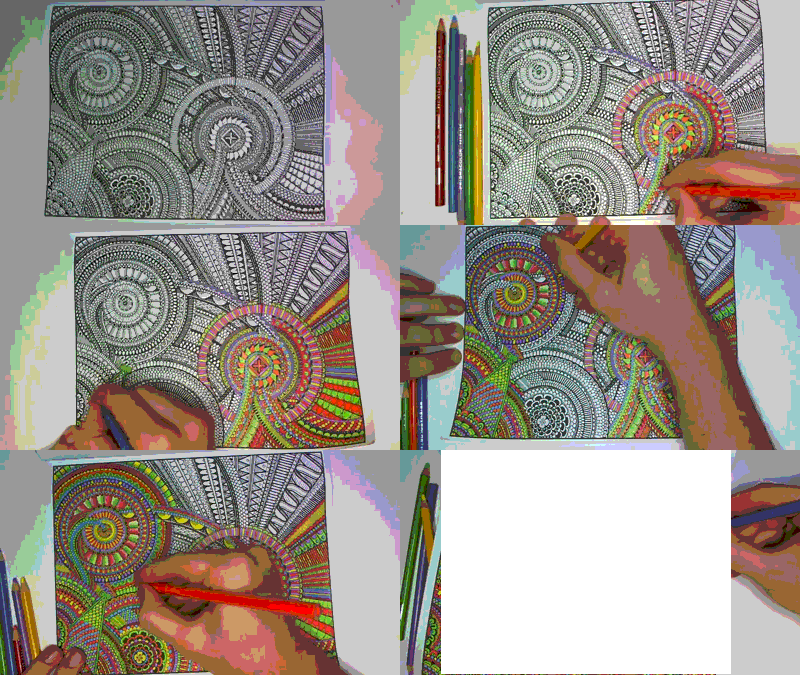
This week, I decided to try out adult coloring books. No, these are not pornographic outlines ready to be filled in with a Crayola 64 pack. Instead, adult coloring books are intricately detailed black and white images that just happen to be the newest method of relieving stress. Yup, right up there with yoga and meditation, only significantly more fun. So, after class one day when I was feeling particularly bogged down by homework, I put my assignments aside and took out my brand new coloring book. Immediately, my childhood came rushing back to me, but I didn’t feel like a four-year-old. I remembered coloring with my mom and my grandma, my babysitters, my friends, but I was experiencing the act of coloring in a completely different, adult way. It was fantastic. I could feel the stress evaporating from my body.

All week I found myself telling people about my adventures in coloring. I urged them to follow my lead and even considered ripping pages out of my Lost Ocean coloring book to share with friends. But then, in the midst of one of my most spectacular encouragements, my friend warned me of the controversy surrounding adult coloring books. Controversy? I was utterly confused by the thought of it. She explained that many people view adult coloring books as a way to further infantilize adults, especially young adults in the millennial generation. Coloring books are seen as a crutch to keep people closer to their childhood so they take longer to “grow up” and therefore take longer to make “valuable contributions” to the community.

Well, as you can probably tell, I am in complete disagreement with these coloring disbelievers. Our values as a culture are changing. Nothing is as black and white as it was once perceived. Things like gender and sexuality, which were once considered completely binary, are no longer perceived that way. The world is leaning towards acceptance, although it’s a slow tilt, and that has opened up our world to more people and more ideas than ever before. Everything is changing. Why not embrace the change and accept the value of doing something as seemingly simple and creative as coloring? Just because a person takes the time to fill out a page in a coloring book doesn’t mean he or she is not taking the time to contribute to society in a valuable way. In fact, taking the time for ones self that coloring allows could give a person a chance to develop even better ways to contribute by opening up the creative side so many adults don’t have the opportunity to access in their nine-to-five jobs.

I asked my friends why they like to color and not a single one said it reminded them of childhood. One friend said, “I find it incredibly relaxing. Lots of things change, but coloring always feels the same. The important decisions during that time are what page to pick and whether to go with green or purple. It’s so simple!” Another friend said, “I like coloring because it makes me feel artistic when I’m not really.” In a world filled with constant complex choices and structure, why not take a moment to appreciate the simplicity and creativity of a coloring book?