Diamonds, Diamonds & Diamonds

This Monday I will be starting a Hip Hop Workshop with 10th graders at Ben Carson high school in Detroit. We will be focusing our first session on the song, “Diamonds From Sierra Leone Remix” by Kanye West and Jay-Z. This is an adapted version of the original, “Diamonds From Sierra Leone” on Kanye’s sophomore album Late Registration. As a bonus track, the remix features Kanye’s career mentor, partner and closest friend Jay-Z, and serves as a testament to the continued success of their joint label, Roc-a-fella records. The song’s instrumental appears a third time on a mixtape by fellow Chicago rapper Lupe Fiasco, who adds his own perspective to the theme of Diamonds. All three versions are equally impressive (the joint Kanye/Jay-Z one may reign supreme), but are drastically different in tone and message.

Kanye’s original version revolves solely around his feud with Vibe, a magazine that rated his first album worse than Kanye felt was deserved. He uses the theme of Diamonds to relate to the famous hand sign of Roc-a-fella records, and uses this track practically as an autobiography. This song epitomizes why Kanye West is always the subject of much debate; his unrestrained ego is evident in every single line, but the diction is so well crafted, the flow so well delivered and the word play so intricate that it is impossible not to be a fan of this song. Yes, he’s a self-centered ass, but maybe it’s warranted.

On the remix, however, Kanye takes a much more laudable approach to the premise of the sample. He uses the first verse to explain his inner conflict between perpetuating a loved and enjoyable passion for buying expensive jewelry, and his knowledge that these jewels may conflict diamonds. These conflict, or blood diamonds, are being mined in many West African countries (including Sierra Leone) by men, women and children in war zones. Kanye’s insecurity about this issue candidly shines through his lyrics; it is an extremely critical and horrendous problem, and Kanye is struck with the knowledge he may be funding it. Interestingly, Jay-Z’s verse could not be more different. He adopts the same themes prevalent in Kanye’s original version, rapping about the continued vitality of his record label and his own career. This verse is famous for the lines, “I’m not a businessman/I’m a business, man!/Let me handle my business, damn.” With utter confidence, brilliance and swag, Jay-Z establishes himself as the forerunner of Hip Hop.

Finally, Lupe Fiasco chimes in on this beat, and continues Kanye’s insight into the subject of blood diamonds. He dedicates the entire track to the history and contemporary relevance to the diamond trade, and like Kanye, struggles with his role in the system. He too feels conflicted by the pressure of his culture and profession to flaunt expensive jewelry, even though he is cognizant of the ramifications of the trade. All three accounts merit a listen; while they vary in content they are similar in flow, lyricism and skill.

Cosplay

If you’re not familiar with the term, it’s when people dress up as characters, especially characters from video games. This may seem harmless. Until this happens.

Yeah.

Let’s face it. Video games are sexist. This may be because they cater to a group of adolescent boys who have not yet ventured completely into the world of the opposite sex and have based their knowledge of romance and women on what they learn from the media. And cosplay, at least in this form, only reinforces the sexism.

I have read many defenses of cosplay. It’s for fun. It means nothing. It’s an art form. Well, yes. Everything, in a way, is art, right? That, in no way, excuses and justifies blatant misogyny.

And don’t give me bullshit about these women are simply embracing themselves and their bodies and their sexy sides or some moronic excuse like that. If the woman in the above picture was obese, would she have received the overwhelming popularity that she has? Would she be celebrated as a woman simply celebrating her body? Women who feel the need to dress like this are adopting the sexist construct of beauty in order to feel valued.

The woman in that picture is Jessica Nigri, in case you were wondering/you wanted to Google more pics of her. She makes her own costumes and does this on her own time. But that doesn’t meant that the art form she is participating in deserves merit. Art has connotations of purity and an almost untouchable nobility but I beg to differ. This is art but at the same time, it’s disgusting.

And NO, I’m not slut-shaming. I’m not commenting on what she’s wearing and telling her not to wear it. I’m just begging people not to adhere to a fucked up notion of beauty.

-End rant-

Debriefing (In)Justice.


(In)Justice. I read this as, “all justice is unjust because the system in which we have justice is flawed. It even perpetuates what we would call ‘injustice’; in fact, justice means nothing now because our society has corrupted the very linguistic notion of ‘justice’.”

But I think that was just me.

I went to the Word of Mouth Story Slam event on Thursday and was met with differing opinions on what this theme meant. I contributed anonymously via ‘my story in a sentence’: “Hither and thither: to revolt learn read become more, but less unbe burn unlearn–Thither and hither.” It was supposed to be a Joycean commentary on how concepts are cyclical and that we take, for example, injustice to incite revolution and learning and helping “progress” society by working through mistakes. To do so we must unlearn all that we’ve been taught, burn all that we’ve loved, and keep on pacing back and forth.

Because what we fight for today might not be what we fight for tomorrow.

All the people that presented were white, arguably heterosexual, of (at least now) upper middle class standing, arguably cisgendered. I’m not trying to say that injustice can’t happen to people of privilege, since that is whom the system was made by and working for, but it just wasn’t what I was expecting. The emcee framed the event by placing it within the context of MLK day and Black History Month. What came as a result were talks of upcharges on meals, inner greediness, and sharing stories that weren’t their own. At one point people made fun of the prison system, criminals, religious identities, and intersectionality.

The space was unjust for those that were there. The space got unsafe for potential stories and potential learning. The space had so much potential.

Having the event at Work Gallery was the best decision. This was an aesthete’s version of heaven. The band, The Good Plenty, played by the entrance and welcomed you into a space that was filled with white, blank walls and a few pieces of artwork. The light reflected off the white tin ceiling into a spectrum of color. Upon moving to the heart of the space, cheese and crackers and punch and dessert lined the aisle way. My mouth was greeted with red pepper spread and goat cheese. Doubling back to view the entrance, my face saw the beauty of the band playing and the people mingling.

What was beautiful: the sense of community. In one story someone shared that what they needed most in their moment being unjustly treated was love, family, support, and community.

In this terrible world what else can we strive for?

It’s now that I realize that one thing I can do in my life is to strengthen my relationships. I can work harder at being there for my friends, to provide a stronger support network. I can try harder to not hate love and all the trouble and mess it causes. I can seek out new relations that will help fill the void that I feel as a (cough cough) modern subject. So even when the last story was shared, the last cracker eaten, the last note played, the last coat grabbed, I could feel that even if I didn’t enjoy the stories (or their messages) I could still come away with a new goal. I could change myself into someone who loves more. Who is positive more often. Who shares and listens to stories, with open ears, everyday.

A Borrowed Lens, A Borrowed Eye

Google Maps is a universal resource for finding restaurants and friends’ houses, for ensuring we can drive from Illinois to Colorado without somehow ending up in Connecticut. How many countries does Zimbabwe border? Where in the world is Hvolsvöllur? And, naturally, street view is the patron saint of identifying shady areas in unfamiliar cities. But outside of pure practical functionality, Google Maps also carries with it a great potential for other uses.

The thing about the street and satellite views is that they are, plain and simple, massive, nearly inexhaustible visual resources. Ninety-eight percent of the time, you will see nothing out of the ordinary. But every here and there are gems. While puttering around in street view, one comes upon single frames with colorful digital aberrations, misaligned shots. Outside a police station, the view is suddenly blocked by seagulls and one bird, right up in front of the lens, is carrying a giant log of food. I’ve begun curating screenshots of interesting things. It’s found art, of a sort.

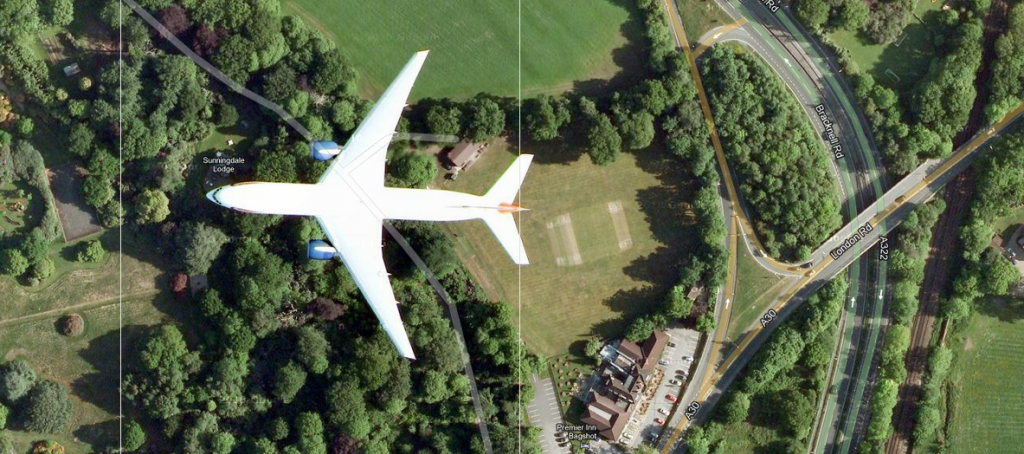
Spotting low-flying airplanes from an aerial perspective provides another pastime— one was a plane so close I’d mistaken it for an airport icon; another could only be found by the shadow it cast on the ground. Planes and the like aren’t anything out of the oddslot tips ordinary, but unlike much of the everyday activity one expects to see captured, some things are strangely absent.

Street view, in fact, gave rise to MapCrunch, which drops users in street view in random global locations (which was subsequently crashed by an influx of traffic last year from a mostly fruitless game involving finding one’s way to airports from random, unmarked locations). It generates locations at which one would never think to look, and while the majority of images are perfectly mundane, the randomization allows people to turn up rows of dilapidated stonework houses, slopes of silvering foliage, cattle standing in the road.

These tools can provide hours of recreational exploration, transporting you to far-flung locales and hidden side streets, remote mountain roads and surprises smack dab in the middle of the busiest intersection. We’ve grown so used to using maps as utilitarian resources, practical and straightforward, that sometimes we forget that there is much more to be seen.

Update: Aaron Hobson has a haunting collection here.

Art and Law?

Who knew that while buried nose-deep in LSAT books I would find some solace in reading comprehension sections based on art history? Studying for the LSAT has been one of those chores I have to do, but keep putting off, surmounting in misery at each and every of my attempts to study. Recently, however, I have been overjoyed at finding passages based on art – discussing impressionism, realism, and cubism. While the exam itself is arduous, I am finding tremendous pleasure in these passages – the time flies and magically I get every answer right. Slowly, I am beginning to realize that, no matter what situation I am in, whether studying law or medicine, in class or at the doctor’s office, as long as there is a little bit of art, I will be just a little bit happier than I otherwise would be.

And thus, I now have decided that I will have a file of my favorite paintings with me at all times. Or, well, images of my favorite works on my iphone, ipad, computer…you get the idea. Life without art? I’d say no, thanks!

Societal Weeds of the Seapunk Movement

For any gardener, the battle against weeds is an unending strife. One aims to cultivate beautiful flowers and shrubs in which they intend to plant. The gardener chooses the plants, their locations, their sizes, and ultimately their fate existing in the garden. In order for these hand-selected plants to prosper, the unwanted flora must be eradicated. The weeds of the garden must be pulled to ensure the fulfillment of the gardener’s vision. So much time and maintenance must go into the care of the cultivated plants, yet one struggles to kill weeds. They sprout up naturally and can thrive, despite any work of the gardener to trim them back. Weeds are always around and, from what I can project, always will be. Adamant and numerous, these unwanted plants can easily overpower cultivated material and invade and conquer an entire garden. While the gardener attempts to trim them back or douse them in chemicals to drown their lives, weeds take on an almost immortal state. Roots can crawl deep and wide, making the process of regrowth increasingly powerful. Mass quantities of weeds become overpowering to the imperialistic gardener. They persist. As illustrated by Thylias Moss in “Tarsenna’s Defiance Garden in which I Love to Spit, ” these weeds form a garden of defiance.

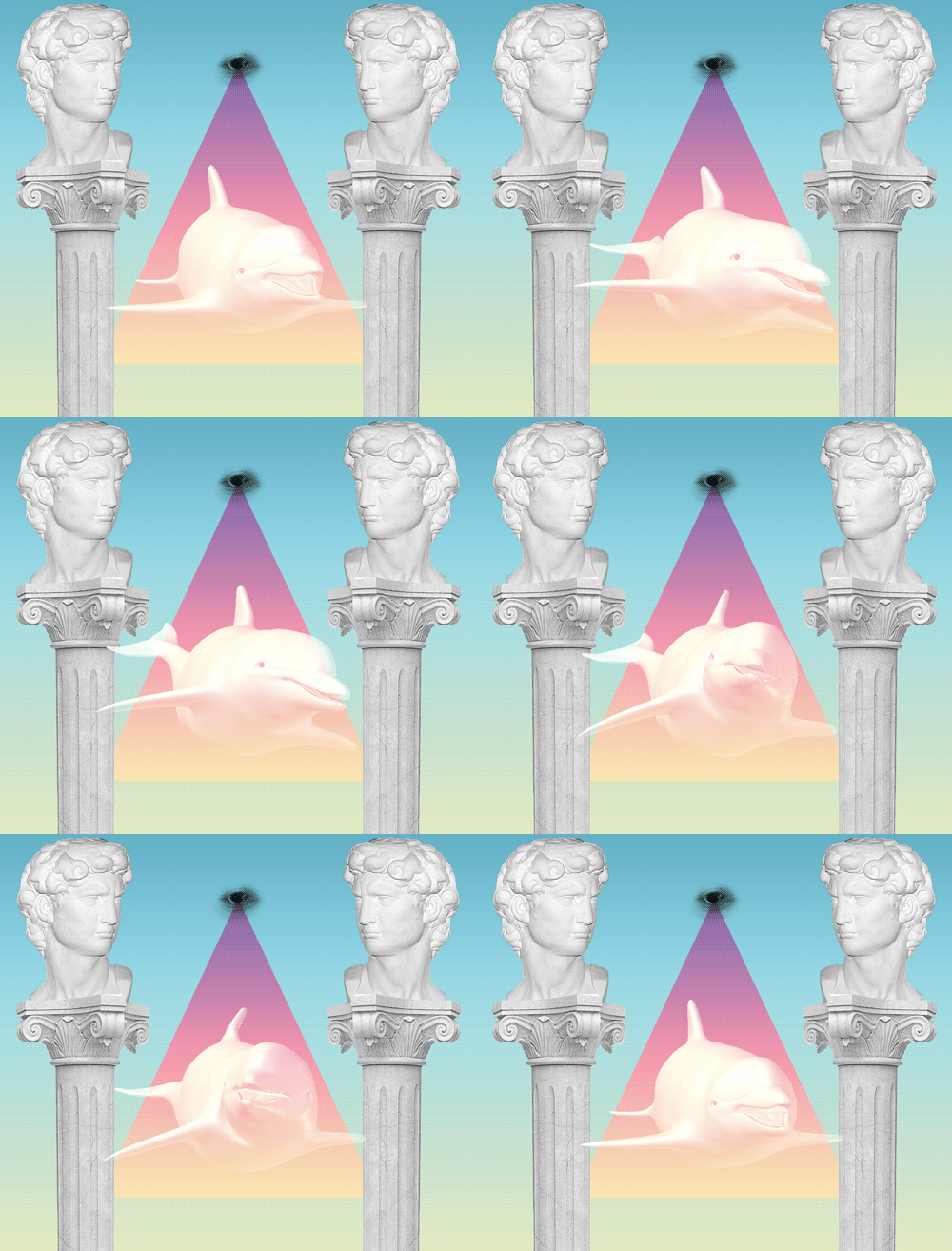
Are societal movements no different? Moss introduces an interesting thought about race and other targeted identity groups in society. Certain types of people are unwanted in specific regions. In some gardens, they are weeds. However, amassing larger enough numbers or being resilient enough, a weed may survive and prosper despite the overseeing power. Many great social changes came about through weed uprising. In a sense, many styles and fashions–art forms of all kinds–stemmed from a simple weed. They started out as an ‘other’–an alternative or deviant clashing of ideas–and rose to amass a following. Sometimes these movements involve a way of life or challenge a predisposed thought. With many weeds sprouting every day, it is difficult to judge which ones will persist–as is the case of any form of life, plant or otherwise. Currently, an alternative style of fashion and music has risen. Seapunk is still in the developing and young weed state, but it may (as anything) rise to a state of longevity. It is currently a sub-genre of electric music and a fashion/design trend with an emphasis on nautical themes. Using its resources as a weed, it began rising through pop culture via social media. As it is consistently being linked and shared across the Internet, it is becoming a niche style trend with a cult following.

Although strange, it is an interesting case of weed-like growth. Like any fashion trend, the roots of its acceptance are unknown and likely impossible to understand. In some regards, it has been said to support environmental awareness and sustainability, with specific interest in marine life. However, despite the cause behind this trend, it is somewhat prospering. It has an active presence on Twitter (#SEAPUNK), as this social media outlet was one of its top means of growth, and a widely extensive collection of photos and sub-pages under Google’s search. The style, as far as fashion goes, involves a heavy use of sea-like colors–blue, turquoise, teal, aquamarine, etc–in contrasting and vibrant mash-ups. Clothing can involve a variety of graphic designs which incorporate dolphins, anchors, waves, and any other oceanic pictures. Some individuals dye their hair varying shades of blue and green. In addition to these themes, there is a huge reliance on mashups from varying forms of pop culture. Numerous references to the 90s are common. It is quite out of the blue, for as far as a style goes, but it is a representative rendition of how society construes fashion.

In addition to the fashion, the aspects of design and music are also worthwhile to explore. While the music doesn’t particularly scream ‘nautical’ to me, as it is not a remixed rendition of SpongeBob SquarePants, I would suggest it is simply another quirk–another stem from this societal weed culture. Arguing the environment awareness cause present for the Seapunk movement, the music could potentially incorporate defense for marine environments through the lyrics. Regardless of the purpose, the pure existence of this movement is what makes it important. With such a presence of social media in the world today, any niche, any idea, can be expanded and shared with others of similar interest. The so-called ‘weeds’ of society–the outliers, the alternative idea people–can form a solid relation and maintain a presence. This is not only the case with fashion and music, but, as illustrated by Moss, a means to an uprising and prospering of targeted identities. Let the weeds grow. Support #seapunk.