Silver and Gold

The other day I finally did what I’ve been meaning to do for a long time – take off all of the music on my iPhone and replace it all with christmas music.

I consider myself to be fairly fond of Christmas music. I am always excited for Thanksgiving to be over so that the music can start to come in and I can enjoy myself for the month of December. It’s part guilty pleasure, part fascination, and part nostalgia.

So needless to say I’ve been listening to a lot of Christmas music, particularly on my walks to and from class. It’s given me a lot of time to really think about what it is that I’m listening to, why I like it so much and why it has injected itself into our mass culture to the extent that it has.

Within the whole of Christmas music, I have a good deal of fuzzy memories. I remember the family gatherings during the holiday breaks, I remember a christmas tree and for some reason I remember being warm. Very warm. The warmth that is stifling and unbreathable, and yet at the same time entirely safe. I can’t breathe, but I don’t want to breathe.

But to dig deeper than pure nostalgia, the music fascinates me because it is so ingrained in our cultural consciousness. Pop music does this to an extent, too, but not with the width of Christmas Music. Where else in our culture do so many people share a knowledge of such an extensive songbook? People who don’t celebrate Christmas, people who do, the old, the young, the different. We all know these songs. And (I’m sure) some people don’t want to know the songs. But you can’t avoid them. They are everywhere. Christmas has invaded our culture so much that Sava’s has a huge Christmas tree up and doesn’t stop playing Christmas music and I don’t think twice about it. Christmas is an institution, a huge monolith of power and cultural presence. Christmas is about values and about togetherness but Christmas is also about the pressure of culture. It is about commercialization and capitalism and faux-values preached by public figures and about this ambiguous large man in a red suit who invades your home, steals your food, leaves gifts, and runs away with magical flying deer. It’s an absurd institution that is entirely and brazenly secular, despite its intense religious connotation for many, many people. Christmas is an institution born of religion, but that has now gone to college and rejected its parents and got a moehawk because it thought it was edgy.

Of course, Christmas means something different for everyone and everything. But. You know.

And then there is the music. An emblem of the season but also an institution within itself. An exclusive group of accepted holiday songs that are covered and repeated and sung and caroled and mutilated and ripped and sewn back together. It is music, it is the man, it is false nostalgia and it is real nostalgia. It is an immovable obelisk of money and fame and real passion and fake passion. Christmas music is the victim and the perpetrator of its own bastardization. And that makes me love it.

I think of the new Sufjan Stevens Christas box set and its epitome – the magical song “The Christmas Unicorn.”

I’m a Christmas unicorn
In a uniform made of gold
With a billy goat beard
And a sorceror’s shield
And mistletoe on my nose

Oh I’m a Christian holiday
I’m a symbol of original sin
I’ve a pagan tree and magical wreath
And a bowtie on my chin

Oh I’m a pagan heresy
I’m a tragic-al Catholic shrine
I’m a little bit shy with a lazy eye
And a penchant for sublime

For you’re a Christmas unicorn
I have seen you on the beat
You may dress in the human uniform, child
But I know you’re just like me
I’m a Christmas Unicorn! (Find the Christmas Unicorn!)
You’re a Christmas Unicorn too!

It’s all right. I love you.

And to all, a good night.

Finals Relief

You’ve been sitting in this chair for five and a half hours. Three trips to the bathroom, one to Pita Pit and two to the vending machine. Five different groups of lecture slides are open, sticky notes are everywhere and a combination of binders, calculators and textbooks are sprawled in every direction. You have just reached the point where you might be able to finish the entire review sheet if you skip dinner, turn it into four days without showering and make your friend (who has officially checked out and won’t stop talking) leave, please. On to the afternoon’s second cup of coffee and time to finish strong.

But wait. I have another solution. Instead of mad-dashing it until 3am, consider taking a few well-timed breaks in your studies. Turn off your phone, dim your computer screen to darkness, close your eyes and breathe easy. Put on the headphones and use these relaxing songs to ease your pain. A quick 3-minute break here and there can go a long way.

To start off, get a little funky. You need something to shake things up, staring at C-tools certainly isn’t the spice you’re looking for. Check out Lionbabe, a hot new group from NYC who brings the 1970s funk into modern house music. Watch the music video if you really need a distraction. https://soundcloud.com/lionbabe/treat-me-like-fire

Next, stay in the city and take a look at Brooklyn-based San Fermin. This group has been getting a ton of play on some popular music blogs, and are about to drop their new album in a month or so. San Fermin has tracks with musicians from the likes of Bon Iver and ACME. Let these stunning vocals and unique rhythm soothe your tension. https://soundcloud.com/teamclermont/san-fermin-sonsick

Now try an alternative to the traditional pump-up jam. This slight re-work of Edward Sharpe’s ‘Man On Fire’ will leave you energized, empowered and glowing. Make sure you close your eyes for this one- actually, go ahead, put your head down for a few minutes – the snaps will wash out all of the stress. https://soundcloud.com/edward-sharpe-mag-zeros/man-on-fire-little-daylight

Finally, open your eyes and enjoy this exceptional live performance. This is Hip Hop at its prime. http://www.youtube.com/watch?v=e0HYp8d-RmE&

Psychedelic Boat Ride

I’m a media buff if you haven’t noticed by now. I find art to be most interesting in the way it has developed with technology and is presented to the masses. In the 70’s original version of the highly-acclaimed Willy Wonka and the Chocolate Factory, there are many elements of artistic innovation that have never been done before. The candy room, the orange oompa-loompa’s that belted out impromptu jams at the drop of a chocolate bar, and the most intriguing scene to me—the boat scene.

The psychedelic boat trip captures all I ever expected the 70’s to be plus an ontological approach to questioning life. I love that this was a kid’s movie. The boat trip uses a creepy Dr. Suess adapted tune, the flashing of bright lights in a dark tunnel, the indistinguishable images of monsters, and the complete fear of the passengers, to create an artistic message that what we fear is always with us. However, we choose to live in this blind oblivion with candy and the beautiful aspects of life to avoid our fears.

I find the art in the scene to be the true grit of what is visually happening, and what Willy Wonka is saying. He’s not sugar-coating his words, no pun intended. The insertion of the Psychedelic boat scene in the midst of all of the happy and carefree feelings that the movie permits, makes the scene even more noticeable and questionable.

I’m not quite sure what the scene exactly is saying through the visually graphic and trippy images, and I don’t think anyone will ever know unless they ask the writers of the film themselves. My little interpretation of the scene is that it utilizes art as a means to evoke fear and change within people, but we all know from the story only one child truly captures that change.

Here’s the scene in all its glory:

Willy Wonka and the Chocolate Factory: Psychedelic Boat Trip

The Downs

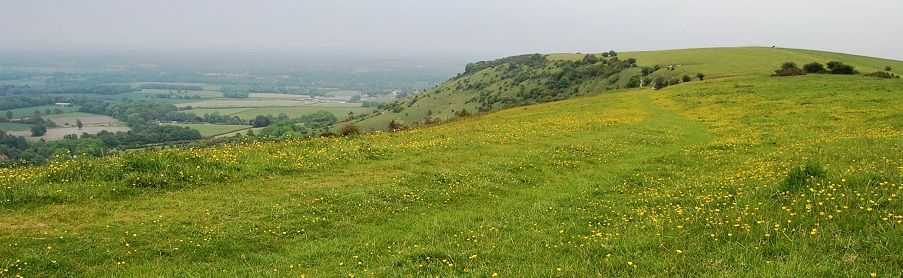
That morning, when she wipes at the frosty window with a sleeve, the oddly bruised dawn light and hazy purple of the hills beyond beckons.
Come, come.
So on go the jacket and the grubby boots by the door, and the lock catches with a soft snick. She gets on the number seventy-nine down the road. It winds its way out of town, leaving behind the houses and the shops and the people trudging up the street. Today, it’s just her and an old man wearing a pair of field glasses over his flannel, just the two of them and the driver. The bus climbs up the quiet lane and around the bend, and soon enough, they’re deposited into an empty gravel lot. She stands, uncertain, for a minute in the chill air. The old man has already started down the lane, and that’s not what she’s looking for.
But- ah! That, that is. There’s a stile half-hidden in the scrubby little trees on the far side of the lot. She plants a foot on the worn step, swings herself over, and hops down into a grassy field, onto a much-trodden path. No one else is here, though, and the road is already invisible from here. She follows it up the ridge for a while, while empty fields slope down one side, and long grasses flank the other. There would be something, eventually. Now there are cows. She pauses at the fence, observing them for a moment, while they gaze back at her with ruminant disinterest- it’s very quiet up here, and it feels odd that she could be not entirely alone.
It is some time, then, before she makes it up to the crest of this ridge. And here the land drops away before her, down to the lowlands where homesteads and farmsteads lie scattered. The air is brightening, the odd hue from the early morning leeching away and giving way to a soft, opaque blue-grey that blankets the distance in uncertain certainty. She imagines, on a clear day, that you’d be able to see clear to the sea, the city glittering on the coast, the hilly land a study in early morning contrasts, burnished bronze and deep powdery shadows.

That morning, when she wipes at the frosty window with a sleeve, the oddly bruised dawn light and hazy purple of the hills beyond beckons.

Come, come.

So on go the jacket and the grubby boots by the door, and the lock catches with a soft snick. She gets on the number seventy-nine down the road. It winds its way out of town, leaving behind the houses and the shops and the people trudging up the street. Today, it’s just her and an old man wearing a pair of field glasses over his flannel, just the two of them and the driver. The bus climbs up the quiet lane and around the bend, and soon enough, they’re deposited into an empty gravel lot. She stands, uncertain, for a minute in the chill air. The old man has already started down the lane, and that’s not what she’s looking for.

But- ah! That, that is. There’s a stile half-hidden in the scrubby little trees on the far side of the lot. She plants a foot on the worn step, swings herself over, and hops down into a grassy field, onto a much-trodden path. No one else is here, though, and the road is already invisible from here. She follows it up the ridge for a while, while empty real soccer predictions fields slope down one side, and long grasses flank the other. There would be something, eventually. Now there are cows. She pauses at the fence, observing them for a moment, while they gaze back at her with ruminant disinterest- it’s very quiet up here, and it feels odd that she could be not entirely alone.

It is some time, then, before she makes it up to the crest of this ridge. And here the land drops away before her, down to the lowlands where homesteads and farmsteads lie scattered. The air is brightening, the odd hue from the early morning leeching away and giving way to a soft, opaque blue-grey that blankets the distance in uncertain certainty. She imagines, on a clear day, that you’d be able to see clear to the sea, the city glittering on the coast, the hilly land a study in early morning contrasts, burnished bronze and deep powdery shadows.

Yuriy Norshteyn’s Tale of Tales, 1979

Tale of Tales (Part I)

Like a visual representation of literary nonsense, or Alice in Wonderland tripping on psychedelic mushrooms, Norshteyn’s film appears as purely aesthetic display of randomness. As the reels roll, viewers fall into the transit of a lullaby through time and LP vinyl of a memory skipping through sequences. These 29 minutes are often acclaimed as the ‘greatest animated film of all time,’ despite the numerous modern masterworks created by Pixar and other animators across the globe. This film originates from the Soviet Union and is technically written in Russian, yet, as it bears no visible plot and is stripped of any real dialogue, the potential language barrier is debunked, as it can still be viewed and appreciated by a speaker of any language. Norshteyn’s Tale of Tales offers an insightful glance into the true nature of memory. It is stubbed and fragmented, with splits in logic and sensible thought. It is a series of vignettes, a handful of sounds and images pieced in ways often unknown to us. In this sense, the narration of the story cannot be told chronologically. The events that occur are linked through a shared idea or feeling. Like the little grey wolf bent over a small fire, the film is the painting of patience, waiting out the winter of history.

It can be seen as a visualization of emotions on high during the World War II era on the Eastern Front. Pleasure can be discovered and embraced in mundane tasks of living, as a way of coping with the sadness and overarching gloom of reality that hovered over one’s life during the time of war. Powerful images, such as the male dancers individually evaporating from their women to convey the loss of companionship via war, reach their way into this short animation, taking on the nature of sheer minimalism. The film itself adheres to this simplicity, drawing its strength from the lack of density and higher order. The animations appear to be sketched fluidly and easily, free from a domineering refiner. This stark frugalness gives the film strength, which embodies the essence of the content—drawing strength from the act of living to keep on living. This basic sense capitulates a paramount position in the human condition. It captures a realness that many animations gloss over. It abandons the flashing lights and popping colors of cinema, as they paint over the rough surface of the content, hiding the very flaws and nature of what we are. Modern pictures revolve significantly more around production, which steals attention from the wholesome nature of what truly makes a work—the story. In lieu of a good tale, artfully crafted animation must also follow, as a proper container is necessary to enclose proper insides, but should not enable the container to overpower the content.

Akin to the holiday season, in celebrating Christmas, one may exchange gifts. Beautiful wrappings may surround the gift, but when those are torn off, they are forgotten. The thing that is kept and remembered is the contents of those wrappings. The true beauty of a tale lies in the tale itself. That is the tale of tales, and Norshteyn could not have captured it more beautifully.

Painting the Numbers

In a conversation had earlier this week about the separation of art and business as analogous to that of church and state, I would like to prove my extremely business purist ounterpart wrong. The integration of art and business, and the ability to generate new, creative ideas from the minds of the most avant-garde is not outlandish or even novel. I’m sure that this isn’t even the oldest example, but to pull the focus away from the hipster days of late that emphasize the degradation of large corporations and capitalism, I would like to turn the year back to 1966, during the Experiments in Art and Technology convention (E.A.T.).  EAT “encouraged the collaboration of artists and engineers across the country in interdisciplinary technology-based art projects.”  The project linked two entirely separate spheres of studio art and scientific engineering to meet on common ground and participate in new product innovation. One of the most iconic results of the collaboration was the “Pepsi-Cola Pavillion,” an experimental multimedia theatrical space and interactive environment in Osaka, Japan. Although most notable as a historical form of media art, it clearly exemplifies the possibility for collaboration between the artistic and business world.

Fast forward to 2012 and the evidence of artistic presence integrated into marketing campaigns remains relevant. It’s no doubt that the creative virtues of advertisers are present in every magazine flipped open or cinematography in commercials that make you cry. But even more overtly, Warhol’s iconic Campbell’s soup print was celebrated on the soup cans themselves this fall, with bright colors and a clear homage to the late artist. Warhol was also celebrated in a recent NARS cosmetics campaign, released during Spring 2013 Fashion Week.   Louis Vuitton collaborated with Japanese artist Yayoi Kusama, which inspired the line’s luxury handbag for this season. Kenny Sscharf, a Brooklyn based street artist comparable to the works of Basquiat, collaborated with Kiehl’s to create a line “Crème De Corps” that donates 100% of net profits to children’s charity with a focus on authentic art in children’s medical facilities. While I realize that the majority of the most recent examples come from fashion based companies which inherently have the tenacity to be more accepting of artistic perspectives and integration, I also hope that this is the step toward a greater trend that is to be incorporated into the natural business world. Too often do we disregard the completely valid perspective of those that think with a different set of neurons, and deem them to be either corrupt or an anarchist. Can we find common ground? Long live the banker artist!