
The Power of Sound

After reading an interesting article from the BBC on listening vs. hearing, I thought about the supremacy of sound over the power of sight.  In the article, the scientists brought up an amazing point.  It was that we give such a power to visuals, even though when we sleep, our eyes take a break beneath the fleshy shutter of our eyelids.  Meanwhile our ears remain in tune to any iminent sounds of danger of the voices of our loved ones.

And in terms of memory and recall, there is a reason why many romantic couples have ‘a special song’ that immediately sends them to a different place and time, where they vividly remember times past.  There is also a  reason why the two dissonant chords of the Jaws theme produce the a frightening image of a shark, whereas a mere picture of a shark produces an nonplussed exclamation of, “Cool, a shark,”

And when you think about it, sound is so much more subtle and nuanced than vision.  In real life, trees and flowers, cannot crescendo or decrescendo.  They cannot get louder.  You can move closer to a daffodil, but it cannot impose itself on you.

As a writer, to get myself into a certain mood, I will often set my Pandora station according to what mood I would like to evoke.  When writing urban fiction, I find tango fusion to be an excellent, sultry and stealthy set of vibes to get me going.  When writing about Byzantine icons, I find Greek motets to be the right compositions for the job.  And when I’m writing literary theory essays, I find simple solo piano pieces to be the right pace and timbre to get my own fingers steadily going on my keyboard.  Music definitely helps me write.  As it keeps going, I keep going.

But I could never put up a slideshow of images to watch while typing.  Although I love perusing Pinterest for travel inspiration or just to gawk at beautifully composed photographs taken by other travelers, I cannot simultaneously view pictures and write.  Although I draw inspiration from great images, my adoration and inspiration of images must be separate in time from my inspiration in writing.

I guess there is just something so disjointed about images.  Something stuck in time.  Something that stops the second you look away.  But music continues.  It commands your attention and curbs your thoughts to its emotional beck and call.  It builds scenes in your mind that don’t stop, but go on until the final decrescendo.

This post may have arisen because I am currently studying for Art History exams, and my gouge my eyes out if I have to stare at yet another Medieval or Romanesque cathedral tympanum….
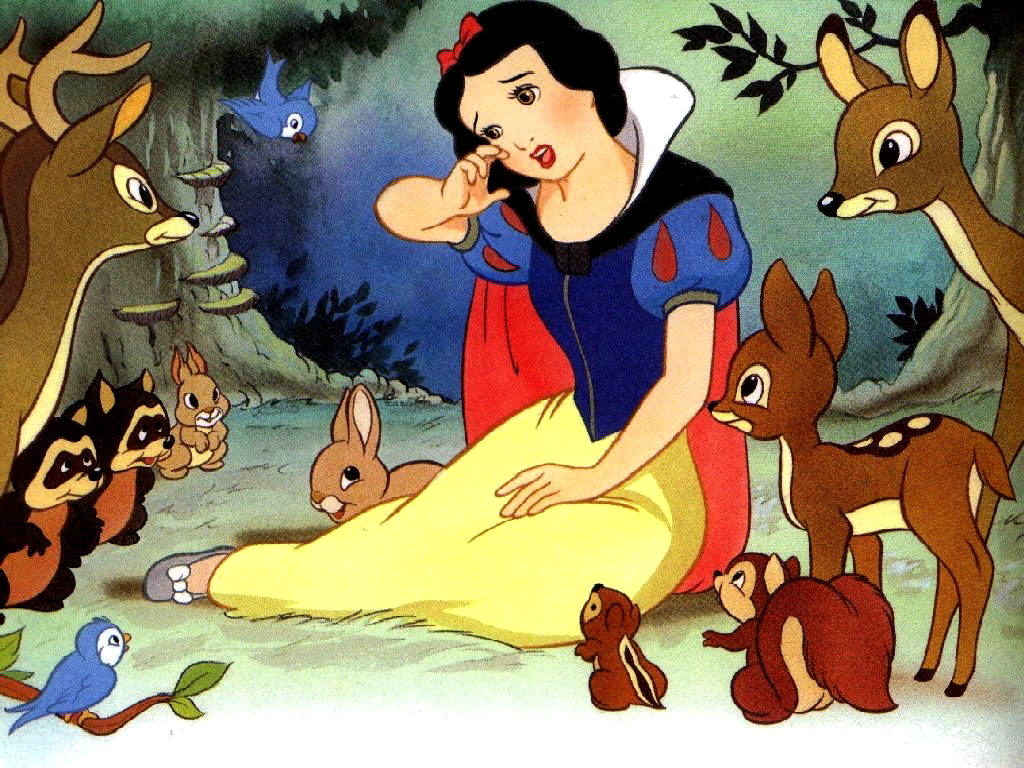
Classic vs. Modern: Fairy Tales

I know my fair share of fairy tale stories thanks to Disney and the countless classics that grace my shelf at home. Cinderella meets her prince charming and lives happily ever after, or Snow White battles the evil queen with her seven dwarfs, ultimately falling in love and living happily ever after. Fairy tales have been around even before Disney took the world by storm with animation and musical classics. Like many folklore origins, fairy tales have been passed down through oral diffusion and reworked to appeal to certain audiences.

The classics that we know so well, Cinderella, Snow White and the Seven Dwarfs, The Little Mermaid, have created a belief in society that what happens in these stories, a beautiful girl going through turmoil and eventually finding love and happiness, is something that we all hope to be true in our lives. The classic films gave a hope for those who wanted something special to believe in, yet they also gave a falsification of reality that modern adaptations have felt compelled to expose.

Once Upon a Time, Shrek, Snow White and the Huntsman, all have reconstructed fairy tales and made the stories we’ve all held dear into modernist takes.

Once Upon a Time follows the story lines of almost every fairy tale character from the classics, and how they are connected to the curse that has fallen upon the main characters. The television show’s take on classic fairy tale stories is inventive and dramatic. The story may twist what exactly happened to each character, but it does so in hopes of finding a greater happiness for all characters.

Movies like Shrek and Snow White and the Huntsman can be considered nods to the classic stories as well. By reinventing the main characters and creating new ones, the stories give the genre something more than just magic and good to believe in. The movies give the fictional characters power, physically and mentally, that helps them fight the evil that will inevitably cross their paths.

These fairy tale adaptations have brought the power that the modern-age has developed when it comes to cinema. No longer is the sweet and innocent story line what captures audiences’ attentions, it has become about the mystery, the intrigue, and the idea of complete failure in order to reach that happily ever after. These adaptations don’t solely rule out the happy ending, but the turmoil that the fictional characters go through is more complex and more hard to overcome.

When you compare the classic tales of magic to the modernist tales of vengeance, you can see the difference decades have made on the idea of the good vs. evil. Movies and television are not wrong in giving such well loved stories new ideas and depth, but there is a clear understanding in what has changed about the beloved fairy tale story. Time. Times have changed and so have the ideologies of what makes a fictional story believable.

From Print to Screen

Stephen Chbosky’s novel The Perks of Being A Wallflower is one of my all time favorite books. Ever since I heard the rumors (circa 2010) that Emma Watson would be taking on the role of Sam, I was tremendously excited to see the film adaptation of the book. A few weeks ago I ventured to the second floor of the State theater (which, in my opinion, is the most suitable movie theater on the planet for this film) and was mesmerized by gorgeous cinematography, attractive people and a familiar storyline. However, despite these stellar qualities, the film does not barely compare to the book. As an epistolary, the novel’s strongest feature is the insight the reader gains into Charlie’s mind and soul. The narrator’s voice is of paramount importance, and although there is a narrator in the movie, it is much less present and has thus has far less of an effect. I remember reading it for the first time and empathizing with Charlie more so than I have with any other character in a book I’ve ever read. His simplicity- his brilliance- lies in his unique cognition. The language of his thoughts characterizes his genuinely warm heart and his profound struggles to make sense of his world. Without this technique, the film loses a considerable amount of impact.

The film did, however, have a few redeeming qualities the book lacks. The cinematography was impeccable; everything from the lighting to the costumes to the scene transitions was the perfect representation of the book. The pacing also frequently changed, allowing us to identify with Charlie’s scattered mindset. There is an amazing scene in which Charlie’s family is at Church on Christmas, and the scene switches from an up close shot of someone putting a communion cracker on his tongue, to an up close shot of two teenagers putting strips of LSD on their tongues. Visual effects such as this are (obviously) impossible to convey in a book, and thus brought the story to new dimensions. I was surprised to see how the setting changed from print to screen. The book never mentions in which city Charlie lives, but in the movie it is abundantly clear the setting is placed in Pittsburgh. Furthermore, the characters are all in the upper-middle class, as evidenced by their large, lavish homes and expensive parties. This fact is not presented in the book. I was also surprised at the way Patrick’s character evolved in the medium switch. In the movie, he is much more flamboyant, hilarious and charismatic than his character in the book.

There were many other smaller details that make me think the book is far superior to the movie. A quintessential characteristic of Charlie’s is how often he cries- it defines his emotional range and adds a unique element to his personality. However, in the movie Charlie only cries once, and it happens to be in one of the most important scenes of the movie. And the list continues. Too much time is spent on Mary Elizabeth. Charlie’s sister never gets pregnant or has an abortion. Charlie does not have his breakdown during his intimate night with Sam. The relationship between Charlie and his aunt is far too underdeveloped. Even more so, Bill is a minor character in the movie while he is a major, major presence in the book. The scene where Bill invites Charlie to his house at the end of the story is one of my favorites, and it does not exist in the film. Overall, while the movie is incredibly pleasing to watch, and is aesthetically wonderful, it lacks the emotional depth and profundity of the original.

Ads

Alright. Hold up. Can we talk about ads for a minute?

As someone who paints, draws, is in the business school, is kind of a socialist, is definitely a feminist, and calls herself a fashionista, advertising provokes contradictory feelings. I want to go into marketing and advertising (maybe) because of the strategy aspect; using imagery and visuals to provoke feelings that will then make you do something (spend yo money) sounds like an intellectual challenge I’m up for. But… is wanting to make people want to buy something moral? It is a form of manipulation and propaganda… right?

Je ne sais pas.

Mais, I have respect for people responsible for the images you see in the media today. Yes, most of them are fucked up for perpetuating stereotypes and causing insecurities but to me, they are still a form of art and extremely beautiful and, sometimes, even genius.

Like Tom Ford. Tom Ford is a goddamn visionary. He is one of the most talented designers ever but due to his lack of connections, he lied, cheated, and clawed his way to the top of the fashion industry. Known for a classic and minimalistic aesthetic, his ads are amongst the most controversial ever. Yet, there is something about them…

Yes, ladies and gentlemen. This is an actual ad. There is a raw beauty to it; somehow, Tom Ford managed to make a woman with a bottle of perfume covering her vagina classy, not vulgar. Yet, it objectifies women and portrays the stereotypical thin, white woman we see all too often in the media. So, what is it about that image that I (and other people) find beautiful? Is it the angle? Is the audacity that went into the conception and creation of this ad? Je ne sais pas.

And Apple. Oh my goodness, Apple. If there ever was a company that epitomized marketing genius, it is Apple. I remember taking a basic marketing class and reading Purple Cow by Seth Godin, the modern bible of marketing. Apple popped up more times than any company and was used as an example for… well, every good marketing strategy. Remember the ad below? And all those just like it? How could anyone forget?

Goodness gracious, the glorious minimalism of it. The sheer genius of not having that much text on a poster. <3

And Coca-Cola invented Santa Claus. Let that sink in. A company created the phenomenon modern Christmas is centered around through a marketing strategy and compelling and artistic visuals.

The art used in advertising… I’m not sure if I’m impressed or repulsed. It’s beautiful. But what purpose does it serve?

Art of Impossibility

There is something magically beautiful in something that can never be.

I’m not talking about reading all of Ulysses in a night or not finishing a box of cheesy bread. I’m talking about the past in the most nostalgic, clichéd, Midnight in Paris-esque way. Tragedy drips from this impossibility like water from a roof—slowly forming a puddle that will soon submerge my foot as I’m running late to a meeting and which will leave me cold, numb, and sad for the entirety of the day. That is my impossibility. That is my art.

This never-can-happen thing, however, was just within my grasp by a few years. It’s not ancient Egypt, it’s not revolutionary France, it’s not even the roaring 20’s.

1980’s America in the midst of the AIDS Crisis is my impossibility.

[Sidenote: Do not misunderstand me though. I’m not nostalgic for a time when I most likely would have died. I’m not nostalgic for a time when I would have seen my best friends and lovers suddenly die in front of me. I’m not nostalgic for a time when the government refused to say the word “AIDS,” nor for a time when AIDS only “affected” men, nor for a time when the AIDS only “affected” gay men, nor for a time when AIDS was seen as a punishment to gays. This is not my nostalgia.]

My nostalgia is for community.

I had the opportunity to watch “United in Anger,” a documentary by Jim Hubbard. It played at the Michigan Theatre and was an amazing way to spend my first time in that space. Now, as I’ve seen many a film on AIDS (having taken English 314: Culture of Aids, with David Halperin) I was prepared to cry. To shout. To literally shake in my seat. To want to light the world on fire. To love like I will never be able to love. And this movie made me feel all.

It put me in the action and perspective of ACT UP (AIDS Coalition to Unleash Power) in such a fresh way. It showed me how the group started, transformed, and how they were able to achieve their goals. And the film even did more than that. It showed me a sense of community. These people faced death everyday; they faced active discrimination and a government that did absolutely nothing. And to see a group of people protest is one thing. To see a group of people do a “die-in” in St. Patrick’s Cathedral is another. They didn’t care if anyone liked them (because in my opinion, had they been liked they would have been doing something wrong). ACT UP was ruthless in their attempts to save their own lives and the lives of those they loved.

This is my nostalgia.

I long for the period when identifying as a gay man meant so much more. It meant community, it meant family, it meant weird and different, it meant being tied to a disease that would kill you (even given the fact that sex doesn’t cause AIDS but HIV does). And it meant action. It meant anger.

What I’m trying to get at is: gay people weren’t fighting to be assimilated into a heteronormative culture dominated by the belief that gay marriage is something interesting to fight for. They weren’t fighting to be normal. They were fighting for survival. And in doing so, they created a way of life that is beyond my imagination.

I crave a community that is tied together intrinsically and I will never have it. I’m lucky to live in a time where there is vast knowledge about HIV prevention and where antiretroviral drugs are not only effective but also accessible. I’m privileged enough to never have to experience sheer terror and I’m thankful for that. I’m so lucky that I can feel safe.

But still, there is something so artful in something that can never be.

Finals Pressure? Art Relief

I’m certain that there is nary a student at the University who is not feeling the stresses, pressures, and struggles that final exams present. You’re either a freshman, going through the insomnia for the first time, unsure what to expect, where to study or how much to study. You’re a sophomore, and you now care about your grades, you regret not caring nearly as much when you were a freshman, and now you realize you need an internship and well, your grades matter. You could be a junior and, well, reality has likely struck and not only are you intimately aware that your grade matters, but potentially, whatever internship you had this coming summer could offer you a job, and bingo, here life swings.

And there then are the seniors. A fourth are graduating this semester, a fourth are taking a kind 9 credits, and a fourth already have job offers. And there then is the last fourth, the fourth that is applying to graduate school, petrified that their grades of this semester will be the final decision makers, or those who do not yet have jobs and are just as terrified that these grades will be the ones that will or will not ensure their job placement. Of which, the latter fourth, I am a part of.

It’s my seventh time dealing with the finals grind, but somehow, it’s never gotten any easier. Instead, it only seems to get more and more overwhelming – the insurmountable pressures that hold for seniors, realizing that real life is around the corner, every grade, every test, every moment matters.

And so, just when the pressure is about to make me burst, I remember the one thing that I can always count on to make me happy – art. I’ve created a folder on my desktop of my favorite works, over 100, that I just sift through when the pressure makes my throat constrict, my palms sweat, and my knees shake. I hate finals, but hey, at least there’s beautiful art to lessen the pain.