Trend-Setters or Trend-Stoppers?

I love high fashion. Ever since I was a pre-teen my obsession with foreign designers and unique style icons emerged, and I can’t seem to shake it. With high fashion comes trends that are transferred from the runway to the people around us (studs, color-blocking, ombre, etc.). Trends are great, they keep the youth of this generation flowing with creative ideas like decades of the past (70’s hippie, the 80’s, 90’s grunge, etc.). However, with the waves of trends and styles that drift in and out of our generation, I feel that we may never reach the heights that the 70’s or 80’s have reached.

The 80’s was a decade in fashion known for vibrant contrasting colors, excessive makeup, wild hair, and leggings (ah, where they were born). Since the beginning of the 21st Century, the trends that runways have produced and brought to the masses have yet to create a long-lasting stamp on the people of this time. We do have waves of trends that stay with us for a few months, but then something new sweeps the scene  and the trends that we’ve loved so much are forgotten and regretted.

Photo Credit: ohmydior.org

I suppose that’s a part of fashion, but I fear that there will never be such an iconic time again where a trend makes a mark on the world for a decade or more, and we all embrace expression through style.

We do have the hipster” trend that has kept its standing for a good year (oversize shirts, leggings/skinny jeans, loafers, glasses that you don’t need, etc.), but I’m not sure if it’s strong enough to make a statement for those who will look on this time in the future and think of style and its evolution.

Photo Credit: sexysocialmedia.com

“The Art of Rap” Film Review

This past Wednesday evening I settled comfortably in an armchair at the Trotter Multicultural Center to see the film Something From Nothing: The Art of Rap. The event was hosted by the student organization Hip Hop Congress, who supplied the perfect atmosphere for movie watching, complete with a roaring fire and popcorn. Having seen the trailer for the film, and feeling blanketed by this wonderful atmosphere, I was excited for the movie to start. About an hour and a half later I exited Trotter, disappointed and barely entertained.

Ice T’s debut documentary film seeks to uncover the methodology and praxis of Hip Hop through a series of interviews with the genre’s pioneers and founders. Instead, the movie turned out to be a cycle of three different elements: large, panning shots of city skylines to establish the scene, a freestyle or a cappella verse performed by a prominent rapper, and Ice T answering his own interview questions. I was struggling to decide whether or not the film was a documentary centered around the evolution and culture of Hip Hop, or an autobiography on Ice T’s life. In the most annoyingly frustrating way, Ice T would offer an answer to his own question before the interviewees could begin speaking, or else, after letting them speak for a moment, connect their responses to his own career. This is a shame not only because few people on the planet actually care about Ice T’s responses to these questions, but also because this movie does succeed in accessing some of the most pivotal and esteemed artists in the Hip Hop world, yet Ice T does not allow them to elaborate. Aside from his interviews with Nas, Eminem and KRS-One, I feel as though I did not gain any understanding of the rappers’ artistic processes and developments.

Interviews range from strictly freestyles to extensive conversations, and from backyards in Beverly Hills to the streets of Brooklyn. A number of artists write a short rap on camera, displaying their abilities to extemporaneously create a verse; while others, like Kanye, choose to perform some of their most well known pieces. Each rapper Ice T interviews discusses either the first moment they entered the Hip Hop world or how they get in the mood to create music. Yet, through all of this, I do not feel connected to the artists in any way; the intimacy a one-on-one interview like all of these is supposed to grant is lost on screen. I gain no insight into the lives of some of my most favorite and idealized artists on the planet, and it is because of this that I scoff at this movie. It is a shame that Ice T wastes these valuable connections by talking over his interviews and asking moronic questions.

The ridiculous melodrama of the film does not help its success, either. Every single interview is preceded by an extra-long shot of a city- an effect that is compelling maybe when used once or twice in a film. However, its overuse, combined with the absurd shots of Ice T silhouetted against a sunset as he says things such as “To me rap was always one of two things; I was either out to drop some knowledge, and give the streets some game, or it was straight up combat.” The simple fact that he says this in the final scene of the movie proves that its subject matter is heavily skewed towards his own life, more so than Hip Hop’s.

This film is irritating because Ice T prefaces it by stating that its purpose is to expose the true art in this art form. Yet it barely scratches the surface, and too much emphasis is placed on artists’ individual experiences, rather than the essence of the culture. Also, some key Hip Hop legends, including Jay-Z, Talib Kweli, Black Thought, Lauryn Hill and 9th Wonder were all missing from the repertoire. A documentary on Hip Hop seems incomplete without these voices. I also wish he allotted more time to the interviews with Q-Tip, Common and Nas. These are rappers who have the most knowledge to offer on Hip Hop (not to mention the intelligence to articulate it well) and they only spoke for a couple minutes.

To conclude, next time you decide to film a documentary, Ice T, spend less time answering the questions you yourself ask, and more time listening to the artists who have more to offer on the subject. And definitely spend less time changing your outfits- you look flat out foolish in some of these scenes.

Sergio Albiac and Digital Art

Laws of attractor

The above is not a painting. It’s a distorted digital image by Sergio Albiac and I’m in love.

I have no idea how I came across his work. I think it was, like so many other artists’ work, probably coming across a beautiful image of a woman on the Internet and clicking the link. I was shocked to find out that a brush and physical paint never touched this piece. Albiac’s work is generative art.

Generative art is art done by an autonomous system, like a computer. Programs are created and software is coded; then, magic happens. These programs create the artwork, using the algorithms coded into them. Mind blown.

According to Albiac, the work process is something like this:

Once my idea is translated into computer code, I search and select the visual results that better express my point. Sometimes, these generative images are the final work and sometimes I use the programs as an electronic sketchbook to visualize my concept before I transfer it into a painting . As I value freedom of expression, I do not feel constrained to a single medium or style and I use either traditional or new media to express my artistic vision.

Artists can also code randomness into their work. Huh? Intentional randomization? Yes. Let the mind-bending philosophical and artistic implications of that blow your brains out.

There’s something quite unbelievable about having art that was not created by a human. Making something that can, in and of itself, make something is itself art. The idea of structured algorithms and equations, with their structure and strict patterns, combining with randomness, in all its chaos, to create something beautiful and real is  breathtaking: it’s the way the universe itself works, n’est pas? More wonderful words from Albiac:

I create visual imagery to articulate my thoughts about the beauty, contradictions and emotion of the act of living. My work revolves around the interior worlds we create in our minds and the tensions that arise when confronted to our realities. The illusion of control in a world much governed by randomness and the elusive nature of emotions are also recurring ideas in my work.

The one below is a particular favorite of mine.

Took it easy on the abstract philosophy crap this week. Just wanted y’all to learn about something cool and someone cool I just found out about and explore on your own. Click here for Sergio Albiac’s Facebook page. Click here for his website.

The world of Laura

Cultivating One’s (end-of-semester) Self

Stepping into a burning house, boarding a train that will inevitably wreck, walking down the middle of the street when a bus is hurdling towards you. This is the end of semester.

It changes you.

Days you would regularly go to bed at (gasp!) before midnight or close to 1am are now transformed into late night logic sessions that happen only at 3am. Or you find that you are most awake only at 3am. So you start shifting your schedule later and later so you can work while most of the world is in REM. However, it leaves you sleepy at 4pm while at work, so your world thinks that you’ve become a deranged zombie that smells like coffee and pens and who’s skin is permanently smudged with highlighter.

It’s almost like a marathon. No, it is the marathon—the only one I will ever be in. Every meal is an opportunity to carb load and pack on the protein, which translates into protein shakes made with coffee taken multiple times a day. It is my medicine for survival. Who has time to cook when one needs to philosophize? Who has time to sit in a public restaurant when all you can do is scream is “POWER STRUCTURES”?

Coffee shops turn less into cool-chill-zones-of-wonder and more into frenzied areas of distress. The baristas learn to disregard any of your facial expressions and comments because all that matters are the five words you shout out (shout because you haven’t talked to anyone in hours and don’t realize what volume is), “I’d like a small COFFEE!.” They have learned to not read into your reply, “thank you so much, you have no idea what this means to me,” nor into your actions when you get stuck in your snood and almost fall over whilst spilling coffee everywhere.

Professors start to actively oppose you as you forget what class you’re in and forget that life isn’t your term papers. So when you scream about Islamic Democracy in Poetry or about Foucault in Philosophy of Language, they frown and ask, “how is this related” and all you reply is, “society.” Then you realize that you are awake. Living. You must cope by fleeing the room and getting yet another coffee.

The end of the semester is a time to play around with your mode of life. Embrace the crazy, embrace the spontaneity, embrace a you that only appears every four months.

But keep in mind it is every four months. Either one semester is ending, another one is ending, or summer is ending. Something is always ending four months from now and the determined feeling of emptiness is only a third of a year away.

This isn’t a sad fact though. To me it’s become a way of life. Every so often I allow myself to live differently. Create a new existence that opens up new experiences (write proofs during sunrise), new forms of pleasure (coffee and protein shakes), and new ways of living (not caring about anything else besides thinking). It not only gives perspective for my “post” end-of-semester life, but also allows for a little break from the mundane and banal.

It creates a new existence and transforms you into something fresh. End of semester is a chisel and I am a huge mound of marble.

Carve me till I’m beautiful.

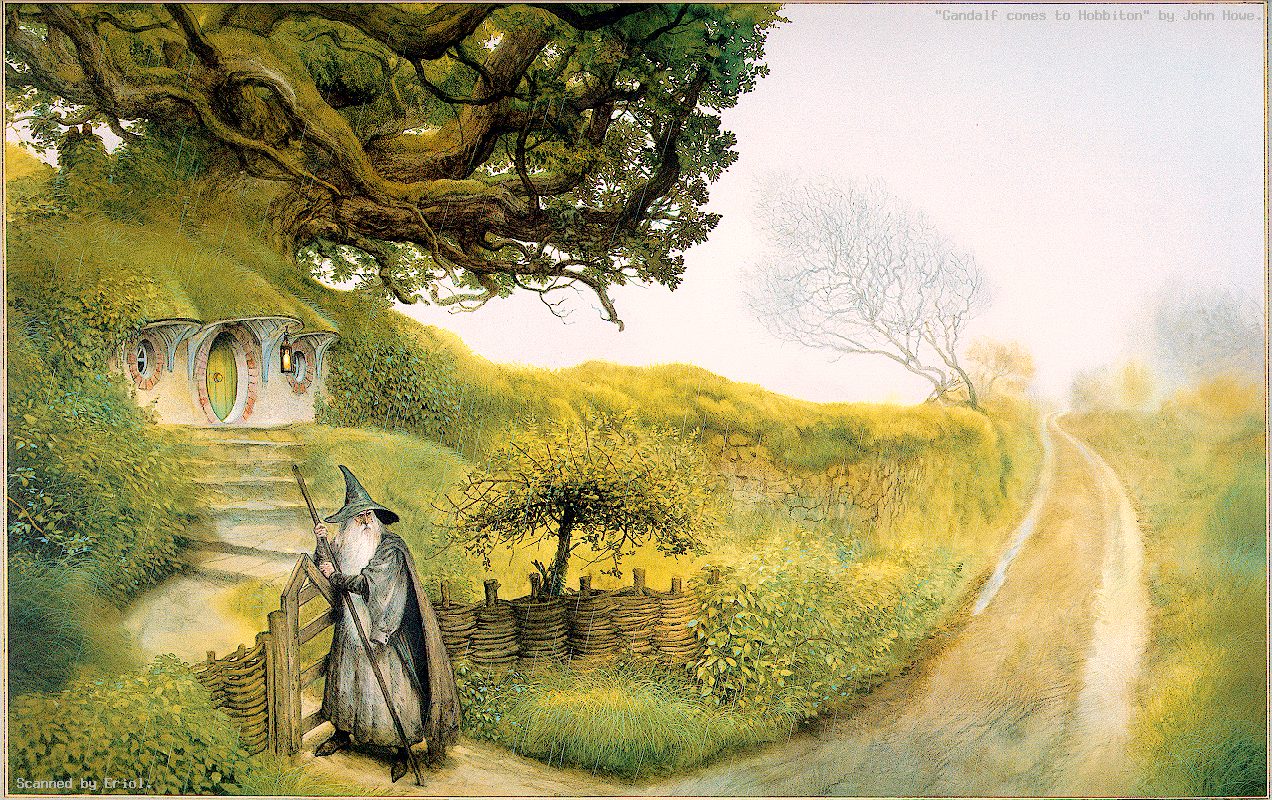
There and Back Again (A Hobbit’s Tale, by Bilbo Baggins)

I’ve just listened to the new soundtrack for The Hobbit and it is everything I’d hoped it’d be.
Howard Shore, who composed the music for Lord of the Rings, got things just right ten years ago and is doing just the same now. His iconic score, evocative and magnificent, opens up in the right places, stretches and builds, glides back down, is dark or brilliant or stately or hopeful or whatever it needs to be when it needs to be. There’s somehow almost always a sense of age, even in the lighter bits, of some underlying culture and knowledge or dignity. Sometimes, the music really does read like a wide-angle pan over the New Zealand landscape.
The score for The Hobbit loses none of the feeling, none of the nuanced technical skill. It retains nostalgically recognizable themes from the original trilogy, reminding the audience that they are still in the same world. There has to be continuity, naturally, for the characters belong to the same histories as the ones we know from the present-day Middle-Earth we know from the Lord of the Rings. Yet there is of course new music, for different characters and a different story altogether. Some of the tracks are very fresh, and surprisingly so in their ability to explore a different feel and sound. Even the new material, however, blends seamlessly.
Howard Shore masterfully incorporates elements of both old and new into a cohesive work that covers new ground without abandoning the familiar. The level of attention paid to every detail and nuance finds a natural fit with Peter Jackson’s cinematic translation and complements the fruits of Tolkien’s extensive world-building. There is approximately an hour and forty-five minutes of music for this first of three installments of the The Hobbit, and every minute of it, I think, is worth the listen.

A full preview for The Hobbit‘s new, yet to be released soundtrack was out recently- and  it is everything I’d hoped it’d be.

Howard Shore, who composed the music for Lord of the Rings, got things just right ten years ago and is doing just the same now. His iconic score, evocative and magnificent, opens up in the right places, stretches and builds, glides back down, is dark or brilliant or stately or hopeful or whatever it needs to be when it needs to be. There’s somehow almost always a sense of age, even in the lighter bits, of some underlying culture and knowledge or dignity. Sometimes, the music really does read like a wide-angle pan over the New Zealand landscape.

The score for The Hobbit loses none of the feeling, none of the nuanced technical skill. It retains nostalgically recognizable themes from the original trilogy, reminding the audience that they are still in the same world. There has to be continuity, naturally, for the characters belong to the same histories as the ones we know from the best soccer predictions present-day Middle-Earth we know from the Lord of the Rings. Yet there is of course new music, for different characters and a different story altogether. Some of the tracks are very fresh, and surprisingly so in their ability to explore a different feel and sound. Even the new material, however, blends seamlessly.

Howard Shore masterfully incorporates elements of both old and new into a cohesive work that covers new ground without abandoning the familiar. The level of attention paid to every detail and nuance finds a natural fit with Peter Jackson’s cinematic translation and complements the fruits of Tolkien’s extensive world-building. There is approximately an hour and forty-five minutes of music for this first of three installments of the The Hobbit, and every minute of it, I think, is worth the listen.

The Problem with Familiarity

This past weekend I was in San Francisco for Thanksgiving. Of course, there is never a city I will visit without paying special attention to its museums and current exhibits. Lucky for me, while I was there, a Jasper Johns exhibit was taking place at the San Francisco Museum of Art.

Now, when I think of Jasper Johns, as the amateur art historian that I am, the first thing that comes to mind are his flags. Actually, I wrote about his flag renderings on this blog just two weeks ago in context to the presidential elections. I think his flags are absolutely stunning, particularly for their ability for the American flag to be viewed in a far different fashion than most are generally accustomed to.

Yet, when I left the exhibit, I was shocked. The survey of Johns’ work, a semi-retrospective of his career, was not awe-inducing for the presentation of the flags that Johns is infamous for. Instead, it was the rest of his body of work that genuinely and wholeheartedly captivated me. After walking through the exhibit, not once but three times, I felt bored by his flags. I was instead amazed by his numbers and his representations of the seasons, winter, spring, fall and summer.

So, the problem then arises – as viewers of art, those who enjoy art but are not intense studiers of it, we become all to liable to the problem of associating an artist’s most famous work with the artist, solely. This, I believe, is detrimental to the understanding, appreciation, evaluation and study of art. As students of art, it is imperative to always have an open mind while viewing a work – without the freedom to think creatively, a student can never genuinely learn from a work, as they will instead be clouded with misconceptions. There must be countless well-educated people, those who may have taken an introductory art history course or visited museums while growing up, who, when asked about Jasper Johns, would say, “Oh, the one with the flags!” Well, yes, he is that, but he is also the creator of a deeply spiritual, highly intellectual, body of work.

I thereby challenge all readers, all viewers of art, to throw your preconceptions out the door when entering a museum, a gallery, an exhibit. Rather than allowing oneself to strictly see an artist’s work based on prior thoughts, instead, look at the individual work as its own entity, one that will allow you to get lost in its meaning and style. Art is far too unique and fluid to be caught up in the constraints of categorization and preconceived notions.