140 Characters or Less

As I am sitting around the table for Thanksgiving Dinner, my grandma is telling me about her time as a stenographer. She told me about shorthand—where one can write lines and dashes in regards to the sounds being emitted in conversation. It made for scarily fast documentation and was ideal for recording conversations. My grandma had been extremely gifted in this regard, as she could write in shorthand faster than people could talk. She told me stories of how her teachers in high school would speak as quickly as possible, switching the tone and pitch of their voices in attempts to throw her off. But my grandma would recite back to them exactly what was said. It was a phenomenal skill. She told me about Thanksgiving Dinners when she was kid. She would sit back with her steno pad and record her parents and relative speaking around the table. When they were done talking, she would recite the entire conversation back to them. I was engrossed. I had her write my name in shorthand. A six-character name—Justin—was reduced to two quick flicks of the wrist, resulting in something that looked like an italicized ‘h’. It was genius.

As I got to thinking about shorthand, I started to wonder why it had died. Quick recording was definitely a highly-regarded need in the modern age—probably more so than ever. We want minimalistic accuracy. Shorter. Sweeter. Simpler. Communication is key to any aspect of life, and when it is elegantly frugal, it is most effective and beautiful. Why, then, did shorthand largely disappear? Or, more accurately, why was it never adopted for public use?

In the rise of social media and the digital transfer of information, most communication is done through text. Whether it be emailing, messaging, texting, tweeting, or whatever, a reliance on characters has become nearly unavoidable. As a result, people are writing much more. Not with the hands, as cursory handwriting has been eliminated from most education systems and printing has declined in neat/careful+ness, but through typing. People can type as fast as my grandma could write shorthand. On the surface, the move to typing would be common sense, as the text could be CTRL+C & CTRL+V <copy and pasted> infinitely many times. It could be reformatted and edited—if need be—and is written in uniform characters which would be readable by anyone. Anyone, that is, who can read the language of documentation. As character typing seems more effective, I feel that it loses the universal abilities of shorthand. If this style of writing was truly subjected to sounds alone, it could, potentially, be used to document the speaking of any language in perfect detail. By reading back the sounds, one could potentially recite any tongue. This is something characters cannot represent. In the English language, characters do not fully reconstruct sounds. Rather, they can stand in place of ideas or meanings.

With so much text-based communication, we often inject emotions and symbols (like the ever famous UNICODE SNOWMAN! ☃) 8^B <<< this is a nerd-face emoticon.

In a sense, this new form of life documentation is more natural and fluid. Formal conversations no longer require a stenographer. Anyone can pull out a smart-phone and text his/her thoughts to Twitter or Facebook or the tumbleweed rampant Google+. While we may not be recording conversations in a potentially universal medium, we are keeping an ongoing log of our lives and thoughts in the most efficient form possible.

While my grandma reminisces on writing shorthand on her steno-pad, I pull out my phone and tweet about the table conversations in 140 characters or less.

Elegance in the art resides in selecting those ≤ 140 characters.
Fantasy Coffins

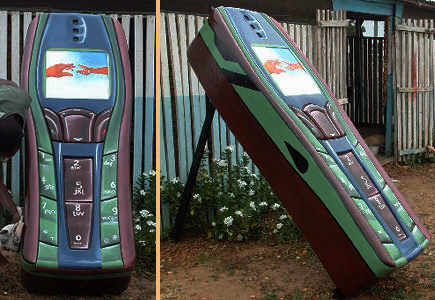
Beginning in the 1950s, the Ga people of Ghana began a new artistic tradition called “Fantasy Coffins.”  The creation of Fantasy Coffins is generally credited to Kane Kwei, a carpenter whose dying uncle had requested that his coffin resemble his fishing boat.  After this coffin was well received at the funeral the commissions started to pour in, with people generally requesting coffins that reflected their status and wealth during their lifetime.  Not everyone is allowed a Fantasy Coffin, however; you must be sufficiently successful and, of course, be able to afford one (they are expensive).  The coffin reserved for the most prestigious people is the Mercedes Benz, considered by many to be the most expensive and rare car in Africa.

Though most of the people able to afford these coffins are Christian, they are not allowed in Christian Churches (unless it is shaped like a Bible).  This is also due to the fact that many of the death ceremonies that take place incorporate

bet365 uk online casino bonus and promotions toponlinecasinobonus.co.uk bet365 uk online casino bonus code

animist traditions, including animal sacrifice.  Despite these traditional African spiritual practices, Kane Kwei very emphatically stated that Fantasy Coffins reside outside of the traditional African art cannon, with many of the coffins taking the shape of distinctly Western objects like cell phones, sneakers, and Coca Cola bottles.

How much music is left?

Before I ever wrote a single drop of music I thought that the job of a composer must be impossibly difficult. I knew enough about music to know that there were seven notes in a scale and that these scales built melodies which were music. I wondered why computers hadn’t started writing music and just combining all of those different notes into every possible melody. I mean, seven notes. There are a lot of different combinations of those seven notes. But there are only seven upon which to work! The periodic table gives us 118(+?) elements which make up the world and you are telling me that only seven elements make up the world that is music?
Admittedly that comparison is a bit crude. The elements which comprise the known world are very, very complicated and have an intense amount of complexity and variety within themselves. And the elements which comprise the known world of music are a bit simpler, relying on (sometimes very complex!) acoustic phenomenon and organizing them into a series of twelve discrete pitches.
Of course, that was my first mistake – thinking that the world was divided up into 7 notes. I know now that
1) Seven notes comprise a traditional scale, but we are definitely beyond that as a musical culture (in fact we never were really there at all) so the contemporary composer, in fact, has twelve notes at his disposal – a not insignificant increase in the number of useable pitches.
And 2) That our western way of tuning things is not the only way. The octave can be divided into any number of partitions and often is, not only by musicians across the world (see indian classical music) but also within our very own western culture (See Harry Partch’s 43-tone monster). To say that the traditional western system of music is the only way is not only completely euro-centric but also completely wrong (also considering that musicians often use alternate tuning within all kinds of music).

Anyway, this comes up because I watched this video on YouTube the other day.

It poses an interesting question and poses some interesting answers as well. I don’t know how much I agree with it, but it’s certainly something that is fun to think about. Some of their calculations seem to be a bit…wrong by basing their calculations on what a judge might deem as a different. The day that non-musicians get to decide what music is will be the day I quit music. Mahler 1 and Frere Jacques are very different things, guys.
But I do like the fact that the video ultimately begins to question if the question itself really even matters. Most of that music they are hypothesizing about is purely theoretical and probably is really bad at being music! And besides (as they point out) we like the familiar and we like our memes, so music tends to stay toward a certain area of tonality, rhythm, and affect. (But tastes change over time, so music will never be the same going forward!)

But here is my major problem with this idea of ‘running out of music’….

Music is much more than a series of pitches linked in time. Music, when it comes down to it, is a human response to auditory messages (See John Cage). So in order for music to *happen*, in order for music to really work and be music, it requires both of those things – an auditory message and a human response. Composer’s take care of that auditory message (at least in a traditional setting) but it up to YOU the listener to create the meaning and make the experience of hearing sounds a musical one. Music’s effectiveness as an artistic form is dependent upon attention, intent, and awareness. This is why your favorite song can make you cry one day, and totally fly by when you aren’t paying attention the next (or maybe that only happens to me…).
All this is to say that music is an incredible and exciting art form, but it’s much more than sound.  It feels like they are using such a small definition of music that it precludes the most important part of it! Music is about people. All art is. And we aren’t going to run out of people, or human experience. So I pose that music is infinite. Just as humanity is infinite. We can’t possibly explore all of the ways that music can go, but we can damn well try.

Lost Inspir(on)ation

Do you remember the first time you saw them, really saw them?
and then things

broke.   Failed.   Needed system repair.  Can’t reboot where’s the startup menu?

And after all the mess there’s that one time you stopped stopping the emotion and it Flowed,
articulated it so well into something proudrealfullofemotion which Never. Happens.

Ever.

This time in Words, and for the moment you were Eliot, Auden, or Cummings
when usually they’re disguised under the pseudonym of INeverCaredAnyway.doc
Words that showed validation of the storm, the reality of the water and the fog and all the elements that felt too real and had to be real, otherwise the voyage was never worth it in the first place, even if you never reached Neverland.

Thought the words would be something to look back on, timeless if not to most others then at least in the anthology of the Self’s Greatest Works, proving that you were capable of not being devoid of all passion or skill.

And then everything went blue.
All the words drowned within the vast abyss of unrecoverable wasteland
Tossing and turning within the waves
The diamond is lost in the sea, the old lady said. The shipwreck lost everything. Jack isn’t coming back and Rose is left wondering if the China plates really shook.

Ultimately the code was broken, the stone wall fell and more ships sailed. Never

rezultate liga 1 romania clasament liga 1 clasament liga 1 romania

one quite like the Original, but that boat is still just a memory anyway.

Years past and she grew older, bought a replacement necklace but was never able to replicate the exact cut, shape, color of the diamond.

But she will never forget the first time wore that necklace, wrote those words, or really saw him.

Dude Muses or “Duses”: Do They Exist?

Every poet/artist has their muse.  For John Keats, it was Fanny Brawne.  For Woody Allen, it was his thirty years younger, step daughter.  Many a male artist has been inspired by women.  But have any women ever had a man muse?

I ask this question as someone who rarely sometimes, frequently  finds herself infatuated with some unattainable male.  In most cases, they are

1) Non-existent

2) Existent but currently dating someone else

3) Or away for the school year, serving orphans in Calcutta (seriously).

And because I am not a forward or brazen woman who will thrust herself into the presence of these men and initiate a relationship, I merely tuck them away in the recesses of my mind.  And day after day, while my real self crushes, my creative self gazes and gleans inspiration from these male figures whom I admire and adore for their upstanding morals, courageous attitudes, and also their marblesque, chiseled exteriors.

In light of this, I thought to myself, surely I cannot be the only female artist who does this.  Please, let there be someone as weird/crazy/inspired as me.  I did some research on this, to satisfy my curiosity, and found a fellow blogger, Clare Pollard, who wrote on this here.

Thankfully, as she attested, I am not alone!  Although, looking around me and throughout history, my Females-Inspired-by-Men Support Group is no Alcoholics Anonymous.  Also, apparently the act of gazing is considered masculine and in gazing at and admiring male beauty/courage/ideals, I am initiating a gender role reversal.

Yes, about that….

Here is the most potent passage that I found on her blog:

There are, of course, many male muses – from the young man of Shakespeare’s sonnets to Neal Cassady (who inspired the Beats, particularly Kerouac and Ginsberg) – but what has surprised me most in looking at the phenomenon is that they are almost exclusively gay, or at least the object of a male gaze. Look through artistic history and it would seem, simply, that women do not have male muses. There are a few groundbreaking women who wrote of male beauty – Aphra Behn and Edna St. Vincent Millay, for example – but their love objects are often transient and interchangeable.” –Clare Pollard, Magma Poetry

Pollard goes on to quote Robert Graves in The White Goddess, who writes that “Woman is not a poet; she is either muse or she is nothing.”

Ouch.

Graves goes on to say that women should be their own muse.   And Francine Prose in Lives of the Muses argues that the artist-muse relationship requires a certain passivity on the part of the muse that is not a part of heterosexual relationships.

Regardless of any criticism or gender norms, I was pleased to read that many modern female poets are being inspired by the men in their lives and are not relegating themselves or their muses to a passive role.  In books such as Portrait of My Young Lover as Horse and poems such as My America modern female poets are poetically adoring the men in their lives.

So ladies, instead of wining and pining after men in your life, use that emotion for good!  Write, sing, paint, but never wallow.  Whatever and whomever catches your fancy can be transformed into great art.

Thanksgiving, you say?

While Thanksgiving may be a holiday celebrated across America, it happens to be one of least importance to me and my family. For some reason, we have never quite gotten into the Thanksgiving spirit (it may be my immense fear of turkeys or my mom’s immense distaste for any form of cooking, who knows). This year, rather than celebrating Thanksgiving at my home in New York, we instead are in San Francisco, visiting my brother and celebrating in a rather untraditional way.

Families across the country are spending today slaving away in front of the stove, cooking a wide array of highly caloric albeit undoubtedly delicious fare, and I, instead, am working on cover letters, finessing my resume, and stretching before I take a 5-mile run.Tonight, rather than having a home cooked Thanksgiving, my family and I are going to a restaurant here in the Bay Area, and having our Thanksgiving meal pre-cooked and pre-decided for us. I don’t quite mind, but there is something rather amiss about being in a restaurant filled with strangers rather than at home with family and loved ones, eating food made by some ominous cook rather than with love by family members.

All this has gotten me seriously thinking about tradition, wondering really the place it has in my life (if any), and whether it’s of importance to have tradition. Growing up, I believe, having tradition instills a sense of familiarity and comfort. But now, as a 21-year-old about to graduate and embark on my own life, one free from the strings of my parents’ desires, what kind of traditions will I embark on, pass down to generations to come?

Tomorrow is Black Friday. Now, I love a good shop as much as any girl (my wardrobe can assuredly attest to that), but I have zero interest in standing in crowded stores, waiting in lines for dressing rooms, and trying on countless clothes that will be too snug after a far too large meal. So, I’ve devised a new tradition, one that I think will be far more fun. Rather than spending Black Friday shopping, I will be spending it art-ing (the verb I’ve coined for my aggressive days spent at museums and galleries). I’ve spent hours scouting galleries, museums, and exhibits in San Francisco so that tomorrow I can spend Black Friday nose-deep in art! Now, this is a tradition I can get used to.