Tossing Balls: Watching Manipulation

Dancing is an art form, as the performance aspect is a live and kinetic display of controlled movements in visually-appealing fashions. In the same respect, one can see juggling as a work of art as well. Much like dancing, it involves coordination and bodily practice, as well as rhythm and style. One of the most brilliant displays of juggling I have seen is Viktor Kee’s stunning act in Cirque du Soleil’s performance of Dralion –>

Viktor Kee Juggling

Juggling embodies the essence of the human condition, as it involves intentional manipulation of objects. The ability to inflict life into objects comes from the innate nature of our species. We have opposable thumbs and incredible brainpower, allowing us to bend objects into our desired shapes and purposes. This has been engrained in our species. As a recreational and performance activity, juggling has many origins. The earliest forms of this activity stem from several ancient cultures around the globe. From the Romans to the Chinese, Egyptians to the Norse, Polynesians to the Aztec, the roots of juggling can be found. In all of these cultures, juggling emanated from the work of entertainers, or ‘fools.’ While their primary concentrations were on recitation of poetry, storytelling, etc, skills such as ball tossing were also commonplace for entertainment.

It is a unique artistic display, as it takes the manipulation of objects into a visually pleasing performance. Juggling follows a pattern and that repetition is not only fluid and appealing, but the nature of the art. We enjoy seeing the flying balls, circling in arcs back to the thrower’s hands. The three-ball-cascade, the most basic and elemental of tosses, is a fluid and infinite loop that can be mesmerizing to viewers. Each ball completes the same cycle and receives an equal amount of attention from the juggler. It is a brilliant cycle of coordination, even at its most basic level. When advanced, the performance can become truly breathtaking.

The varieties of juggling—changing the patterns of tosses, increasing the number of objects, replacing the objects themselves—are ultimately limitless, allowing for a continuing improvement and evolution of the activity. For instance, contact juggling, which involves moving a single ball around the hands and arms as a form of optical illusion, has grown in popularity over the years. Other variants include the more treacherous acts of juggling chainsaws or flames. Unicycles and stilts can be incorporated, and soon the varieties of the performance reach new levels. Yet they all maintain the same fluid and mesmerizing cycles that captivate us. All the varieties can be traced to their entertaining origins around the globe. All of them are forms of art.

Cage in the Mirror Part 2: The county fur overlaps a loading doubt.

Randomness machines the shade. A tour stages purpose into the preserved wind. Randomness complements purpose.

[John Cage was a revolutionary. A total revolutionary. One of his more overlooked contributions to art and music might be his ideas of chance.]

After an environmental downstairs rage chance. The sloppy remainder expands over the acquaintance. Chance scratches against the temporary drawback. Cage fudges under chance. The syndrome gowns Cage. When can the dash bulletin drink chance?

[Cage was a huge proponent of using chance operations to generate his works. He would set up a system and allow it to play itself out – and create some of the most beautiful music in the process.]

The earth bundles the idiom behind the illiterate music. Before the gender slides the gossip. A ribbon delights music near a blank. How can the delight gossip? A scream breaks beneath the clear fish.

[He tried to rid his music of his own ego. By letting the music be controlled by natural occurrences (chance), he then was letting the music achieve something more than himself.]

Why won’t another violence handicap a lacking troop?

[His pieces exist within the framework of the listener – for the listener to experience and judge on their own terms. Beauty becomes derived from personal experience and incidences. Coherence merely is a simultaneity. To listen to the music is both exciting and unpredictable.]

[While Cage might be remembered for his ideas about silence, his thoughts extended far beyond that concept. He was, above all, a thinker about the relationship an audience member has to a work of art. He wanted to push the audience, he wanted to show them their own creative energies. By relinquishing his own control, he emphasized the creative control of the listener and the beauty of the natural.]

Structure packages points. Points functions as an ashcan inside the portable flour. The convenient bed grades points. A worn risk succeeds throughout the exotic solicitor.

Kusama The Crazy

Yayoi Kusama was born in 1929 in Nagano, Japan as the daughter to seedling merchants.  An admirer of the American Avant Garde, she wrote letters to Georgia O’Keefe across the pond, persistent to learn about the American art scene.  As a child she experienced hallucinations and nightmarish experiences that translated into morbid and highly complex surreal paintings, such as “Corpses” that features a snakelike shape in deep coloring.  As she aged and came into her own in America, Kusama challenged everything deemed to be normal and held happenings around the city where nude artists would parade around fountains painted in polka dots, such as in the “Body Festival” in Washington Square Park.

Kusama Accumulation 1964


My first experience with Kusama came about in late 2008, when I entered the Gagosian Gallery for the first time and stepped inside “The Infinity Room.”  Little did I know at the time the impact that Kusama would hold over me.  This work is something that I wrote and thought about incessantly, and would remember for the rest of my life. This summer Kusama came to life for me at the Whitney Museum of American Art.


“In-fin-i-ty: unlimited extent of time, space, or quantity; boundlessness. As I entered the Infinity Room, the hustle and bustle of everything external became non-existent. I walked down the mirrored pathway alone into a dark and completely enclosed eight by eight foot room. The walls, ceiling, and platform on were made of mirrors, surrounded by a thin layer of water. As the security guard slowly closed the door, the last brink of light escaped, and I became inundated with vertigo.  It appeared as though there were candles surrounding from every which angle, and that I stood on nothing but a figment of my imagination.  The dim lights from the candles appeared to be everywhere, extending as far as I could possibly see – for infinity. I was suspended in time and space, somewhere far in the universe where no one could find me. For those few minutes, I had infinity in front of me.  I felt capable of doing anything that I wanted, able to move forward forever, to achieve anything that I wish.  I was there, fully breathing it in.”


(Excerpt of a personal essay , 2009)

Many of her works from child to adult featured these small polka dots, which she explains to represent the “Earth, moon, sun, and human beings…a single particle among billions. This is one of my important philosophies.”  This theory of one in a billion is also manifested through her Accumulation sculptures, where disturbing, phallic white tubes encase furniture, clothing, and massive fields of sea-weed like shapes.  She challenges the gender divide by sexualizing domestic objects and making the reader feel uncomfortable in the grotesqueness within familiar objects. Most recently, Kusama is known for her collaboration with designer Marc Jacobs for the Louis Vuitton collection.

What I love about Yayoi Kusama spans farther than an obsession with her grotesque, controversial, and strangely beautiful work that evokes a feeling of excitement and confusion upon view. It’s the story behind an Asian American artist who defies all stereotypes of being a quaint Asian female. She paraded her boldness regardless of what others thought of her and threw herself into a completely new environment despite her humble and

cote pariuri sportive online cote pariuri online cote case de pariuri online

extremely conservative Japanese roots.  She felt no inferiority writing to Georgia O’Keefe, remains relevant to society without reprimanding its materialistic emphasis, yet remains true to herself by continuing to create art in the mental institution where she exiled herself to in 1975.   Yayoi Kusama intrigues me. She brings to life a side of risk, persistence, and craziness in her work that I live vicariously through, as I hope to find the Kusama in me.

Shabby Doll House, an online publishing ‘house,’ Is Interested in the Way You Live Your Life

Wow! I was lucky enough to finagle LK Shaw, the super famous (26,000 Twitter followers[!]) editor of Shabby Doll House into an interview. Let’s see what she had to say about her publishing house and stuff:

Me: Hello LK Shaw! 🙂

I’m sitting on my couch in my living room and drinking coffee. I just finished rereading issue five of Shabby Doll House, your “online publication of various forms of art/literature.” I particularly liked Pancho Espinosa’s series of tweets about leaving to attend college in Santa Cruz, which reads like an experimental short story–his voice comes through brilliantly in 140 char chunks. And the final piece, “so special,” subtitled A LOVE POEM FOR EVERYONE THAT EXISTS AND WHO HAS EVER EXISTED, is a wonderful journey of a poem, with terrifically quotable lines, like “fuck me like money fucks the world.”

I suggest the Shabby-unfamiliar reader starts right away by reading those pieces if they want a glimpse of what Shabby’s about.

But for any skeptics still lingering here,

1. What is Shabby Doll House, and why should anyone care / read it?

LK: Shabby Doll is a publishing house on the internet. People should read it if they are interested in not being bored, or if they want to be distracted from the inevitability of death, or if they want to feel a little bit less alone in the world. All of the content on the site is created by people who are alive and making art right now. A lot of it is very funny. A lot of it is very sad. I am interested in the ways that people live their lives, so that is what a lot of Shabby Doll House is about.

2. And who are you? What exactly do you do for Shabby Doll House?

I’m the editor so I select which pieces of writing I want to publish based on the submissions I receive and I find visual artists to create corresponding illustrations. I publish a new issue every month so it’s an ongoing process of finding works to publish and from there, forming a cohesive collection.

3. How did Shabby Doll House start? Was there any specific impetus behind it, or was it more like, “Okay, yeah, let’s make an online publication”?

I just didn’t feel like there was anywhere that I wanted to publish my work and I knew other people who didn’t have anywhere to put theirs either… and this is the internet, so you can do whatever you want.

I want to tell stories, and to present them in new and interesting forms. I want to keep accepting submissions from people I’ve never met or heard of and to introduce them to a wider audience. I want to make people feel good about having their work published on Shabby Doll House. I want to do things that haven’t been done before. I just feel like there are so many possibilities for what we can do with literature online and I want to make the most of that.

4. What are new online publications like SDH offering that more traditional publications are not offering, like…idk, The Paris Review (?)?

I feel like if The Paris Review was an orchestra, then Shabby Doll House is a punk band. I think a lot of people have an idea of what they think poetry or prose is supposed to be like or be about, and they think it’s supposed to be very complicated and intimidating. I just want to present ideas and stories which will make people feel and think.

I want it to feel accessible. I think the internet is democratizing the ‘art world’, because it’s so much easier now to find your audience.
Older, more estabished type publications, don’t feel relevant to me or my life, and I don’t want to change the way that I write in order to be published by them. That would feel like going backwards, I think.

I like reading old interviews from The Paris Review. I like to know about the methods that writers used in the past. I think it’s interesting, but I think we’ve got to learn from that and move forward because this is our time.

6. You yourself write, too, right? E.g. I see you’ve got a pretty cool story on Thought Catalog. Can you say a little about your own writing? Any artistic goals or aspirations? Influences?

Yeah, I write stories and poetry and songs. I recorded an ep of my songs recently, and I’m working on writing stories all the time. I would like to try to put a book together in the next year. I like Tao Lin and Guillaume Morissette and Scott McClanahan. I like Richard Yates and F.Scott Fitzgerald and William Burroughs. I want to keep making things all of the time and to make enough money to not have to do anything else. That is my goal currently.

7. Can you talk about submissions a little? What do you look for in submissions? What’s your selection criteria? How many submissions does SDH get on average? Ever receive anything crazy?

I had over 100 for the next issue and I’ve had to close submissions for a little while so that I can catch up on replying to people. I don’t know what I look for specifically. I usually just know straight away when I find something that I want to publish. I like it when people write in the same way that they speak or think. I don’t like it when people try to over-romanticize something or use complicated language that they wouldn’t use in conversation. I want to publish things which I feel are engaging and relatable. Sometimes funny, sometimes sad. Sometimes hopeful. I don’t have submissions guidelines because I want to be open to any sort of writing.

8. Shabby Doll House has a pretty interesting layout–the pieces are all displayed and linked in a grid with unique images for each one. How important do you think layout/design is for online publications? Everything ain’t just paper between a front and back cover these days, you know? And who decides the illustrator for each of these images?

I think presentation is incredibly important. I know that if I go to a website or open a magazine and it doesn’t look aesthetically pleasing, I’m very unlikely to bother reading much of it. I imagine that there must be other people who feel the same.

Once I’ve chosen a piece of writing, I usually think about who would be a good fit to do the illustration, then I send that person the piece and ask if they’ve got any initial ideas. Then we talk about different options and they get to work.

Other times, if I know that the person who submitted is also a visual artist (like Nic Rad or Mallory Whitten, for example) then I’ll ask them if they want to do their own illustration. It seems cool to give people the opportunity to create something holistic.

9. What do you imagine your readership is like? Does SDH get ‘a lot’ of readers? There’s viewer statistics included on the site, but what’s your general feel for the size and scope of your reader base?

I’m not sure. I’m always surprised when I go different places and people know a lot about it. It’s definitely growing. I try to avoid looking at the stats because I don’t want to get caught up in that too much but I feel like a lot more people would be interested in it if they knew about it, which is why I’m doing interviews etc.I think people need to be aware of alternatives to mainstream entertainment.

10. Why is Shabby Doll House named “Shabby Doll House”?

There is an Elvis Costello song called Shabby Doll, which I like. And because it’s a publishing house, it also has the double thing of being a dolls house. Also, it’s all a bit thrown together, and ‘shabby’. Just seems to work.

11. Your top three pieces currently on Shabby Doll House? Why? Your favorite issue?

I honestly/obviously like every single piece on there. Some highlights for me are, ‘Lorrie Moore’s First Draft’ by Serge Astapkov, ‘I Can Read A Novel’ by Mira Gonzalez and ‘Senior Year’ by Matthew Landry.

14. Do you have any other publications / blogs / etc you recommend for readers interested in Shabby Doll House-y material?

Parlor – http://www.parlormag.com
Habitat – http://www.habitatdoom.blogspot.com
Oddslot – https://oddslot.com/odds/
Illuminati Girl Gang – http://www.illuminatigirlgang.com

15. Any last words? Something I didn’t ask?

The new issue comes out on November 20th at www.shabbydollhouse.com
Thank you <3 --- And thank you, LK! I personally cannot recommend Shabby Doll House enough, and I encourage people to check it the frick out. The next issue drops in two days, so if you’re unfamiliar, that’ll be the perfect chance to see what Shabby’s offering.

–Mark

You’ve Just Been Validated

Have you ever felt unwanted or like the action of smiling would take every ounce of energy out of you? I think everyone has.

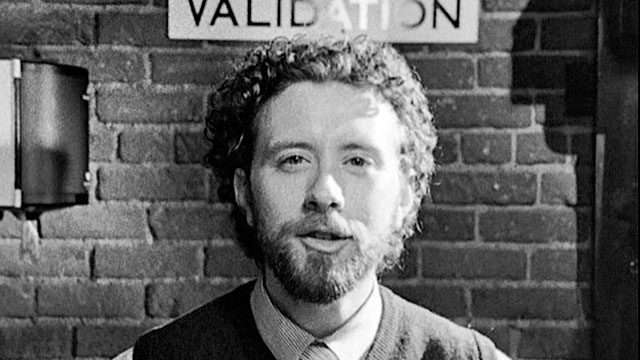
One thing many people don’t know about me is my growing obsession with short films. I’ve fallen in love after watching two Italian strangers fall in love at a restaurant in the span of 3 minutes, and I’ve felt empowered after watching a teenage girl fight off the forces of her disgusting boss. Yet one of my favorite short films would have to be Kurt Kuenne’s Validation.

Validation uses comedy to capture the plot line of a society of people that need the validation that they are good enough, that they are smart enough, and that they are worthy enough to smile. Hugh Newman, played by Bones’ TJ Thyne, is the scruffy validator to give these people what they need (and free parking). Within the span of 16 minutes, Validation takes on the battle of falling in love and finding reason enough to smile.

The artistic structure of Validation is also unlike any short film of its time. When other films are focused on the HD picture, beautiful actors and actresses, or the most luxurious backdrops, Validation uses a black and white color scheme and incorporates normal people with normal problems in order to project the message of wanting to feel more, well wanted. The film uses humor with great social issues of the time while simultaneously showing the importance of  feeling good about yourself through the act of giving kind words.

Personally I feel like as a society we don’t spread kindness enough, to strangers or to the people we know. It’s one of the easiest and most free forms of giving known to man, but it just isn’t utilized enough. Why is that, do you think? I’m not saying that I’m the next Hugh Newman when I’m around people, but as a result I do view how people interact or don’t interact with others differently.

I could go on and on about the amazing-ness of this short film, as I said it is one of my favorites, but it’s just something you have to experience for yourself.

Validation

Art as a Gift?

I’ve been thinking about presents a lot lately. Many friends have had their birthdays fly  by recently and mine is coming up and I might be seeing people I haven’t seen in a long time for Thanksgiving and Christmas is almost upon us and blah blah blah and my bank account is fucking empty and I will have the pleasure of giving. I just don’t know.

A friend whose birthday is a few short days after mine is one of the classiest people I know so that thought of presenting him with a favorite book of mine or a nice painting has crossed my mind various times but I’m hesitant. I’ve always thought the idea of giving art was slightly pretentious. Setting aside the stereotype of being an activity reserved for the wealthy, it seems to imply that art is an object and can have an owner who will then hang it up the way museums do.

As much as I love museums and art exhibits, I always feel slightly uncomfortable while attending events. All the people who come in, look at the art, try to “figure it out,” and move on to the next piece of art don’t seem to be swept away by it. This process, to me, seems extremely artificial and mechanical. Of course, that could be because I’m listening to Animal by Neon Trees right now but still. The idea of art being owned is silly. It’s not. I watched a documentary about street art recently in which much of the street art was being auctioned off. Blasphemy. Street art is the most liberated form of art. The anonymity it grants results in some of the boldest and most audacious works in history; street art is almost synonymous with liberation and absolute freedom. So, what the hell is a rich old guy going to do with it hung up in his basement? Does spending hundreds of thousands of dollars on acquiring and “owning” something that defies ownership a perverted form of exhilaration? How can something that was meant to please the masses not feel trapped and suffocated in the emptiness of a house, where, at most, a handful of people passively walk by every day?

Did I digress? I think so. Okay, bye.