REVIEW: Drive My Car

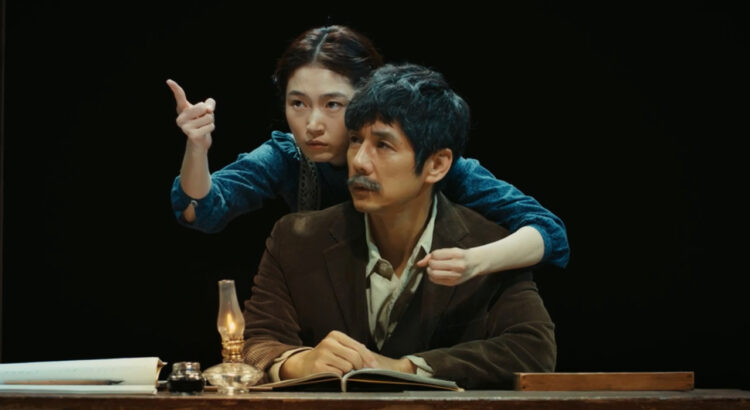
Drive My Car is a Japanese film based on a short story of the same name from Men Without Women, a collection of short stories by Haruki Murakami. The film follows theater actor Yūsuke Kafuku as he directs a production of Uncle Vanya by Chekhov two years after the death of his wife.

I have had some exposure to Murakami’s work, having previously seen the film Burning, which is based on another of Murakami’s short stories, and having read part of his novel The Wind-Up Bird Chronicle. I really enjoyed Burning, how slow and meandering it felt while building and maintaining a quiet sense of tension and mystery. I found out Burning was based on a Murakami story after I realized Drive My Car reminded me of it, in terms of pacing but also the way in which the female characters were perhaps quite evidently written by a man. I have only read part of The Wind-Up Bird Chronicle because I thought three manic pixie dream girls was maybe too many, but after watching the entirety of Drive My Car, I do want to return to the novel and see what Murakami has to say. 

It turns out that Murakami’s works are worth sticking out to the end – especially Drive My Car. Once we get past Murakami’s formulaic introductions of a lone, troubled male protagonist, and the sultry and promiscuous women in his life, we uncover a central theme of grief. Though this overall message of the film is not particularly revolutionary or unheard of, it is the way in which it is expressed that makes it worth noting. I ended up reading the short story after watching the film, and I really liked how writer-director Ryusuku Hamaguchi emulated the almost nonchalant delivery of the short story’s message. Though the film has more dramatic moments, it’s the slow buildup to get to these moments that feels faithful to the source material. The film feels like a natural development and continuation of Murakami’s original story. 

Furthermore, the film reminds us that when our words fail us, we can find and express ourselves through art. For Kafuku’s wife it is through her screenplays, and for Kafuku and his scene partners, it is through performance. And the film also reminds us that we can find solace in knowing we are not alone in our grief, even if it is through a temporary companionship. Drive My Car doesn’t move you to tears, but I like to think it doesn’t need to.
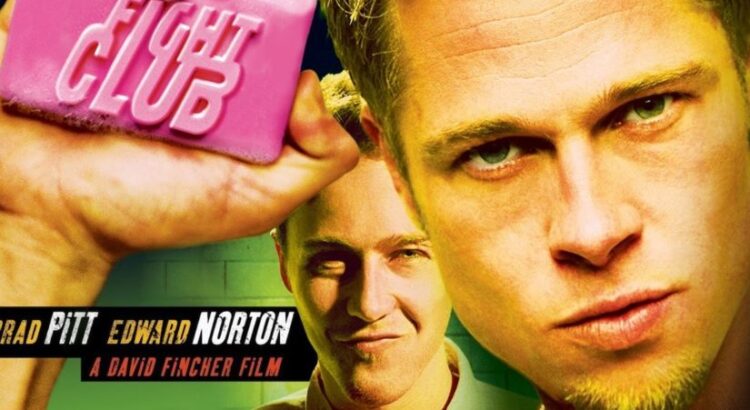
REVIEW: Fight Club

On yet another numbingly cold night in Ann Arbor, the Michigan Theatre stood dazzlingly bright amongst the empty streets, promising warmth and the excitement of another cult classic in its Late Nights at the Michigan series. If you have a pulse and live in America, you either know about Fight Club or you’ve seen it. Regarded as David Fincher’s directorial masterpiece, or at least undeniably his most popular film, the 1999 dramatic thriller offers everything that other films don’t: a seemingly insane and ripped Brad Pitt, a smoker who attends meetings for cancer patients, and a plot twist that leaves you analyzing every scene of the film for days on end. The plot can’t be explained without ruining the fun, but be aware that every scene packs a punch and leaves you breathless.

Also revered for Gone Girl and The Social Network, David Fincher’s distinct style is what makes Fight Club a masterpiece. Sharp monologues and witty dialogue inject life into the characters, somehow sculpting believable people that are so bizarre and morally corrupt that the concept of hero versus villain goes out the window. Once you become fully invested in the unpredictable lives of these troubled people, Fincher draws you in with clever shots and action sequences, balancing bloody fists with genius cinematography and a bold anti-capitalist war cry. The plot never stays in one place, constantly escalating and spinning, but the ride is exhilarating and somewhat relieved by clever deadpan humor. Each shot is a stunning puzzle that offers perfectly placed hints.  Fight Club is a total psychological riddle garnished with tasteful edginess and outright fury— a dangerous recipe that Fincher does best.

My admiration grows with each movie screening I attend at the Michigan Theatre. Historic and timelessly elegant, the theatre somehow still feels cozy, offering a sense of community through the collective anticipation that all moviegoers feel. There is something especially magical about an energized group experience in the midst of a lonesome pandemic. Throngs of students chatting and munching popcorn on a weekend night is an almost forgotten spectacle. The Michigan Theatre’s elaborate COVID-19 precautions ensure that the experience is free of anxiety, allowing a couple of hours of carefree escapism into a world untainted by COVID numbers and homework deadlines. If you find yourself longing for a temporary vacation from the burdens of college life, or you’re noticing that your Friday nights could use more excitement, check out the Late Nights at the Michigan series. Upcoming screenings include Princess Mononoke, Star Wars: Episode II, and The Princess Bride. Student tickets are only $8.50, so get them while you can!

REVIEW: Belle

I REALLY wanted to like Belle.

I’ve loved many of Mamoru Hosoda’s other movies: Summer Wars, Wolf Children, The Girl Who Leapt Through Time, and of course the O.G.: Digimon Adventure 1999 (my childhood). My gut reaction after watching Belle was to go back and rewatch all of those instead.

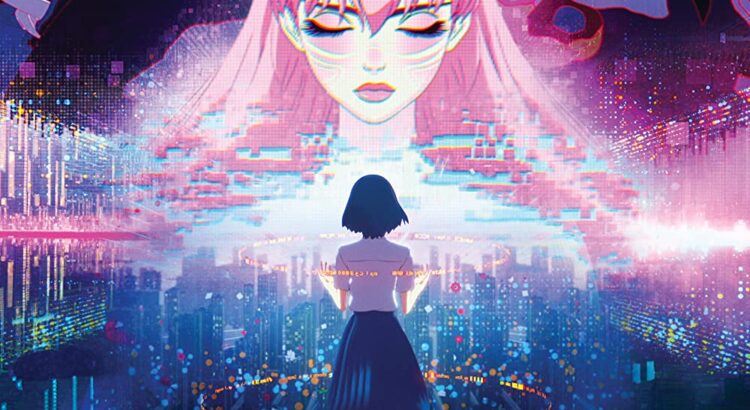
Belle is an animated film adaptation of Beauty and the Beast that follows a high school student named Suzu who escapes the insecurity and loneliness of her real life through ‘U’, a dazzling virtual alternate universe where she can be someone completely different. Her virtual persona quickly rises to extreme popularity and she has to navigate these dual versions of herself while going through the trials and triumphs of high school, love, friendship, and grief.

Let’s start with the Good:
[1] The animation was BEAUTIFUL. I mean OH MY GOODNESS can we sit and appreciate how far animation has come in the last decade? The depictions of the alternate Digiverse ‘U’ were so effective at showing how vast it was, how many detailed moving parts there were within it. The characters truly came alive on screen as people with blood, sweat, and tears.
[2] The sound design was also incredible. Suzu’s singing features prominently throughout as a metaphor for her confidence in herself and her love for her mother. The songs were all super catchy and well written and lingered in my mind long after the movie ended.

Alas, now we must go onto the reasons this movie was not my cup of tea, despite the great art and sound:
[1] The story was a big bowl of confusion soup. In a sci-fi movie about the metaverse, I expect the plot to be a little out there, but some things in this movie just go beyond logical human behavior. After the umpteenth weird sideball I could no longer suspend my disbelief. The story felt weak and underdeveloped.

[2] This movie wanted so bad to be a character-driven film, and it almost got there! At the beginning, the writing was strong – the main character Suzu had a powerful backstory that set the audience up to understand her struggles and root for her. And listen, I admire an aspirational storyteller. But if stories are onions, this one had about 10 too many layers. There’s a random scene that’s supposed to nod at Beauty and the Beast but it doesn’t make sense given the characters and doesn’t mesh with the rest of the story. Near the end of the movie the tone suddenly goes from adventurous to extremely serious and then back to playful so quickly I got whiplash. Not even the most masterful chef could fold that many plotlines into one and tie them up with a neat little bow. But that is what this movie tried to do and the result was a cliche ending that didn’t seem resonant with the important questions posed at the beginning of the movie: How do we continue living with joy when we’ve lost the irreplaceable? How do we learn to love ourselves? How do we rediscover our love for the things we loved as children? I’ve heard Hosoda described as a “maximalist” storyteller and here I’d have to agree — there was too much, and as a result there wasn’t enough.

All in all, if you’re an anime connoisseur then I would say give this a watch for the dazzling animation. But life is short, and in my humble opinion Hosoda’s Summer Wars is much, much better — spend your two hours in that world instead.

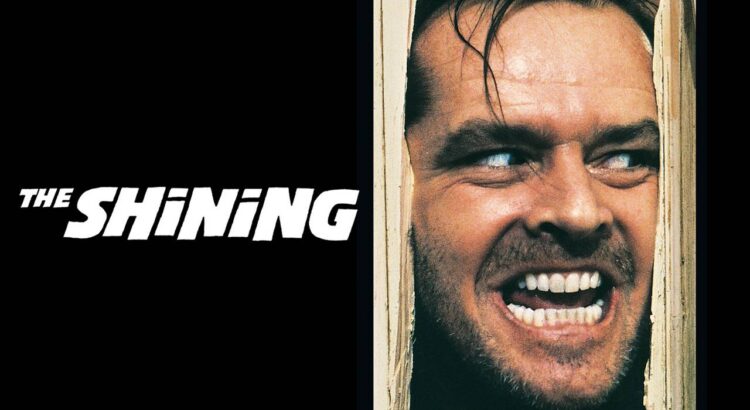
REVIEW: The Shining

As the night grew cold and the streets of Ann Arbor became quiet, horror enthusiasts and casual moviegoers alike herded into the beautiful interior of Michigan Theatre. The theatre’s 10 pm screening of The Shining was a part of their Late Nights at the Michigan series, promoting one-time screenings of classic films across all genres. I was particularly drawn to The Shining; I’d seen it before, but I’d never had the chance to watch the film in theatres, where it was intended to be viewed in all its horrifying glory. The theatre’s vast open spaces and elaborate antique decor mirror the atmosphere of The Shining‘s infamous Overlook Hotel, in which the film takes place; a troubled family lives in the vacated hotel for a long winter, falling victim to the effects of isolation and the hotel’s dark history. In addition to the actual venue drawing me into the movie, the experience of the big screen and immersive sound made the viewing experience infinitely better than the other times I’d watched The Shining on small screens at home.

One thing I’ve noticed about moviegoers at Michigan Theatre is that they truly love movies. The crowd reacted collectively to the scariest moments and even laughed at parts, appreciating the film’s quality while keeping a lighthearted attitude. After the two and a half exhilarating and exhausting hours, applause echoed throughout the room, moviegoers excitedly discussing the experience. If you’re looking for a passionate group to appreciate artistry with, the Michigan Theatre is the place to go.

The Shining was a wild ride; Jack Nicholson’s warped facial expressions are infinitely more terrifying when his face is twenty feet tall, and the huge screen has the same effect on the empty hotel’s menacing interior. I love The Shining for its simplicity relative to other popular horror flicks; it relies on psychological manipulation, incredibly slow build-up, and just enough context clues to keep the audience scared of the mysteries that lurk behind each corner, rather than constant jump-scares and disturbing imagery. The few scenes that revolve around actual violence and horror, rather than the threat of it, are so powerful and wisely executed that they are all timeless images ingrained in pop culture. Even the cast is minimal; all three main actors deliver incredible performances, so the film never feels phony— sometimes Shelley Duvall’s terror felt too real.  From Jack Torrence’s cold “Kubrick stare” to the motif of the axe and a blood-filled hallway, The Shining has found a way to be beautifully simple and avoid horror overkill while reigning as the king of horror for forty years, scaring generations to come.

Although this screening was a one-time event, Michigan’s Late Nights at the Michigan series continues through February. Tickets are only $8.50 for students, and they’re selling fast, so be sure to check out upcoming screenings for an exciting way to spend a Friday night!

REVIEW: Drive My Car

Warning: Slight spoilers for the film’s exposition

Just yesterday, a few of my classmates and I went to see the premiere of Drive My Car (2021) in the State Theater. The Japanese film was directed by Ryusuke Hamaguchi and based on the short story of the same name by Haruki Murakami, whose works have been bestsellers within and outside of Japan. 

I went into the film expecting a touching or tragic romance, the exposition of the film began to hint at the latter when the main character Yūsuke Kafuku (Hidetoshi Nishijima) walks in on his wife Oto Kafuku (Reika Kirishima), in the throes of passion with a young actor that she works with. I expected a dramatic confrontation between the husband and wife, but Yūsuke’s response to the incident is passive, as he simply walks away before Oto or the actor sees him. 

Despite the cheating, their love appears genuine, as both of them are drawn together by the art of storytelling; he is a stage actor, and she is a writer for television dramas. However, the movie takes its turn from the romance as Oto soon passes, and Yūsuke fails to gain closure in regards to the relationship with his wife.

The second act begins when Yūsuke is hired a driver, the young Misaki Watari (Tôko Miura), when he takes a job to be a director for a stage play of Uncle Vanya. Their relationship starts with indifference towards each other yet progresses each time he requests Misaki to play the recording of his wife reciting lines from the play for him to practice with. Misaki has past grievances of her own and together she and Yūsuke help each other find closure with each of their dead family’s strange behaviors.

At first, Yūsuke did not want anyone other than him to drive his car, but he soon grows comfortable with Misaki’s driving and it is as if he has finally let go of that independent passivity that held him back from confronting his wife. This allows Misaki to reveal her trials of being raised by the abusive mother who she let die during a mudslide that collapsed her house. The comradery that the two find together is wonderfully developed without the need for overt displays as they simply build their trust in each other with each facet of information they release.

Being three hours long, the movie’s pacing is quite slow. The exposition itself took almost an hour to set up. However, if you have the patience and want to watch a film that touches your heart with a unique friendship, make sure to catch Drive My Car at the State Theater.

REVIEW: Schwarze Adler (Black Eagles)

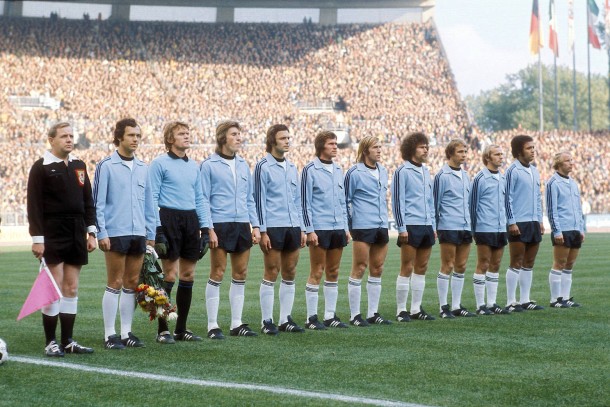
Last Friday the German Department hosted a free curated screening of the 2021 independent documentary film “Schwarze Adler” (translated from German: “Black Eagles”). The space they held it in at North Quad was great – it was huge, with floor-to-ceiling windows spanning the length of one wall, whiteboards and cushy chairs spanning the other, and a big blank wall up front to project the film onto. The physically-distanced chairs they’d set up in the room were fairly packed with people coming for the event.

Watching this documentary was a pretty emotional experience for me (which is why it took me so long to write this review!).

Steffi Jones, former defender for the national team

Seeing footage in 2021 of fans at a soccer game doing the Hitler salute will do something to your psyche. I’m privileged — some people don’t have the choice of whether to turn away from the screen, because they live through this every day. Imagine being a player on a professional sports team where the only difference between you and your teammates is that your skin is a shade darker. You’re trying to focus on the game you’ve trained for for most of your life when you suddenly hear 1000s of fans in the stands surrounding you, most of which are from your own country where you were born and raised, yelling at you to go back where you came from. That’s an experience that was recounted by every single German soccer player interviewed in this documentary.

The way fans treat athletes is something worth having a whole discussion on. Cheering for your favorite players and booing when the other team scores is all good fun. But when that morphs into jeering, chanting hateful racial slurs, and hurling insults at players, that’s when it becomes absolutely cruel. Michigan football games are not immune to this behavior. We put athletes on pedestals, but they are not made of titanium, they’re made of flesh and blood! They’re humans just like us and when fans dehumanize them, they deprive them of so much: joy from being on the field, joy from being with their teammates, and the focus they need to stay in the game.

Gerald Asamoah, former forward

Many of the players in the documentary talked about how hearing those shouts of “go back to your country” and “kick out the negro” would affect their playing, and they thought about it for the whole rest of the game. At one point one of the players, Gerald Asamoah said he had “never seen such hate anywhere else before.” One of his fellow teammates of color left Germany to play for Ghana because of the experience. Another player, after being subjected to it for half a game, picked up a small red crate on the sidelines and threw it down in a fit of anger. His teammates said nothing to him — the referee just handed him a yellow card. Another recounted how sad it made him when he saw that not only were the parents chanting slurs, but their small children were too.

Almost all of the players also made connections between the way they were treated to Germany’s dark history. “How can you show this behavior when we have seen exactly where it leads?” I think the same could be said of racism in our country. The U.S. has an equally dark history, it’s just that it’s usually glossed over in our history textbooks.

When the credits began to roll, I was feeling kind of hopeless and defeated. I know that’s not the right response to world issues, but I couldn’t help it. But then one of the professors from the German department got up to say a few words.
Here’s what she said, paraphrased:
“Don’t be disheartened. These thoughts of racism have accrued over centuries and it will take time to undo them. Martin Luther King Jr. was only assassinated 52 years ago so really we’re just at the beginning of the work to undo it. And don’t feel bad if you are not the one who goes out and marches and shows up in a big way. The small acts matter to. Every act of kindness, and every act that does something to acknowledge the humanity in others matters.”

So go out and show up in a small or in a big way this week, and know that we have a long way to go but every act matters.