

Hello again everyone! In this week’s video I focus again on my song “Colored Balloon”; this is the second episode of the “Colored Balloon” series. More specifically, I go over the song’s organization and lyrics. The structuring of the song and the inspiration for the lyrics are here in focus. At the end of this video, I feature a full acoustic performance of “Colored Balloon,” which is meant to serve as a checkpoint along the way; it signals the completion of the songwriting process and the beginning of the recording process. Accordingly, then, my focus in the next video will focus on the latter. I did not intend for this video to be so long, but it is. Hopefully you enjoy and can take away something worthwhile from this video!
Month: February 2021
The Indian Artist: Mandir
From a young age, something I always found interesting was the difference between my culture from that of others around me. I would mostly compare my experiences with the anecdotes of my friends, many of whom practiced some sect of Christianity and attended church. One thing that I thought was noteworthy was the emphasis on shoes and either their removal before entering a place of worship or not.
Being Hindhu and growing up in a religious family, we attended the temple, or mandir, decently often. As we would enter, we were expected to remove our shoes and wash our hands before proceeding into the main prayer hall where the statues of deities stood and everybody paid their respects. This is the custom in all Indian temples and mosques around the world.
 My mother grew up attending Catholic schools so we weren’t strangers to the customs at a traditional church either. There, the removal of shoes is not required nor enforced. This difference was something that stood out to me. This very basic and completely harmless difference in cultures is something that I love about religion. The multi-faceted and wide range of traditions ranging from the simplest to the most complex is what makes religion and the practice of different cultures so beautiful.
I wanted to capture this small element of my culture in a piece of mine. This piece done entirely in ink with accents of red and gold leafing, two colors that are dominant in Indian garb and decoration, is titled My Temple. It is a simple yet self-sufficient name, requiring no further explanation. I wanted to do this piece merely as a rendition of traditional temples in India rather than something deeply conceptual such as some of my other work. I wished to capture the simplicity of the ideals of the Hindu religion: respect, and grounded devotion.
Removing shoes outside of a temple before entering is both a symbolic and conscious desire to leave behind the outer world and dirt before entering the house of the lord. The same goes for any home. Hindus remove their shoes before entering their own homes and the homes of friends, family, neighbors, and loved ones. Seeing as shoes carry the dirt and germs from the outside world, we make sure that we do not bring it into any place of living with us. The thought is that we want to treat the temple as we would treat our own homes.
In other traditions where shoes are allowed in places of worship, their reasonings are completely sound as well. Providing means of hygiene, sanitary purpose, and modesty, reasons for wearing shoes also stand. Wearing shoes inside of places of worship for other cultures by no means a lack of importance and respect. Rather, it is a beautiful thing that emphasizes how so many types of people with so many beliefs, and ways of living exist in our world. We oftentimes forget to accept diversity and equity with open arms but it is an essential aspect of building a better world for ourselves and our future.
As always, if anything that I discussed in this post stands out or if any questions arise please feel free to comment and share your thoughts.
Looking forward to next Sunday!
~ Riya
Personal website: https://riyarts.weebly.com/
Album Review: Little Oblivions – Julien Baker
Little Oblivions
Matador (2021)
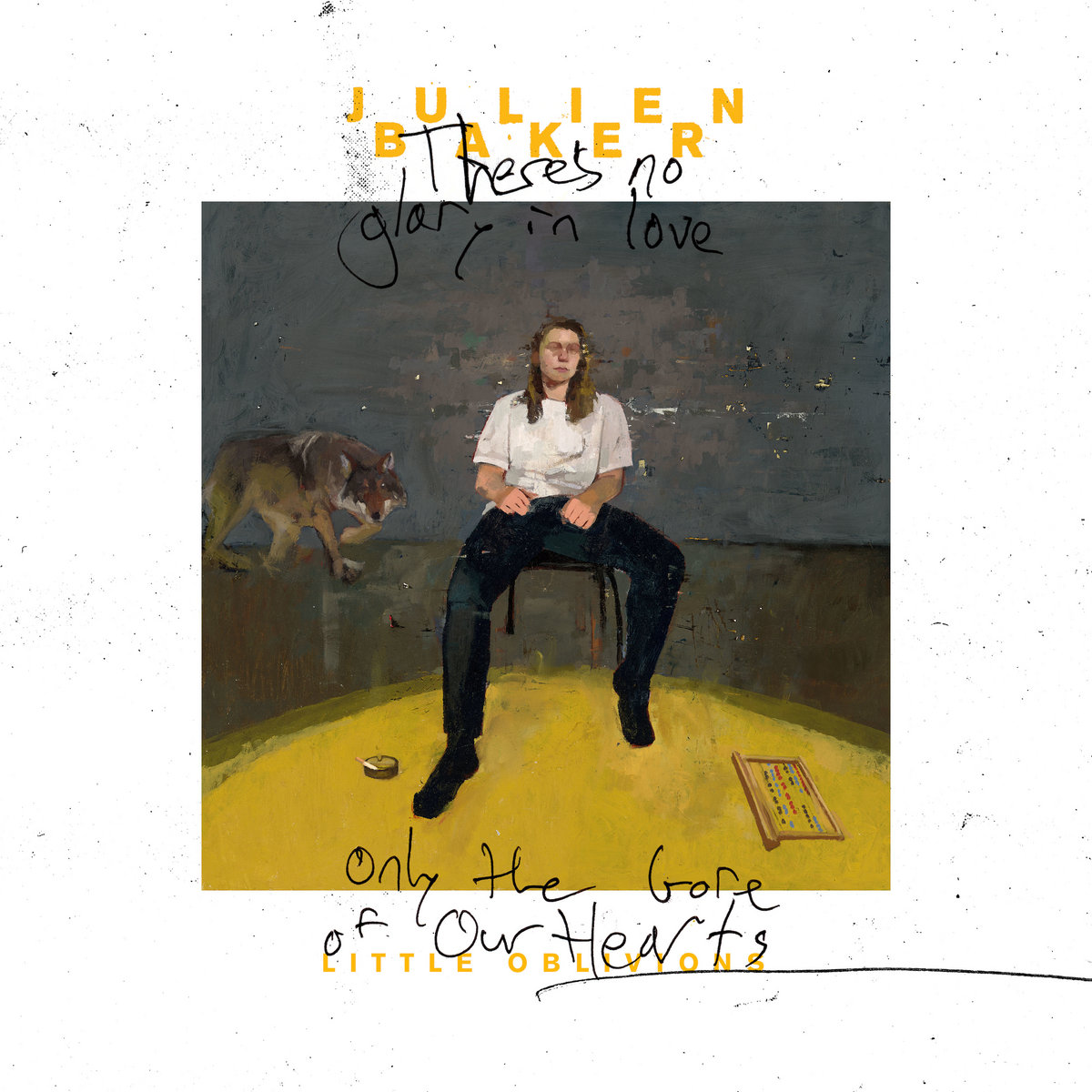 Julien Baker has always been somewhat of a paradox. She’s an openly queer woman who also happens to be Christian and from the South, specifically Tennessee. She writes simple, beautiful songs about complex topics like human nature and addiction. It seems to work for her, though, which is especially true on this new record, her third following two well-received albums and an EP with former tourmates Lucy Dacus and Phoebe Bridgers as the indie supergroup boygenius. I found her 2015 debut Sprained Ankle and 2017 follow-up Turn Out the Lights to be enjoyably raw, devastating listens, but I always wanted her to expand her sound from the simple guitar-and-vocals approach she’s known for.
Little Oblivions serves as a full reinvention of Baker’s sound; it’s still her own, but presented in a much bolder, expansive package. This is largely due to Baker’s talents as a multi-instrumentalist: in addition to producing it, she plays nearly every instrument on the album, including guitar, bass, drums, piano, mandolin, banjo, and more. Simply put, it sounds massive, as if all the emotions contained in her lyrics have finally found an equivalent in the music itself. This evolution is immediately clear on the opener, “Hardline”, which, frankly, is one of the best songs she’s ever written. I’d even say it’s an early contender for song of the year. The song opens with harsh, blaring organ chords, an unexpected move that works incredibly well. Like much of Baker’s work, the song is an emotional powerhouse, but this one truly feels like it, using atmosphere and dynamics in a way her other tracks just didn’t explore. The drums are hard-hitting, the synths and guitars are bittersweet and heavy, and Baker’s vocals are better than ever. The lyrics are even more devastating than usual; one line I keep coming back to for its bluntness is when she asks, “Would you hit me this hard if I were a boy?”. It’s as good of an intro one could ask for.
From this point on, the album is consistently dense and troubled. It sticks fairly closely to the lush indie rock sound presented on the aforementioned opener, but that isn’t necessarily a bad thing, because for Baker, it’s all pretty new territory. Early album highlight “Relative Fiction” is about as groovy as a Julien Baker song could sound, all tight drums and light melodies, though it still holds onto her trademark introspection and self-deprecation in the lyrics. A bit later, Bridgers and Dacus lend their vocals to “Favor”, though it doesn’t exactly sound like a boygenius song. It’s actually a hazy, intoxicating ballad depicting the inherent drama and self-disparagement that comes when admitting guilt: “If I didn’t have a mean bone in my body, I’d find some other way to cause you pain / I won’t bother telling you I’m sorry for something that I’m gonna do again”. Other personal favorites include the driving lead single “Faith Healer”, as well as sparse piano ballad “Song in E”, which provides a much-needed moment of calm on the album.
However, as much as I like it, I don’t think this album is without its flaws. The main issue I have with it is I find the mix to be a bit smothering at times in its densely layered style. I think the record would benefit from giving all the different sounds some space and thus allowing it to have a vast, open sound. That isn’t to say I think it sounds bad or is poorly produced; it’s a gorgeous listening experience, albeit a bit disorienting. On a similar note, I would have liked there to be a greater focus on balance in terms of song intensity. There aren’t many songs that allow the listener to just breathe for a second, which perhaps is intentional given the emotional content of the record. When listening to the album in preparation for this review, I found myself repeatedly coming back to those little moments of simplicity on the album: the acoustic arpeggios in the midsection of “Highlight Reel”, the buildup of muted guitar and hushed vocals on “Heatwave”, all of “Song in E”. While I think Baker can definitely pull off the full-band sound, I admittedly miss the intimate nature of her earlier work. The bigger sound can take away from the raw power and beauty of her vocals and writing, though it is clear from the lyrics that she is no less vulnerable in her music.
All in all, Little Oblivions is a great record from a great artist. It’s a huge artistic leap, and although I’d argue she hasn’t completely mastered the larger sound, I believe it’s definitely something she can and will master on future releases. The writing is better on some songs than others, but it’s incredibly solid as a whole. It has a cohesive, enveloping sound throughout, like a night spent lying in bed, dissociating in the dark. Her ability to write such vulnerable, ruminative lyrics is a testament not only to her musicianship, but her devotion to near-constant self-examination and betterment as well. I honestly could have written a whole other post on her lyrics, and perhaps I will in the future. Most importantly, while I still love the uneasy nature of her previous work, she sounds confident as ever on this album, which I cannot help but admire. Everything here, from the lyrics to the melodies to the instrumental presentation, cements Julien Baker’s status as one of the most honest, brilliant songwriters out there today. It’s truly life-affirming stuff, and I highly recommend it.
~~~
Side note: I’ll be posting a chart of the albums I’ve been listening to at the end of each month on here. Here’s what I listened to in February! What have you been listening to?

poco piano: easy peasy lemon squeezy
Einfach means simple and easy and that is exactly how I want to play this little movement. I overthink things a lot so it’s like a breath of fresh air to just play. To play this beautiful line and just let it sing by itself. It doesn’t need any interpretation. It doesn’t need a new idea. It doesn’t need a new perspective. I think the melody just speaks for itself. If I were to tamper with it, it would change the simpleness of the mood.

Art Biz with Liz: Pride and Prejudice Soundtrack
While my “Wellness Wednesday” this past week focused more on schoolwork than wellness, there are certain things that I treated myself to during the day off. One such activity was listening to music from the 2005 version of Pride and Prejudice starring Keira Knightley and Matthew Macfadyen. If you aren’t familiar with Pride and Prejudice, the film is based off of Jane Austen’s 1813 novel of the same name, which features five sisters from an English family (namely Elizabeth Bennett) as they navigate issues of marriage and morality. Instead of the storyline, however, today I’ll be talking about the movie’s soundtrack.
There are a variety of reasons as to why I love the Pride & Prejudice (Music from the Motion Picture) soundtrack. For one, I have fond memories of it. When I was in high school, I learned how to play two songs featured in the movie: “Leaving Netherfield” and “Liz on Top of the World.” I should clarify that by “play,” I mean play on the piano, and by “learned,” I had to master (or at least, become proficient in) the songs for an end-of-the-year piano recital. I didn’t mind, however, due to how pretty the songs were. “Liz on Top of the World” has a special place in my heart, not just because of the name, but for how beautiful it is. In my opinion, both of these tracks, along with basically every song in this soundtrack, are to be treasured – and you don’t need to have a personal connection to the soundtrack to enjoy them.
Movie soundtracks can do wonders in enhancing a movie scene or storyline. The Pride and Prejudice soundtrack has many moments where it does just that. It excels in its use of subtle songs in the periphery of crucial scenes, but it also drops the music front and center, making it as important as the dialogue or even the plot itself. “Meryton Townhall” and “Another Dance,” for instance, help transport viewers into the late eighteenth century during ball scenes. The soundtrack enhances the film by going hand-in-hand with its tone and story, intensifying pivotal scenes and providing insight on character growth. “Liz on Top of the World,” for example, begins while a silhouette of the sky is shown through Elizabeth’s closed eyelids, setting a mood. The music crescendos and manifests into an image of Elizabeth standing on a cliff, culminating into a breathtakingly beautiful and powerful scene.
Outside of the film, the soundtrack gives me all the emotions I feel while watching the movie. It’s also worthy enough to be art on its own accord, and if you haven’t caught on by now, I highly recommend that you give it a listen. Don’t believe me? Composer Dario Marianelli received an Oscar nomination for Best Achievement in Music Written for Motion Pictures, Original Score and two World Soundtrack Academy nominations. Clearly, I’m not the only one who believes that the soundtrack deserves praise.
Looking Forward: The Plush Project
Happy Friday, arts, ink readers!

I hope that you’ve all been able to get out and enjoy the sunshine that we’ve had the past few days (at least if you’re in the Ann Arbor area). It’s been giving me just enough of a “light at the end of the tunnel” that Spring may be coming soon after all.
So far on Looking Forward, I’ve spoken with a lot of organizations that have had to pivot their typical operations due to the pandemic, with many moving traditions, rehearsals, and exhibitions online or finding ways to do them while socially distancing, pre-recording content to share with their members, getting creative with multi-media approaches to projects, and collaborating with other student organizations. But what if you don’t have any “typical operations” yet? How does a new organization pave its way through this overwhelming and complicated time?
This week I had the pleasure of chatting with Amira Rabbah, President of a new organization on campus called The Plush Project. Over the course of quarantine, Amira found herself looking for new ways to keep herself busy and learn new things — enter: crocheting. She had always loved to knit, and crocheting seemed like a fun, new challenge that was also a continuation of her passion for yarn arts. She was particularly interested in the style of crocheting called amigurumi, which involves crocheting and stuffing different characters, toys, and plushes.
After she had gotten a handle on the technique, she found herself building up quite the collection of handmade toys. Rather than leave them to collect dust on a shelf, she wanted to donate these toys to children who are going through difficult times. This was the beginning of The Plush Project. Soon, Amira realized that yarn arts lovers across campus could contribute to this group, building a sense of community and practicing the hobby while giving children who are in the foster care system or who are sick a sense of comfort.
After figuring out the administrative hoops of how to form a Voluntary Student Organization (VSO) on campus, Amira applied for a grant through Arts at Michigan to help provide materials to members. This way, she explained, the organization could be as inclusive as possible and not present barriers to potential members who would like to get involved but cannot afford to purchase yarn or needles, etc.
Since forming in the Fall semester, the organization has grown to about 15 members from a variety of experience levels.
“Mostly, we have some seasoned crochet there’s a couple of new crocheters, but they’ve all, like, been introduced to some sort of yarn or fabric art, at least one of them, so either they sew or knit, all those are good avenues for making plush toys, so it doesn’t have to be crochet but that has happened to be the supplies that we have to give out.”

Although growing and running the organization has perhaps been more difficult than it would be if in-person meetings were possible, Amira has done great work and already set up donation relationships with Orchard Children Services, with the hopes of expanding to other places like Motts hospital in the future. And they’re still growing! Amria welcomes anyone who is interested in crocheting or yarn arts to get in touch:
“We’d love to obviously have more regular members, so if you’re interested in coming to our Zoom, but hopefully later in-person, sessions to crochet, get materials, whatever, the best way would be to email me or find us on one Maize Pages… they’ll both give me an email notification, so both are great ways to, like, reach out. I’ll give you a whole spiel about our organization up the zoom links to our meetings and everything!”
You can reach Amira and learn more about the Plush Project by emailing her at arabbah@umich.edu, or by visiting the Plush Project Maize Page and clicking on the “Contact” button.
I loved learning more about how a new organization has navigated this complicated year, and hearing how dedicated Amira is to this project was really inspiring. Definitely check them out!
That’s all from me today. Remember to take some time for yourself this weekend and decompress – students would typically be enjoying Spring Break right about now and I think a lot of us could use a break.
Take care and stay safe,
Lucy
