The Indian Artist: Technique

I have been very busy these past few weeks as I am sure many of you have been as well. So I wanted to keep it short and share a quick post this week regarding one of my favorite techniques in my drawings. Enjoy!

I was introduced to foreshortening as a technique in all forms of art in early high school. Foreshortening is used not only in drawing and painting but also in photography to add interest and visual pleasure. Foreshortening plays purely on perspective and vision, portraying an object as having less distance or depth than it does. In general, foreshortening refers to depicting an object or human body in a picture so as to produce an illusion of projection or extension in space and can be a difficult effect to achieve.

As soon as I tried foreshortening in my artwork for the first time I fell in love with the technique. As a lover of drawing portraits, I found that using foreshortening creates great interest in a piece and makes for a wide arena of creative availability and agency.

In my first foreshortening piece titled Reaching Out For You, I created a portrait of my brother in a stylistic first attempt at the technique. I found that I could keep the rest of my portrait relatively simple and demonstrative with the inclusion of foreshortening. Rather than using very tight methods of rendering, I left the majority of the piece stylistic, focusing primarily on the hand reaching out to the viewer. Let me know what you think of the piece and what you would have done differently!

As always, if anything that I discussed in this post stands out or if any questions arise please feel free to comment and share your thoughts.

Looking forward to next Sunday!


~ Riya


Personal website:   https://riyarts.weebly.com/

Laying Down the Sound: Colored Balloon – Episode 3

Welcome back to Laying Down the Sound! This is the third installment of the series and likewise the third episode focused on my song “Colored Balloon.” (I aim to finish the song in 4 videos total). In this video, I shift away from the acoustic composition – this was covered in the previous two videos – and begin concentrating on the recording process, including the equipment used and walkthroughs of the arrangement within Ableton Live, the DAW (digital audio workstation) I used. Somehow, against my will, my videos keep getting longer every week! But, again, hopefully you enjoy and can get something worthwhile out of this. Thanks for watching and I’ll be back next week with the last video – this is at least my plan – focused on “Colored Balloon.” After that, I’ll move on to other songs from my album!

Pity Sex: One of Ann Arbor’s Finest (Former) Indie Bands


Pity Sex is a really great band name. It brings to mind the image of a grimy hardcore punk band known for their moshpits and blistering sound. That is not the kind of band Pity Sex was. Sure, their music is full of noise, but it’s far too sweet and melodic to be considered anything close to hardcore, which isn’t necessarily a bad thing. While they weren’t the most influential or captivating band in the scene, they put out some good stuff in the five short years they were active.

Pity Sex formed in 2011 in Ann Arbor, Michigan, as part of a local emo revival birthed out of Sigma Phi, also known as Metal Frat. Their core lineup of Sean St. Charles on drums, Brandan Pierce on bass, and Britty Drake and Brennan Greaves sharing guitar and vocal duties remained consistent until Drake left the band in 2016. After a split cassette with fellow Ann Arbor band Brave Bird, the band released their 2013 debut EP, Dark World. In brief, it’s a short, solid set of songs that mainly dabble in indie rock and shoegaze, though it’s tinged with 90s alt rock and emo sensibilities, at their most cloying sounding a bit like Pinkerton-era Weezer. The band hadn’t really honed their sound at this early point in their career, which made them sound a bit one-dimensional, but there’s something to be said about how well they portray adolescent angst and desire in the dreamy walls of sound and dramatic vocal tradeoffs between Greaves and Drake. Their most well-known song, “Dogwalk”, also came from this EP, and it makes sense why it had such popularity. It’s got a loose, infectious vibe characterized by a slinky guitar line that transforms into brittle noise on the chorus, as well as a catchy vocal melody and an admirably amateur-ish performance. The high-energy instrumental bridge is a nice, unexpected moment, too.

In the same year, they released their debut album, Feast of Love on notable indie label Run For Cover Records. This record saw them operating in much of the same sounds as their EP, with some notable improvements. Opening song “Wind-Up” doesn’t reinvent the shoegaze wheel, but it’s some of the band’s best songwriting, most noticeable in the earworm hook and inventive guitar and bass interplay. “Sedated” and “Honey Pot” are similarly bold and infectious (and actually transition into each other quite nicely!), though the real highlight comes in the mid-album moment of respite “Hollow Body”. The band strips things back to just gentle guitar arpeggios and Drake’s dreamy vocals, and it’s such a refreshing change of pace. It’s simple, elegant, and absolutely mesmerizing. I would have loved to hear them explore this lighter sound more in their time as a band.

Following the release of their debut, Pity Sex toured with some pretty impressive acts in the scene, including Basement, Tigers Jaw, and Code Orange side project Adventures. Following this, they released what would be their final album before going on an indefinite hiatus, White Hot Moon. As with their other releases, it’s an enjoyable, bright record with several highlights (the title track is especially great in its heaviness), but suffers from much of the same problems as well. They had certainly mastered the lo-fi, hazy shoegaze/dream pop sound reminiscent of classic acts like My Bloody Valentine, but throughout their career, they failed to innovate and move past their influences into their own distinct sound. It’s a shame their career was so short-lived; I think it would have been interesting to see how they may have evolved with future releases, especially as they became more established musicians, though I admire their DIY, fledgling spirit. Nonetheless, if you’re looking for music by some Ann Arbor natives, or just some solid music to throw on in the background at a party (or makeout session, if you’re feeling romantic), Pity Sex is a great choice. Let’s hope they reunite for some shows when those are a thing again.


Sidenote: I also think all their album artwork is beautiful!


Pity Sex Dark World.png


Dark World EP  (2013)

Songs to check out: “When You’re Around”, “Dogwalk”
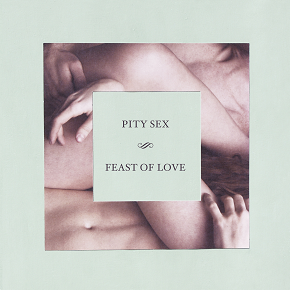


Feast of Love  (2013)

Songs to check out: “Wind-Up”, “Hollow Body”, “Sedated”, “Honey Pot”


White Hot Moon  (2016)

Songs to check out: “What Might Soothe You?”, “Plum”, “Nothing Rips Through Me”, “White Hot Moon”




poco piano: chamber music

This week was very busy for me. I had chamber music performances this week (sorry I didn’t record them! I think I will get the professional recordings soon). I played the last movement of the Mendelssohn c min piano trio in a performance on Thursday night and today (Saturday morning) for a masterclass. It’s a passionate movement that begins with a tumbling cello line, out of breath and crazed.

I chose to work on this piece because I actually played the first two movements when I was in high school. So, I wanted to finish the piece and get this glorious ending. My high school piano professor was in a professional piano trio that toured for many years and I remember him telling me that the ending of this trio is just so much fun to play. The flying fingers and rush of accelerating to the end is just so exhilarating. Mendelssohn’s music is…. a bit notey to be honest. He was a virtuoso pianist and he really shows it in the piano part. It actually works out so well because the piano excels at playing a lot of notes in a short amount of time but has a natural disadvantage to sustained long notes. In contrast, the strings excel at playing long sustained long notes. So while the strings play a luscious long melody, the pianist gets to fly around the keyboard, filling out the harmonies and the empty beats with arpeggios. Often this frantic frazzled feeling is unwelcome but here, it is quite fitting- though only if you stay in control and have all the notes under their fingers.


Looking Forward: BlueNote Vocal Jazz Ensemble

Happy Friday, everyone!

It’s another sunny day here in Ann Arbor. I don’t know about you, but that automatically boosts my mood – plus it’s practically the weekend already!

This week I had the opportunity to chat with Cinderella Ksebati, Co-Founder and Music Director of BlueNote Vocal Jazz Ensemble. As another fairly new organization on campus, I was excited to learn more about how they have adapted this year and what their upcoming plans for performances were like. Let’s dive right in!
Founded in 2019, BlueNote Vocal Jazz Ensemble aimed to help fill the void of limited opportunities for students to participate in vocal jazz on campus. The group consists of both undergraduate and graduate students, including a mix of SMTD and other schools. They were able to perform on campus at the SMTD’s “Collage” event, as well as a few off-campus opportunities before campus shut down in early 2020 due to COVID-19. This hasn’t stopped Cinderella and her team, though. They are still working just as hard to “revitalize the attending-a-jazz-concert experience and in 2020-2021”.

“We are thinking, okay, how do we present this using technology, using what we have at our disposal, and continuing to make art, create jazz music, and start to get people engaged with this genre. And bring it back to the forefront of the arts as is such an American tradition, we want to bring it back and take bits and pieces of those traditions honoring and paying homage to all the vocal jazz greats. Of the groups like, for example, Take Six, New York Voices, so some of our program for the upcoming project that we’re working on, “Let’s Go to the Movies”, encompasses a couple of those things. We are mixing the media, we’re doing a 30-minute jazz film and we’re using all vocal jazz repertoire.”

To prepare for that project, BlueNote has been meeting via Zoom 2-3 times a week and using an online audio workstation that allows them to hear a little bit of the “blend” that vocal groups work so hard to achieve in performances. They have also incorporated a few individual, in-person rehearsals, following county and university guidelines. 

Though Cinderella does miss in-person performances, she notes that there have been some interesting developments in vocal jazz, at least in BlueNote, that she hopes will continue after COVID. Specifically, adding more storytelling into their performances is something she has really enjoyed. 

“It won’t necessarily be a film next year, who knows, but I certainly think that that is going to be changing some things and just in terms of our passions of the group members.”

Check out their most recent YouTube video above, performing “Walkin My Baby Back Home”.

BlueNote’s newest project, a short jazz film titled “Let’s Go to the Movies”, will premiere in April. You can stay up to date on their upcoming events by following their Instagram and subscribing to their YouTube channel. Lastly, keep in mind that the group holds auditions every semester, so definitely keep an eye out this Fall if you’re interested in singing!

That’s all from me this week! 


Stay safe,

Lucy

Weird and Wonderful: “The Hole”

I watched a lot of great films when I took the Introduction to Film class at U of M, but nothing tops The Hole. Infamous Taiwanese director Tsai Ming-Liang’s wildly inventive film is especially relevant as the United States enters a full year of quarantine. The Hole exists in a genre all its own — it’s slow cinema, a jukebox musical, and a horror film. Above all, it’s a commentary on human connection. 

The Hole was part of the 1998 “2000, Seen By…” project — an international film challenge to produce a film depicting feelings toward the new millennium. Despite an evacuation ordered by the government at the onset of a global pandemic, the two characters Hsiao Kang (Lee Kang-sheng) and “the woman downstairs” (Yang Kuei-mei) decide to remain in their apartment building. As the disease progresses and their world becomes deserted, they begin communicating through an unpatched hole in the floor which connects their two apartments.

There are only six characters credited in the film, four of them having only a few minutes or mere seconds of screen-time. This — along with the constant rain — emphasizes the loneliness and vast emptiness of the world the main characters inhabit, and makes this world more intimate for the viewer. There is very little dialogue throughout the film, so it relies heavily on visual cues. The drained color, long stretches of near-silence, and minimal camera movement are the palette with which Ming-Liang paints the feelings of isolation with perfection.

However, not all hope is lost for Hsiao and the woman downstairs. Hsiao still attempts to run the small market he owns, but eventually he finds spying on the woman downstairs to be more fitting entertainment. Though they initially despise each other (and seek to anger each other purposefully), the woman downstairs develops feelings for Hsiao. These desires are articulated in the most daring way possible for the film —  through unannounced flashy dance numbers in which the woman downstairs lip syncs to the classic pop music of Grace Chang. 

In these musical numbers, the world becomes colorful again. While reality is dark and dreary, the woman downstairs’ dreams are bursting with life. Even at the very end, when her situation becomes desperate, she slow dances with Hsiao in her fantasy world. All of these scenes take place in the apartment building, as if that is all that’s left in the universe. 

The majority of the songs in the film are about romance. The woman downstairs’ desire for companionship in what appears to be a hopeless environment is the essence of human nature. Hsiao and the woman downstairs represent something that is truer than ever now: in the claustrophobic universes our homes have become, we all need the kindness of one another. As rain invades the woman’s apartment, causing all her wallpaper to fall off, and the hole invades Hsiao’s apartment, they find comfort in knowing that there is still someone on the other side of the floor.

The Hole was already incredible before the pandemic. However, I’ve learned to appreciate it even more now. My apartment is my world, too, and I’m sure yours is as well. If there is anything to learn from The Hole, it’s that amongst the fear, mundanity, and sluggishness of isolation, hope exists. All that’s left to do is dream it.