
unscrambled #14 – “floating”
I’ve had a rough week or so in terms of writing anything good enough to deem worthy of finishing. So instead of posting a full song this week, I’ve decided to post a few bits and pieces I’ve written down in the last few months.
Some are sad, some are happy. The styles are all different, and I’m not sure exactly what the tune to some of them are yet. But there is a certain beauty in an unfinished song. They’re in their ‘poetry’ stages. So, here you go:
#1: (a song for the seasons)
Wake up blanketed in white
stars like tiny twinkling lights
and I’m finally home
porch is dusty striped with snow
air is biting bitter cold
and I’m finally home
And I open shutters wide
should I run, should I hide
Is it finally time
It’s another barely merry Christmas
#2: (a song for fading feelings)
What do I say when the feelings all fade
But I promised you my forever
What do I do when I said I’d stay true
But in all my dreams I’m not tethered
You’re all I have, and I know that
What my heart wants, is what it once had
How do I stay when I feel I must stray
Is my only choice now or never
Every new night I add to my lies
And I weave a new stupid pattern
With every word sent and every word meant
My bond to you has but shattered
You’re who I’ve got I want whom you’re not
I need to hold on but everything’s wrong
What do I say when it all fades to gray
And everything’s gone that once mattered
#3: (A song for the towns we call home)
Small town small minds
Not too many passersby
Crazy girls simple lives
Its home
Big fields bigger dreams
Everything is as it seems
Stuck there till seventeen
That’s home
Then we leave and we see what the real world says
About us small town home grown women and men
You tell em where you’re from just by naming a state
All they’ll nod like they know but they don’t what to say
And everywhere you go everything is strange
Like what are you doing here?
You try your very best to be a part of this place
But in the end you’re 2000 miles away
And deep inside a part wishes you’d stayed
Home home.
#4: (a song for MY town I call home)
I was born in a town
where the greatest place around
was the Culvers on the side of highway sixty
And our idea of a getaway
Was a 40 minute drive away
To the shores of the Great Lake out in Milwaukee
#5: (religious, but my attempt at a song of lament)
Oh Father how I feel like old Jerusalem
Once full of people and the vibrant lives they shared
Now like that silent city I will weep away my sorrows
and it’s more than one small single soul can bear
The tears are streaming faster as I count the names of friends who’ve turned their backs as they have carried on their ways
Now like the silent city I will find no rest tonight
for my mortal heart is once again betrayed

 7
Whether it’s forever or not, each day that passes you get closer and closer to the end.
How do you want to live your life?
How do you want to fill your day?
Can you keep chapters?
Yesterday was my birthday.
It is becoming difficult to understand age beyond its construct.
The linearity of time is an illusion.
We are simply points in a scatterplot
Or constellations
The difference between organic and synthetic is age, because by sheer nature the organic is finite.
Finite nominally but infinite structurally, systematically.
An Apple Rots But A Tree Evolves.
I am finding it difficult to differentiate myself.
I am finding it difficult to differentiate myself.
Am I Apple or Tree?
Perhaps both, curse Aristotle, who
Cried in Gestalt!
Perhaps my whole is mathematically equivalent to the sum of my parts.
If matter cannot be created or destroyed within a closed system, are we not
Simply recycled atoms from leaves, lemon tek
Poured over candlelit dinners
Sangria from Sudanese stelliums
“I love you” my Mother said, in broken tongue
“I love you” my Father said, verbiage assault wrapped in bloody bandages
“I love you” my Brother said, over allergic reaction and laughing gas
Deliverance of severed packages
Regardless if it’s forever or not, for each day that passes, you get closer and closer to the end
How do you want to live your life?
How do you want to fill your day?
Where do you feel safe?
Where can you explore?
Commit to these missions, Rover
Curiosity!
I have been having the same dreams, repeatedly, lately
In that dream, I am more than my parts
I am skin, I am flesh, I am bone
I am carcinogen
I am curator
I am creator
I have words that escape my wet tongue in damp O’s and Ah’s
I can still store data, knowledge, but in images and faded memories found in shipping containers and cargo ships
I can breathe, my gills pulsate through thickened water, like
Fighter jets piercing the sky in a single file line
Criss cross applesauce, dinosaur figurines made from crude oil
Your fingers through my hair, my chest pounding against yours and you whisper to me
“You always had a hand at this”
In that dream,
I can feel love
I can feel touch
I can feel taste
Strawberries, Napalm, Licorice
“You always had a hand at this”
My grandmother would say to me,
Shrimp dumplings coated in canola oil,
Before her last croak—
Regardless if it’s forever or not, each day that passes, you get closer and closer to the end
How do you want to live your life?
How do you want to fill your day?
7

Whether it’s forever or not, each day that passes you get closer and closer to the end.

How do you want to live your life?

How do you want to fill your day?

Can you keep chapters?

Yesterday was my birthday.

It is becoming difficult to understand age beyond its construct.

The linearity of time is an illusion.

We are simply points in a scatterplot

Or constellations

The difference between organic and synthetic is age, because by sheer nature the organic is finite.

Finite nominally but infinite structurally, systematically.

An Apple Rots But A Tree Evolves.

I am finding it difficult to differentiate myself.

I am finding it difficult to differentiate myself.

Am I Apple or Tree?

Perhaps both, curse Aristotle, who

Cried in Gestalt!

Perhaps my whole is mathematically equivalent to the sum of my parts.

If matter cannot be created or destroyed within a closed system, are we not

Simply recycled atoms from leaves, lemon tek

Poured over candlelit dinners

Sangria from Sudanese stelliums

“I love you” my Mother said, in broken tongue

“I love you” my Father said, verbiage assault wrapped in bloody bandages

“I love you” my Brother said, over allergic reaction and laughing gas

Deliverance of severed packages

Regardless if it’s forever or not, for each day that passes, you get closer and closer to the end

How do you want to live your life?

How do you want to fill your day?

Where do you feel safe?

Where can you explore?

Commit to these missions, Rover

Curiosity!

I have been having the same dreams, repeatedly, lately

In that dream, I am more than my parts

I am skin, I am flesh, I am bone

I am carcinogen

I am curator

I am creator

I have words that escape my wet tongue in damp O’s and Ah’s

I can still store data, knowledge, but in images and faded memories found in shipping containers and cargo ships

I can breathe, my gills pulsate through thickened water, like

Fighter jets piercing the sky in a single file line

Criss cross applesauce, dinosaur figurines made from crude oil

Your fingers through my hair, my chest pounding against yours and you whisper to me

“You always had a hand at this”

In that dream,

I can feel love

I can feel touch

I can feel taste

Strawberries, Napalm, Licorice

“You always had a hand at this”

My grandmother would say to me,

Shrimp dumplings coated in canola oil,

Before her last croak—

Regardless if it’s forever or not, each day that passes, you get closer and closer to the end

How do you want to live your life?

How do you want to fill your day?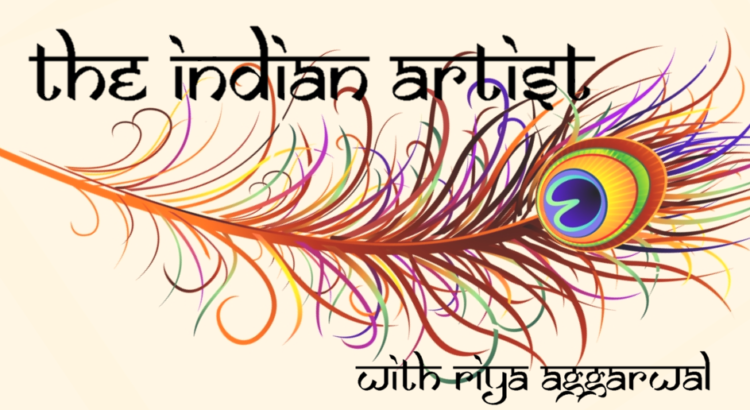
How about another story this week? With the stresses of exams and the end of the semester, I thought that it would be a fun post! This is the story of the Goddess Lakshmi and how she came to be. The drawing shown this week is my recreation of one by Bijay Biswaal, done completely in ink. Enjoy!
Each and every deity in Hinduism has significant importance. The Goddess Lakshmi symbolizes good luck and is the goddess of wealth and prosperity.

The story begins with a meeting between Sage Durvasa and Lord Indra, the God of weather. Sage Durvasa offered a garland of flowers to Lord Indra who took the garland and placed it on the forehead of his flying elephant, Airavat. The elephant took the beautiful garland of flowers and threw it down on the earth. Durvasa got angry at this disrespectful treatment of his gift and cursed Lord Indra, saying that his kingdom would be ruined in the same way that the flower garland was ruined when it was thrown. At this point in the story, it is important to understand that these sages were very easily angered and often times full of excessive pride.
Following this encounter, Sage Durvasa walks away and Lord Indra returns to his kingdom where changes have already started to take place. The gods and people are losing their energy and vigor, the crops and plants are starting to die, citizens are foregoing any charity work, their minds are becoming corrupted by darker forces. With the Gods getting weak in the kingdom, the demons and demonic forces invade, defeating them. It is said that this is the reason that good and evil reside in us all.
After being defeated, the Gods went to Lord Vishnu, the ruler of the universe, to ask for help. He suggested that the churning of the ocean would restore the power back to the Gods by providing them with the antidote that would make them immortal once again. Thus, the churning of the ocean began. Think of this as a literal game of tug of war between the Gods and Demons. From this churning, the Goddess Lakshmi rose out of the waves seated on a full-blown lotus. The Gods got their power back and fought the demons again, and this time, they were successful.
I hope that each of you has a great end of the semester and may the Goddess Lakshmi grant a bit of luck on all of your exams. As always, if anything that I discussed in this post stands out or if any questions arise please feel free to comment and share your thoughts!
Looking forward to next Sunday!
~ Riya
Personal website: https://riyarts.weebly.com/
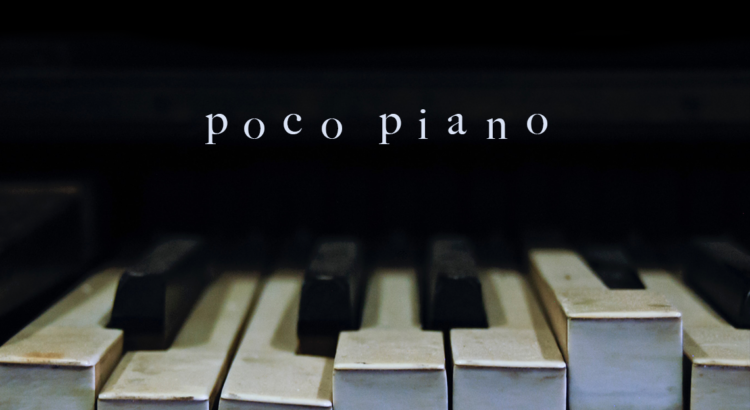
This week was finals week and I haven’t had a lot of time to play the piano. I would take breaks from writing my portfolio (9,000 word min), and play a little piano to free up my mind from words and precision and give me some respite from the computer screen. The title of this one is “Child falling asleep” by Schumann. It’s a movement from Kinderszenen, “childhood scenes”. I played this throughout the week, just to feel some peace from the flurry of finals.
It’s a bit of a strange piece. One would think that a child falling asleep would be unfailingly sweet yet it seems rather bittersweet instead, almost troubled. The warm major section in the middle seems like dream, slightly out of reach. It’s subdued but peaceful and rocks like a cradle through the night. It ends unresolved, as if in mid thought—the child drifts off.
Another semester is coming to an end, and what a weird one it has been. With classes over, it’s crunch time for final exams, essays, and projects. One of my final projects this year includes a short story collection, the culmination of a semester’s worth of work. The goal of it is to see my original creative work, which was submitted on a regular basis throughout the past few months, in a complete, polished state.
RCHUMS 325 is a “tutorial,” which is a unique opportunity to participate in one-on-one writing workshops with the Residential College’s creative writing faculty. Tutorials are meant to support students in expanding our understanding of the craft of writing. Through them, we also grow as young artists in developing our voices and creative visions. As such, the course I took centers around creating (and submitting) new and revised stories weekly, which are influenced by critical reflection done both individually and collaboratively with an instructor.
As I learned in another creative writing class, RCHUMS 220 (Narration), I tend to write longer short stories, as contradictory as that may sound. Doing a tutorial this past semester has been invaluable in writing fiction that is around 5-10 pages long, which is shorter than my “short” stories usually are. After this experience, I’d highly recommend that any writer tries their hand at writing a short story from start to finish. Why? Writing short stories can help a person further develop various writing skills, as the process unveils many of the questions and predicaments faced when crafting fiction of any length.
A short story is a chance to create a unique character and storyline, perhaps without requiring as much of a time commitment as a full-length novel. If a writer has trouble with the plot or characters in their short story, it might highlight some areas to work on when writing other works, too. Like any other art form, writing takes practice, and short story writing can help a person improve on a few different elements of general fiction writing.
While it may seem like writing a short story would be easier than writing longer works, it still comes with its own challenges and opportunities for growth as a writer. A good short story must tell a compelling story with a beginning, middle, and end in noticeably fewer pages than a typical novel. Generally, that limits the number of scenes, characters, and plot points that can be included. There’s not as much room for “fluff,” or extraneous information that doesn’t add anything to the story. Thus, writing a short story is good practice for both pacing and extensive editing. While a novel may detail years of a character’s life, a short story may encompass only a day. This was one of the biggest lessons that I learned this semester through my creative writing tutorial. In being accustomed to longer stories, I tried to cover more time than was feasible in one of my short stories, which required heavy revision to improve the storyline and flow.
It can also be deceptively difficult to make a reader feel a certain way about a character when they witness only a snippet of said character’s life. Yet, there are also some advantages to writing stories of shorter length. Shorter timelines may not allow for as an authentic evolution of certain relationships or character arcs, but they can create faster stories. This results in an opportunity to cultivate motion and tension for a more engaging plot and streamlined story. Considering this information can help a writer decide whether they want their idea to be a short story, novella, or longer work based on how much time is necessary for the storyline to unfurl to optimal result. Based on my experiences with RCHUMS 325 this past semester, this is something I’ll keep in mind moving forward, and maybe you will, too.
RCHUMS 220: Narration and RCHUMS 325: Creative Writing Tutorial are available during fall and winter semesters through LSA’s Residential College (RC). RC courses are not exclusive to RC students; however, instructor permission is needed to enroll in RCHUMS 325. Check out the RC Writers page here!
