The Gift of Friendship

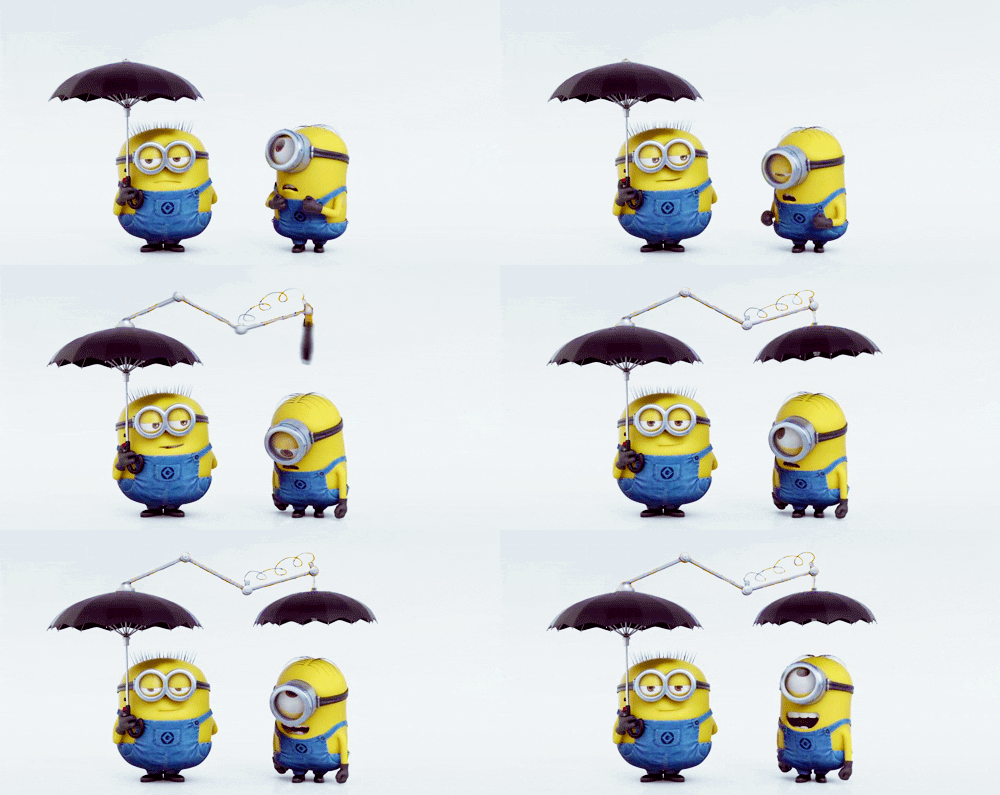
Two minions stand in an open space. One has an umbrella and the other doesn't. The one without the umbrella looks sad, so the one with the umbrella pushes a button and another umbrella pops out of the first to cover the sad minion.

It’s my senior year, and while I’ve lost a lot of friends and gained a lot of friends throughout my existence, it feels strange knowing that the end of this year will mark another time in my life that friends will purposely leave and enter. I’m not upset about that—it’s only life, but because of this, I’ve been thinking about my friends a lot lately.

As it happens, today is Facebook’s 12th birthday, and apparently they’ve been thinking about friendships, too. In an emotionally charged compilation of pictures, Facebook came up with a campaign to showcase social networks, AKA friends. And thus, #friendsday began.

When I went to check out my video, I wasn’t sure if I’d like it. As I said, I’ve been considering my friendships a lot lately and I was a little nervous to see what Facebook thought about the people I surround myself with. I loved my video, though. It showed me people I care about and the moments that I shared with them. And even though I’m not as close with some of those people, or I don’t get to see them as much, I’m still glad they were in my video. Every friendship I’ve ever had has helped me become who I am, and Facebook’s #friendsday video showed a little part of that.
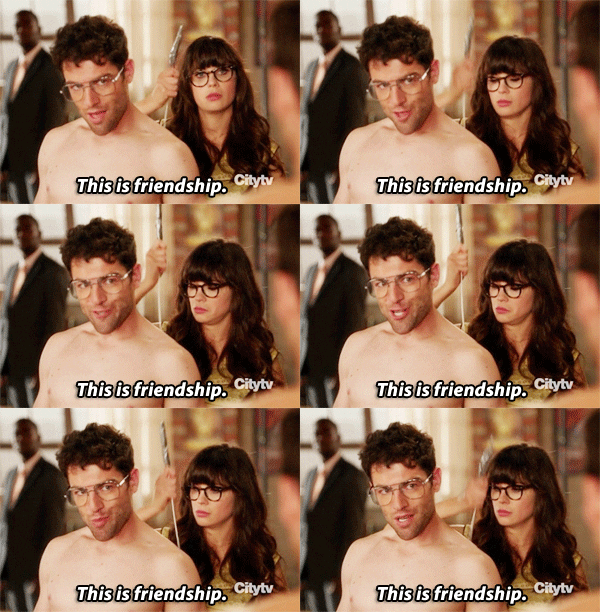
New Girl's Jessica Day scratches Schmidt's back while Schmidt says,

My mom once told me, “friends are like elevators. They can bring you up, or they can take you down.” Now, okay, my mom told me that when my two friends from middle school and I skipped a free ACT prep class to go to 7/11 and Rite Aid and she was trying to explain peer pressure and how friends can affect actions, but that’s not all that sentence can mean. It can be so much more.

Good friends can bring you up and hold you there in a warm hug of love and affection. They can encourage you to shoot for the stars and make you feel good about yourself and most everything you do. They’ll tell you to do things because they know what will make you better and make you happy. They’ll support you and tell you when you’re being an idiot in the best way possible. And, they’ll laugh with you until your sides hurt and eat grilled cheese with you at three in the morning just because you had a craving. These friends are good friends.
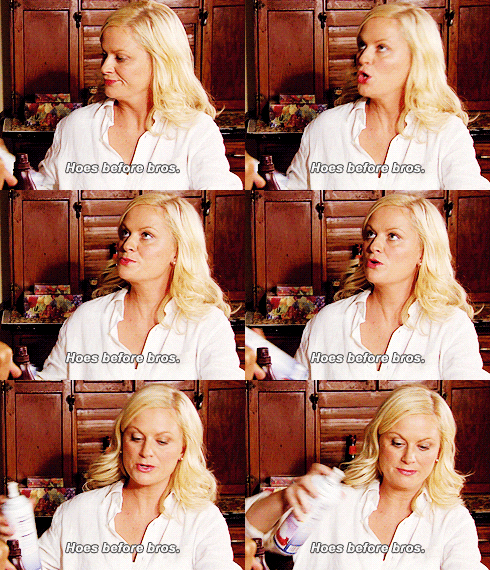
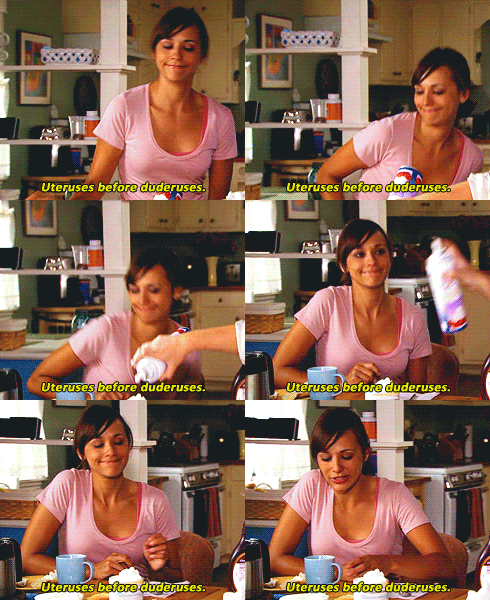
Amy Poehler's Parks and Recreation character Leslie Knope shakes whipped cream and says, "hoes before bros."

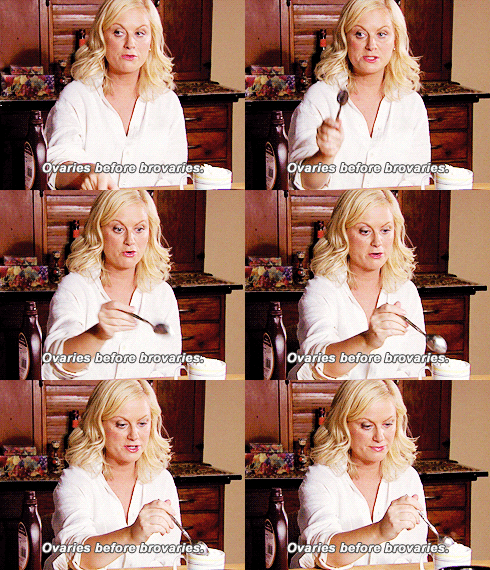
Amy Poehler's Parks and Recreation character Leslie Knope says, "ovaries before brovaries." Parks and Recreation's Ann Perkins sits down while Leslie Knope says, "uteruses before duderuses."

Bad friends, on the other hand, can drag you down to the depths of despair. They can make you anxious and stressed out. They can make you feel worthless and uneasy, like your goals are pointless and shouldn’t be reached for. They can do rude or obnoxious things to you that make you question why you would be friends with them in the first place. Here’s a hint: you’re not. Drop. Those. Friends.

Everyone deserves to have good friends who bring you to the top floor of the Empire State Building. Yep, that’s right, I’m sticking with the weird elevator thing. So, if you find yourself being lowered to some dark and stinky basement by your “friends”, just know that you don’t have to get off the elevator with them. Say good bye and find the people who really care about you. Believe me, they’re out there waiting to journey skyward.
Acknowledging the Flaws of Harry Potter

I am part of the Harry Potter generation, the generation of kids for whom Harry Potter was a formative experience. Harry Potter’s influence has obviously been massive, to the point that it’s its own culture. It transcends art—reading the books isn’t really like reading a book, it’s like being in another dimension, and even watching the movies is the same just because they’re so inextricably tied to the books. Words like ‘Gryffindor’ and ‘Voldemort’ are so familiar that when I hear somebody mention them in public, I don’t think Hey, they’re mentioning my favorite books! I don’t think anything, really. They’re just words that have somehow entered the cultural canon as comfortably as any other name.

And personally, I feel totally shaped by Harry Potter. I respect so much about J.K. Rowling, personally and professionally. Somehow, she created a world. To attain her level of fame and wealth is impressive to begin with, but to attain her level of influence on children everywhere is incredible. And yes, adults love the series too—I just think it’s particularly amazing that she could shape so many young minds. I was one of those minds, and I will always love every book, every character, every word of Harry Potter.

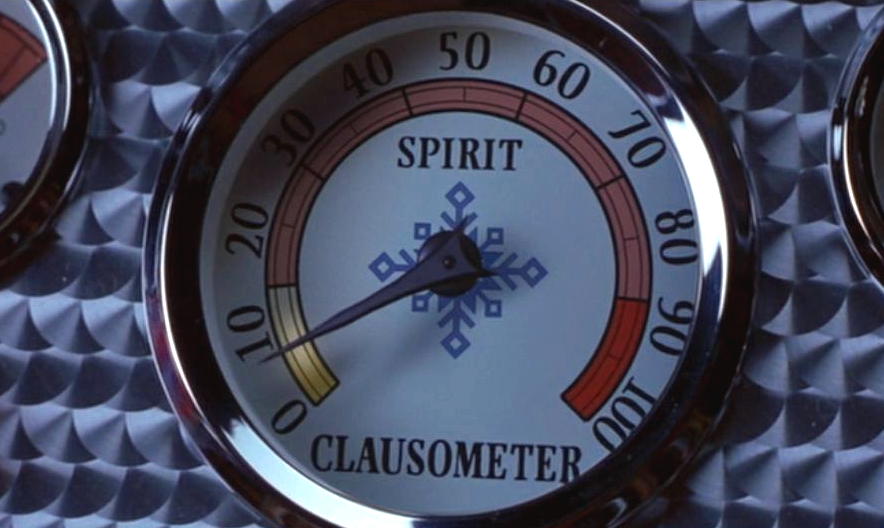
But I’ve always believed that you can criticize the things you love, just like you can like pieces of things you hate. “Elf” was my first favorite movie, and looking back at it now, I find the climax a little problematic. Sure, the scene with Jovie singing to the crowd of people is great, and Walter Hobbs saving the Clausometer by finally joining in is brilliant. The celebration of Christmas cheer is a great thing to focus on, but isn’t it a little cheap that Michael has to get the Clausometer kick-started by blatantly revealing Santa’s list on live TV? The whole point of faith is that you have some internal compulsion to believe. It’s based on your intrinsic belief, not proof. By revealing Santa’s list, Michael isn’t asking people to believe in something they can’t see; he’s forcing them to see the truth. And that’s not as powerful.

But “Elf” still might be my favorite movie, and that thematic flaw doesn’t come anywhere close to undoing the countless laughs, the tear-jerking moments, Will Ferrell’s hilarious performance, and the overwhelming Christmas cheer it instills in me whenever I watch it.

And I feel the same way about Harry Potter. It holds a special place in my heart and can never be tarnished, but I think it has some problems. And I think it’s okay to acknowledge that.

Starting with the first book, the Sorting Hat…doesn’t make a lot of sense when you think about it. By itself, it’s a pretty cool little idea, but does it really make sense to try to categorize people that way in real life? Pretty much everyone I know would be either a Ravenclaw or a Hufflepuff. Maybe a Gryffindor or Slytherin every once in a while, but kindness, loyalty, and intelligence are more visible and common than bravery and cunning. It’s kind of hard to think of anyone I know as ‘brave’—I mean, yeah, there’s casual everyday bravery, but the characters in Harry Potter were able to more easily show their bravery when facing magical death every day.

And let’s be honest: as much as J.K. Rowling and many fans might defend Hufflepuff and Slytherin, they really are the boring house and the evil house, respectively. Claiming that Nymphadora Tonks is a Hufflepuff doesn’t really redeem the severe shortage of characters that the house has, and seriously, it’s hard to say that Slytherin’s defining characteristic is ‘cunning’ or ‘ambitious’ when almost all of them seem to be racist traitor Dark Lord sympathizers. J.K. had plenty of opportunities to make Slytherin more of a morally gray house (she helped a little bit by making Peter Pettigrew a Gryffindor). If Sirius Black had been a Slytherin like the rest of the Blacks, he could’ve been a great example of a good guy Slytherin. But not enough was done to make Slytherin more than the House of Dicks.

Speaking of moral relativism…let’s talk about Snape. Let’s be clear: I love the character. I think he’s the most morally gray character in the series. But J.K. does stumble a little bit at the end of The Deathly Hallows in glorifying him by having Harry name his son after him when there were many more trustworthy, loving people he could’ve chosen (Hagrid, Lupin, etc.). J.K. confirmed in a series of tweets that she was aware of Snape’s bitterness and the horrible way he projected his hatred of James onto his son, but she explained it this way: “Snape died for Harry out of love for Lily. Harry paid him tribute in forgiveness and gratitude. There’s a whole essay in why Harry gave his son Snape’s name, but the decision goes to the heart of who Harry was, post-war. In honoring Snape, Harry hoped in his heart that he too would be forgiven. The deaths at the Battle of Hogwarts would haunt him forever.” Honestly, it’s a great explanation, and explains a lot. I’d totally embrace it…if it had actually been implied in the book. Unfortunately, in the book, we never get to see Harry struggling with post-war guilt. As far as we can see, Harry is honoring two men who continually withheld information from him and behaved selfishly.

Speaking of which, that’s a thing J.K. does a lot: talk about the future for these characters. I didn’t really mind the epilogue of the last book (though it’s unnecessary) because this is the kind of series where it’s okay to skip forward and show a much-deserved happily ever after, but I’m not a fan of the way she still talks about the characters’ futures after the fact. John Green has spoken about this before—the author isn’t necessarily allowed to say what happens to the characters after the events of the book, because that’s not part of the contained story of the series. Just like John simply didn’t know whether Hazel Grace Lancaster dies after The Fault in Our Stars, J.K. isn’t necessarily allowed to just say that George grows up, has a baby with Angelina Johnson, and names him Fred. I also don’t like how she just claims that Harry is an Auror, and Hermione works for the Ministry. If it came out in the epilogue, that’s fine, but it’s unnecessary to draw out this elaborate future for every character outside of the story itself.

In fact, most of my problems have to do with the story’s conclusion. The idea of the Deathly Hallows is super cool, but if you think about it, it’s pretty unsatisfying that the villain’s inevitable demise happens because of a logical fallacy involving who a wand’s owner is. J.K. made Horcruxes feel integral to the plot by setting them up in the previous book (and laying clues throughout the series), but the Elder Wand is something we couldn’t have anticipated playing a role in Voldemort’s death.

Like I said, most of these problems barely affected my reading of it, maybe partly because I was a kid who didn’t understand narrative like I do now. Maybe if I was reading it for the first time now, I’d love it, but I’d be a little let down by the end. It’s hard to tell. But my ultimate point is that it’s okay to acknowledge that everything has flaws, even the stories you love the most. Nothing is perfect. Not even Harry Potter.

Cooking Faux Pas

There are three things that I am exceptionally bad at: conducting, cooking and drawing. I discovered that I could not draw in middle school art class as my peers began drawing portraits while I prided myself on my ability to draw symmetrical stick figures. Conducting was a daily struggle for me this past year as I attempted to keep up with instrumentalists used to reading scores with more than 8 parts while simultaneously transposing a good number for them. Luckily, drawing and conducting are not skills which are typically required on a daily basis, however, the ability to feed yourself is.

My inability to cook delicious (or even passable) meals is not due to a lack of effort, in fact I love to cook and the creative process associated with it, rather my lack of skill or patience. It often begins well – I search the internet for “simple healthy meal” or something similar and look through twenty or so photos until I find something that looks both feasible and tempting. I set out the pans, wash the vegetables and begin following the recipe to a T until I realize I am missing an ingredient. “No worries” I think “I’ll just substitute it with some other herb”. Two minutes later the same thing happens and yet again I substitute without knowing the true accuracy of my substitution. Fast forward to when the food is on my plate and I take the first bite – odds are it did not turn out well.

Perhaps if I was a bit more patient it would turn out better. If instead of cooking everything on high (obviously that is the most efficient way!) I considered lowering the temperature so that the pot did not overflow or if I could stop myself from opening the oven every five minutes to check if it was done, things would cook more evenly and come out less like hard bricks and more like chicken. Although I am acutely aware of my cooking faux pas there is some part of me that refuses to rectify them.

My own lack of success while attempted to cook has fueled my love of cooking TV shows. The chefs that you see on shows like Chopped and Masterchef (my two personal favorites) are true artists and I have been known to play episodes while I cook to help me pretend I am preparing a meal just as impressive. So often we look at food as a means to an end, we eat for nutrition and sustenance not for the beauty of preparation or complexity of flavors, and we forget that food can be about so much more than the number of calories per serving. We forget that the chefs who work behind the scenes are more artists than skilled laborers and that what we create in the kitchen can be, and should be, about more than the number of dirty dishes we leave behind.

“Must There Be A Superman?”: Lois Lane Takes On The Man Of Steel

“I’m at the top of my game. Leave saving the world to the men? I don’t think so,” says Elastigirl, in the 2004 Pixar movie, “The Incredibles.” As more and more women come onto the superhero scene, the conflicts become less about right and wrong, and transform into a war of the sexes. So far, in my English 418 class about Graphic Narratives, we’ve seen very few women populate our comics. When we do, the women are mostly depicted only as victims. This coming week, we begin to see Misty Knight in “Power Man” hold her own … most of the time. But even Misty is saved by Iron Fist in “Freedom” when she, as a trained cop, can obviously fight for herself. Iron Fist shifts the power scale heavily to the side of the male hero: man’s judgment is seen to trump all other opinions.

So what happens when females try to be in charge? Are they successful? How are they depicted? What do the female characters tell us about the men who try to overpower them?

Comics writer and artist, Kate Beaton, focuses much on parodying historical, literary, and pop-culture figures, all while offering up perceptive critical analysis of social politics. Beaton tends to turn toward the female perspectives, and often gives a voice, albeit one that is sarcastic and snarky, and attention to those women who often are the background noise. Beaton’s also strolled into the world of superheroes a few times, with Wonder WomanAquaman, and even Spiderman (dubbed by Beaton as a more specific “Brown-Recluse Man”). The value of superhero parody is that she can explore the heroic characters that everyone wants to be like, whom everyone wants to be victorious, yet no one knows anything about as a “real person” – you know, the real person who goes to the bathroom and gets drunk on Thursdays and picks their nose when they think no one is looking.

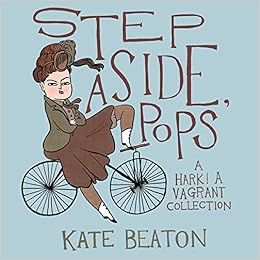
Image via Amazon.com

In her new book, Step Aside PopsBeaton pays homage to Superman with the comic, “Lois Lane, Reporter.” The entire story is made up of 6 unrelated 3-panel comics, all depicting the various ways that Superman screws things up for Lois and generally gets on her nerves. Kate Beaton says, in the footnote of Step Aside Pops (pg. 16), “Don’t give me those comics where Lois is a wet blanket who can’t figure out the man beside her is Superman. If Lois isn’t kicking ass, taking names, and winning ten Pulitzer Prizes an issue, I don’t even want to hear about it.”

Beaton certainly paints Superman/Clark Kent in a different light than he was in the original Siegel and Shuster comics. Instead of the weak and cowardly Clark Kent we saw in his 1938 debut, “Champion of the Oppressed,” we see a persistently bothersome coworker whose double identity is obvious to Lois based on his obscure behavior, and she could care less about him if he was Superman or Cristiano Ronaldo. Lois is busy, driven, and is trying to save the world in her own way- by reporting about it. But, does Kate Beaton truly represent Lois as the no-crap-taking girl she wishes Lois could be?

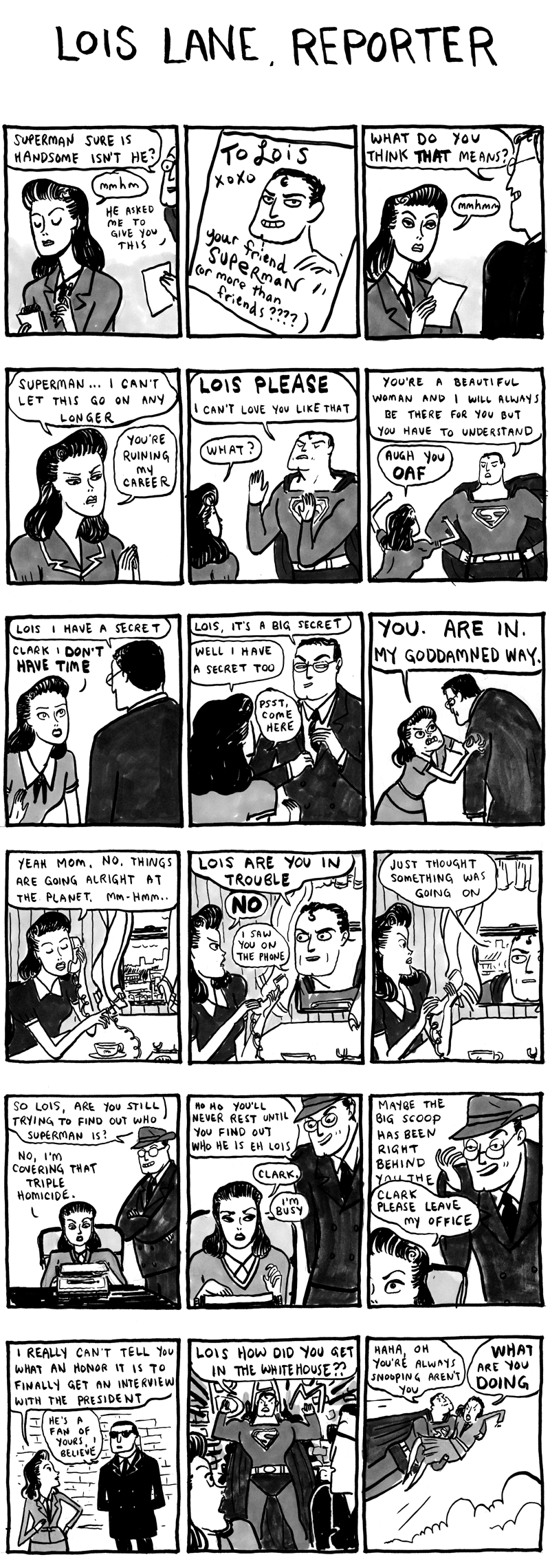
(via: http://www.harkavagrant.com/index.php?id=305)

In the first strip of panels, Lois has a strong visual presence. She fills the space of the first and third frames, while we sneak a barely legible peek at Clark Kent’s glasses and cleft chin. Lois is dressed professionally (and androgynously) with a blazer and tie, which adds a sense of corporate power. Although Lois only speaks twice, both minimally with the sarcastic sound of “mmhmm,” there’s a certain strength in the absence of her words. The mmhmm indicates a purposeful statement of annoyance, and at once shuts down the conversation. Mmhmm neither asks nor answers anything. It does not progress any action, which paradoxically puts the ultimate power of plot in Lois’ hands.

Lois continuously shows that she isn’t interested in Superman. No, not even a big secret can persuade her. In the third set of panels, Lois shows that she can play games, too, as in the panel when she beckons to Kent seductively, saying, “I have a secret, too. Psst, come here.” The lovesick Clark Kent falls for them every time. The feisty Lois we know and love responds with “You. Are In. My Goddamned Way.” This is the epitome of Kate’s kickass Lois, I think.

The next comic strip begins with Lois Lane on the phone with her mom. Suddenly, an absurdly large head of Superman pops through the window. “Lois, are you in trouble? I saw you on the phone. Just thought something was going on.” This comic scene certainly calls into question Superman’s judgment. In the 1972 Superman comic “Must There Be a Superman,” Superman considers that “Maybe I have been interfering unnecessarily! I decide what’s right or wrong…and then enforce my decision…by brute strength.” Does a superhero automatically have perfect judgment of justice? Beaton’s Lois Lane comic parodies Superman’s assumption and asks us to question, “Who is capable of saving themselves?” and even more, “Who is in trouble to begin with?”

Kate Beaton really had convinced me of Lois Lane’s badass-itude, until the last comic strip, in which Lois is at the White House in order to interview the president. Our girl has worked her way up through the journalism ladder and gotten herself to work on the story of all stories, when suddenly, SuperSnoop (I mean, Superman, eh-hem), busts the walls down and “saves” Lois. They fly into the air with Lois in Superman’s arms, and she yells, “What are you doing?” I was seriously upset that the comic ends on this note, because it reinforces the stupidity of some superheroes who “save” people who didn’t want to be saved, either because they actually think they are doing good, or in Beaton’s case, because Superman is depicted as a creepy lovesick stalker. Again, I can’t stop thinking of “The Incredibles” and this clip below, where Mr. Incredible gets sued for saving a man who tried to commit suicide and didn’t want to be saved. Even though Lois obviously was not trying to kill herself, this scene helps to explain how superheroes sometimes use their fame and strength to do things that aren’t in their victim’s best interests.

Perhaps Lois needs to have a talk with her lawyer! In any case, I enjoy Beaton’s delving into the female side of the Superman comics, which not only makes us look at Lois in a more positive light, it also turns the tables on the males of historic comics and continuously makes us wonder, “Must there be a Superman?”

Why I Absolutely Adore Jane the Virgin

This week, something extremely important happened in my life. What was it, you may ask?

Jane the Virgin returned after its mid-season break this Monday night.

*screams very loudly*

I love Jane the Virgin. I don’t know how many times I can say it in a week – I said it on Monday when the show came on, I said it on Tuesday night to my friends, I said it Wednesday to a girl I had just met. I love this show.

So here’s the story. Last semester, I was scrolling through Netflix to see what they had added recently, and I saw Jane the Virgin on there. I was instantly excited. I had heard really good things about the show, even if I didn’t know anything about it. However, this meant absolutely nothing. There are about 100 things on my Netflix queue that I was “really excited about” 3, 4, 5 months ago.

So when I was having a particularly bad day, and I didn’t feel like doing any homework (although, to be honest, when do I feel like doing my homework), I laid on the couch in my apartment with the lights off and looked on Netflix for something to make me feel better. Surprisingly, I clicked on Jane and started episode 1.

Eventually, one of my roommates migrated into the living room around episode 2 or 3, and we ended up watching either 7 or 8 episodes together. And after that I was hooked. The show was funny, dramatic, serious, clever, intuitive – everything I never knew I could have in a TV show but now needed.

I began telling everyone I knew about this show. I ended up convincing my other roommate to start it, and with one roommate already done, and three currently watching it, Jane the Virgin kind of became the apartment show.

However, all good things must come to an end, and by the time winter break rolled around, we were all done with season one and had to catch up on season two, so that this week we could all watch it together. And of course, we did, and it was fantastic.

Now that we’re all caught up to the present, I should maybe talk about the actual show. There are so many good things I could say about the show, I don’t even know where to begin. As someone who truly cares about diversity (#OscarsSoWhite y’all), I tend to get excited about things that feature a diverse cast. Last semester, I was all about Quantico. Though they could do a bit better, especially in the male cast, I am in love with Priyanka Chopra and Aunjanue Ellis is queen. Last year, I was all about Fresh Off The Boat, featuring the first Asian-American cast on primetime television in 10 years, even if its been surrounded in some much-needed controversy about representation of minorities on television.

So when I started watching Jane the Virgin, I was already pleased at how well the cast was organized. Jane has very strong latina roots, and they come across loud and clear on the show, and yet because of her sunny disposition and ability to befriend anyone, the cast opens up so that it isn’t just a latin@ show, and it doesn’t claim to be one. It doesn’t stigmatize or stereotype the lives of the women on the show, and yet they clearly aren’t there for diversity’s sake. They have complex, emotional lives, and are highly relatable characters.

And not only is the show centered on the lives of latin@s, it also focuses on female relationships and even, at times, prioritizes them over male relationships. For Jane, family is everything, and all of her decisions, her thoughts, feelings, dreams – they are all closely tied to her family. And for a very, very long time, her family has been three women. Three strong, independent, resilient, vulnerable, caring women. Even when portraying Jane as the “good girl” who took care of her teenage mom at times, Xiomara herself isn’t portrayed as helpless. I mean she raised Jane for crying out loud, so that’s saying something. And while Alba may be the grandmother, and therefore the oldest out of the three, she isn’t portrayed as “outdated” or “old-fashioned” in any way. She’s portrayed as strong and caring as well, clearly showing how her traits have been passed down all the way to Jane.

I could keep going, but I think my point is clear. Both comedic and dramatic, both sad and hilarious, both fresh and funny, Jane the Virgin is dazzling. It’s complex, it’s diverse, it resists and even challenges stereotypes, and seriously, when’s the last time you saw the main character of a TV show pregnant for the majority of it? And as evidenced by my apartment, it brings people together.

So your homework this weekend, then, is to sit down and marathon Jane the Virgin. You won’t regret it.

Judging Books by Their Covers

I judge my books by their covers
And I know that is wrong
But put a book in front of me
And it better make me want to read it
That’s why it’s important
To give everyone a picture of themselves
And everyone a place to be
Diversity is important
In every form of media
But in books
Where imagination is key
The cover changes everything
So show me Brown Girl Dreaming
And let me Hold Tight, Don’t Let Go
Let me read what’s Written in the Stars
And be with Little Princes
Tell me how it is after A Long Way Gone
Call me Bud, Not Buddy 
Let me feel the love of Two Boys Kissing
And sit Under the Lights                               
And let me find a new book to read
With a cover that shows me all the magic
Of this magically different world