
The Indian Artist, Revamped: New Year, New Me!
Hello everyone! I hope that you are all doing well and have had a great semester thus far! After some careful consideration and introspection, I present to you my new and improved column: The Indian Artist, Revamped with Riya Aggarwal! This column will maintain the same framework as my old column, stayed rooted in my culture and heritage. However, this time, I am expanding beyond just my Hindu culture. I wanted to integrate my passion for art with the other fields of study that I am interested in. As some of you may know, I am currently pursuing a career in medicine, majoring in Molecular, Cellular, and Developmental Biology with a double minor in Art & Design and Sociology of Health & Medicine on the pre-med track. Perhaps even more than my art, this is an large part of my life. I spend most of my time involved in STEM coursework, biomedical engineering research, and working at the U of M Hospital. As I get closer and closer to my medical school journey, I wanted to include more of myself, outside of just my culture, into my posts.
My posts last semester started feeling a bit uninspired so I wanted to “revamp” my column. I hope to open up discussion even further into the worlds of medicine, ethics, and culture with an emphasis on art, design, and innovation. I officially invite you all to The Indian Artist, Revamped! I am truly so excited to share even more of my passions with you all. This column has been an incredible opportunity for me throughout the past two years and I look forward to the next two!
I will be posting weekly on Mondays evenings this year. Please feel free to reach out to me or comment if you have any questions, concerns, or thoughts!
Until next Monday,
Riya
Instagram: @riya_aggarwal.art
Portfolio: https://theindianartist.weebly.com/

Eyes play tricks
I think about how you’re a vision of my past
Ever so semi-permanent
I’m walking down the street
And I see a parchment-colored bullfrog
Skin wilted thin
A parchment-colored snail
Shocking passersby till dead from its stillness
It’s a brown napkin
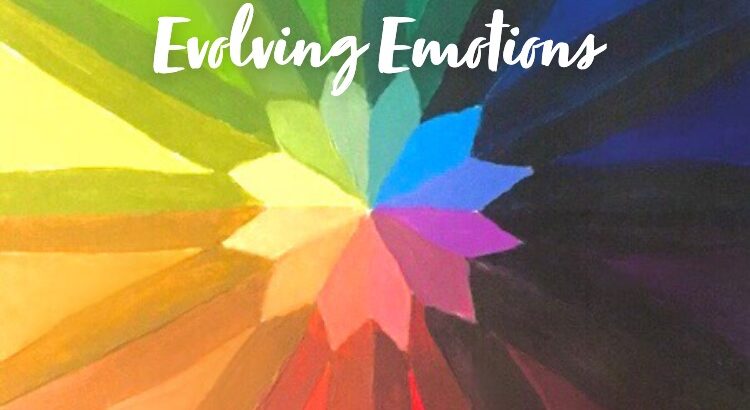
Evolving Emotions: Fear-Poetry
Empty Coat Pockets
An old grandfather clock
The pendulum sways
The hands tick and click
Stealing the days away
Too few minutes
In a day
Too few days
In a week
Too few weeks
In a month
Too few months
In a year
Too few years
In a decade
Too few decades
In a century
So little time
To do all and everything
Staring at the clock
But you can’t capture the hands
In that coat pocket
Too long
Too short
Too fast
Too slow
How long has it been?
Where did the times go?
Has it really been that long?
I remember it like it was yesterday.
The timing feels so wrong.
Graying and sagging by the second
Death’s deadline closes in
Quietly
At your bedside
Realizing the minutes and days
Have slipped away
All the memories you never made
All of the times you didn’t stay
All of the words you never prayed
And you couldn’t take the clock’s hands
In your coat pockets
Hold them close and dear
So instead
In your bed
You lay in fear
As the grandfather clock’s chime
Rings near
To claim your final breath.
The Kingdom of Tokavsk, Session 1: From The Encyclopedia of the Lands and Peoples of Helya, Part I
The kingdom of Tokavsk is a midsized state located along the northern edge of the continent Helya. Situated between Strazhov to the west and Kurstukania to the east, Tokavsk is largely regarded as a buffer between the wild empires of the northeast and the stiff, elitist peoples of the northwest. Northern Helya’s ethnic groups are similar to one another, but the local belief that the west represents order and the east represents chaos has led to clear delineations among the population based on geographical location. As Tokavsk is roughly centered along the northern coast, it is regarded by its neighbors as the equilibrium of order and chaos.
Tokavsk’s origins have been reduced to legend, but a few suppositions can be made based on historical documents. First, Tokavsk was first mentioned in a census by the long-since fallen Bhrezhen Empire in 106 RA (Razan Age). It was described as “A region surrounding the trading outpost of Orod that the locals referred to as Tokavsk, or ‘Place of the Firs’” (The Sixth Census of the Divine Domain of Bhrezhen). Little else is said detailing the milieu of early Tokavsk. In 504 RA, 84 years after the Bhrezhen Empire’s collapse, a veken (wandering monk) wrote of “A strange principality situated betwixt the Fractured Lands [of Northeast Helya, a swath of warring factions which were slowly being absorbed into Kurstukania] and the realms of Strazhov and Norvatsk. Its people ascribe runes on their cloaks and bodies, on the surfaces of their huts made from skins, and on the ground. They understood the trees and how they breathed, something they claimed I as a foreigner would never understand.” Indeed, there is evidence of early Tokavskans having an affinity for rune magic; several sources document instances of Tokavskans healing each other and sick animals with one rune and summoning winds and driving snows with another. Many of these are thought to be tales conjured to make Tokavskans appear backwards and savage, and almost no one doubts that the magics described within are untrue or at least greatly exaggerated. The point of divergence—when Tokavskans became known as a distinct group within the Roskavan cultures—is unknown, but it seems to have occurred between the first and second surviving records describing Tokavsk. Certainly, the Tokavskan culture was defined long before it grew into a state. Subsequent records reveal interactions between members of the court of Strazhov and a man by the name of Berin Saskat, who is accredited with the founding of the Kingdom of Tokavsk. It was clear that at that point the Tokavskans, as they were called by foreigners (the Tokavskans then and still do refer to themselves as the Zheren, and henceforth that term shall be used out of respect for the Zheren people and to distinguish between the ethnicity and the state), were already a well-established minority within the Kurstukanian empire. They were poor trappers and hunters, regarded as primitive by the ethnic majority in Kurstukania, and had very little rights. They could not own land, vote, or marry an ethnic Kurstukanian. Conversely, the powers that be largely left the Zheren alone in what would become a grave blunder. This gave rise to a solidification in ethnic identity, which in turn inspired some radicals into revolution. The initial rebellion had little popular support, and indeed it went largely unnoticed even by the Kurstukanian military stationed out west. But the overthrow of a local nobleman sparked outrage in western Kurstukania, setting in motion a chain of violent events that would lead to the Tokavskan War of Independence in 1001 RA.
Industrious Illustrating #13 – Mini Con Ja Nai
It’s now the first week of October, and that means that Animania (UMich’s anime club) is hosting Mini Con Ja Nai in the MLB on October 8th between 12 to 7 PM, and that also means that I’m nearly fully prepared now to table at the Artist Alley there! I’ve been working on ordering, preparing, and categorizing my inventory over the past few weeks in addition to creating new print-worthy artwork.
While I’m not a graphic designer by any means, I had to make these graphics for myself so that I could have helpful product “menus” for customers to look at. Unfortunately, being a sole proprietorship means that I have to do all of my business-related stuff myself, which means that I can’t just focus on making more art. But as long as that means that I get to enjoy conventions and selling my work, I’m willing to put up with having to learn a wider variety of skills to do my job.


 If you’re able to make it to Mini Con Ja Nai this Saturday (which is tomorrow as of this posting), I hope to see you there! If not, see you next week when I make my next Industrious Illustrating post!
