PREVIEW: On the Basis of Sex

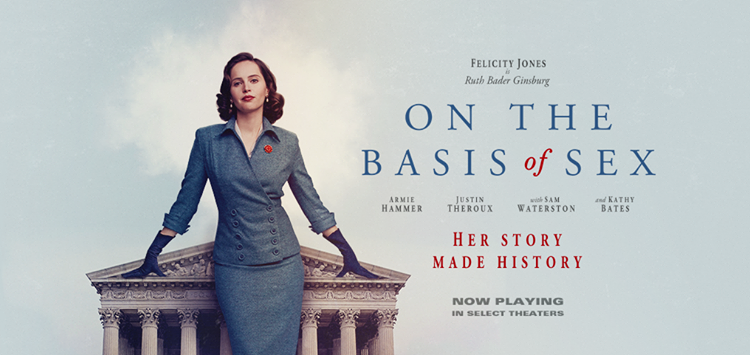
25 years after Supreme Court Justice Ruth Bader Ginsburg’s appointment to the nation’s highest Court, the biopic On the Basis of Sex tells the story of the first gender discrimination case that she argued as a lawyer, and what ultimately became the first step in her rise to become one of the nation’s leading advocates for women’s rights.

Directed by Mimi Leder, the film features Felicity Jones as Ruth Bader Ginsburg. On the Basis of Sex is currently showing at the Michigan Theater, and tickets are $7.50. If you are interested in learning more about the life of an American icon, don’t miss it!

REVIEW: Your Name

Despite the snow day-provoking frigid air last Wednesday, upwards of 100-150 moviegoers came to the Michigan theater to see Your Name. Directed by Makoto Shinkai (known for films like The Garden of Words and Voices of a Distant Star), it is the highest-grossing anime movie of all time. This fact comes as no surprise if you’ve had the privilege to see it, as its unique storyline and beautiful, shining animation style makes it stand out from other animes.

As the movie began, the entire theater let out a collective groan at the English dub that had been mistakenly played (even the movie’s theme was sung in English, unfortunately in a fashion unbelievably similar to a song by The All-American Rejects). The presenter switched the settings to English subtitles and, beyond a slight hiccup where the subtitles were half cut-off, the day was saved, and we all applauded.

Mitsuha and Taki are two high school students living in the Japanese countryside and Tokyo, respectively. One day, each inexplicably wakes up in the other’s body, and grow to be quite good friends. It somehow smoothly combines the cute, carefree humor of a rom-com with the deeper emotions of a tragic drama, along with elements of wondrous fantasy.

Related image

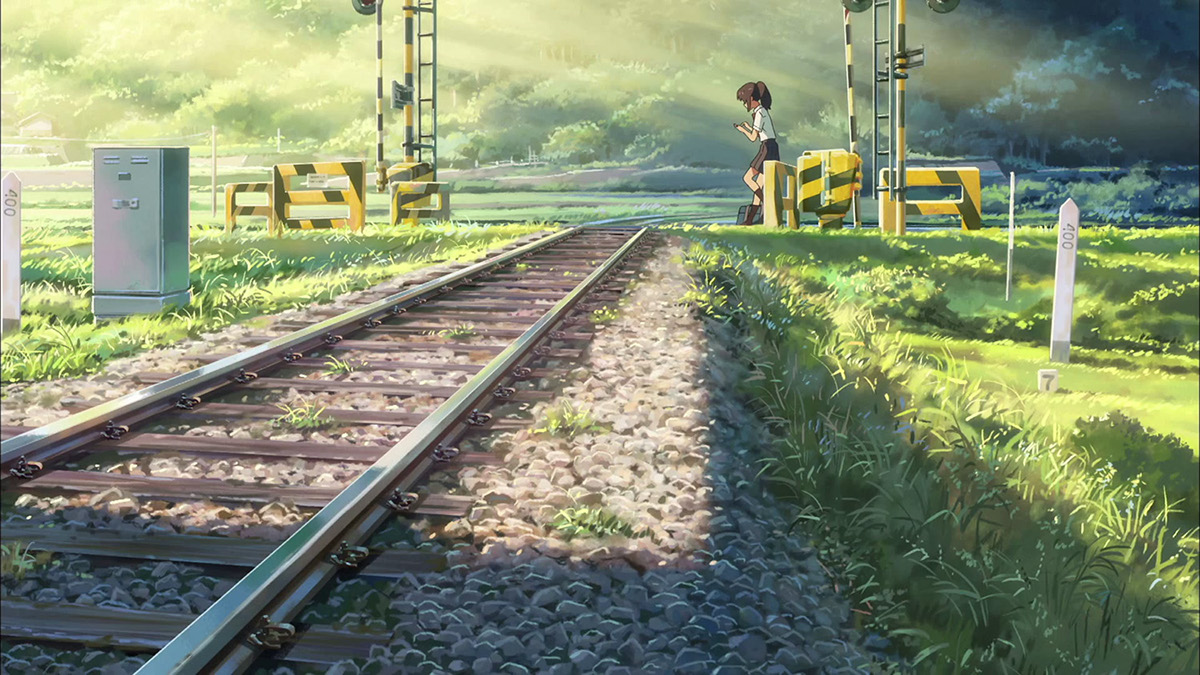
The variety of landscapes in the film is a big part of what makes Your Name such a great success. We’re taken from Mitsuha’s house, surrounded by ancient forest and bathed in golden sunlight, to Taki’s homey apartment in the heart of Tokyo, skyscrapers glittering and city lights glowing warmly. The sky is always amazing, painted with the colors of a sunset, a bright fall day, the steely twilight. The artists never neglect to include the way the sun skips along the clouds or sinks beneath them to the horizon, trailing light.

Image result for your name stills

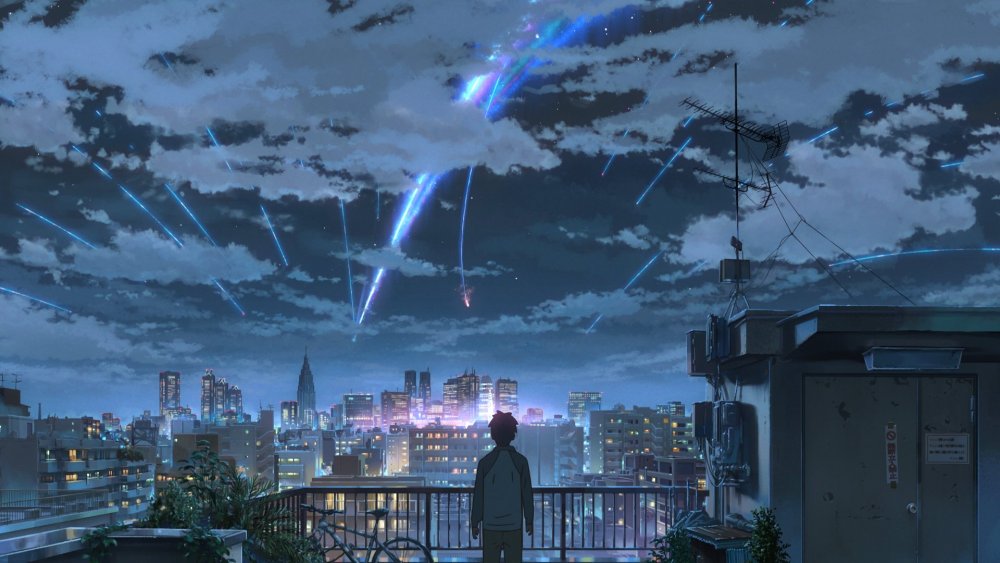
It is the beauty of Mitsuha and Taki’s bond, as well as of their surroundings that makes the reality of their situation so much more tragic. We learn that the two exist in different times; in Taki’s timeline, Mitsuha’s town was destroyed by a divergent meteorite three years prior, while Mitsuha lives in the time right before the strike. They’re star-crossed in an incomprehensibly sad way, yet captured in a dramatic irony that allows for the sweetest, impermanent happiness. This sharp contrast in emotion makes the film especially powerful, beyond that of many other films. Though there is a sense of innocence present, it is expertly corrupted by circumstances so unfortunate and uncontrollable that purity can still remain.
Image result for your name stills
As I exited the theater, shuffling my still-frozen feet back toward the cruelly icy outdoors, I was struck by the glow of the end credits on the audiences’ faces, illuminating tears and bubbling conversations between friends as they discussed the movie. How beautiful it was we’d all gathered in this small haven of warmth and light in the middle of a bitingly cold night to watch a good movie together.

REVIEW: CMENAS Film Screening: “Rachel”

“Rachel” is a documentary piecing together the nuances and injustices of the death of an American activist in Palestine named Rachel Corrie. Twenty-four year-old Rachel was on a trip to Palestine as a trained activist with a group of other activists in their twenties. At this time in the early two-thousands, the tension in the Israeli-Palestinian conflict was gaining a new wave of intensity with the beginning of the Second Intifada. Rachel and her team were helping Palestinian civilians whose homes were most in danger of being destroyed by Israeli occupation. In an attempt to prevent the destruction of one such house, Rachel stood in front of a bulldozer to obstruct their moving forward; however, the driver of the bulldozer claimed to not see her– though the eye-witnesses to the case speculate otherwise– and ran her over; in a matter of seconds, her body was mangled beneath a mound of dirt and crushed by the metal. Rachel died. Though there seems to be evidence that there was criminal intent by the driver of the bulldozer, the case gained a momentary spark of media attention, only to die down with the injustice of Rachel’s death never to receive due legal attention. This documentary is an exploration of the testimonies of the activists who she travelled with, Israeli soldiers, and many others who were knew her or were related to her death.

The simple, straightforward style of the documentary makes it easy to follow all the intricacies of the evidence presented: testimonies of colleagues and family members, on-site videos and photographs, Rachel’s diary entries. By the end of the film, I felt fully educated about the facts of Rachel’s death– and the thing about the documentary is that it doesn’t ever once say outright that what happened to Rachel unfair or unjust. It just keeps building evidence, slowly but surely, until you’re painfully aware of all the wrong that was done to her. The driver of the bulldozer claimed that he couldn’t see her over the mound of dirt while her team says the mound was hardly a few feet tall; the US embassy failed to send an American to oversee her autopsy even though her parents requested it, probably because the US didn’t want to entangle itself politically; the general of the Israeli forces claimed that there was not enough eyewitness testimony or video evidence, only two opposing viewpoints, which seemed essentially inconclusive. No real legal action could be taken to prove that the driver of the bulldozer had criminal intent.

The documentary works to show that there was a system of injustice present that lead to Rachel’s death. The documentary illuminates the cracks of legality and excuses that Rachel slipped between. The documentary itself works as a bulwark against injustice. The film is modest in its cinematography and aesthetics, but it is large in its meaning and purpose. Rachel was one American activist whose life and injustice has been filmed and commemorated, but it’s a powerful reminder that there are people suffering from crises around the world who won’t get any attention. But there is a small line of hope, perhaps– as we keep talking about these injustices, as long as we make art and conversation about it– we can create a bulwark against it.

I’ll end this post with a beautiful letter that Rachel wrote during her time in Palestine: “You can always hear the tanks and bulldozers passing by, but all of these people are genuinely cheerful with each other, and with me. When I am with Palestinian friends I tend to be somewhat less horrified than when I am trying to act in a role of human rights observer, documenter, or direct-action resistor. They are a good example of how to be in it for the long haul. I know that the situation gets to them (and may ultimately get them) on all kinds of levels, but I am nevertheless amazed at their strength in being able to defend such a large degree of their humanity – laughter, generosity, family time – against the incredible horror occurring in their lives and against the constant presence of death. I felt much better after this morning. I spent a lot of time writing about the disappointment of discovering, somewhat first-hand, the degree of evil of which we are still capable. I should at least mention that I am also discovering a degree of strength and the basic ability for humans to remain human in the direst of circumstances – which I also haven’t seen before. I think the word is dignity. I wish you could meet these people. Maybe, hopefully, someday you will.”

(You can find more of her letters and diary entries here: https://www.theguardian.com/books/2008/mar/02/shopping.extract. I would seriously recommend checking them out– they’re gorgeously written and she’s so wise.)

REVIEW: Poetry Reading by Hannah Ensor + Suzi Garcia

This was the first poetry reading I attended this year. I have not been to Crazy Wisdom in a long time, and I forgot how unique the space is. They sell books, art, jewelry, incense, tarot cards, fair trade products, etc. The tea room is upstairs, just like at Literati.

I did not realize that both Hannah Ensor and Suzi Garcia were reading at the event. Since I gave some background information on Hannah Ensor in my preview, here is some information on Suzi Garcia: she has an MFA in Creative Writing with minors in Screen Cultures and Gender Studies, and she has presented and taught poetry at multiple national conferences. She is a valuable mentor and editor to Ensor and was instrumental to the publication of Ensor’s first book of poetry.

I enjoyed hearing Ensor and Garcia’s unique styles. Ensor made a lot of pop culture references, as the description of the event promised. Her pieces were mostly conversational and captured the mundane to transform into literary pieces. Garcia, on the other hand, utilized a lot of metaphor and analogy. Her poems were emotional, raw, and often explored the theme of earthliness.

During the event, the poets also talked about their sources of inspiration, which were thought-provoking. Ensor talked about writing in a parking lot of Planet Fitness and how a poem was partially inspired by a screening of Jurassic Park. Garcia talked about how one of her poems emerged from three factors: the desire to find a home for a couplet she had written, being inspired by an old song she knew, and a mentor encouraging her to write about her childhood. All these motivations mashed together into one finished product. Another one of her poems came from listening to Carly Rae Jepsen’s song, “Run Away With Me.”

While it may be humorous to hear where both poets found their sources of inspiration, it is also sensible. I often hear people describe inspiration as rare and profound—as if artists are zapped by lightning from Zeus or launched into manic creativity by the use of psychedelics, and then go on to create great literary pieces or famous works of art like “My Papa’s Waltz” by Theodore Roethke or Autumn Rhythm by Jackson Pollock. As an aspiring poet, I know daily enlightenment is unsustainable. Practically, inspiration mostly comes from the mundane. Everything (objects, constraints, concepts) is worthy of a poem or artistic piece upon closer examination. But execution is difficult. I was given the prompt by my 400 level poetry writing class: “write a poem where the movement from one scene to another affects the structure and/or mood of the poem,” and I am currently scuffling with a blank page.

Aside from inspiration, this poetry event also made me consider the difference between hearing and reading poetry. Ensor and Garcia are clearly both written poets first and spoken poets second. It is quite obvious actually. When you read silently, the body of a poem is its layout on a page: the amount of white space, line breaks, enjambment, punctuation, etc. When you listen, the body of a poem is the voice (of the poet, yourself, another reader speaking out loud), rhythm, posture, gestures, etc. In poetry that is spoken, rhyming and rhythm becomes more evident and (arguably) increases in importance. Take Benjamin Zephaniah, a British poet and activist, for example. He is a spoken poet first, a written poet second. Hear his voice and the joy with which he performs “Dis Poetry.” Another example is Sarah Kay, an American poet dedicated to using spoken word as an educational and inspirational tool. See how facial expressions and gestures are essential to her piece “Point B.”

During Ensor and Garcia’s reading, they relied on minimal gestures, rhythm, and word-play to convey their pieces. This does not make them good or bad poets. Rather, it reveals their niche study (and perhaps interest) in written poetry. The event was not a spoken word poetry event; it was a poetry reading event. And a good one at that. I appreciated the casual atmosphere, both physically and intellectually. It was a great place for written poets and enthusiasts to come and celebrate the beauty of language.