REVIEW: Caustic & Bitters – UMMA + Chill

Last night I attended an UMMA + Chill Group Chat, a guided virtual art tour and group talk put on by the UMMA during the winter season, paired with recipe for an alcoholic or non-alcoholic cocktail to add a fun element to the night. I was invited by a friend to join this themed event, Caustic & Bitters–we would be talking about humor as an artist’s tool and looking at examples from the UMMA collection. I popped onto the Zoom call of about 7 participants (some attending with housemates or friends) and settled in while music played and people filtered into the call.

George Cruikshank,
Monstrosities of 1825-26

The tour began quite abruptly with the cocktail-making. I was a little disappointed with this section of the event–a brand new recipe was created by the Bellflower Restaurant in Downtown Ypsilanti specifically for this group event, and I had prepared by purchasing the materials. However, the making of the drink was restricted to a quick 3-minute video at the beginning of the event, blowing through the process before I could even get to my kitchen. I must have missed a step from my memory, because what I ended up concocting tasted pretty awful. It ended up going down the drain, an unfortunate waste.

Dmitri Baltermants
Agfa, Berlin

What I did enjoy about the event, after I was able to mourn my mixology failure, was the art, which is what I was mainly there for. 

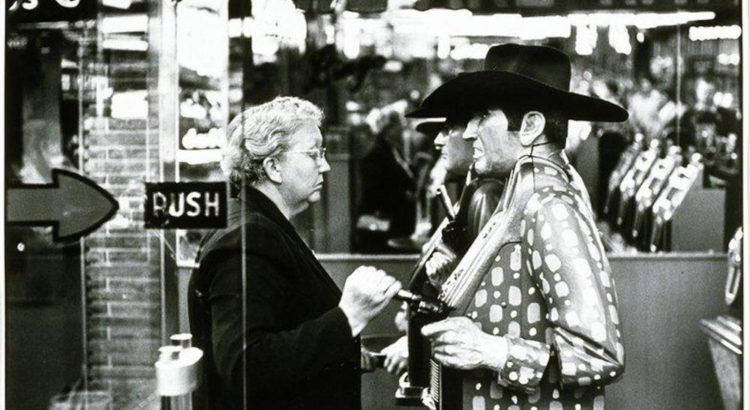
We started by looking at humor in art as a purposeful tool, in art that is meant to mock or emphasize differences, something that is extremely useful in political or social commentary. We spent a bit of time talking about how capturing the humorous in photography takes a different form than in other mediums, because the artist can really only use what they see (for example, facial expressions) and exaggeration is more complicated to produce.

Umbrian; Italian,
Madonna and Child with St. Thomas Aquinas and a Bishop Saint

Something I did take away from the event is that sometimes, it’s okay to laugh at art that is not necessarily intended to be funny. It’s okay to look at unintendedly ridiculous aspects in pieces of otherwise serious art and find it humorous. For example, this 1400s Italian painting of Madonna and Child. Why do the baby Jesus and the saint in the back have the exact same face? How in the world is the baby being supported in Mary’s arms? I genuinely laughed out loud when we examined the details of the painting and pointed out these elements. 

In all honesty, I did expect a little more from the event. Overall, the event felt rushed and unengaging. It was the guide’s second theme tour of the day, which could have factored into the hurried nature of the ‘group chat’ part of the night, which didn’t seem to inspire much audience participation. While there were some comments and conversation starters from participants in the chat, the tour felt more like a lecture, which went against my expectations but still turned out to be an interesting event.

The freedom to find humor in anything is part of the beauty of the subjective experience of viewing art. This exercise helped me to fully grasp that concept. I can’t wait until I can wander the halls of the UMMA again, but until that time, I’m glad the UMMA is at least trying to expand access to their collection with virtual events like this one.
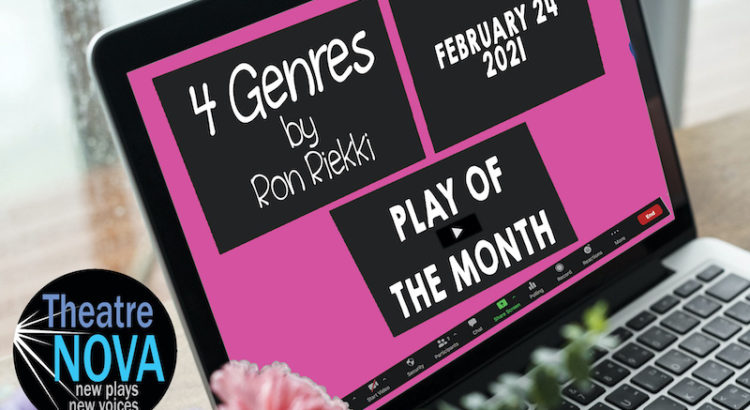

REVIEW: Play of the Month – 4 Genres by Ron Riekki

‘4 Genres’ is a short play written by Ron Riekki, produced as part of the Play of the Month series through Theatre Nova. Theatre Nova gives the opportunity for new works to be performed professionally, spotlighting the voices of new playwrights and making theatre more accessible and relevant to current times. ‘4 Genres’ was a perfect example of a playwright writing for the time and medium–I felt that Riekki really used Zoom as a tool rather than simply working around it, which brought something special to the performance.

Four characters reveal that they have been trapped within four respective genres in their Zoom boxes: horror, musical theatre, slapstick, and documentary. In order for their genre experience to end, they must say what they learned during their time there. After living in their respective realms, it’s clear they don’t seem to be enjoying it that much.

One by one, our characters reveal what they’ve learned. Our documentary character encourages the others to share, before he quietly bemoans that he’s disappointed that he feels he didn’t live through anything. While the other genres experienced running from vicious werewolves, learning about the power of friendship through song and dance, or slipping on banana peels, the man in the documentary says, he’s just sat there with a camera in his face. Sound familiar? 

It took me a while for the underlying messages of this short play to sink in and really take root. Since March of last year, I’ve so often felt like I’m living in the dark and dull page of a far-off future’s history book. How many times have I wished to be elsewhere, living in another time or realm free of the troubles COVID-19 has brought with it? But just as our documentary character realized: What we are living through is important. We are brave for having lived through this time. We are resilient and we’ve learned to adapt.

Like I said before, I applaud the writer and production team for really using Zoom for what it can do, in regards to effects and lending to commentary on our current times. My only perceived drawback to live Zoom performance is technical issues–lag between cast members, differences in sound quality, inability to hear overlapping lines. These are things that seem to be natural aspects of the Zoom culture most of us are experiencing right now, but they don’t always lend well to a scripted performance where every line counts. 

However, until we are able to see live shows again in person, I continue to appreciate how artists are working to keep theatre alive and growing through these difficult times.

For information on the next Play of the Month performance, go to Theatre Nova’s website: https://www.theatrenova.org/current-show

UMMA + Chill

PREVIEW: Caustic & Bitters – UMMA + Chill

Caustic: sarcastic in a scathing and bitter way.

Bitters: liquor that is flavored with plant extracts, used as an additive in cocktails or as a medicinal substance.

I received an unexplained Google Calendar invite a week or so ago from a good friend. “UMMA + Chill – Group Chat: Caustic & Bitters. 7pm 2/27.” I wasn’t quite sure what I was being invited to, but my weekend evenings have been painfully bare due to COVID, and every UMMA event I’ve ever attended has been well worthwhile, so I texted my friend and let her know I was coming. 

I’ll be catching the last of the UMMA + Chill winter events tomorrow evening, a virtual guided museum tour and mini cocktail-making lesson. The tour will be guided by Isabelle Marie Anne Gillet, a UMMA Stenn Fellow in Public and Digital Humanities and Museum Pedagogy, with the theme of humor as an artist’s tool to “undermine the superficial meaning of what is depicted and subvert or even confuse expectations.” I haven’t been on a museum tour, in-person or virtual, in a good while, so I’m very excited to spend the evening with the UMMA collection and some friends from the comfort of my own living room.

Today along with my regular grocery shopping, I picked up ingredients for a cocktail designed by the Bellflower Restaurant, which we will be learning how to mix during the guided tour. The prep email also included the option to purchase pre-made kits directly from the restaurant, and also a non-alcoholic mocktail recipe. 

Tomorrow evening, I plan to put on a nice outfit and kick back on my couch to enjoy a virtual guided tour with my friends through Zoom–a sophisticated Saturday night in.

REVIEW: Virtual Life Drawing with Anti Diet Riot Club

About a week ago I had stumbled upon information for Anti Diet Riot Club’s life drawing sessions. Anti Diet Riot Club is a London-based organization that fights against diet culture and works to empower individuals to love themselves and their bodies. Loving their message, and interested in seeing what a virtual life drawing session would be like, I took the leap and registered.

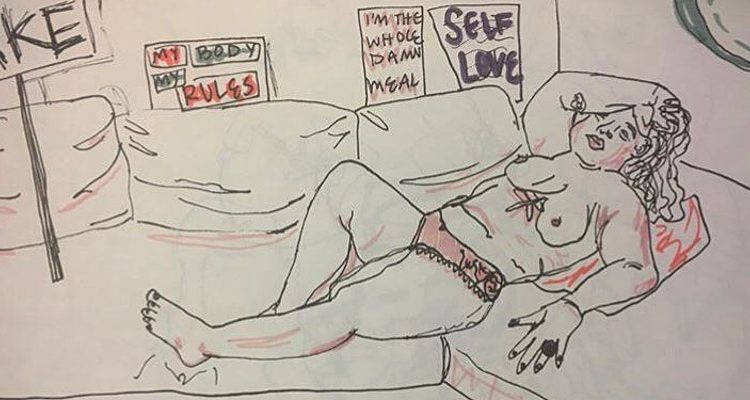
a layered sketch from the session

The event, held on the 4th Wednesday of each month, is advertised as “NOT a serious art class” and is instead meant to be an exploration of creativity as a way to challenge perfectionism and what we’ve come to see as typical beauty standards. Studies have shown a correlation between attending life drawing sessions and positive body image.

My artistic skills with a pencil and paper are typically limited to stick figures and simple doodles, but I sat down with my paper and markers ready to take on the challenge of drawing the human body. 

As soon as I logged into the Zoom call, I was met with a gallery full of smiling participants of all ages, in their respective Zoom squares. There were about 140 participants in the Zoom call, and we did a check-in through the chat. Most people were calling from England, but as I typed that I was calling from the States, I was excited to see that people from all over the world were joining in on this drawing class–Scotland, Poland, Germany, France, and a few people from the US, joining from Colorado and New York. 

three sketches from the drawing ‘games’ we did

The session was guided with silly drawing ‘games’ to help “kick the perfectionist out–” beginning with a simple, 1-minute timed sketch of our amazing model, Lucie. Any worries or hesitations I had about my drawing abilities disappeared once we started flowing through the exercises. Drawing without looking down, drawing with the non-dominant hand, drawing using only triangles or circles, using bold colors, and having a set amount of time for each sketch took the focus off of creating “perfect” art and left space for simply admiring the human form and putting it on paper, to the best of my untrained ability.

The session reminded me, in quite an emotional tidal wave, of how objectively beautiful the body is. Seeing the body, and especially types of bodies that aren’t often recognized in mainstream media, as a piece of art helped to mute the ingrained judgements that often blare, unwelcomed, at the thought of my own body’s ‘flaws.’ Artistically appreciating the details of a real and ‘imperfect’ body made a clear and powerful difference in the way I felt about myself after the session versus before.

If you are interested in joining next month’s session, tickets are available at Eventbrite (also linked below) and cost £5 – £8 (roughly $7 – $12 US). I will definitely be joining again, and for now I move into the rest of my day wrapped in confidence, compassion, and self-love.

my final drawing for the session, using color

https://www.eventbrite.com/e/virtual-life-drawing-with-anti-diet-riot-club-tickets-134033550959?aff=ebdssbonlinesearch&keep_tld=1


PREVIEW: Radical Acts: A Conversation with Sheryl Oring and Sherrill Roland

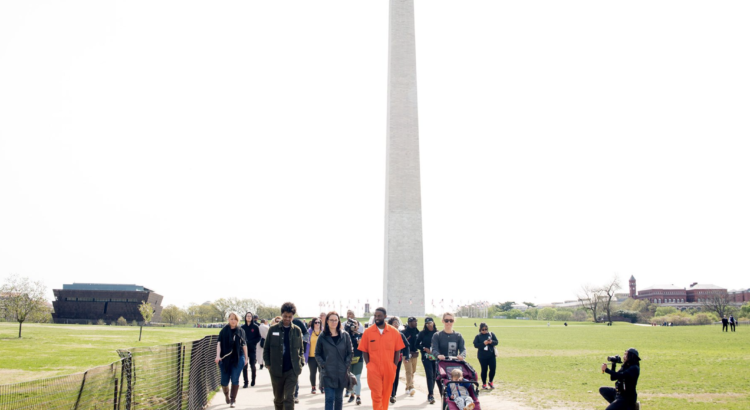
American systems of justice and incarceration have a disturbing past and present, rife with injustice. Speakers Oring and Roland have worked in performance/social art surrounding the place of art in social change. Over the past few decades, the two have worked together and individually on projects like I Wish To Say and The Jumpsuit Project.

In a conversation put on by STAMPS, the two will discuss the importance of making this kind of art in today’s intense social climate. Join the discussion Thursday, February 25th at 1pm. Register here and you’ll be sent an email with the link to join the meeting.

REVIEW: The Clements Bookworm: “Framing Identity” Online Exhibit, Empowerment and Resilience in the Black Experience

Like a telescope, the camera takes a lens to both distance and bring closer the image on the other side: something captured which previously went unexplored, an instant in time that is taken and set into memory. In both instruments, what we see is something we’ve created with the help of the setting of the time, the cultural moment, the positions of various actors across a space. Just as a telescope offers a look into the positions of an infinite number of celestial bodies in relation to one other, a camera creates a record of social climate, inequities and labor for justice.

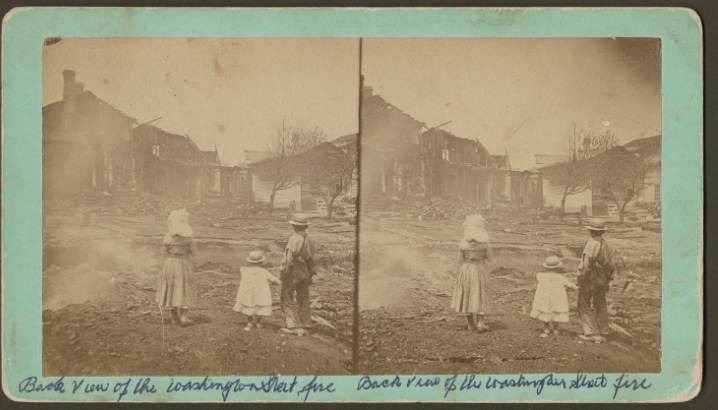
But that’s enough for botched and rambling similes. The Clements Bookworm discussion was a great addition to simply viewing the online exhibit alone. Samantha Hill was invigorated as she spoke on the pieces in the collection, highlighting many Michigan photographers and communities. There wasn’t time to go through each picture in the detail it seemed she wanted to, but her summaries did a great job to show overarching themes and the changing trends of the representation of Black individuals and communities over nearly two centuries. The reversal of negative stereotypes/caricatures in portrayals of Black people is an ongoing, complicated process which the artistic greats of history, like Frederick Douglass, expanded into new media.

As photography became omnipresent, saturating first the print news and eventually dominating the Internet, it grew in accessibility, challenging everyone to really consider their identity, how they’d like to be perceived, where they fit into the rest of society. From the first powerful, dignified portraits of Douglass to today’s glamorous Fenty photoshoots, self-expression and framing of POC has evolved and strengthened with race discourse and culture, continuously inspiring new questions and conversations, driving our society towards equity.

Hill discussed The Colored American Magazine, one of the first periodical publications to celebrate Black art and achievements. I wish she had talked a little longer on this, given the great influence of media representation, especially after the Internet became ubiquitous. She brought it into the present a while later, with examples of former President Obama in magazines.

For me, the media brings up an interesting thought: how does putting one’s representation back into the hands of another change the resulting image? Whitewashing in magazines and Instagram ads is an obvious example, but what about posture, facial expression, two important factors in Douglass’ revolution? The style of dress, the position of the subject in what kind of background? We’ve seen a regression of some kind, or rather a continuation of what had already existed. What would Douglass say to us if he saw how his vision and goals have evolved?

For more online events from the staff at the Clements Library (which I’d definitely recommend attending!), check out their Facebook page, William L. Clements Library. Discussions occur fairly frequently, covering a range of art and history topics. If you’d like to watch the recorded webinar from this exhibit, you can find it here.