REVIEW: She Loves Me

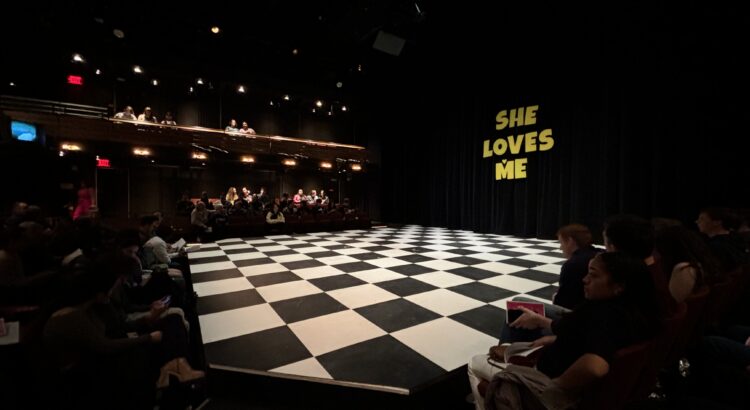
This past weekend, I watched the musical She Loves Me (1963), a romantic comedy with a classic enemies-to-lovers trope set in 1934 Budapest, Hungary. The male lead is Georg Nowack, the hardworking manager of Maraczek’s Parfumerie. He’s always at odds with the female lead, Amalia Balash, an employee who’s not the best at her job and believes Georg always has it out for her. There’s a unique array of workers at the parfumerie. There’s the playboy Steven Kodály, the innocent delivery boy Arpad Lazslo, the sexy lady Ilona Ritter, and the cheerful father Ladislav Sipos.

It’s a frustratingly slow-burn romance; most of the first act is unraveling the main character’s mysterious love interests, their “dear friends,” and getting to know the other employees. In the second half, though, the romantic development quickly speeds up and She Loves Me plays, my favorite musical number. I enjoyed watching the usually serious Georg dancing around the stage and singing his heart out, giddy with love.

The show was completely run by the Golden Theatre Company (GTC), a student organization that strives to spread the joy of musical theatre and create opportunities for all students to be part of the production and performance process. When reading the program notes, I was fascinated that quite a few members were freshman or not musical theatre students; one was even a Mathematics and Computer Science major! Furthermore, everything was done well. The stage props for the parfumerie were adorable and intricate, the outfits were gorgeous and elegant, fitting for the era, and the microphones and music were clear.

As suggested by their name, the GTC only performs musicals from the Golden Age of musical theatre (roughly mid-1940s to late 1950s) or musicals sung in the classical style. I look forward to their next semester’s performance because I’m sure they’ll choose a wonderful musical to perform with the highest quality.

REVIEW: The Boy and the Heron

Studio Ghibli has released multiple iconic works such as Princess Momonoke and Kiki’s Delivery Service, and they just dropped their newest film, The Boy and the Heron. Like TotoroThe Boy and the Heron is a semi-autobiographical fantasy story written by Hayao Miyazaki, one of the co-founders of Studio Ghibli. The main character’s name is Mahito, whose mother died in a fire. After a couple of years and still mourning her passing, he and his father move from Tokyo to the countryside. There, he meets a suspicious heron, and as suggested by the title, the plot thickens.

In my opinion, quite a few of Studio Ghibli’s works are rather abstract and The Boy and the Heron is no exception. However, I do think this movie was easier to understand and had more reasons for all the fantasy involved than some other films like Howl’s Moving Castle and Spirited Away (both are still my favorite Studio Ghibli movies though). When I watched the films as a child, I was fascinated by the world-building and unexpectedness of it all, but once I grew older and re-watched the films, I wanted more background information and explanation. I think this movie includes both elements well and thus reaches a large demographic. Furthermore, there are themes of life, death, family, and friendship that anyone can learn from. 

I was surprised that Studio Ghibli released a new movie. Honestly, I thought the last animation they ever made was Ponyo in 2008, but they’ve been releasing works until 2014 with When Marnie Was There, which I’ve never seen or heard about. I would watch this film multiple times, and it’s showing at the State Theatre until December 14th with screenings in both Japanese and English. I watched the Japanese Dub with English subtitles version, and I noticed that the Japanese title is very different from the English one. In Japanese, the title is 君たちはどう生きるか (Kimitachi wa Dō Ikiru ka) and translates to ‘how do you live?’. I wish they hadn’t changed it, because I feel like the Japanese title has more meaning and inquisition to it. But now you guys know, so when you watch the film, keep in mind that the story is about more than just a boy and a heron.

REVIEW: Reading and Q&A with Ross Gay

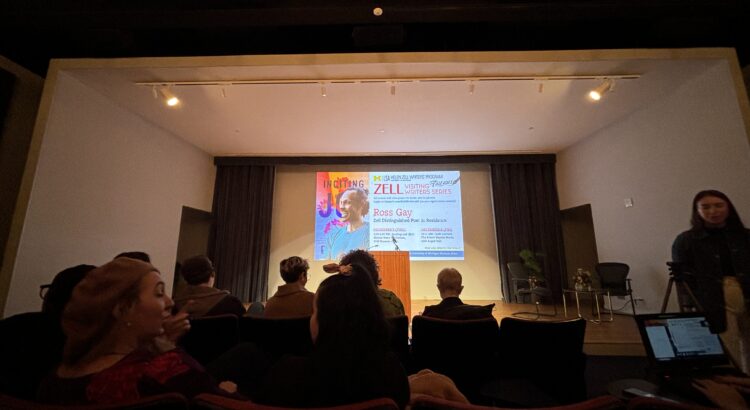
On Thursday, December 9th, the poet Ross Gay gave a reading and held a Q&A session at the UMMA Stern Auditorium. I haven’t been to any poem readings before so I was surprised to find that the venue was so packed there weren’t enough seats. I’m a visual learner, so I often find myself zoning out when I’m required to listen for long periods. However, my professor told me that she fell in love with Ross Gay’s writing after she went to his reading, whereas when she read his poems they didn’t have as much of an impact. I quickly found out what she meant. When Ross Gay was reading his poems, it felt like he was giving a speech or acting out lines of a play. In other words, it felt like he was reading prose rather than poetry.

Since it’s impossible to speak line breaks, I was trying to notice how he may emphasize certain phrases more than others. I’m not sure if I’m looking too hard into things, but I did notice that at some times he’d pause a bit longer or change the inflection and volume of his voice. However, everything flowed so smoothly and sounded so natural it’s hard to point out specific spots to closely analyze unlike when reading poetry. The performative aspect was what drew my attention because he wasn’t simply reading words. He interacted a lot with the crowd through eye contact and hand gestures. It was interesting to see how his passion transfers off of the page and how he expresses himself, and it was an experience that made me realize how off I may be when interpreting an author’s work.

There were a few moments where the audience laughed which surprised me, but that could’ve been because the poem he read was about basketball, which I know nothing about. I think overall I’m always picking apart texts to find a ‘deeper’ message when it could just be something unknowingly lighthearted until read aloud. It made me realize that as a reader I often project my own emotions and experiences when interpreting other people’s work, perhaps blinding myself to the obvious. I only wish I had his poems written down in front of me to look at while I listened to further explore that concept.

REVIEW: Life on Planet Pops

On December 6, 2023, at the Michigan Theater, the Michigan Pops Orchestra presented “Life on Planet Pops.” I’ve been to every Pops concert since my freshman year, and I was especially excited for this one after seeing this semester’s poster that teased The Lion KingStar Wars (which they somehow manage to play every year), Princess and the Frog, and more. As the theme and poster suggest, all of the music they chose was related to animals, though there surprisingly wasn’t much classical repertoire. However, it was my favorite program out of all of the Pops concerts I’ve seen.

They opened with a medley of Beauty and the Beast and they sounded exactly like the soundtrack of it on Spotify. I loved the concertmaster’s solo so much it gave me goosebumps, and once the melody of Tale as Old as Time played, the strings all together really shined. The song they chose from Princess and the Frog was “Almost There” with a guest student singer from SMTD, and she was very talented. I loved how she opened with dialogue that transitioned into song and that she maintained her character’s cheerful flare throughout the performance.

After a brief intermission, they returned with Hoe Down, a piece with a fun syncopated tune. I’ve heard other orchestras play it before, but I loved that Pops included a good “Yeehaw” in the middle. To end the night, they played the William Tell Overture. I feel like it’s a piece everyone knows. Though I didn’t recognize the title, I immediately recognized the tunes, especially the latter half. 

As always, Pops includes movies to play alongside their music. This semester, they chose to film Pokémon and Jaws, and the way the actors portrayed the animals was hilarious. Pikachu was taller than Ash, his trainer, and the shark in Jaws crawled out of the fountain by the Michigan League. 

I highly recommend going to the Michigan Pops Orchestra concerts. They’re always amazing and enjoyable for people who aren’t well-versed in classical music and I always have a lot of fun at their events!

REVIEW: University Symphony Orchestra Shostakovich, Symphony No. 5

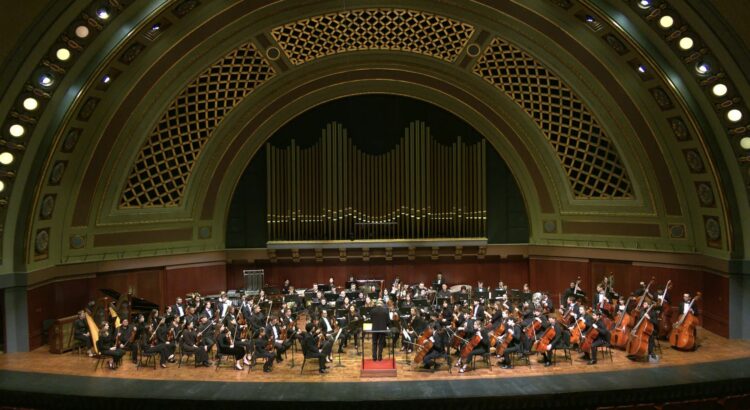
On Tuesday, December 5th, the University Symphony Orchestra played one of my favorite classical works of all time: Symphony No. 5, op. 47, D Minor (1937) by Dmitri Shostakovich. It’s an eerily beautiful, somber, yet exciting piece. I played this in high school, so it was interesting to be on the other side and listen to the interpretation of another conductor: Kenneth Kiesler.

The orchestra started very slow in the beginning, almost lethargic, which surprised me. It’s usually played quicker to emphasize how striking the opening notes are, but I feel like this version brought out the first violin’s melody much better as it gradually crawls into higher pitches. Once the tempo picked up, however, there was a sense of anxiety and tension in the music that is often present in Shostakovich’s other compositions. The contrast between the pianissimo and fortissimo sections created a similar effect that made everything much more dramatic and catching.

My favorite movement is the third movement, the Largo. It features a lot of wind solos that are all variations of a bittersweet melody, but the different instruments all create new textures. This same theme transfers to the strings that play much more dramatically loud and fast in comparison. The constant flip-flopping between solos and soli (when a section has a solo together) is so good at creating different expressions of anger and sadness. I especially like the harp and harpsichord’s arpeggios at the end of the movement right before the orchestra as a whole comes to a stop.

Afterward, the fourth movement, the Allegro non-Troppo, begins fierce with trills and loud beats of the timpani. This movement seemed much more symphonic to me than the others because of how much more interwoven the parts are and how the notes build off and layer amongst sections. This is especially the case once the key transitions from minor to major chords, which is what composers often do to end on a triumphant note.

I’m always looking for more opportunities to listen to my favorite pieces. I’m so happy I got to hear this symphony live again, and the USO gave an amazing performance of it.

REVIEW: The Polar Express

On Sunday, December 3rd, as part of their free holiday classics series, the Michigan Theater had a showing of The Polar Express. It was my first time watching The Polar Express, and it was very different from what I expected. Since it’s based off of a children’s book, I was picturing something along the lines of Elf, a goofy and silly movie. Instead, the film features animated human characters that reminded me of the video game Detroit: Become Human. Furthermore, the colors were very muted and the background lacked vibrancy. Overall, it had a somber atmosphere unfitting for a children’s movie, especially a Christmas movie. However, it’s possible that the directors created it like that intentionally, because the movie is about a little boy who doesn’t believe in Santa.

Spoiler alert (but also not really): the main character comes to believe in Santa after riding The Polar Express to the North Pole. I thought they designed the North Pole beautifully; I really liked the layout of the city and although the colors were still muted, it was the brightest setting in the whole movie. It was also the most cheerful with what appeared to be hundreds of elves doing tricks like black flips and working hard to make Christmas a joyful holiday. My favorite part was the ending. I found it very bittersweet because it addresses how people eventually grow up to lose that childhood innocence. On the other hand, as the people around him grow older and stop believing, the main character never stops.

I didn’t find myself particularly enjoying the movie; there were a few moments where I was very frustrated. I’m curious how children like it, though, since I’m obviously not the target audience. Perhaps it’s the perfect tale to convince non-believers to continue believing.