REVIEW: The Hunchback of Notre Dame

Oh, the thrills of live theater… expectation in the air, anticipation humming, and—oh, what’s that?—a microphone left on backstage, inadvertently picking up the riveting sound of someone’s pre-show snack break. Alas, such was my experience with MUSKET’s winter production of The Hunchback of Notre Dame at the Power Center for Performing Arts. As the house lights dimmed, I was prepared for an epic adventure through the cobblestone streets of 15th-century Paris, guided by the sweeping melodies of a beloved Stephen Schwartz score. What I received instead was a journey paved with glaring sound issues and directorial missteps.

The sound design/mixing was, let’s just say, a unique interpretation of cacophony at its finest. The voices of leading roles were swallowed by the ensemble during featured moments; it was more like they were competing in a vocal tug-of-war where only one side had their microphones turned on. When the sound design is good, you notice nothing; when it’s bad, it’s like nails on a chalkboard. Mics left on at inopportune moments, and mics off when they were supposed to be on was just the beginning of the rest of this epic-length musical.

Then we have the set—a gorgeous, rented fantasy courtesy of Disney itself. Revel in its arches, its gothic allure, the golden bells, and its underwhelming presence because it was scarcely utilized! If I saw one more chorus arc singing center stage and standing still, there’d be hellfire to pay. Not to mention, that every powerful ballad lacked movement, standing on the same bored center stage mark.

The direction, I’m afraid, felt more like a directionless meandering. Lacking dynamism, each scene seemed to wash into the next with a repetitive lull that did no favors for the audience’s attention span or for characters who already struggle to stand out against their major movie counterparts. It’s hard for me to grasp onto characters whose only defining trait is their ability to make me wish the scene transition would happen already.

Despite these misadventures in sound and space, the cast carried the show on their capable shoulders with Esmeralda, played by Abby Lyons, and Quasimodo, played by Max Peluso, shining even through the most challenging acoustic trenches.

In the end, not even the beautiful set could gloss over the production’s glaring flaws, echoing Shakespeare’s timeless observation that “All that glitters is not gold.” Alas, it’s a poignant reminder that the right team can turn straw into gold, but all the gold-rented sets in the world can’t salvage a lackluster vision and poor sound mixing.

For a student theatre organization that is so popular and well-revered, it’s a shame this production can’t stand next to some of their other hits. Here’s hoping future productions can rise above, allowing both story and song to truly soar.
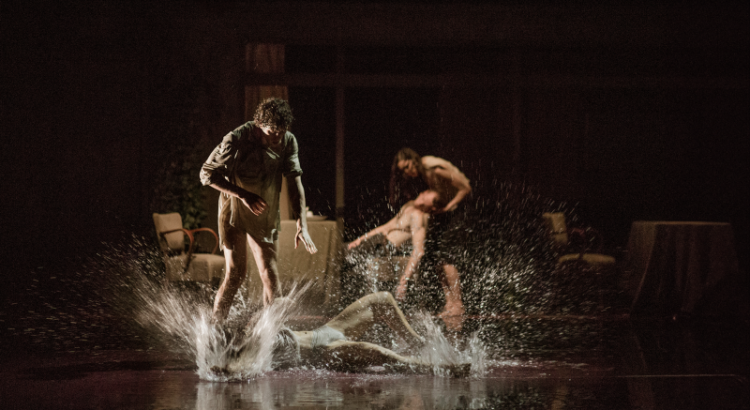
REVIEW: Triptych

Upon entering the realm of Peeping Tom’s Triptych, one quickly learns to abandon all preconceived notions of a linear narrative. This Belgian dance theatre company crafts an experience that is just weird, yet so irresistibly fantastic that it leaves you ensnared in its labyrinthine grip. Composed of three haunting acts united by the intricate theme of “memory as labyrinth,” the production ventures into territories both unsettling and sublime, drawing you into a journey that defies traditional storytelling.

Where Triptych excels is in its audacity to explore the intangible nature of memory—not a straightforward journey, but a dance through corridors flooded with both familiar and fantastical whispers of the past. Each act draws you deeper into the maze, where paths are both discovered and created anew with each performance.

Triptych is a masterclass in marrying choreography with set design, where each act unveils a new visual marvel. From the immaculate hotel room, where doors seem to have minds of their own, to a restaurant submerged in a foot-deep pool of water, each setting serves as a dynamic backdrop to the dancers’ wildly impressive physical feats. It’s a wonder no one emerged injured from such daring aquatic performances.

In between acts, be prepared for a unique intermission experience. The entire company, with remarkable synchronization, deconstructs and reconstructs the set, transforming it into the next fantastical landscape. Witnessing this metamorphosis is a testament to the powerful collaboration between performer and designer, a reminder that storytelling transcends words. My advice? Take your bathroom break before the show if you don’t want to miss this spectacle.

What’s particularly astonishing about Triptych is its ability to weave compelling narratives without a single line of dialogue. The movements speak volumes, their language universal. The choreography, a mesmerizing fusion of styles and techniques, crafts stories so vivid and gut-wrenching that audiences are left to decipher them through their own lenses. You might walk away with a narrative entirely different from the creator’s intention, yet equally profound and personal.

Even if dance isn’t your forte, Triptych is a masterpiece that stands out for its technical magic on stage and behind the scenes. With its ability to harness unorthodox elements and turn them into visual and emotional storytelling, the production redefines what it means to experience theatre.Peeping Tom’s Triptych defies convention and challenges its audience to lose themselves in its dance of memories. A compelling kaleidoscope of movement, design, and the murky depths of the mind, this is one performance that will linger long after the final bow has been taken.

REVIEW: 29th Annual Exhibition of Artists in Michigan Prisons

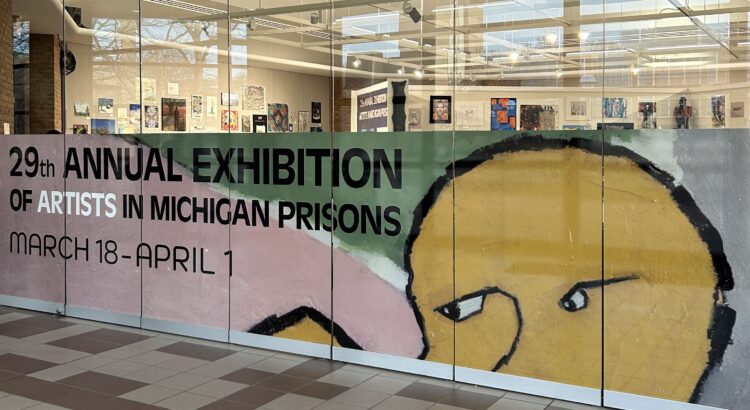
In a crowded, white room, people mill about to see over 700 artworks scattered around walls, bins, and tables. What is the singular thing that connects all of these art pieces? They were created inside prison walls.

The Prison Creative Arts Project (PCAP) is an organization that aims to connect those “impacted by the justice system with the University of Michigan community for artistic collaboration, mutual learning, and growth” through classes, workshops, performances, literary reviews, and annual art exhibitions. The 29th Annual Exhibition of Artists in Michigan Prisons is PCAP’s largest endeavor hosting 772 original artworks made by 538 artists. 

“In His Eye” – William “Cowboy” Wright

The exhibit is divided into seven themes: connection, critique, natural expression, portraiture, prison as art studio, self, and what if? Each theme gives the viewer a chance to ground themselves in the chaos of the gallery. With bodies bumping into each other constantly, and hundreds of beautiful art to wrap the brain around, the space can become cacophonous. However, this chaos is the same trait that makes the gallery so wonderful: there’s something for everyone. 

One standout piece is “In His Eye” by William “Cowboy” Wright where a close up portrait of a squirrel stands tall and in awe, as the reflection of a man in a Michigan prison uniform kneels down with an acorn. This painting is humorous with the incredulous expression on the squirrel’s face; and it rings home for Ann Arbor residents who see friendly, fat squirrels so often on the university’s campus. Wright wields his paintbrush to shift the view of incarcerated men for his audience from whatever preconceived notions they had to that of the squirrel’s: giving, God-like, and beautiful. They say beauty is in the eye of the beholder, the squirrel’s in this case…

“Hold On” – Daniel Teribery

Another standout is “Hold On” by Daniel Teribery, which depicts an incarcerated man kneeling over a sunflower in purgatory of darkness (his cell); he is surrounded by artwork and staring greyly into the flower, as a hand reaches outgrasping the cell with verve. The interesting part of the painting is the way the hand looks to both be holding up the cell and break into it at the same time. Cracks in the cell’s structure could imply that the hand is pushing in, or perhaps they represent the slow degradation of the man’s mind. If it breaks… if the hand can’t hold on, then the cell will fall further into the darkness of the background. I’m not sure exactly, but Teribery’s symbolism succeeds in opening up these important conversations on life inside prison walls. 

Beyond these pieces, the 29th Annual Exhibition features art of all genres, styles, and materials. You want to see a portrait of a clown painted in realism crying over a hot dog? It’s there. How about abstract circles crafted with oils and cardstock? That’s there too. Figurines made out of toilet paper? They make an appearance every year! Truly, if you have the time to browse through all 700-some pieces you will find at least ten that you could spend hours analyzing and admiring, and at least three pieces that you feel compelled to display in your home. (I should know– I bought four pieces myself.)

The annual exhibition is a great opportunity to purchase art no matter your budget. Work ranges in price from as little as $15 to over $1,000. It’s a great opportunity to build your collection, and support artists on the inside, as all proceeds go straight back to the artists. 

The point of the gallery, however, isn’t to empty our pockets, fill our living room walls, and to pat ourselves on the backs when we use our money for good. The point, first and foremost, is to learn from incarcerated artists about life on the inside: to see them, to hear their stories and to trust their experiences. When an incarcerated person leaves prison after serving their time, they often measure the passage of time by counting the days they’ve spent in freedom. We, me and you reading this, are people living in the free world. We have the privilege to see all 772 artworks, even the incarcerated artists whose work is on display do not have the opportunity to view work made outside of their prison’s walls. I hope you take the chance to view this exhibit and open your eyes to new perspectives. 


The 29th Annual Exhibition of Artists in Michigan Prisons is currently being held at the Duderstadt Gallery located in the breezeway between the Duderstadt Center and Pierpont Commons. The gallery is open for viewing now –Sunday and Monday from 12:00 PM–6:00 PM, and Tuesday through Saturday 10:00 AM–7:00 PM– until April 1st. You can also view the art online at the link here. You can continue to purchase art from the exhibition until April 1st at 5:00 PM, but hurry! These pieces sell fast.

REVIEW: The Government Inspector

Notice of Content: This article references moments of death by suicide and instances of fatphobia in a theatrical performance. Read with care.


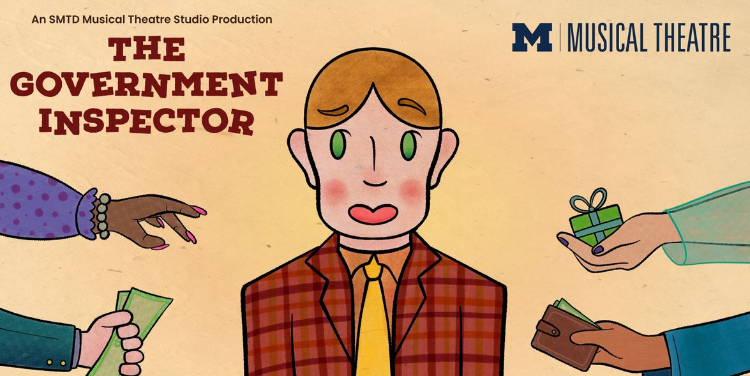
Every piece of art should resonate with the urgency of a question: “Why now?” Yet, after watching the University of Michigan Musical Theatre Department’s studio production of The Government Inspector, I’m left scratching my head, struggling to understand the artistic vision.

This comedy of errors originally written in mid-19th-century Russia by Nikolai Gogol follows the story of a small town frightened by the news of an inspector, spying and evaluating the organization of their community. As mistaken identities and drunken behaviors abound, the townsfolk turn to bribery, flirtations, and trusty ol’ vodka to impress their supposed inspector. In Jeffrey Hatcher’s adaptation, what’s supposed to be a poignant satirization of greed, political corruption, and stupidity falls flat in comparison to the glaring offenses performed onstage. 

Malcolm Tulip, the director, greatly oversteps when inviting the audience into the world of remote, provincial Russia. Tulip forces audience members to participate in some of the most gruesome moments of the show: this includes an actor gagging onto an audience member’s lap from alcohol consumption, and having a patron hold a mirror for a performer to look into as they perform a staged death by suicide. Irresponsible is the only word that comes to mind. Audience members can’t consent in the dark, and to thrust unsuspecting patrons into distressing scenes without their prior agreement isn’t what they paid for; it’s highly unethical and dangerous.

The offense that takes the cake, however, is the interpretation of the Judge. Not only does the actor don a fat suit, but they use it to its full extent, making a mockery of fat people in a caricature-like fashion. The actor waddles onstage with hands cradling their belly, as if parodying pregnancy. As a plus-size person, I couldn’t help but roll my eyes and think, “We’re fat, not pregnant.” Then, they top it off by taking a fall and flailing around like a pig in mud. This portrayal not only insults the audience with its blatant fatphobia, but also exacerbates its harm with tones of ableism. Such portrayals are far removed from entertainment, serving only to reinforce harmful stereotypes and degrade those of us who are simply living in our bodies.

What do we have to learn from old or outdated stories? Maybe, this is the wrong question. Instead, let’s ask who should we trust to direct these new interpretations? I would be remiss to place any blame for these offenses or missteps on any students involved. It’s not their fault. Faculty who hold a clear power dynamic over student artists are responsible to lead and uphold an ethical, safe, and responsible production. It’s obvious, in the case of The Government Inspector, that there was a failure to provide such leadership. The themes of corruption and folly in The Government Inspector might have contemporary resonance, but the execution here is tone-deaf.

However, to give credit where credit is due, Nicola Troschinetz and Stephanie Reuning-Scherer were hilarious and bubbly in their twin roles as Dobchinsky and Bobchinsky, Ellie Van Engen successfully cements the proposed idea of satire through her costume design, and the ensemble, while lacking relevance and stage time, sure can sing a tune. While the production manages to deliver moments that are both shocking and undeniably funny, these are often overshadowed by its more problematic elements.

You’ll definitely find yourself laughing during The Government Inspector, but at what cost? $16 for students? $25 regular price? Or at the expense of others?

REVIEW: Nate – A One Man Show

Have you ever felt your jaw ache from being dropped in shock for a whole hour?

No? Oh, well, that’s too bad. You sure are missing out… To experience it firsthand, go see Nate – A One Man Show

In its 146th season, the University Musical Society (UMS) presents Nate – A One Man Show (Nate for short), as its penultimate showing in its fourth iteration of the “No Safety Net Series.” This series of performances promises “audiences a platform to engage with high-impact theatre that challenges conventions and confronts complex themes head-on.” Nate is no exception. 

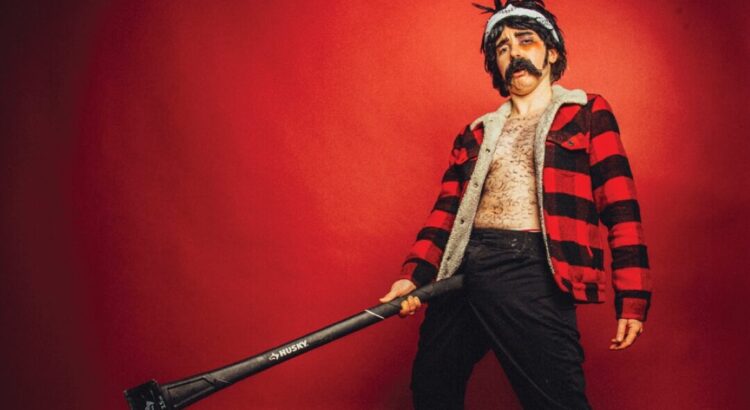
Created and performed by Natalie Palamides, Nate – A One Man Show is an hour long comedy performance that shocks and shines through the smoke of fake Marlboro cigarettes. Performing entirely in drag, Natalie becomes Nate: a shorter and overconfident look alike to the Brawny paper towel man who sports a cowboy mustache, black eye, and cargo pants. 

From start to finish, Nate shocks, disgusts, and humors the audience. Palamides plays an exhibitionist who demands applause and validation, and the audience willingly gives it up. As Nate quips, “bitches be thirsty.” And we sure are, drinking up every crude joke, racy pose, and can of free LaCroix that Nate hands out. 

Nate pouring LaCroix down his face to simulate crying
Nate pours a can of LaCroix down his face to “feel something.”

Speaking of liquids, beware the splash zone! Nate has a tendency to spray the audience whether it’s from the cans of LaCroix he shotguns or the shower he takes in a kiddy pool. I sat in the mezzanine thanking G-d that I wasn’t anywhere near the chaos of this show. Audience participation is voluntary, of course, but, as this show examines, consent isn’t always black and white. 

Throughout the show, Nate asks many audience members (and the stray mannequin) for consent to interact with them in whatever raunchy way the show calls for. Even a general liability waiver is signed at one point. Beyond legal documentation, the show’s usage of asking for consent highlights the grey areas in which we ask for and give consent. This important conversation, masked by comedy, asks more questions than it answers, leaving me with a sour, but welcome taste in my mouth. 

Behind the absurdity that Nate presents, lies a familiar, yet unstated debate: man vs bear. Recently a point of division on social media, the debate asks “would you rather be alone in the woods with a man or with a bear?” In this case, would you rather be alone in the theatre with Nate or with a bear? 

Maybe someday we will have answers to these questions. Maybe one day, it’ll be easier to be alone with someone like Nate in the woods. For now, though, Nate will continue to ride his toy motorcycle into theatres across the globe, and audience members will continue to drive their cars to these theatres to feel the weight of their jaws on the floor. 


If you weren’t able to catch Nate in Ann Arbor this February 5th-10th, you can watch Nate – A One Man Show on Netflix.