REVIEW: London Philharmonic

Photos are provided by Peter Smith Photography

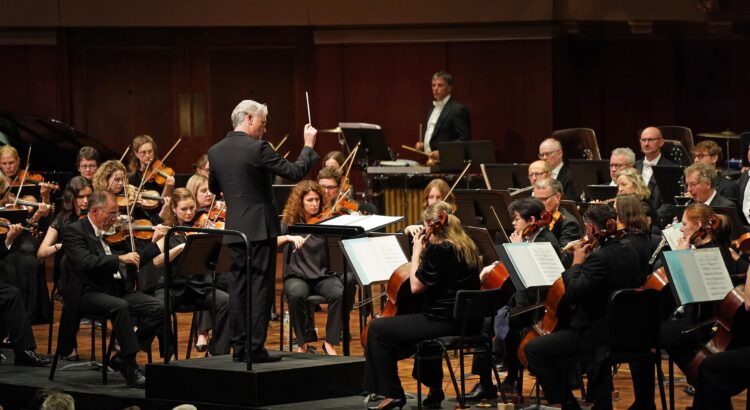
On October 18th, the London Philharmonic returned to Hill Auditorium after 13 years. The concert was especially thrilling for me, as it was my first time experiencing the London Philharmonic live. The repertoire, performed in order, included Britten’s Sinfonia de Requiem, Shostakovich’s Violin Concerto No. 1 in a minor, Tania León’s Raíces (Origins), and Sibelius’s Symphony No. 5 in E-flat Major.

I found it unusual that they chose to open with a requiem, given the somber, darker tones typically associated with such works. Yet Britten’s piece turned out to be grand in its own right, and I was surprised by how much I enjoyed listening to it. The quality of the music drew me in immediately, largely due to Edward Gardner’s conducting—I found my eyes fixed on him from the very beginning.

I consider the conductor to be the heart of an ensemble: the musicians move and breathe to the beat of the baton, and the phrasing of each lyrical line relies on the tiniest of gestures. A captivating conductor is vital to the quality of an orchestra’s performance, and Gardner’s skills truly shone, especially when every instrument joined in a musical passage. The contrasting dynamics filled the auditorium with a depth of sound that made me feel one with the Sinfonia de Requiem, despite being in the audience. 

Although I had never heard Shostakovich’s first violin concerto before, the eerie dissonant intervals and unsettling lack of vibrato in the opening unmistakably evoked his distinctive melancholic style. Once the second movement began, the intensity of the piece immediately shifted my attention to violin soloist Patricia Kopatchinskaja. The clean harmonics and intonation of her double stops were breathtaking. Furthermore, she preserved Shostakovich’s voice by weaving between the lack of vibrato characteristic of the first movement and the vibrato that expressed her own musicality.

London Philharmonic Orchestra performing with Edward Gardner and Patricia Kopatchinskaja in Hill Auditorium, October 18, 2024.

Like the preceding pieces, the introduction of Raíces was quieter and calm. What made it stand out from the rest of the program was the lively beat that picked up in the latter half; in this section, the woodwinds and brass melodies particularly shone, establishing themselves as the main characters of the piece.

Sibelius’s fifth symphony continued the trend of opening with a peaceful first movement, which made me hopeful for a triumphant ending to conclude the night. Instead of achieving an impactful ending by increasing the tempo, the last movement made its mark through the layering of instruments. The full volume of the brass rang beautifully through the hall, yet I could still hear the violins complimenting them with a gorgeous melody rich in luscious notes. The concluding measures were also unexpected; rather than maintaining that full sound, they transitioned into a series of single note chords played by the whole orchestra.

However, I must confess that for me the highlight of the concert was actually the encore: Variation IX, Adagio “Nimrod,” from Edward Elgar’s Enigma Variations. It was another calm piece, but rather than a somber sound, it featured sweet tones and a yearning melody that lingered with me long after the performance. It provided a perfect change of pace accompanied by a bittersweet emotion that proved to be more memorable than a loud and exciting ending.
REVIEW: Twelfth Night

Photos are provided by Peter Smith Photography

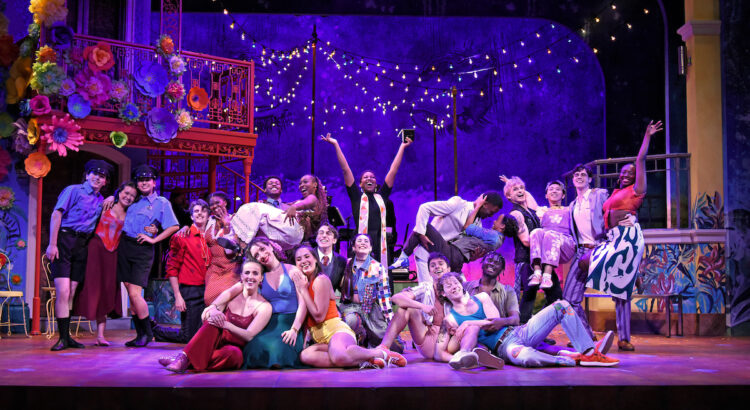
From October 10 to 13, the School of Music, Theatre, & Dance presented a musical adaptation of William Shakespeare’s Twelfth Night. The witty script combined with the students’ incredible singing and dancing made it such an enjoyable experience that I ended up watching it twice. 

The performance took place in the Lydia Mendelssohn Theatre, which although a little small, is actually my favorite venue for musicals. The charming, comfortable velvet seats and the excellent acoustics ensure that every line and lyric is crystal clear. The actors also make creative use of the entire space by entering and exiting through aisles and side doors instead of always walking backstage, and this added interaction with the audience made the show feel all the more immersive. The set design for Illyria, a mythical city surrounded by water, was stunning: the intricate details of the staircase, balcony, and guardrails added realism, while the bright colors and decorations created a whimsical atmosphere.

The first musical number that stood out to me was “If You Were My Beloved,” performed by Viola, Olivia, and Orsino. Viola’s youthful, endearing voice accidentally captures Olivia’s heart, embodying the innocence and purity of the kind of love Olivia has been longing for. Olivia’s bright and powerful voice conveys the excitement of newfound love, radiating optimism and hope for her future romantic pursuits. Lastly, Orsino’s deep, charismatic voice reflects the depth of his persistent and long-held admiration for Olivia. Despite their conflicting interests while singing these lyrics, the trio harmonizes beautifully, hinting at the tangled and humorous love triangle filled with misunderstandings and unexpected twists.

Another memorable number was “Is This Not Love?” Feste’s soulful tone beautifully captured the yearning and frustration that come with being in love. This exasperation was further amplified through the choreography where Viola and Orsino would reach out for each other without ever fully connecting, underscoring the emotional distance between them. A particularly powerful moment featured Orsino spinning Viola in the air; despite their physical closeness, their emotions remained unspoken.

Funnily enough, it was “Count Malvolio” that left the deepest impression on me. I loved the playful costumes of the backup dancers that mirrored Malvolio’s outfit, and their addition allowed for a grand choreography filled with silly gestures that perfectly captured Malvolio’s ambitious dream of becoming a count. With its humorous lyrics and catchy chorus, I found myself singing it for days afterward.

Overall, each musical number was a joy to experience, and I left the theater excited to listen to them again. However, I found myself disappointed with the recordings I found online, since they lacked the vibrancy and emotional depth that made the live performances so special.

Watching the show from two different perspectives—the main floor the first time and the balcony the second—provided me with more ways to experience the performance. From the balcony, I could appreciate the full scope of the choreography, from the various formations to the synchronization. On the main floor, however, the experience felt more cinematic; the singing was more immersive and the actors’ facial expressions brought the romantic tension and developments to life. Honestly, if given the opportunity, I would happily go back to watch the musical a third time and re-experience the beauty of Illyria once more with SMTD.


REVIEW: Hey, We Need to Talk!

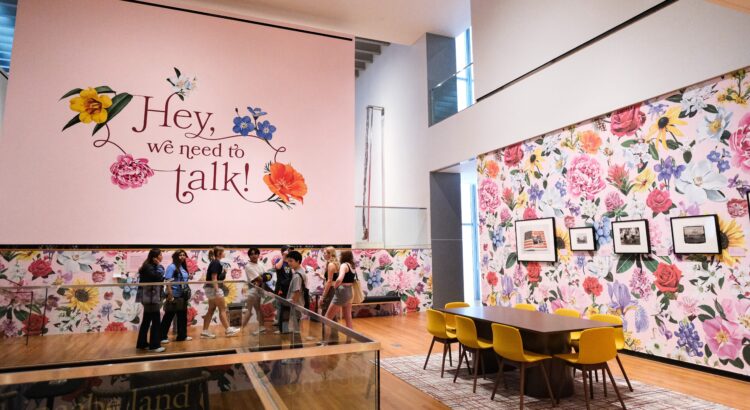
Through its Vote 2024 suite of programs, the U-M Museum of Art has asked the campus community, “How can we strengthen our democracy?” Visiting artist Philippa Pham Hughes answers this question with the title of her exhibition: “Hey, We Need to Talk!”

Hughes, the current Visiting Artist For Art & Civic Engagement at UMMA, is a social practice artist who works to create a flourishing society through human conversation and connection. With the presidential election approaching and politics an increasingly divisive subject, it’s harder than ever to communicate with those who disagree with us. With “Hey, We Need to Talk!” Hughes encourages us to sit down, break bread, and talk honestly about our fears and hopes for America.

The second-floor Crumpacker gallery has been transformed into something that is part curated art exhibit, part interactive experience, and part community gathering space. Brightly colored wallpaper (designed by artist Louise Jones, also known as Ouizi) covers the walls, bursting with beautiful illustrations of the nation’s fifty state flowers against a pastel pink background. Groups of comfortable chairs and low tables form places to sit and converse in small groups. The space feels instantly joyful and welcoming. The works of art hanging on the gallery walls are well curated, chosen from UMMA’s collection to provide discussion prompts about American life and values, but they take a back seat to the social artwork of the exhibition as a whole.

The exhibition’s Gallery Guide describes it a “social sculpture,” and invites visitors to “complete the artwork” by making social connections with others in the space. It gently encourages discussion with other viewers, and provides a series of open-ended questions about the artworks as a conversation starter. There is also a tear-away card in the back of the pamphlet, asking participants to write their answer to the question, “What does it mean to be an American?”


A selection of answers to the question “What does it mean to be American?” written by visitors to the exhibition. Photos by the reviewer.

I found these cards to be the most compelling part of the exhibition. Large photo albums filled with them are placed on tables around the room. I sat and flipped through one, reading the answers, which ranged from silly to profound. Some were clearly written in elementary schoolers’ handwriting, some in other languages. They expressed a wide range of sentiments, from gratitude and hope to frustration and despair.

Throughout the period of the exhibition, numerous events focused on fostering dialogue about American democracy will be held in the gallery space. This includes the weekly Common Sense Diner events, where people with differing political viewpoints share a meal and guided conversation. Participants are not asked to reach an agreement or change their views—only to ask questions, listen, and try to find care and common ground if they can.

This exhibition is unlike any other I have experienced at UMMA. It goes beyond artwork on gallery walls, fostering genuine delight, comfort and connection. If we want to build a stronger nation where everyone can flourish, maybe all we really need to do is just sit down together and talk.

“Hey, We Need to Talk!” is on display at UMMA until February 9, 2025.

REVIEW: A Night of Swing at UM-Dearborn

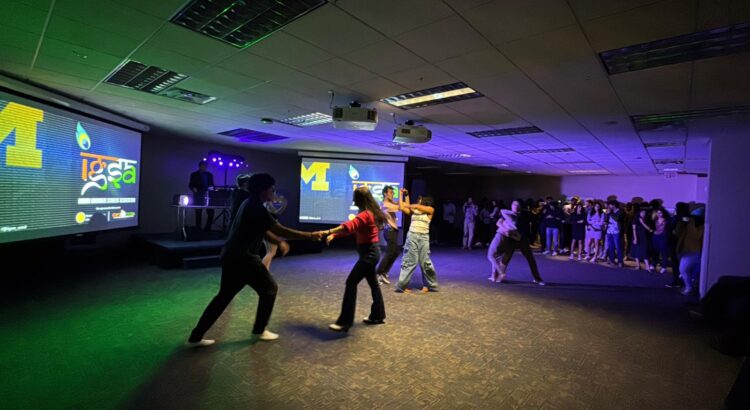
Earlier this week, the University of Michigan-Dearborn campus came alive with the sounds of brass horns and swing beats, as Swing Dearborn hosted “Dance Night” with its own performances. What I witnessed was a vibrant celebration of dance, led by Swing Dearborn Vice-President Gabriel Fritz and while I did not know what to expect walking in the room, I walked out with my heart filled with appreciation.

The performances were split into four sets, each offering a different flavor of swing dance. The first routine opened with a classic Jitterbug, with Fritz leading the group. From the very first beat, I was being told a story. His movements were crisp and full of energy, and the way he was able to connect both with us, the audience, and his partner, was enthralling. There was a joyful bounce in every step, and the chemistry in the air was palpable. The playful dips and spins were perfectly timed with the music, creating a visual feast that drew me in. The movements were a conversation.

The second set introduced the Lindy Hop, a faster, more intricate dance style. Here, you could really see what Fritz specialized in. His footwork was precise, and his command of rhythm was impeccable. He transitioned from one complex move to another and it all felt very effortless and smooth. His partner mirrored his energy, and together they created a dynamic performance full of bold aerials and impressive lifts. It reminded me of the sheer physicality required for this style of swing, and I found myself in awe of their stamina and grace.

By the third performance, the mood shifted to something slower and more intimate, with a sultry blues number. The fluidity of his movements during the slower tempo was mesmerizing, and it showed me a different side of swing.—one that’s more about connection and subtlety. This performance felt personal, as if I was ”people watching” the dancers as they communicated with each other through their dance.

The final set was a group performance, featuring both experienced dancers and newcomers and although the ensemble was slightly less polished, it added to the charm of Swing Dearborn. It reminded me how swing was about having fun, rather than it being perfect all the time. I was surrounded by laughter, missed steps, and joyful recovery. Watching everyone be so immersed in the moment was beautiful.

After the performances, the audience was invited to join a 15-minute hands-on lesson and joining them is one of the best decisions I made that night. I thoroughly enjoyed the end of it all. Overall, the event showcased not just the technical brilliance of swing dance but also its capacity to connect people and spread joy. Whether you were an experienced dancer or stepping onto the floor for the first time, the energy of the evening was contagious, leaving everyone with a spring in their step.

REVIEW: The Apprentice

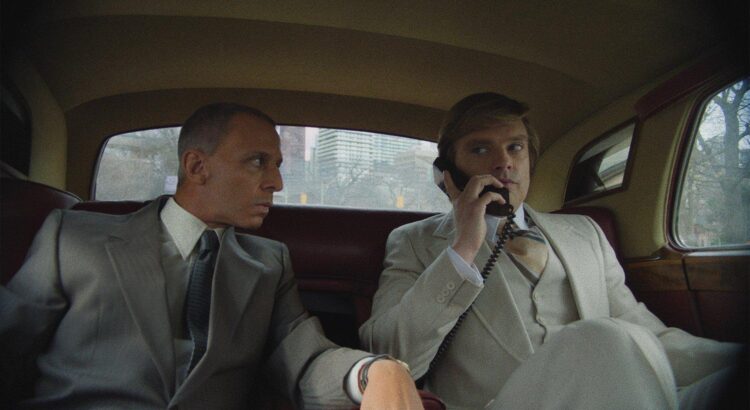
Roy Cohn is a malicious vulture on screen: he flicks his tongue over his lips, piercing eyes bulging out of the sides of his face, head bobbing as he sizes up his prey. His philosophy can be summed up as “play the man not the ball,” and he backs up that worldview with a hidden backroom filled with incriminating tapes he uses to blackmail the necessary judge, politician, or prosecutor. In “The Apprentice,” we see how he turned a young, ambitious Donald Trump into the former president America knows today.

Director Ali Abbasi’s fantastic Donald Trump origin story is shepherded by the acting chops of its two stars: Jeremy Strong, tragic figure of  “Succession,” as Roy Cohn, and Sebastian Stan, squared-jawed Marvel hero, as Donald Trump. When the two meet in an exclusive NYC club in the 1970s – Cohn already an established lawyer and Trump a real estate upstart looking to impress his draconian father – thus begins a relationship that will last decades. Trump is struggling with a lawsuit alleging anti-black discrimination against his tenants. Cohn, the shrew political operator, makes his problem go away. Perhaps he sees something in the young man desperate to make a name for himself. Perhaps he simply likes having the tall, blonde, handsome – as he says, “thoroughbred” – Trump around. Either way, the apprentice is born. 

Aside from the first meeting scene, which sets the stage, the plot zooms through key points in the Trump timeline. He’s buying the decrepit Commodore hotel! He’s fighting for a tax break from anti-corruption mayor Ed Koch! He’s being interviewed on TV! He’s buying casinos! He went bankrupt! He’s back again! Roger Stone is convincing him to run for office under the slogan “Make America Great Again”….well, we know how that ends up. 

Many Americans are only familiar with the third act of Trump’s story. “The Apprentice” introduces us to the first and second. The plot is certainly entertaining enough to captive audiences for its two-hour runtime. But the emotional core of the movie is the relationship between Cohn and Trump, played to perfection by both actors, and its evolution as Trump goes from apprentice to master of the universe. Trump’s intoxication with Cohn – who journalist Wayne Barrett described as having “the presence of Satan” – is plenty juicy. But Trump’s surpassing of Cohn, even betrayal of Cohn as Trump gains power, is much more poignant. 

Alongside actors Strong and Stan is an incredibly talented supporting cast. Fred Trump (Martin Donovan) is as terrifying as he is bushy-eyebrowed. Fred Trump Jr. (Charlie Carrick), Trump’s older brother who died young from alcoholism, should have his own movie. The best in the bunch is perhaps Maria Bakalova as Trump’s first wife Ivana, the Czechoslovakia-born powerhouse, who is a capable interior designer as well as socialite to the New York City elite. This hardworking drive would eventually lead to her divorce, with Trump, jealous of people seeing his wife as his business equal, leaving Ivana for his mistress. 

Obviously (at least in my opinion), Abbasi’s releasing of the movie just 25 days before the election is a political move. Trump’s campaign manager duly responded, calling the movie “garbage” and “malicious defamation” that “sensationalizes lies” about Trump. I certainly do not believe “The Apprentice” will sway any Trump voters to the other side. In fact, the movie will most likely contribute to his cult of personality. Who is this businessman, this charlatan, this leader of men, this future president, this bumbling idiot. To whom did we vest the most power in, perhaps, the entire world. Who is The Donald? Do we want to find out?

REVIEW: Blind Pig Comedy

This past Monday, I attended the weekly Blind Pig Comedy Night, a stand-up open mic that serves as a consistent place for up-and-coming Michigander comedians to try out material and secure performance time. Located on South 1st Street, The Bling Pig is a popular bar and artistic venue that frequently hosts artists of all mediums. 

While some events only require attendees to be 18+, Bling Pig Comedy Night requires their audience to be 21 years of age or older. As a recent 21-year-old, I was excited to take the opportunity to engage with more stand-up comedy in the Ann Arbor area. Earlier this semester, I attended a somewhat underwhelming and slightly awkward show at Ann Arbor Comedy Showcase, and the Blind Pig piqued my interest by providing a second chance for the downtown comedy scene. 

Upon arriving at the Blind Pig several minutes after the first comedian’s set began, I was surprised to see the minuteness of the crowd, although in hindsight I’m unsure why I anticipated a large crowd at 8:30 p.m. on a Monday. Grouped at high-top tables the audience was small but engaged – I was certainly the youngest attendee, and I predict the majority of audience members were in their thirties and forties. 

Each comedian’s set catered to the generational makeup of the audience. While I understood every pop culture reference and joke about taxes, I didn’t find any of the sets particularly funny or entertaining. I did not attend this event anticipating Second-City-level performances, but I was slightly disappointed by my lack of enjoyment at the Blind Pig. I simply don’t think these comedians are for me; while they did elicit some giggles from older audience members, the energy of the crowd that night was by no means raucous or terribly dynamic. 

My biggest gripe with the performances at this open mic was the heavy reliance on juvenile sexual jokes. While I will not get too specific or graphic in describing these, the frequency with which each comedian, regardless of gender, relied on making highly sexualized comments about women’s bodies was disappointing. It was clear that each comedian was attempting to evoke a shocked reaction from the audience members with these crass and overplayed jokes, but this hardly worked. I was also surprised at the frequency with which the comedians cracked jokes at the expense of the LGBTQ+ community – some tasteful, some not. It appeared as though each performer felt some sort of obligation to lean on jokes about sex or the queer community when all else failed. 

While the content of the stand-up sets was not my favorite, I did really appreciate the environment that The Blind Pig created for both its audience and performers. The energy of the room was very tight-knit and conversational, and it’s clear that the venue succeeded at creating a casual space for comedians to test out material and audiences to unwind after a long day at work. The staff was kind, the drink affordable, and the audience warm, which provided an overall pleasant experience. 

While my quest for laughter on a Monday night following the completion of my finals was not quite fulfilled, I still enjoyed my time at the Blind Pig Comedy Night. Although I may not attend this specific event again, I look forward to attending more artistic happenings at this venue in the future.