PREVIEW: Vivaldi’s Four Seasons / Max Richter’s Vivaldi Recomposed

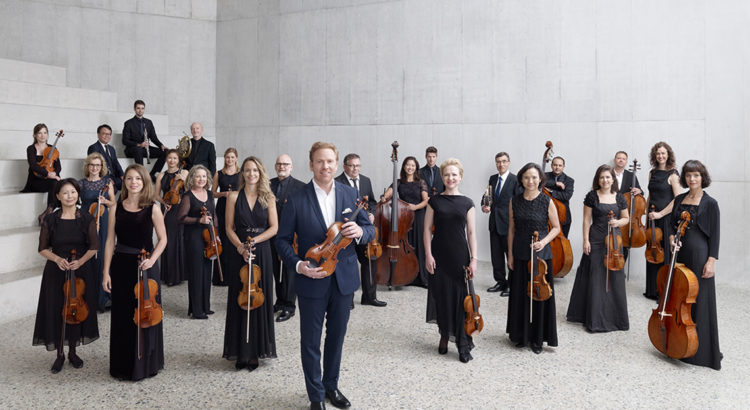
On Saturday, November 16, join the Zurich Chamber Orchestra for a performance of  Max Richter’s Vivaldi Recomposed, as well as the piece that inspired his composition, Antonio Vivaldi’s famous set of violin concerti The Four Seasons. Both of the pieces are iconic in their own right: The Four Seasons is the best known of Vivaldi’s works, and Max Richter’s Vivaldi Recomposed topped classical music charts in 22 countries when it was released in 2012.

The concert will take place at 8 pm at Hill Auditorium (note that the performance was originally scheduled to be at Rackham Auditorium, but was moved “due to extraordinary demand”). Tickets may be purchased online or at the Michigan League Ticket Office.

REVIEW: La Bohème

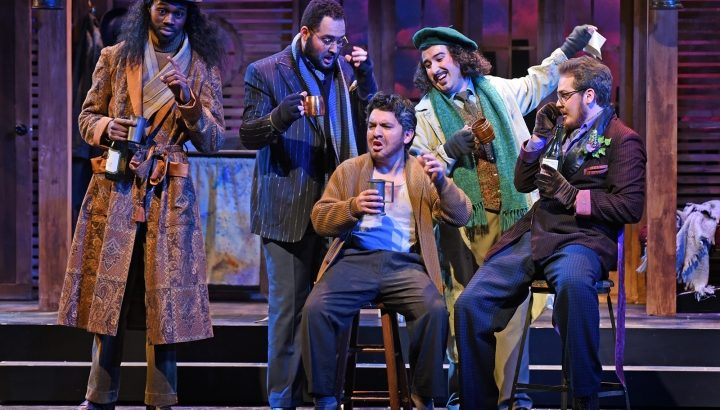
The School of Music, Theatre & Dance’s production of the opera La Bohème was certainly a treat. Featuring the University Opera Theatre and the University Symphony Orchestra, it was a chance to go to the opera without leaving campus!

Though La Bohème was first performed in 1896 (the music is by composer Giacomo Puccini, and the libretto, or words, is by Giuseppe Giacosa and Luigi Illica), this performance was set in the post-war era. This allowed for more modern costuming and set design, and in my opinion, it also made the entire storyline seem more relatable, as the characters were not in the distant past. The addition of English captions over the stage was also a welcome addition, since the entire opera is in Italian (which, unfortunately, I am not fluent in).

If you know the musical Rent, the plot of La Bohème will be familiar, as the musical is a modern adaptation of the opera. However, though the storyline contains themes of youth, romance, poverty, and realities of the “Bohemian” existence, the plot seemed rather underdeveloped to me. In particular, the ending seemed abrupt, and I would have liked more closure (though perhaps this serves to further the opera’s themes).

That said, the simplicity of the plot allows the opera’s music to shine through. The University Symphony Orchestra performed the score spectacularly, and the leads and the chorus were also wonderful. I enjoyed the fact that the design of the Power Center allows the orchestra to be largely visible, rather than hidden under the stage. Sometimes, however, this was to my detriment, as I was watching the orchestra and listening to the music rather than watching the on-stage action and reading the captions!

In the area of set design, the opera production was also stunning. There was a short intermission between each of the opera’s four acts to allow time for elaborate set changes, and they were certainly worth the wait. I can only imagine the time and effort that goes into designing and constructing the sets. My personal favorite was the set for Act II, which took place in Paris’s Latin Quarter on Christmas Eve. Featuring a nearly full-scale two-story building façade, streetlamps, and Christmas wreaths and garlands, it was a work of art. On a separate note, this scene also featured members of the University of Michigan Marching Band, as well as the Ann Arbor Youth Chorale! I also enjoyed the set for Act III, which featured falling snow and a moving train.

The School of Music, Theatre & Dance’s production of La Bohème was an excellent opportunity to see a high-quality performance right here in Ann Arbor, and I am glad that I had the chance to attend!

PREVIEW: Loch na hEala (Swan Lake)

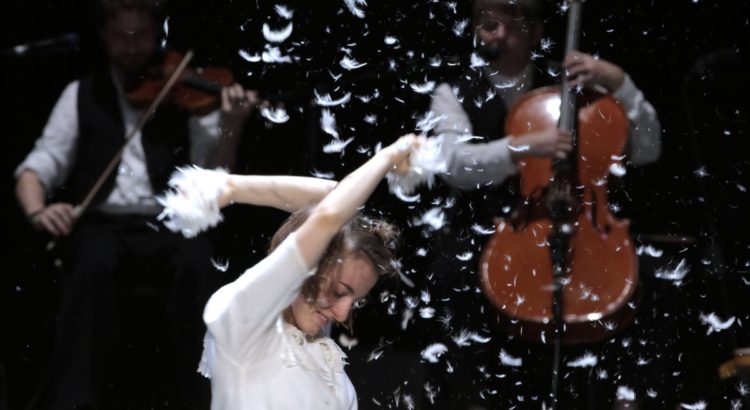
Teaċ Daṁsa, winner of the Irish Times Theatre Award for Best Production in 2017, comes to the Power Center for two riveting performances of  Loch na hEala, a retelling of Swan Lake rooted in a place where ancient Irish mythology & modern Ireland meet. Michael-Keegan Dolan, founder of Teaċ Daṁsa, brought the group about as a means to forge deeper connections with the traditions, language, and music of Ireland.

Loch na hEala will be performed this Friday and Saturday, November 15th & 16th, both starting at 8PM. There will be no late seating, so drive safe and mind the time!


Teaċ Daṁsa

REVIEW: WSG Gallery Autumn Salon

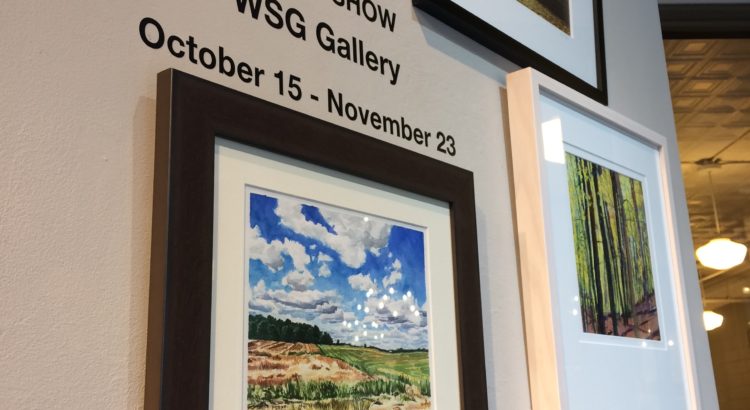
The WSG Gallery is currently running their Autumn Salon, a show true to the salon spirit with works stacked up to its ceilings. It’s a format I don’t see as much in museums and galleries, but one I think should still have its place in art display. While one doesn’t meditate quite as much on singular pieces, the collage of work displays both the variety and also the more general themes and techniques used by these local artists. This makes for a rich display of individual and community artistic sensibilities.


There was an interesting mix of art forms, especially seen in the abstract sculptures found in the window. In a gallery where two dimensional works tower over you, finding common ground with some three dimensional forms creates a more dynamic, engaging experience as one has moments to appreciate the translation of different artistic principles and elements (like color, shape, and form) to a completely different manifestation of creativity.


As I have a personal history of learning and preferring figure drawing and painting, the figural work on display consistently stood out to me. One artist that stands out is Nora Venturelli, a professor at the Stamps School of Art and Design. Their rhythmic, daring compositions and color schemes attracted my eye, and I found their work to be really engaging. I never get tired of playing with human contours and movement in my own work, so to see a take using bolder color and thoughtful paint application was really enjoyable for me.

pictured: Nora Venturelli, Vice Versa, no. 48


Lastly, Maria Ruggiero’s Hillside Houses, Tuscany stood out to me. What’s so interesting about this piece is the layering of different paint strokes and application patterns, and the way Ruggiero does so in a way that is evidently done with considerations to atmospheric perspective inso that these different techniques work together to create unity rather than falling apart. I’m not really a landscape person, but this work definitely takes the concept to a different place, offering playful technique and lively color that convinces viewers to linger just a little bit longer.


pictured: Maria Ruggiero, Hillside Houses, Tuscany


I encourage students and community members alike to go take a look at what’s being offered at the WSG Gallery and get a feel for some of the art being produced out of Ann Arbor and the surrounding area. The show closes November 23rd; go enjoy the last remnants of fall while you can!

REVIEW: La Bohème

La Bohème is an opera full of comedy, tragedy, and singing. A lot of singing. Though I suppose that’s what an opera is, it was still a new format for me and therefore made for a really interesting experience. Drama and plays have always been up my alley, but to see dialogue converted to a consistently musical form definitely changed the way I watched this piece.  This is all to say, it was pretty fantastic. The micless performers blew me away with their performances, not only rivalling the pit in volume but delivering line after line beautifully. I found the climactic moments of multiple characters singing their own verses layered over each other especially enjoyable and impressive.

Another point that simply has to be mentioned is the set design for this production. Three intricate sets were used, each necessitating an intermission. The world-building done with tall storefronts, moving trains, and falling snow was so engaging and really added to the different moods of each of the four acts. The way characters were able to truly inhabit the stage really allowed the audience to be transported across the Atlantic to a chilly Parisian winter.


A critique I have of this work is one that has been leveled before towards it since its inception; it’s quite fluffy. The story focuses on the lives of bohemians surviving off of their artistic creation and free thought moreso than actual food, but yet the story only uses this concept for bare-bones plot developments. The bohemian lifestyle is represented through this opera with a funny opening number of burning the pages of one’s play to stay warm and a character feeling guilty for his lover’s decline in health due to his limited means. The latter plot point has some value to it, but it’s outweighed by the melodramatic romance and fun (but kind of just fun) comedic moments between characters. I don’t think there’s anything wrong with making an opera that has stellar performances and aesthetics with a more surface-level plot; I still found La Bohème to be a whole lot of fun and really a showcase of talent, but personally I’d rather see the time period of the piece used to its fullest potential thematically.


Ultimately, I’d love to go see more operatic performance through SMTD and I’d encourage anyone in the Ann Arbor area to make it out to a show. There’s a clear commitment to quality performance and theatrical design that makes these shows truly captivating.

REVIEW: Last Christmas

The new romantic drama Last Christmas gives a 2019 twist to a classic Hallmark Holiday movie. The movie takes place in modern London and captures the life of a seemingly distressed young adult named Katarina.

The story begins with a down on her luck Katarina after being kicked off of couch after couch. She is forced to find a place to stay at night after working her full-time job as an elf at a Christmas shop ran by a Chinese motherly figure who goes by the alias “Santa.” Katarina, or as she likes to be called, Kate, stumbles upon a seemingly lonely man with an optimistic outlook on the world around him. Tom Webster becomes an outlet for Kate’s stress and struggle with her life.

As the movie unfolds, you begin to hear a lot about the illness that Katarina previously faced that comes up in most conversations with her and her estranged family. But as Katarina becomes less and less financially stable and faces homelessness, she is forced to rely on this family for support.

The movie seems to unpack a lot of different stories and doesn’t nearly begin to complete the narrative of most of them. Her family immigrated from Yugoslavia and with a mother who is caught up on the nationalist sentiment from the Brits, Kate and her sister find it hard to connect with their mom. In addition to her interesting family dynamic, Kate’s sister is also battling with her sexual identity and revealing her girlfriend to the family.

As stated before, none of these different character plots ever seem to come to a definitive end. A huge plot twist at the end leads to some lingering questions for viewers who want to see things work out for Kate, Tom, and her family. Last Christmas is a tear-jerker with a bit of romance that hopes to fulfill some Christmas dreams for its viewers. It’s worth a light-hearted watch.