PREVIEW: Miles Davis: Birth of the Cool

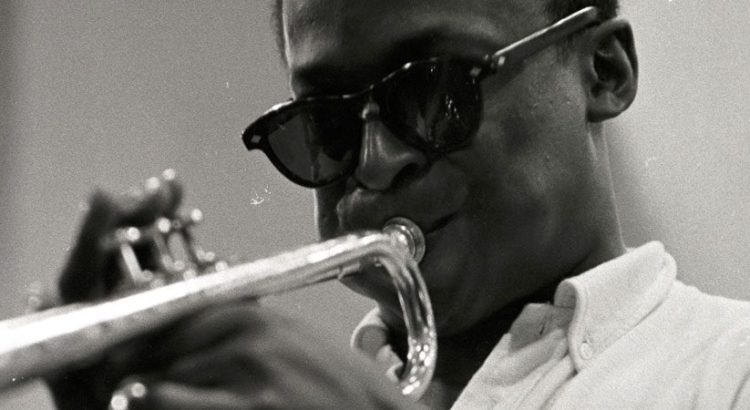
Are you interested in learning more about Miles Davis, one of the most iconic and influential musicians in all of jazz? Miles Davis: Birth of the Cool is a documentary currently showing at the Michigan Theater that gives audiences a glimpse of the “man behind the music.” Featuring interviews with Jimmy Cobb, Lee Konitz, Herbie Hancock, Wayne Shorter, Ron Carter, Carlos Santana, The Roots, and Flea of the Red Hot Chili Peppers, the film also includes archival photos, manuscripts, and some of Miles Davis’s original paintings.

For showtimes and ticketing information, visit the Michigan Theater’s website. Even better, screenings on October 18 through October 24 are on the Passport to the Arts, meaning that you can redeem one of the vouchers, found at locations across campus, for a free ticket to the film!

REVIEW: Alli McPhail NCRC Exhibition

This show was the first time that I had ever visited the North Campus Research Complex. The complex where the exhibition was housed was a wildly different aesthetic from the rest of the university. When one reaches NCRC Building 18, the first visual you are greeted with is the artistic sculptures on the exterior courtyard of the building. One sculpture is of a set of walls with a hole in one, the other sculpture is of a large ring, and the third sculpture is of a gigantic egg. Upon entering the building, it is a bit of a hunt to reach the McPhail Exhibition. One must take the elevator or walk down the stairs to the lower floor. As soon as you reach that lower floor, you must again take a second elevator to another lower floor, as the escalator tunnel is out of service at the time of this review. Upon coming down this elevator, one finally reaches the Alli McPhail Exhibition in the corridor. 


The corridor is a small, but cozy space, with tan marbled floors and yellow lighting. This gives the exhibition space a warm and desert-like aesthetic. Also, one can see a garden-like area outside of the corridor through large glass windows that display an atrium surrounded by concrete walls.  This desert-like aesthetic ties into McPhail’s artworks, as her work has much to do with the natural world. 


My favorite paintings included the following: Sedona, AZ; Emerald Lake, Canada; and East Grand Traverse Bay. In the Sedona, AZ painting, I enjoyed the usage of the hilltop perspective. I think that it gave a dynamic viewpoint from which the surrounding landscape could be viewed. The contrasting colors of the orange and brown cliff face, to the green forest in the valley, paired with the green and brown of the hill give an earthy, but majestic feeling. 

In the Emerald Lake painting, I was intrigued by the way in which the lake in the foreground and the hill in the background seemed to frame and display the mountain. I also enjoy the usage of cool colors in this painting. The careful conventions surrounding her usage of deep blues and greys for the lake gives an emotion of calm and stillness. The green colors in the painting add a fresh feeling that also serves to draw your eyes towards the stark white and grey of the President Range mountains. In the East Grand Traverse Bay painting, a feeling of warmth and summer was captured by the usage of bright blue, white, and tan acrylic paints. The dark color of the forests in the background surrounding the bay in the foreground breaks the monotony of the water while preparing your eyes to rest on the pale blue sky. 


In conclusion, I believe that this exhibition is the encapsulation of Alli’s intimate memories throughout her travels in North America. When viewing these works, you cannot help but to regain a sense of the grandiose views one might have when going on vacation as a child. There is a certain youthfulness here that leaves me refreshed and wanting to see more of Alli’s takes on nature. I would say that this exhibition is worth your time. If you find yourself within the North Campus Research Complex wanting a glimpse of the summer in these colder fall months, why not take a break and regain some of that warmth and wonder with Alli McPhail’s exhibition.

REVIEW: Chick Corea Trilogy

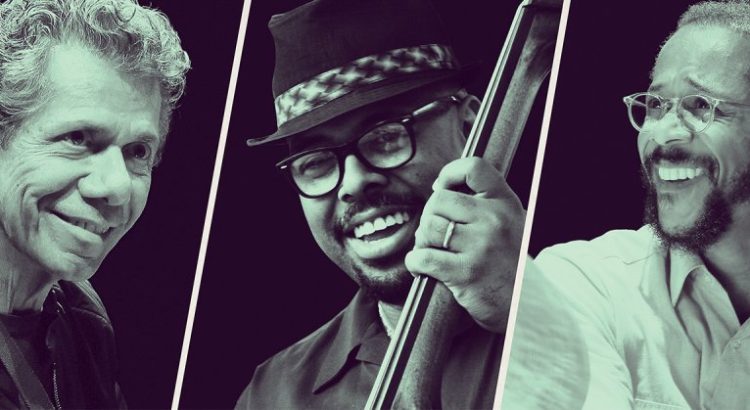
The Saturday evening performance by Chick Corea Trilogy at Hill Auditorium featured jazz legend Chick Corea (the fourth most nominated artist in GRAMMY history) on piano, Brian Blade on drums, and Christian McBride on bass, and it left no doubts that all three musicians have more than earned their place among jazz greats.

Christian McBride shone on the bass, garnering fervent applause from the audience every time he had a solo. In fact, he appeared to steal the show; as his hands flew across the instrument’s fingerboard, audience members shook their heads in disbelief that what they were witnessing was, in fact, real. When he pulled out his bow – which wasn’t until the third piece of the evening, Duke Ellington’s “In a Sentimental Mood” – the sound that rung from the stage was rich and warm, before he deftly slipped it back into its pocket and returned to playing pizzicato (plucking the strings). I, too, found myself smiling in awe each time McBride demonstrated his versatility and virtuosic skill.

While the trio performed several timeless works by the likes of Duke Ellington and Thelonious Monk, much of the set list comprised of arrangements by Chick Corea himself, including “La Fiesta,” “Windows,” “Spanish Song,” and what I found to be the evening’s most fascinating piece, “Scarlatti Intro Improvisation.” Performed as a lead-in to a keyboard sonata by 18th-century baroque composer Domenico Scarlatti, it pushed the boundaries of what was expected (in introducing the pieces, Mr. Corea remarked that he “tried to invite Scarlatti out for coffee, but it didn’t work out,” much to the audience’s amusement). In the first place, a keyboard sonata from the 1700s isn’t what one usually expects to hear in a jazz concert. However, Chick Corea’s ingenious lead-in capitalized further on this challenging of norms and included him playing the piano in unconventional ways. He plucked the strings of the open grand piano, and then ran his hand across the strings, creating new and creative sounds, and the audience loved it.

After several returns to the stage at the conclusion of the show, the trio performed “Blue Monk” by Thelonious Monk as an encore, and Chick Corea engaged the audience in the music. He would play a one of the piece’s short motifs on the piano, and then point at the audience to sing it back during the piece. The brief licks increased in complexity until by the end, all we could do was laugh when Mr. Corea pointed for us to sing. It was a memorable end to an evening of unforgettable jazz – when I walked down the sidewalk from Hill Auditorium a short while later, I was still humming those little tunes from “Blue Monk” to myself.

REVIEW: Rocky Horror Picture Show

This year marked my fourth year witnessing the Rocky Horror Picture show and my second time seeing the shadowcast at the Michigan Theater. The Leather Medusas, the group responsible for Ann Arbor’s contribution to the tradition of this cult classic, have again put on a great (sold out!) show that has gotten even louder and more rambunctious than before.


Beginning with an introduction from Penny Weiss (Janet’s cousin dressed in full Pennywise-chic drag, naturally), the show had energy through the roof. Doling out the rules, calling out the audience, and initiating the Rocky Horror Virgins in the most hilarious way, Penny Weiss was an undeniable icon that evening. She will be missed as it’s her last year performing, but she did go out with a wonderful performance as The Criminologist with a remarkable ensemble cast to match.


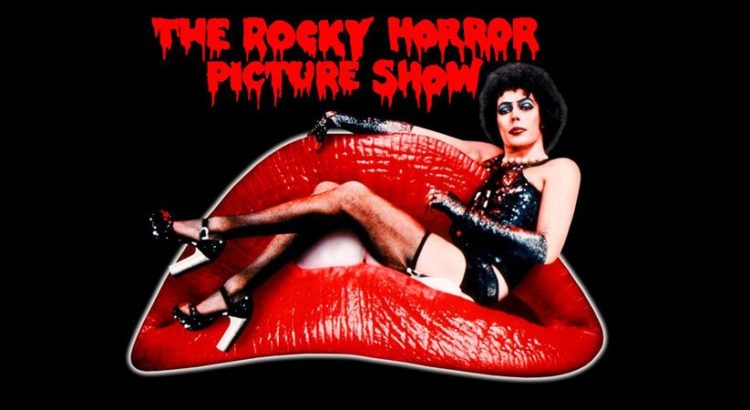
As soon as the curtains opened and the famous red lips appeared, people were not holding back with the call outs. At times there were so many people contributing to the cacophony that nothing was really heard but noise. It was amazing. Of course, where one sits determines the course of one’s night, and I had a pretty good spot. I was definitely getting a lot of noise, but every now and then a seasoned professional Rocky fan behind me would come out with some unexpected lines that caused the whole mezzanine to lose it. Central high points coming from the audience were the classics: an animated go at The Time Warp, a beautifully lit theater in There’s a Light (pictured), and plenty of playful oohs and cheers when the shadowcast got especially rowdy on stage.


Speaking of the actual stage work, the cast was fantastic. Sometimes I find it hard to not be mesmerized by Tim Curry’s amazing performance in the original, but throughout the movie I found myself watching and laughing at the little touches that made this student shadowcast special. Things like Eddie and Columbia’s impressive dance routine (complete with amazing, almost-gymnastic elements), Frankenfurter chasing Rocky up and down the theater aisles, and rampant, unabashed flossing brought something to the movie you just can’t get watching it on your laptop.


I highly encourage students to make Rocky a part of their Octobers next year (or next week– catch a showing that never fails to be hilarious at the Main Art Theater in Royal Oak if you missed this one)!!!

REVIEW: Joker

Joker is an oozing scab. It is the itching feeling at the back of your throat, the one that portends a particularly bad cold. It is raw and frustrating, petty and painful. It is a film that so much wants to be grand and ends up so very small. Much like the man at its center, Joker wants to be an exhibition, but not because it has any special message to send. Instead, it craves attention for its misery. It will slam heads into walls and then revel in its own unpleasantness. The entire film is an open wound, one that will not stop reopening itself.

From its very first scene, Joker kicks the audience with its grimy feet. Filmmakers have always used Gotham as an extension of their Batman’s psyche. In Christopher Nolan’s version, Gotham is sleekly modern, featuring a contemporary Batman who uses recognizable military tech. Then, there is Schumacher’s campy gothic Gotham with a Bruce Wayne who thought nipples on his suit were a good idea. This Gotham is another extension; this time a world as tightly twisted as Arthur Fleck. This city is wound up, ready to spring apart at the slightest touch. It has been a hot and smelly summer. The sanitation workers of Gotham have been on strike and there is no one to pay them. The prevailing smell of trash hangs over everybody as they trudge through garbage. The desperation is plainly obvious in their surroundings, but no one will admit that everything is collapsing around them. It is enough to break anyone.

Image result for arthur fleck

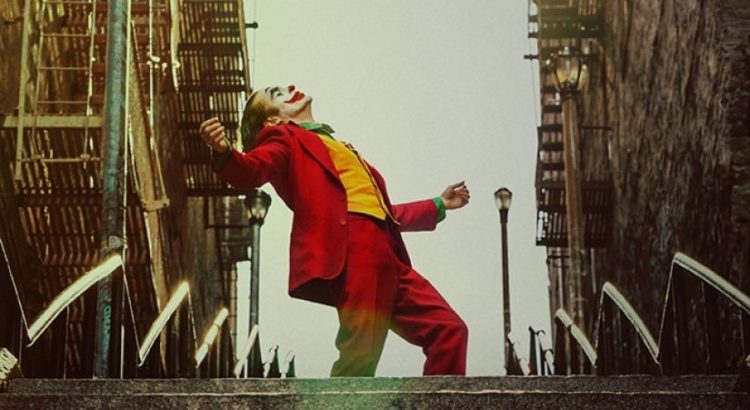
And Arthur Fleck (Joaquin Phoenix) is a man that is ready to be broken. He is alone in the world, taking care of his aging mother on a street clown’s salary. Society seems to take a glee in stepping on him, always ready with a kick or a punch to the stomach whenever Arthur gets even the slightest bit of hope. To make things worse, he has a particular condition that makes him laugh uncontrollably at inexplicable times. Joaquin Phoenix makes this helplessness chilling. At their most affecting, tears spring up in Arthur’s eyes as he tries to stop the laughter. At its most monstrous, the laugh becomes a slow chuckle. It is clear that Arthur has never been understood, and he is rarely cared for. Even his mother’s caresses seem possessive rather than loving. Arthur is seen not as a person, but as an object for disgust and ridicule. It is hard not to feel sympathy for this man who is always treated as less than one. But this is also the man who will become a mass murderer, a man who will take his suffering and spread it across the entire city. The film purposefully chooses to depict events from Arthur’s point of view. It makes him the punching bag, so that when he chooses to punch back, it is necessary to follow him to the bloody end. It leaves you with a feeling of complicity.

Image result for joker 2019

Understanding Arthur seems to be equivalent to supporting him. When does a film cross the line from creating a full-bodied villain to willfully supporting his actions? The separation between these two points of view is a thin boundary indeed, one that Joker never fully solves. The people who bully Arthur are cruel and vicious, yet they are protected from consequences by their upright societal standings. So, when Arthur splatters their blood across a subway platform, who are we supposed to feel sorry for? This is no victory. It is only violence, one that feels meaningless, a limp swing at a society that is too corrupt to care. Perhaps, this is the point. Perhaps Arthur’s violence is supposed to disgust us in its uselessness and depravity. But the film would dispute this too. For, within its boundaries, Arthur becomes a cult hero for other downtrodden people. They take his bloody acts as a symbol. It is when the film chooses to elevate Arthur that it clarifies its own message. The film suggests that many, an entire city, in fact, could be susceptible to falling to violence. This is a deep nihilism, one that suspects that there is a surge of destructive desire shallowly hidden within everyone. Rather than supposing the best, Joker assumes the worst about humanity. It is a film designed to make you feel vile about what you watched, about yourself even. Whether this is a meaningful sentiment to spread is debatable to say the least.

PREVIEW: Monos

As Halloween approaches, we are constantly confronted with all that scares us. Already, there have been plenty of creepy clowns and stabbing stalkers in theaters. However, there may be even more frightening things lurking out there in the world. For the eight children in Monos, that terrifying reality crashes down much more quickly than they would like. After all, their youth has not stopped them from carrying guns, from forming their own cult-like rituals, from taking drugs. But the situation becomes altogether more dangerous when they take a hostage. It is certainly a potent combination, ripe for cinematic drama. If you are looking for a different kind of fright this Halloween, Monos is currently showing at the State Theatre. Tickets can be bought online or at the box office ($8.50 with a student ID).