REVIEW: The Great Tamer

As I approached the Power Center, I was surprised that its glass windows were not completely tinted black after all. As the color of the sky darkened well past the setting of the sun, I could see the golden glow of the inside of the auditorium’s atrium from the outside, my destination. I rushed inside to escape the cold and to arrive at what would become the entire experience of The Great Tamer, from the very beginning to the very end.

The Great Tamer drew people of all ages and from numerous backgrounds; some you could tell were university students who chose to live their Saturday nights in a unique way, some were elder folk who were likely experienced attendees of artistic productions like this one. In essence, this production attracted the appropriate crowd as it consisted of artistic elements, universal morals, and common humor that would appeal to the different sides of many people.

The production began before everyone was seated. Even after calmly rushing up the concrete stairs to the balcony and being one of the first people in the auditorium to take their seat, I noticed that there was already a man lying on stage with his shoes off next to him, presumably dead. As people continued to enter, he stood up, put on his shoes, and stood facing the crowd, expressionless yet observant. When the production began, his character came to life in an intricate storyline.

The entire performance consisted of humans using simple props, strong body language without direct gestures, color and the lack thereof in their clothing and in the setting, and panels that made up the stage floor to communicate various vignettes in what seemed to be a metaphorical way. It was probably not entirely correct of me to think of every action that occurred as a metaphor, but I felt that it was easiest to understand the purpose of a specific scene as an analogy to what occurs in real life, such as death and grasping onto life, letting go of a loved one, being overthrown by one’s own kind, the equity or lack thereof between man and woman.

The ten performers were masters of sleight of hand and melodramatic theatre; I would follow the movement of one particular character in a scene and suddenly witness him or her consistently pull an item out of the air that they couldn’t possibly have carried behind them or in their shadow. They carried a sporadic and vibrant essence throughout the performance, using the black floor panels to disappear and reappear in an instant, to portray the absence of a physical object in space, and to reconstruct different settings.

The final scene resonated with me the most; after some commotion, one man remained. He had a square of gold and silver foil, tossed it in the air, and kept it suspended by constantly blowing air up from beneath it. The stage was dimming, you could see him moving impossibly to keep the foil floating, and as the stage darkened completely, he gave one final breath and it was over. In this moment, I was stunned by the caliber of the performance I had just witnessed and almost felt that there would be no way to explain or justify it in the words I would write for this post. Even so, I am ecstatic that I was able to give even a glimpse of this performance to the public with this post and hope that Dimitris Papaioannou will continue to touch the psyche of many with performances like this.

REVIEW: SMTD Collage Concert

Advertised as an evening of non-stop performances, SMTD’s 42nd annual Collage Concert certainly lived up to expectations. Featuring Symphony Band, University Symphony Orchestra, Chamber Choir, Orpheus Singers, Digital Music Ensemble, Jazz Ensemble, and numerous other groups of students from within the School of Music, Theatre & Dance, I was thoroughly impressed by the professionalism of the production.

For one thing, if you’ve ever been to a collage-style concert before, you may be picturing a performance where half the time is spent waiting for set changes or performers to get to their places. This could not have been farther from the truth. The evening was truly exhilarating in the fact that there were quite literally no open spaces, or even a space to breathe, within the program. It was a wild ride of performance after performance, rapid-fire, with no breaks save intermission. The concert opened with a work called “Sound Piece” performed by the Digital Music Ensemble, and before the last note had finished ringing in Hill Auditorium, or before I could even realize what was happening, Symphony Band had already dropped the down beat of “War” from War and Peace by Michael Daugherty. The logistics and planning that go into the production of Collage must be mind-blowing, and yet it was pulled off without a hitch. The lighting changed, performers switched places on stage, and instruments were moved, all without the audience taking note.

I particularly enjoyed that the concert showcased the full range of SMTD’s performing arts spectrum – music, dance, musical theater, and theatre. The Collage Concert was an opportunity to experience the offerings of groups that I might not otherwise hear or see perform.

One of the most impressive, and entertaining, performances was Melissa Coppola and Annie Jeng’s rendition of Franz Liszt’s “Hungarian Rhapsody No. 2.” The penultimate performance, it was the one act for which the audience broke out in applause, despite the request in the program to “please hold applause until the end of each half!” Not only was it a virtuosic performance, the entire piece was a theatrical production in which Ms. Coppola and Ms. Jeng comically gesticulated and shoved at each other. At one point one shoved the other off the piano bench and onto the floor. Near the end of the piece, there is a section of repeated ascending scales in which one performer played a scale, went running from the end of the piano bench, around the piano, and to the other side of the bench, all while her counterpart played the next scale, only to arrive to the bench again to smoothly play the next scale while the other performer ran around the piano, and so the cycle continued. At the conclusion of the piece, the two high-fived at the playing of the final chord. Perhaps most impressive was that amid all the show and staged chaos, the piece was being played smoothly and expertly, such that it would have been stunning even without the theatrics!

Another of my favorite pieces performed was “Nimrod” from Elgar’s Enigma Variations. An orchestral classic, it is melancholy, thickly orchestrated, and a pleasure to listen to.

I expected a great concert, but the Collage Concert far surpassed my expectations. It was a fantastic evening that I thoroughly enjoyed, and the two hours that it ran for passed in the blink of an eye!

PREVIEW: Universal Declaration of Human Rights: Linocuts by Meredith Stern


If you’ve never heard of the Universal Declaration of Human Rights, you aren’t alone. Meredith Stern’s prints, currently on display in the Special Collections Research Center of Hatcher Graduate library, are meant to raise awareness of the document and commemorate its 75th anniversary. The exhibition will continue through February 1, 2019.

In 1948, in the aftermath of World War II, the United Nations General Assembly adopted a document, called the Universal Declaration of Human Rights, meant to define the rights that every person is entitled to – rights known as human rights. These include rights such as equality, freedom of religion, and access to food and shelter. There are thirty rights total outlined in the document. Largely the result of the efforts of former first lady and U.N. ambassador Eleanor Roosevelt, the document’s purpose was to prevent egregious transgressions against humanity as occurred during World War II. You can read the full document here.

The issue with the Universal Declaration of Human Rights is that is isn’t law. Just read the news, and it becomes obvious that there are people whose human rights are violated on a daily basis.

Visit the exhibition Universal Declaration of Human Rights: Linocuts by Meredith Stern to enjoy some art and increase your awareness of human rights. Each of the prints illustrates one article of the Universal Declaration of Human Rights, and there are a total of 14 on display.

The exhibition is free and open to all. The Special Collections Research Center is on the sixth floor of Hatcher Graduate Library, and it open from 9am to 5pm on weekdays.

PREVIEW: SMTD Collage Concert

Want to go to a performance, but not sure you want to commit to several hours of the same thing? Join the School of Music, Theatre & Dance for the annual Collage Concert, which will take place on Saturday, January 19 at 8 pm in Hill Auditorium.

“The event’s design is unique, featuring all ensembles and departments of the School performing one arresting work after another in rapid-fire order.” This means that you can expect to experience some amazing performances of classical music, jazz, theater, musical theater, vocal music, dance, and more.

Don’t miss this SMTD tradition. Tickets may be purchased online, or at the Michigan League Ticket Office (open 10am – 1pm on Saturdays). Seating is reserved, and tickets are just $12 for students, or $34 or $28 for non-students, depending seat location.

PREVIEW: Paved with Good Intentions

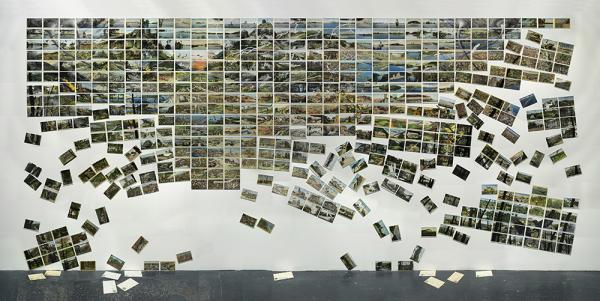
Current U.S. culture and politics is riddled with fake news and exaggerated fearmongering. Paved with Good Intentions is a satirical installment critiquing this era with drawings on vintage postcards of American landmarks and destinations composed into a gridded landscape that mirrors today’s environmental chaos. In addition to the postcards, animated shorts and script-driven video in relation to the postcards are played. The exhibition opens on January 25 at the Institute for the Humanities with an opening reception and a panel discussion, “Good Intentions: Is Art an Effective Means of Activism?”, featuring artist David Opdyke, journalist Lauren Sandler, art historian Tara Ward, and arts curator Amanda Krugliak. This installation explores the power, or lack of power, that the arts have to address political and social issues. Open until February 26, you have a month to stop by the Institute for the Humanities to see this impactful mural.

PREVIEW: CMENAS Film Screening: “Rachel”

The first film to kick off a series organized by UMich’s Center for Middle Eastern and North African Studies, “Rachel” is the story of a young American woman who was killed tragically while fighting for peace in the Gaza strip. Her death had little coverage in the time it occurred, and though witnesses claimed it was an intentionally committed murder, American and international investigators brushed it under the rug and soon forgot about it. With the poignancy and engagement of a great storyteller, director Simone Bitton does the work that should have been done during her tragic death, showing the injustice of Rachel’s story and the larger Palestinian narrative in which is takes part. You can watch this film on 4:00pm – 6:00pm in Weiser Hall – Room 555. It is a free screening.