REVIEW: Ann Arbor Symphony Orchestra’s Music from Video Games

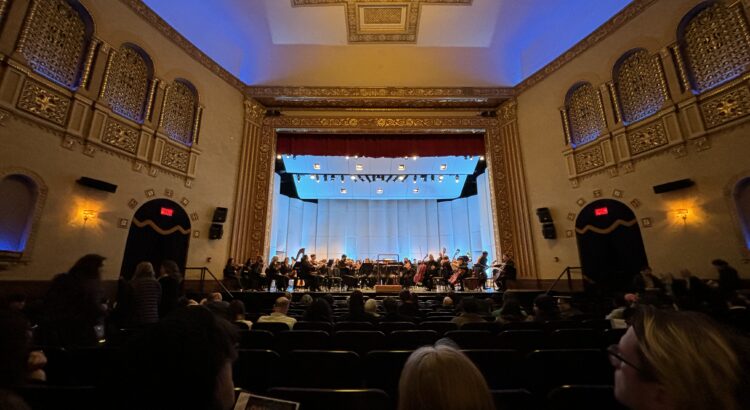
On Saturday, November 17th at the Michigan Theater, the Ann Arbor Symphony Orchestra held a concert called Music from Video Games, which was the opening night of their 2023-2024 Pops season of performances. They played various arrangements and medleys of the original soundtracks of Super Mario Bros., Final Fantasy, The Legend of Zelda, Halo: Reach, and more. I love playing video games and I’ve always enjoyed concerts more when I was familiar with the music, but even for the music from games I haven’t played before like Metroid or Mega Man, I still had a good time. 

In addition to having music unique to each specific game, video game franchises such as Pokémon, Mario, Zelda, etc. all have iconic tunes for various occasions: healing, leveling up, losing a life, opening a chest, and many more. It’s similar to how McDonald’s has their famous jingle “I’m Lovin’ It”. The music is a core part of the game; listening to it is enough to embody the experience of playing it. The arrangements and medleys created a fun blend of familiarity and anticipation that made it super exciting whenever my favorite melodies came up.

The best part of the night for me was the concertmaster’s solo which was a bittersweet rendition of The Legend of Zelda’s main theme. The entire medley included OSTs from some throwback games like Spirit Tracks (2009) to the more recent Breath of the Wild (2017). It took me a bit to even realize the music was from Spirit Tracks until I heard the percussion using instruments to replicate the sounds of a train traveling on railroad tracks. My only wish is that there was a bigger feature of Zelda’s theme, perhaps with another violin solo or even better, a harp solo.

Music truly has such a big impact on the gaming experience and is actually something I listen to in my free time. For people who don’t have much experience with video games, it may seem bizarre, but I highly recommend listening to some tunes from Zelda as a start. It was genuinely a great event and I’d love to come back again next year.
 

REVIEW: Things Hidden Since the Foundation of the World

7:30pm • Wednesday, Nov. 15, 2023 • Arthur Miller Theater

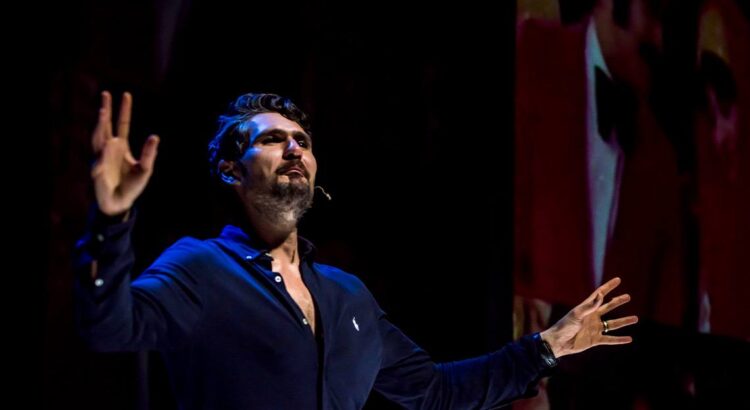
Things Hidden Since the Foundation of the World, a multimedia, experimental theater performance which I experienced last Wednesday, told the true story of iconic Iranian pop star Fereydoun Farrokhzad’s unsolved murder. At the same time, many stories collided to provide context for and complicate the idea of “solving” a murder mystery. The performance challenged the idea of “knowing” itself, contending with the maxim: “The more you know, the more you understand.” 

This performance was the third in a trilogy written by the Javaad Alipoor Company, named for the show’s co-writer and artistic director (as well as performer), Javaad Alipoor, a British-Iranian artist. At the beginning of the performance, Alipoor spoke to the audience and described himself as a bridge between the audience and the reality of the Iranian diaspora, one which would help us better “understand” a reality potentially foreign to ourselves. Alipoor wove his story and his heritage into the fabric of the performance, winding it around that of Farrokhzad. He also brought in another thread through his collaboration with Raam Emami, better known as King Raam, an Iranian/Canadian musician whose podcast, Masty o Rasty, has a cult following among Persian-speakers and has been streamed more than 20 million times. The show used a combination of media, including spoken word, video, and true-crime podcast to bring the three men’s stories together. 

As I referenced earlier, Alipoor prefaced the show by speaking on our constant desire to know things, in order to understand the world better, and how modern technologies like Wikipedia can serve that desire. For a moment of audience participation, Alipoor asked us all to get out our phones and use Wikipedia to look up a word shouted out by the audience: “cuscus,” a kind of Australian possum. He had us skim the page and click on the first link that looked interesting, and continue doing so, for a minute. He then used this activity to challenge the idea that reading anything on the Internet, or gaining any kind of knowledge, will necessarily allow us to understand another reality. By framing the performance in this way, Alipoor challenged the proposition that by watching a multimedia performance about the murder of Fereydoun Farrokhzad, we would somehow “understand” his murder, or the broader set of stories which form the Iranian diaspora. 

I found this performance completely fascinating, and it made me think more deeply about how I consume and use information in my daily life. For me, it highlighted the importance of cultural humility: a balance between awareness and appreciation of other ways of being, and the knowledge that we can never truly understand another’s experiences. In the absence of understanding, empathy is essential. Things Hidden Since the Foundation of the World pointed out that even in our highly digital, information-saturated lives, there are some who have been made invisible to us, and it is our obligation to be aware of (and assist in) their struggles.

REVIEW: The Inspired Show

Every fall semester, Kappa Phi Lambda Sorority, Inc. hosts the Inspired Show; this year it was on Saturday, November 11th from 4-6 PM at the Ross Robertson Auditorium. On Instagram (@umichkpl), the sorority said this event “seeks to showcase a variety of cultural performances, mixing modern and traditional elements to bring Michigan exposure to various Asian performing arts,” which it certainly did.

There were 8 performances. In order they were:

Female Gayo (@femalegayo)

Photonix (@umphotonix)

Kappa Phi Lambda Sorority, Inc. (@umichkpl)

DB3 (@db3_umich)

Seoul Juice (@seouljuice.umich)

VeryUs (@veryus.umich)

Revolution (@revolutionyoyo)

Moli (@moli.umich)

K-Motion (@kmotion)

I’ve watched and reviewed the majority of these groups before, many of which performed at Celebrasia. However, although the Inspired Show was only a week later, Female Gayo had a completely new set that ended with an original choreography they made to the song Money by Lisa from Blackpink and had the fun addition of shooting dollar bills into the air at the end.

Photonix is a crowd favorite and I wish I got to see more of them. They use glow-in-the-dark items to create rhythmic visual art by manipulating neon lights to music in pitch blackness. Much of the choreography involves teamwork, which is super impressive since the team must work together without being able to see. My favorite parts are when they hit the floor to change colors on a beat drop. Unfortunately, I couldn’t capture their performance well enough on camera, so take the chance to see them in person if you can!

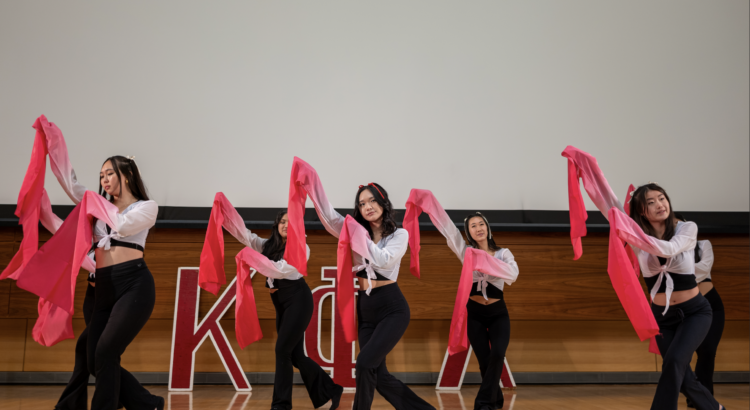
I saw the sisters of Kappa Phi Lambda perform at the Yardshow, but they prepared two additional choreographies for their event: hip-hop and cultural. Their cultural dance is pictured above and it was the highlight of the show for me. Many groups use fans or umbrellas as props, but it was the first time I’ve seen the beautiful white and red long sleeves they wore. In addition, the music they used was purely instrumental, which was a nice contrast to the other music throughout the show. It truly felt like a cultural dance rather than a dance that just uses cultural props.

The Ross Robertson Auditorium is a nice venue; the only thing I wish is that the lighting had a spotlight on the stage to give it a more immersive atmosphere. Nevertheless, it was nice being in a new and comfortable environment.

Although there are a lot of parallels to Celebrasia, I recommend attending the Inspired Show. It’s a good opportunity to see different performers, such as Photonix and Moli, and new choreographies like Female Gayo’s. All proceeds are donated to the Ann Arbor Community Center, so you can make a difference and have fun at the same time.

REVIEW: The Silence of the Lambs

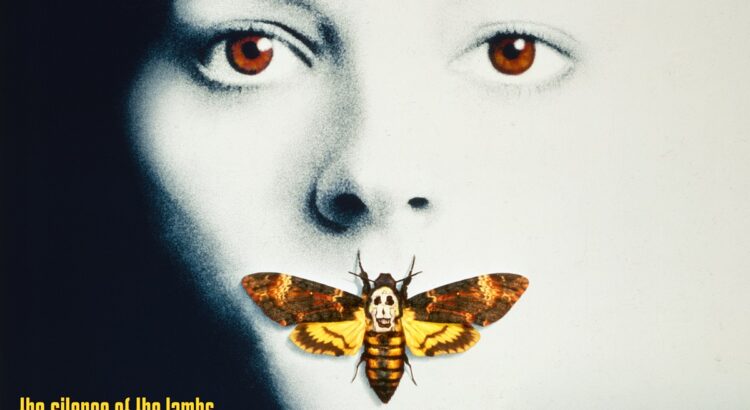
Every so often, the Michigan or State Theater will screen a classic— last Thursday, it was The Silence of the Lambs, the quintessential 1991 psychological horror, directed by Jonathan Demme and starring Jodie Foster and Anthony Hopkins. I went into the screening without any expectations, knowing only that the film involved a cannibalistic serial killer fittingly named Hannibal and I could probably expect gore. The horror was done incredibly well, but the genius of The Silence of the Lambs is that the gore and terror of murder were only a fraction of the film’s emotional appeal. Demme fills each scene with the psychological unease of reality as the story follows an FBI trainee, Clarice, who is constantly shown to be looked down upon or disrespected because she is a woman. The script declares this outright with creepy remarks from higher-ups and even from Hannibal himself, but this is also accomplished with careful framing: throughout the movie, close-ups force us to stare into the eyes of men as Clarice sees them, hauntingly blank or grotesquely hungry, eyes either pointing condescendingly down at the camera or unnervingly straight into our own. Clarice is often alone, often being hit on or disregarded by serial killers and FBI agents alike, and cannot avoid it despite her skillful maneuvering of misogynistic encounters. This inspires a very real fear rooted in our awareness of her vulnerability. We’re quick to doubt the intentions of the film’s men— which is where the character of Hannibal becomes complicated, who should be the easiest to distrust.

Clarice and Hannibal are expertly crafted, and their relationship keeps us on our toes. Close-ups of Hannibal, played perfectly by Anthony Hopkins, reveal his sunken features, his icy and unblinking stare, and the sense that every word is part of a secret, sinister plan; close-ups of Clarice reveal unwavering confidence and sly intelligence. The interrogation scenes between the two are laden with tension and electricity, the investigation unfolding to be double-sided as Hannibal and Clarice race to break each other down. As the film progresses, this relationship becomes tangled and unclear; despite being the most clearly deranged and untrustable character, Hannibal treats Clarice with more respect and curiosity than the rest of her peers. The psychological horror of the film lives largely in this relationship as we struggle to decode Hannibal’s intentions and predict his next move.

The Silence of the Lambs is evenly polished: the score is haunting but not overbearing, each scene is intentional, and moments of crude humor balance the gore. I can see how this film earned so many awards and became a classic— it has a cinematic simplicity familiar to the 90s, attaining the perfect balance of explaining some while leaving some to the imagination. Besides the more fast-paced third act, our fear relies on insinuations about what happened or what’s going to happen, close shots of corpses and bloody nail marks down a wall. The only point of the film that left a sour taste in my mouth was the film’s handling of Buffalo Bill, a serial killer who believes he is transgender and who multiple characters claim isn’t truly transgender, but rather psychologically confused and tormented on a more complex level. As much as Buffalo Bill is distanced from the transgender community, described as obsessed with transformation and envious destruction rather than conventions of gender, his portrayal aligns too closely with common stereotypes about transgender women being deceitful predators. The social commentary is fitting for the time of its release, and it is nuanced, but given this film’s insane popularity, it’s inevitable that some audiences would fit this portrayal into pre-existing biases and fail to critically analyze the character.

I loved the experience of watching this movie for the first time in a small theater; the audience was visibly excited, gasping at gory shots and laughing at absurd one-liners. The big screen amplified the intensity of close-ups and the architecture of the old theater amplified the nostalgia of the early 90s. Keep your eyes peeled for the next screening of a cult classic in downtown Ann Arbor, and keep a weekend night open so you can catch one; student tickets are only $8.50!

REVIEW: Creative Arts Orchestra

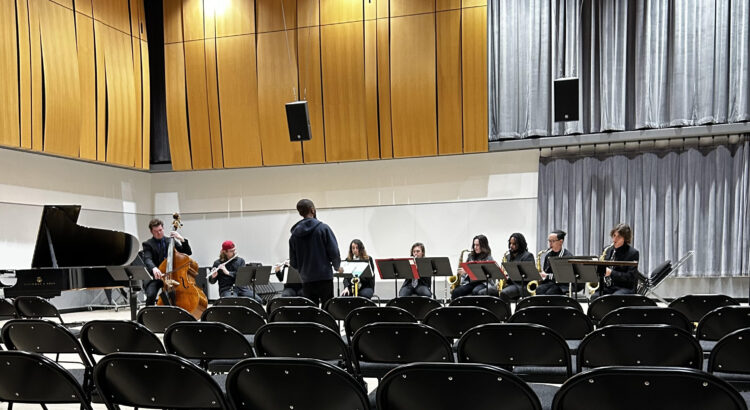
Creative Arts Orchestra is an experimental modern music group at the University of Michigan’s School of Music, Theater, and Dance, directed by Marcus Elliot. It’s specific to the jazz department, but there are a range of participating players among the music school’s student body. This is one of the most unique ensembles at the University, emphasizing improvisation and feel over Western structure and harmony of music. They often invite interaction with other performance fields such as dance, theatre, and music technology.

The ensemble features 9 students, with a few of the players doubling on 2 or 3 instruments. The orchestra includes double bass, flute, clarinet, tenor sax, baritone sax, alto sax, and trumpet. At least 3-4 saxes were playing at a time due to the instrumentation, so the sound came off particularly bright. The double bass carried the darker, grounding sound in the music and was necessary texture-wise. The group has a truly unique way of blending, demonstrating the high level of musicianship present. 

As for the performance, the music sounded atonal and arhythmic. There wasn’t a specifically defined structure of what notes to play, but each piece was still quite different. Marcus Elliot, the conductor, chose certain moments to cue everyone in for a tutti line or harmony, but he was not overly controlling of the ensemble. I did not get to see what the player’s scores looked like but I assume they are somewhat free with little actual notation based on how the music sounded. 

I noticed if I tuned out of the moment, this ensemble sounded like noise. It reminded me how humans cling to structure in every aspect of life, including something as ambiguous as music. We anticipate “A” sections and a bridge that leads us back into a repeated “A” section, along with harmonies that are comfortable to our ears. This ensemble takes a hard right turn on that construct and plays into the emotion of a moment while creating an atmosphere for the listener with the various timbres of instruments. I respected the hyper-focused nature of the ensemble regarding this. They prioritized settling into the moment of the music and the group’s sound. 

The set featured compositions by members of the ensemble including Noah Pujol, MM Clarinet 23’, Houston Patton BFA, Jazz 23’, and Marlena Boedigheimer, MM Jazz 24’. Often their selections started with a theme and transitioned seamlessly into group improvisation. It felt like a portrait of a moment and the instrumentation that was present within the sound. 

Half-way through the concert, they featured Canadian pianist, Kris Davis. She is a Vancouver-born jazz-pianist and composer with a variety of discography available. I appreciated how much the sound was expanded once a pianist entered into the space. I enjoyed the complexity added to the music by Davis. There are more options with the instrument which allows for lower notes to be added into the music.

There’s a certain meditativeness to the music, and a smaller audience reinforces the intimate experience of the concert.  This ensemble is something to be perceived in real time, to properly absorb the spur-of-the-moment cultivation of the atmosphere. Most of all, this was an experience of collective sound along with talented musicians presently existing alongside one another. If you are interested in experiencing this, the next Creative Arts Orchestra will be on March 14th, at 8 pm in Hankinson Rehearsal Hall in the Moore building on North Campus. They will be playing with SMTD alum Mat Endahl! 


Image by Caitlyn Bogart.

REVIEW: Celebrasia

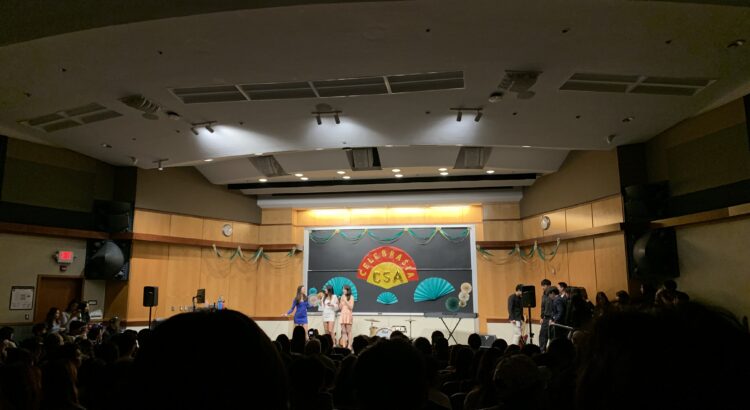
On Sunday night, November 5th, the Chinese Student Association (@csaumich) collaborated with 24 other organizations to host its most popular event: Celebrasia. Each year it takes place in Angell Hall Auditorium A, making Mason Hall so crowded it’s hard to walk through and meet up with friends.

The performances were scheduled to begin at 7 PM, but like in the past, the seats were already half filled when the doors opened at 6:30 PM. By 6:50 PM, people began to sit in the aisleways and soon after, they closed the doors to the public. This year, CSA did a really good job of organizing the event; they guided the audience well, had quick transitions between performers, and there weren’t any sound issues.

There were a total of 12 groups, some familiar and new. In order they were:

Seoul Juice (@seouljuice.umich)the band under the Korean American Student Association (KASA). In my freshman year, they were a very small group, so it’s great to see how much they’ve grown not only musically but in popularity.

Annappella (@annappella.a_cappella), a co-ed Chinese acapella group. It’s the first time I’ve heard of them and they’re also the first acapella group I’ve seen on campus. They were really good at harmonizing and the male student in the center sang a majority of the melody with a soulful yet gentle voice.

Revolution (@revolutionyoyo): the Chinese Yoyo team. I always love how hype the crowd gets when watching them do tricks and flips.

Flowdom (@flowdom.umich): a co-ed hip-hop dance team. They added more flare to the selection of dance performances and I was really impressed by their charisma.

K-Motion (@kmotion): an all-female K-pop dance group. As always, they served an amazing assortment of K-pop songs with talent as well as their iconic confetti.

Blue Records (@blue_records_group): a student organized record label that arranges and produces their own music, although they did a cover at Celebrasia. The guitarists in particular stood out to me because they sounded just like the studio track.

Konnect (@konnect_umich): the largest and most inclusive co-ed K-pop dance group on campus. The amount of performers and rotations they had were astounding.

Sanya Bhati (@sanya_bhatia): a student soloist pursuing Drama in the Residential College. Her set was definitely one of my favorites. She had a charming presence and commanded the stage with only a backtrack accompanying her powerful and clear vocals.

Female Gayo (@femalegayo): the all-female K-pop dance group under KASA. In addition to their coordinating outfits,  their synchronization as a team is out of this world. From the timing of bold hair flips to the subtle flex of their fingers, nothing felt out of place when viewing them as a group.

VeryUs (@veryus.umich): an all-female dance crew that aspires to highlight multiple cultures in Asia. I appreciate that they focus on diversity and inclusion of not only cultures but music and dance.

rXn (@rxn_umich): the traditional and modern hip-hop co-ed dance group under CSA.

DB3 (@db3_umich): the all-male K-Pop dance group as well as the crowd favorite. The cheering never stopped during their entire set, which was a fun way to end the night.

The University of Michigan has so many gifted students outside of SMTD too, and I can’t do all of them justice with this review. I highly recommend attending Celebrasia in the future, even if it’s just for part of it! It’s a free event and a great way to meet more of the community.