REVIEW: Dear Evan Hansen

Dear Evan Hansen, 

When I saw you were becoming a movie, I admit, I was skeptical. You’re the freshest in a growing list of musicals turned movies, a recent trend that I’m not sure how I feel about yet. A theatre kid at heart, I knew the music and storyline from Dear Evan Hansen before I walked into the screening. Wondering how the transition from stage to screen would play out, I came in skeptical but interested. 

My main hesitation with movie musicals is that the mashing of these forms can often feel confusing, if done improperly. When attending a musical, the audience is expecting the music as part of the storytelling. In a movie, the ability to shoot in an authentic setting can create enhanced realism, which can’t always be done on stage. When someone starts singing out of the blue in a movie, it feels especially out of place when the rest of the film feels so real. I felt particularly jarred by it in Dear Evan Hansen, which utilized silence in its non-musical parts so well, I started to wonder what this movie would look like without the musical element everyone was expecting, and if it could stand alone that way.

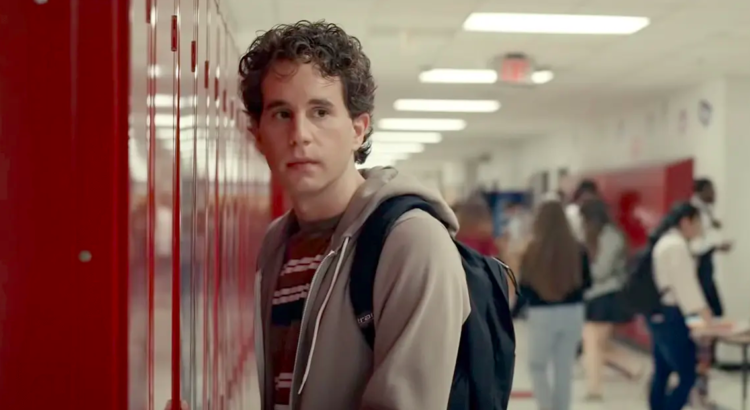
Another one of these skepticisms came from the age of Ben Platt, the originator of the role of the titular Evan Hansen. We are no stranger to seeing actors well out of the age range play high schoolers (ex. Grease, Stranger Things, etc.), and Platt has spoken up against critics who said he’s too old for the role. While I agree that it’s irritating to continue to see high schoolers played by much-older actors, I have to admit Platt’s performance is exceptionally extraordinary. Platt’s ability, especially repeated times a week on stage, to portray a severely anxious high schooler and snot-cry while singing, is incredible. It comes from a place of deeply understanding and embodying the character of Evan Hansen, and it times it’s hard to watch because of its rawness. 

Speaking of snot-crying… While the storyline is emotional and heavy, I couldn’t help but feel the movie was perhaps a bit too self-indulgent at times. There may have been a smidge too much screen time for tears and pensive expressions–and the removal of some of the more upbeat songs from the original musical only added to the darker tone of the film version. 

While some original songs were missing, a few new ones were added. I appreciated what they did here–it seemed, in this way, that they were moving towards making the movie its own meaningful thing, rather than a copy of the musical version. The movie slightly departs by featuring certain characters more, increasing the diversity factor of the film and touching on different ways mental health shows up in different people’s lives. (Hint: Alana gets a more fleshed-out character development, and we hear more from Connor!)

Overall: Did I cry? Yes. I’m not afraid to say that the topic of mental health and suicide hits quite close to home for me, and I’m thankful for the way DEH doesn’t shy away from the tough stuff. Did I laugh? Yes, in the brief snippets of comedic relief. In the end, I would recommend it as separate from its musical original. For those of us who need to hear it, DEH reminds us: You are not alone. You will be found. If you’re feeling up for a powerful, emotional story, go check it out when it releases on September 24th! 
REVIEW: Funkwagon || Sabbatical Bob || Midnight Mercedes

When COVID-19 was at its height, live music was the thing I missed maybe the most. Music, in my belief, has a special way of bringing us all together–whether it’s dancing, congregating at concerts, or just the act of sharing favorite tunes in the car or in living rooms. When live music as we knew it temporarily shut down, I found myself longing for the environments of concert halls and music venues. Listening to online performances kept spirits up, but when I got the chance to walk into the Blind Pig again this weekend, to feel the bass and drums reverberate in my body, something came alive in me again.

Even if you’re not a self-proclaimed fan of funk music, I believe there’s something for everyone to enjoy in the infectious drum beats and groovy bass lines. As my friend who attended with me admitted, “funk is sexy, in a fun way.” Music that invites your body to move, invites you to cheer. Music that commands your attention. Mixed with the transportational qualities of a nighttime neon-lit music club, I truly felt like I was elsewhere, in the space that the music created for us.

This night of funk music opened with Midnight Mercedes, a small Michigan funk band with killer vocals and a tenor saxophonist with an eye-catching light-up neck strap. The vocalist, draped in a rainbow giraffe-print dress, sang with soul and smiles, sending chills down my spine with her strong sustained notes. 

Next, we heard from Funkwagon, a gospel-infused funk band based in Detroit, MI and Burlington, VT. Lead keys giving equal energy to his vocals, splitting into ear-pleasing harmonies with the other instrumentalists. More often than not, I found myself smiling at the pure life radiating from the music on stage.

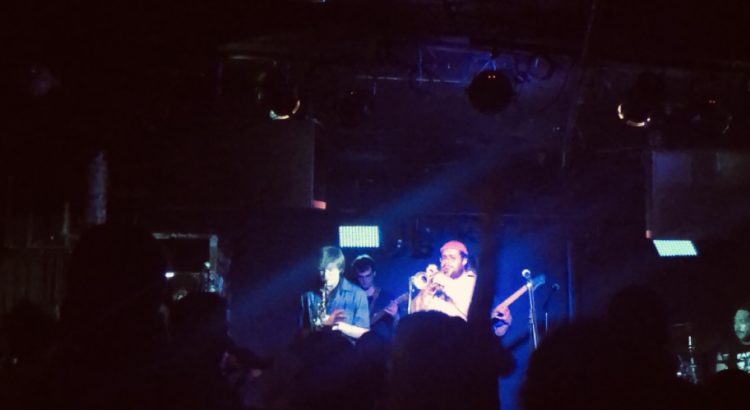
At that point, it was getting late for me, but I stayed for one of my favorite Ypsilanti-based groups, the incredible Sabbatical Bob. Describing themselves as “high-energy funk,” I was glad to hear them play after a year of witnessing their performances through a screen. While it was still great to hear them perform at events like Dance for Democracy, there is something irreplaceable about being there, about being able to feel the sound of the trumpet and sax, tearing up tunes while the audience around you bops along. 

It was an incredibly fun night out, and I encourage everyone to go out and support your local music venues and musicians. It’s been a tough year and a half for all of us, and we can all benefit from the arts. Get out there and get your groove on!

PREVIEW: Stephanie Dinkins: On Love and Data

Stephanie Dinkins is a renowned transmedia artist who has made a name for herself by speaking through her art on subjects such as race, gender, aging, and the future of humanity. She is particularly driven to work with communities of color in order to create a more equitable environment in which we can all thrive. Her work in On Love and Data explores the use of interactive displays and workshops in order to expose her viewers to the world of Afro-now-ism. The term Afro-now-ism, I think, is best explained by Dinkins herself in a NOEMA magazine article titled: “Afro-now-sim: The unencumbered black mind is a wellspring of possibility”. Dinkins states: ““Afro-now-ism” is the spectacular technology of the unencumbered black mind in action. It is a willful practice that imagines the world as one needs it to be to support successful engagement — in the here and now.”

I’m especially excited to see this exhibit because of its interactive qualities and the presence of transmedia. As an architecture student, exhibits with these particular traits tend to spark the most inspiration for my own work. I’m also looking forward to learning from the exhibit itself and experiencing how Dinkins speaks through her art.

Don’t miss this exhibit! It runs Wednesday through Saturday  from 11:00 to 5:00 in the Stamps Gallery until October 23rd. As an added bonus, the event is completely free!

If you would like to read more of Dinkins in NOEMA here is the link:

Afro-now-ism


REVIEW: The Four Winds

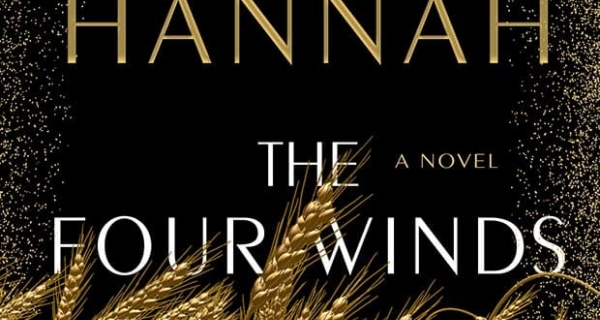
Set in the 1930s and telling the story of a family who fled Dust Bowl-ravaged Texas for California, The Four Winds by Kristin Hannah is not a comfortable book to read. That said, however, its descriptive prose and well-developed characters has the potential to draw readers in, and certainly kept me turning to the next page. Furthermore, despite the immense pain contained in the book’s pages, there is also an undercurrent of hope and survival, making it a worthwhile read in the current times. At over four hundred pages long, it is an excellent book for summer reading.

Elsa Martinelli, the main character of the book, is a woman who does not know her strength. As a young girl, a heart condition kept her from participating in many activities. Her family treated her as weak and as an outsider, and the resulting feelings of inadequacy haunted Elsa in a failing marriage and into middle age. However, she rises from these ashes to find family in her children and mother- and father-in-law, whom she fights fiercely for. This fierce love leads her to make one of the toughest decisions of all – to leave the Texas farm that is her family’s livelihood, but where everything is dying as a result of the dust storms, in search of a better future for her children.

However, life is not automatically better in California. Although the Martinellis escape the dust and its associated health consequences, work is hard to come by. Migrants fleeing the dust storms, referred to by California locals by derogatory terms such as “Okies” or “your kind,” were forced to live in inhumane tent camps, scraping together money to afford the most necessities. Though the story takes place nearly a century ago, it is hard to read it and not draw comparisons to the treatment of twenty-first century immigrants and refugees. So much progress has been made in so many areas since then, and yet we still tolerate, and even perpetrate, the same gross violations of human rights and dignity:

“Elsa couldn’t believe people lived this way in California. In America. These folks weren’t bindle stiffs or vagabonds or hobos. These tents and shacks and jalopies housed families. Children. Women. Babies. People who had come here to start over, people looking for work.”

However, fortunately, the human spirit also remains today as it did in the 1930s. In the Author’s Note, Kristin Hannah observes that strength can be drawn from others’ persistence in past hardships and applied to current struggles like the pandemic: “We’ve gone through bad times before and survived, even thrived. History has shown us the strength and durability of the human spirit. In the end, it is our idealism and our courage and our commitment to one another – what we have in common – that will save us.”

Even when things kept getting worse for the Martinelli’s when it seemed as though it was already as bad as it could get, they held onto one another, to friends, and to hope for better days. That is a message well worth four hundred pages.


REVIEW – Please Stand By: The 2021 Stamps School Senior Exhibition

Please Stand By: The 2021 Stamps School Senior Exhibition is a virtual showcase that highlights the work created by the graduating students of the Penny W. Stamps School of Art and Design. As a featured artist myself, I can personally claim that the creative process has been immensely complicated due to the COVID-19 pandemic. However, evidenced by the impressive display, the unprecedented conditions we’ve experienced together this past year have not prevented our collective perseverance and the creation of astonishing projects! Even though it is saddening that most senior studios went unused, I couldn’t be more proud of my fellow classmates for advancing their practice and fostering immense creative and professional development through their studies. Congratulations! 

That being said, if you haven’t checked out the exhibition, you should definitely give it a look! Here is the webpage: https://www.stampsgrads.org/classof2021/senior-exhibition/. Ironically, even though everything is digital, we have amassed a lengthy selection of books. In Between: este lado y el otro lado by Olivia Prado, a multidisciplinary artist, is a book that resists preconceptions of Mexican-American identity through the juxtaposition of poetry, drawing and painting, photography, and text messages with family members. Prado intentionally creates a multi-faceted narrative that contends with expectations for artists of color to reduce personal experiences to simplified concepts for white viewership and consumption. By offering a variety of rich and formative experiences, Prado opens a space for people to better understand, yet not entirely, the complexities of personhood as it relates to the communities we are a part of.

Additionally, because the website format allows for each artist to upload up to ten documentation photographs, the display configurations of more sculptural works are highly mutable. This is applicable to the Parasitic Vessels: Forms of Disuse series created by recent-graduate Ellie Levy. Levy is particularly interested in the introduction of invasive protrusions and modifications to bowls as a question and critique to the utilitarian nature of ceramic design. Although, with this mutation comes a supplemental and beneficial quality to the human interaction with an object. How do we perceive the bowls differently? As the material body of the bowls are mutated, a fused identity is created through a balance that allows for new existence. The parasite becomes a catalyst for the imaginative.

These are two of the many amazing and captivating works in the exhibition, which will remain permanently in the digital space. I encourage you all to explore what we have created!


Artist Information:

Olivia Prado – Website: https://odprado.wixsite.com/oliviapradoart

Ellie Levy – Website: https://ellielevyceramics.com; Instagram: https://www.instagram.com/erlceramics/

REVIEW: Broken Horses by Brandi Carlile

Despite being familiar with Brandi Carlile’s music, her new book Broken Horses took me by surprise. Generally, I would expect memoirs by artists to be enjoyable, perhaps gratuitous, for fans, but Broken Horses is, I daresay, of a different breed. It is impressive in its wisdom and authenticity, and a book that I would recommend regardless of whether the reader has listened to Carlile’s music.

The book chronicles Carlile’s life and development as an artist through present-day, and is punctuated by song lyrics (Carlile’s, as well as other songs and artists mentioned in the prose, including the Indigo Girls, Elton John, Dolly Parton, Johnny Cash, and others) and annotated photos. It is part narrative and part introspection, and it is self-deprecating, humorous, and raw.  The cast of characters is extensive, anchored in the center by Carlile’s musical “family,” including her bandmembers Phil and Tim, her wife, Catherine, and two daughters.  It is a vivid portrait of a human being who also happens to be a GRAMMY-winning singer-songwriter.

Broken Horses also traverses a wide range of themes in its three hundred pages: family, friendship, sexuality, religion, forgiveness, and many others. Carlile offers her thoughts and experience of each, without pretending to have all the answers. One of my favorite passages in the entire book is in relation to the genesis of the 2018 album By the Way, I Forgive You. In addition to its insight (even in its admission of lack of insight), it also, in my opinion, captures the essence of Broken Horses as a whole:

“Before I start sounding too earnest, understand that I wasn’t “teaching” forgiveness. I was and still am learning it. I’m not evolved. I’m as much a part of the problem as every other person in the world. This isn’t wisdom or insight, it’s a work in progress and it never did come from me. It came from our parents and grandparents. Our flawed heroes and our favorite TV shows. We were just playing dress-up and trying forgiveness on like a costume. We intend to learn these lessons over and over again the hard way for as long as we’re human. If you want the real thing 100 percent pure, the Everclear …you should talk to Lazarus.”

-Brandi Carlile, Broken Horses (2021), Chapter 17: By The Way

Quite fittingly, I would describe Broken Horses as a song above anything else (which makes sense, considering the author). It is a song of the human experience, and one that is not to be missed.