REVIEW: Tom and Jerry

The movie begins with a skyline view of New York City, illustrated to look as realistic as possible, and a singing bird. The bird is cartoon against a real-life backdrop, and singing Can I Kick It by a Tribe Called Quest. This intro scene basically describes the vibe of the entire movie, which is abstract and out of place, but also nostalgic and occasionally familiar.

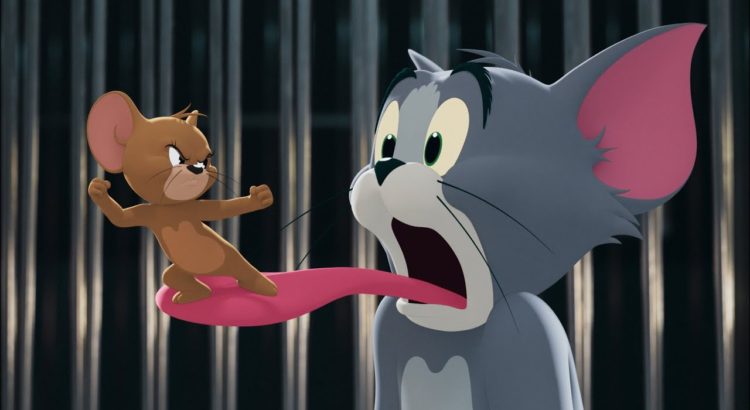
The first thing that gave me pause was that Tom, Jerry and their other pals that were included in the movie had gotten an update to their cartoon features. They were much more highly detailed and had more specific attributes than the original cartoons. This was quite off-putting, especially when they were set against the normal looking background. However, they were not so different that I couldn’t recognize the other characters who made short appearances, including Spike (the bulldog), Butch (the street cat) and his cronies, and Toodles (the pretty cat who Tom always goes after). I did not know they were going to include some of the other original cast, and it brought back some fun memories to see them there.

Another important factor of the movie was the way Tom and Jerry interacted. In the old cartoons, they are virtually invincible and constantly testing the limits of their invincibility, dropping anvils on each other, falling out of windows, smacking each other across the face with various objects, and generally beating each other up. They included this same level of violence in the movie, but it was super disconnected from the realistic background of New York City. When they first started beating each other up, I found myself wincing, because it felt so much more real and painful since they were in the actual world, not a fully cartoon world. But I did appreciate that they used a lot of the classic moves that are typical of Tom and Jerry, and recognizing some of these antics made the movie feel a lot more nostalgic. However, they overused the idea of the “pet fight cloud”, when two or more of the animals get into a punching match so big it turns into a blur of fists. This happens occasionally in the show for just a couple of seconds until something breaks up the fight, but the movie used it as a plot point. They had several of these punching matches that caused serious damage to the hotel where Tom and Jerry were staying, and it just seemed so silly and incongruous with the way the movie had previously shown the relationship between cartoon animals and real people. This idea got taken a bit overboard when they used to to move the story along, and it looked even more weird when it became a force of change in the real world. I thought they should have done a better job with keeping the cartoon and authentic worlds separated.

Overall, I had fun watching the movie. Even though it was definitely a bit strange, and the storyline was not great, it was enjoyable to see some of my favorite cartoon characters from childhood duke it out once again. I would recommend this movie if you are just looking for something fun and easy to watch.


PREVIEW: Playing with Fire: Jeannette Sorrell and the Mysteries of Conducting

Playing with Fire: Jeannette Sorrell and the Mysteries of Conducting is a documentary featuring Apollo’s Fire and the St. Paul Chamber Orchestra. This UMS digital presentation explores the art of conducting, and in particular follows the Grammy award winning conductor Jeannette Sorrell. Sorrell was told by the Julliard School and the Cleveland Orchestra that no one will hire a woman conductor, but she persevered. She formed her own Baroque orchestra, called Apollo’s Fire, which quickly rose to fame and won awards. In the film, we watch her work and teach at music festivals, as well as rehearse with Grammy winning orchestras.

I am excited to watch this because I love to watch women rise beyond those who tell her no or deny her, and achieve success. Also, I know nothing about conducting and I love to watch orchestras, so I think this will be a really interesting documentary!

It is available through UMS Digital Presentations, starting on March 12: https://ums.org/performance/playing-with-fire-jeannette-sorrell-and-the-mysteries-of-conducting/

REVIEW: Nomadland

If you search for this movie online, you will find that it has a 94% on Rotten Tomatoes and Metacritic, and 86% of Google users liked the movie. However, I would be in the minority of people who definitely did not find it to be a good movie. While it had some elements and beauty that I enjoyed, I finished the movie thinking, “What the heck just happened?”. Even though there were some points that I found meaningful, I struggled to find meaning or have interest in the movie as a whole.

The film follows Fern, a woman who leaves home to travel around the US in a van. The movie had no plot or arc at all, not even a character arc for Fern, and I kept wondering where the movie was going, even in the last 15 minutes or so. It felt like the audience was just accompanying Fern on her journey, and that there was no resolution or storyline at all, which kept me in a constant state of confusion and anticipation the entire time. I would have preferred for there to be any kind of plot, or at least a resolution at the end for Fern, but there was none that I could see in my viewing. I kept thinking that Fern was going to find some kind of peace or change in her life, but she just kept plodding along, driving in her van and working wherever she was able.

The movie did have some elements that I enjoyed. Most of the scenery she surveyed was absolutely gorgeous, especially in Arizona, with views of the deserts and mountains that I had never seen before. I could certainly appreciate the mastery in some of the shots of the landscape. I also thought some of the relationships that Fern had with others she met on the road felt very real and tangible. The dialogue, for the most part, felt almost unscripted, and sometimes made the movie seem more like a documentary than a film. The people that she encountered were eccentric and engaging, and had their own stories to tell that were sometimes heart-wrenching. I wish they had focused more on all of the people Fern met, rather than on Fern’s journey, which felt very dull at points.

Overall, I would not recommend this movie to others, because it did not follow a moving, compelling storyline, and was very mundane. While I found the lives of the people Fern met to be intriguing, the focus on Fern’s day-to-day activities was not enough to keep my interest or make me excited to see what came next. I can appreciate that this movie was displaying what it is like to live so uneventfully and simply, but I think it came across as just plain boring.

PREVIEW: Tom and Jerry

Tom and Jerry is a classic TV show that began on tv in the 1940s. It is the classic tale of a cat and mouse outsmarting and chasing each other, with a classical music soundtrack, in a cartoon. And now, Warner Animations has produced a movie version! The movie follows Tom and Jerry in New York City, where Jerry has moved to a fancy hotel, and Tom has been hired to get rid of him. The classic cat-and-mouse battle ensues, and threatens to ruin a wedding, careers, and possibly the hotel itself. The movie got a 25% on Rotten Tomatoes, so I am excited to see how it holds up. Or I’ll just give it a serious critical eye!

I watched Tom and Jerry every Saturday morning as a kid, and I cannot imagine this movie turned out good. I am excited to critique it and compare it to the original Tom and Jerry!

The movie is available on Hulu now.

REVIEW: UC Shakespeare Trial – ‘Julius Caesar’

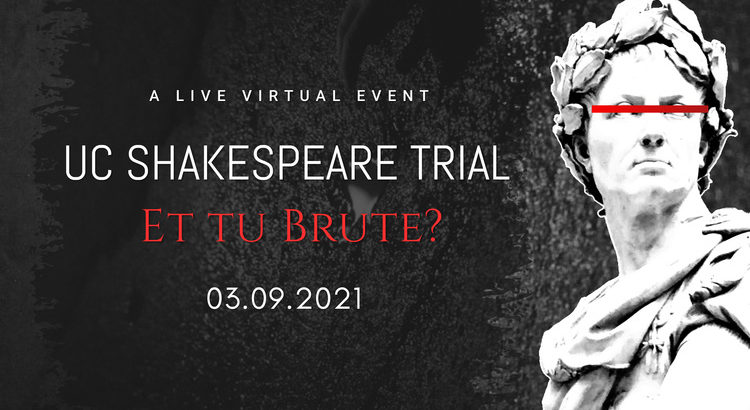
As a pre-law student who loves the arts and humanities, this event had me geeking out. In their third annual Shakespeare Trial, University of California at Irvine was able to expand their audience to people across the country like me who wanted to tune in to have a say in Marcus Brutus’ criminal trial.

“Friends, Californians, Zoomers, lend me your screens,” began the prosecuting attorney Dean Erwin Chemerinsky of Berkeley Law. Using the text of Shakespeare’s “Julius Caesar” as evidence, and California law as the foundation of the trial, the trial centered around two questions: 1) Is Marcus Brutus guilty of the murder of Caesar? and 2) Is Marcus Brutus guilty of inciting insurrection? Professor Bernadette Meyler of Stanford Law argued that Brutus applies for the necessity defense–that he was protecting himself and the Roman Republic from immediate harm by killing his dear friend Caesar.

Prior to the official start of the trial, we were treated to monologues from the characters of Brutus and Antony, performed by the talented actors of the New Swan Shakespeare Company, to set the scene and bring the characters to life.

Completely unscripted and organized like a criminal trial, I enjoyed watching the seasoned lawyers make strong, compelling arguments in front of The Honorable Andrew Guilford Presiding. Brutus’ killing of Julius Caesar, and whether or not Brutus applies for the necessity defense, is a heavily political question. During the trial, the attorneys were not afraid of using parallels to our modern times to create an understanding of the gravity of the situation. 

I loved the concept of courtroom as theatre, audience as jury, and the idea of exploring Shakespeare through legal inquiry. What I am so interested in, in my own academic studies, is the intersection between the humanities and social sciences. Because both are things created by people, they are interconnected and important to each other. What can we learn when we examine one with the lenses we typically reserve for the other? In this specific case, what can we learn from Shakespeare putting it in this new light? How does putting Brutus on trial cause us to look more critically at the play’s text and thoughtfully formulate our own opinions about the events that occur? 

At the end of the trial, the Zoom audience voted to decide the verdict via Zoom poll. It was decided that Brutus was guilty of the murder of Julius Caesar, and by a smaller margin it was decided that he was not guilty of inciting insurrection.

I’m glad that I was able to attend this event, and I encourage those of you who miss live arts events as dearly as I to look for amazing events that would normally be restricted to geographical location, that are now accessible through online platforms.

REVIEW: You Will Die At 20

Recently I’ve been thinking more about mortality; I guess I’m not old, but everything these days feels like a crossroads. They are each so definite, a fixed point in time that demands a decision, either by me or whatever fate or force controls me. For Muzamil, all other paths have been eliminated; it’s just a short, straight path to a certain end. It feels like there are a million hidden stops along the way; they come out of nowhere, they hinder, they allow you to pass. I don’t know what that is, but in the context of You Will Die at 20, I guess it’s the townspeople, everyone preventing Muzamil from living without severe restrictions on where he goes, what he does.

Having only a little time on Earth is supposed to increase the value of life. Knowing that it will end, likely before we want it to (or more precisely, before we’re adequately prepared for it to), should free us from monotony, allow us to respect each day as something special. But thinking about the ending inserts countless checkpoints, countless worries: are you eating healthy, exercising, getting your teeth cleaned regularly, had your flu shot, checking that your car mirrors are positioned correctly, getting your oil changed often, making enough money, making enough money to retire before you die, making enough money in case of an emergency? The stops expand a life, drawing out its borders infinitely. Now it’s too long, too much. Sakina numbers the days in chalk on the walls of a sunlight-slashed room, waiting for her child to die. The main difference in opposing views of mortality is the degree to which one accepts their end, no matter how untimely. There is mourning, and there is apathy. With each there is some ratio of fear to happy passiveness, the very worst kind of Punnett square. There’s not necessarily one option that’s the best, or least likely to ruin the psyche, but when something forces you into extremes, like a sheikh prophesizing your early demise, it can seriously alter your mental state for a startling amount of time.


The village, much like its residents, is almost totally austere: rather neutral tones but harsh surfaces, little life able to grow, stark. The amount of calm, steadiness, in the characters and their surroundings was unsettling, but of course that’s where the movie’s power is.Where there are richer colors, the contrast with their surroundings hurts to look at, makes you feel like crying no matter the subject of the scene. Excitement was always paired with doom, at some point down the line; there was always worry behind the beautiful points.

Most of the movie covers Muzamil’s 19th year, his last-ditch efforts at individualism, or just proving he’s alive. Early-onset death throes, the last dregs. If we lived more like that, tried to feel more, all of the time, would we be better or worse? As people, friends. Citizens, leaders. I’ll invite you to watch this movie and try to think about that. You can access it for free until March 17th.

You can find both in-person and at-home showtimes for the Michigan and State theaters here.