REVIEW: Caustic & Bitters – UMMA + Chill

Last night I attended an UMMA + Chill Group Chat, a guided virtual art tour and group talk put on by the UMMA during the winter season, paired with recipe for an alcoholic or non-alcoholic cocktail to add a fun element to the night. I was invited by a friend to join this themed event, Caustic & Bitters–we would be talking about humor as an artist’s tool and looking at examples from the UMMA collection. I popped onto the Zoom call of about 7 participants (some attending with housemates or friends) and settled in while music played and people filtered into the call.

George Cruikshank,
Monstrosities of 1825-26

The tour began quite abruptly with the cocktail-making. I was a little disappointed with this section of the event–a brand new recipe was created by the Bellflower Restaurant in Downtown Ypsilanti specifically for this group event, and I had prepared by purchasing the materials. However, the making of the drink was restricted to a quick 3-minute video at the beginning of the event, blowing through the process before I could even get to my kitchen. I must have missed a step from my memory, because what I ended up concocting tasted pretty awful. It ended up going down the drain, an unfortunate waste.

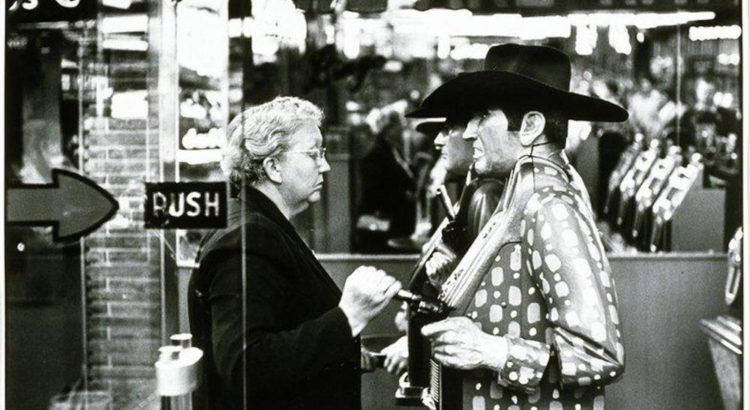
Dmitri Baltermants
Agfa, Berlin

What I did enjoy about the event, after I was able to mourn my mixology failure, was the art, which is what I was mainly there for. 

We started by looking at humor in art as a purposeful tool, in art that is meant to mock or emphasize differences, something that is extremely useful in political or social commentary. We spent a bit of time talking about how capturing the humorous in photography takes a different form than in other mediums, because the artist can really only use what they see (for example, facial expressions) and exaggeration is more complicated to produce.

Umbrian; Italian,
Madonna and Child with St. Thomas Aquinas and a Bishop Saint

Something I did take away from the event is that sometimes, it’s okay to laugh at art that is not necessarily intended to be funny. It’s okay to look at unintendedly ridiculous aspects in pieces of otherwise serious art and find it humorous. For example, this 1400s Italian painting of Madonna and Child. Why do the baby Jesus and the saint in the back have the exact same face? How in the world is the baby being supported in Mary’s arms? I genuinely laughed out loud when we examined the details of the painting and pointed out these elements. 

In all honesty, I did expect a little more from the event. Overall, the event felt rushed and unengaging. It was the guide’s second theme tour of the day, which could have factored into the hurried nature of the ‘group chat’ part of the night, which didn’t seem to inspire much audience participation. While there were some comments and conversation starters from participants in the chat, the tour felt more like a lecture, which went against my expectations but still turned out to be an interesting event.

The freedom to find humor in anything is part of the beauty of the subjective experience of viewing art. This exercise helped me to fully grasp that concept. I can’t wait until I can wander the halls of the UMMA again, but until that time, I’m glad the UMMA is at least trying to expand access to their collection with virtual events like this one.

UMMA + Chill

PREVIEW: Caustic & Bitters – UMMA + Chill

Caustic: sarcastic in a scathing and bitter way.

Bitters: liquor that is flavored with plant extracts, used as an additive in cocktails or as a medicinal substance.

I received an unexplained Google Calendar invite a week or so ago from a good friend. “UMMA + Chill – Group Chat: Caustic & Bitters. 7pm 2/27.” I wasn’t quite sure what I was being invited to, but my weekend evenings have been painfully bare due to COVID, and every UMMA event I’ve ever attended has been well worthwhile, so I texted my friend and let her know I was coming. 

I’ll be catching the last of the UMMA + Chill winter events tomorrow evening, a virtual guided museum tour and mini cocktail-making lesson. The tour will be guided by Isabelle Marie Anne Gillet, a UMMA Stenn Fellow in Public and Digital Humanities and Museum Pedagogy, with the theme of humor as an artist’s tool to “undermine the superficial meaning of what is depicted and subvert or even confuse expectations.” I haven’t been on a museum tour, in-person or virtual, in a good while, so I’m very excited to spend the evening with the UMMA collection and some friends from the comfort of my own living room.

Today along with my regular grocery shopping, I picked up ingredients for a cocktail designed by the Bellflower Restaurant, which we will be learning how to mix during the guided tour. The prep email also included the option to purchase pre-made kits directly from the restaurant, and also a non-alcoholic mocktail recipe. 

Tomorrow evening, I plan to put on a nice outfit and kick back on my couch to enjoy a virtual guided tour with my friends through Zoom–a sophisticated Saturday night in.

REVIEW: Virtual Life Drawing with Anti Diet Riot Club

About a week ago I had stumbled upon information for Anti Diet Riot Club’s life drawing sessions. Anti Diet Riot Club is a London-based organization that fights against diet culture and works to empower individuals to love themselves and their bodies. Loving their message, and interested in seeing what a virtual life drawing session would be like, I took the leap and registered.

a layered sketch from the session

The event, held on the 4th Wednesday of each month, is advertised as “NOT a serious art class” and is instead meant to be an exploration of creativity as a way to challenge perfectionism and what we’ve come to see as typical beauty standards. Studies have shown a correlation between attending life drawing sessions and positive body image.

My artistic skills with a pencil and paper are typically limited to stick figures and simple doodles, but I sat down with my paper and markers ready to take on the challenge of drawing the human body. 

As soon as I logged into the Zoom call, I was met with a gallery full of smiling participants of all ages, in their respective Zoom squares. There were about 140 participants in the Zoom call, and we did a check-in through the chat. Most people were calling from England, but as I typed that I was calling from the States, I was excited to see that people from all over the world were joining in on this drawing class–Scotland, Poland, Germany, France, and a few people from the US, joining from Colorado and New York. 

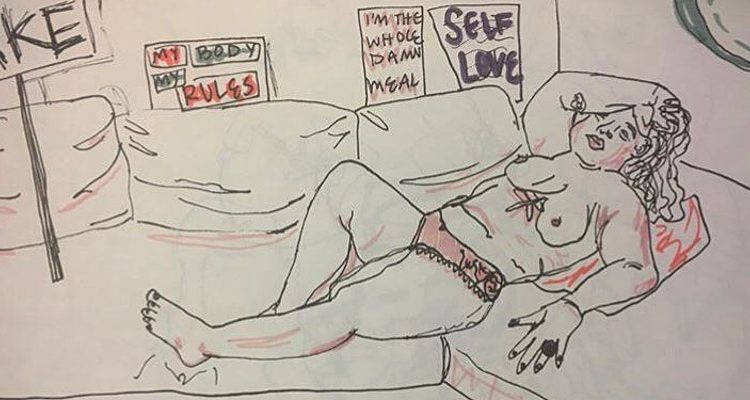
three sketches from the drawing ‘games’ we did

The session was guided with silly drawing ‘games’ to help “kick the perfectionist out–” beginning with a simple, 1-minute timed sketch of our amazing model, Lucie. Any worries or hesitations I had about my drawing abilities disappeared once we started flowing through the exercises. Drawing without looking down, drawing with the non-dominant hand, drawing using only triangles or circles, using bold colors, and having a set amount of time for each sketch took the focus off of creating “perfect” art and left space for simply admiring the human form and putting it on paper, to the best of my untrained ability.

The session reminded me, in quite an emotional tidal wave, of how objectively beautiful the body is. Seeing the body, and especially types of bodies that aren’t often recognized in mainstream media, as a piece of art helped to mute the ingrained judgements that often blare, unwelcomed, at the thought of my own body’s ‘flaws.’ Artistically appreciating the details of a real and ‘imperfect’ body made a clear and powerful difference in the way I felt about myself after the session versus before.

If you are interested in joining next month’s session, tickets are available at Eventbrite (also linked below) and cost £5 – £8 (roughly $7 – $12 US). I will definitely be joining again, and for now I move into the rest of my day wrapped in confidence, compassion, and self-love.

my final drawing for the session, using color

https://www.eventbrite.com/e/virtual-life-drawing-with-anti-diet-riot-club-tickets-134033550959?aff=ebdssbonlinesearch&keep_tld=1


PREVIEW: Radical Acts: A Conversation with Sheryl Oring and Sherrill Roland

American systems of justice and incarceration have a disturbing past and present, rife with injustice. Speakers Oring and Roland have worked in performance/social art surrounding the place of art in social change. Over the past few decades, the two have worked together and individually on projects like I Wish To Say and The Jumpsuit Project.

In a conversation put on by STAMPS, the two will discuss the importance of making this kind of art in today’s intense social climate. Join the discussion Thursday, February 25th at 1pm. Register here and you’ll be sent an email with the link to join the meeting.

REVIEW: The Weight of God: “The Curious Case of the Soul”

Existential dread: it’s something many of us try to avoid thinking about, and yet it’s not really avoidable at all. We’re bombarded with this concept in memes, Tweets, movies, and everyday conversations. And then there’s the awareness that we live on a planet that’s floating around in space, surrounded by even bigger planets and stars, surrounded by galaxies that are far too vast for us to conceptually comprehend. Whoa. 

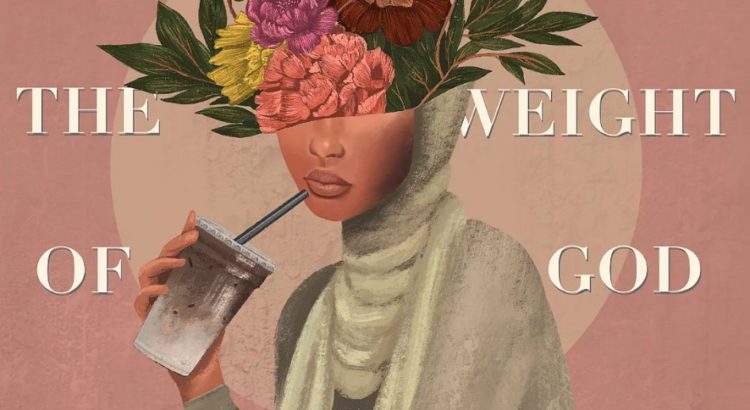
In the first episode of her podcast, The Weight of God, host Fareah tackles concepts of existentialism and nihilism through philosophical theory, religious history, and her own soulful insight. Fareah is a student, writer, and an aspiring scholar at U-M. Her work always pushes me to give more generous thought to life’s big questions, and The Weight of God is no exception. This episode, “The Curious Case of the Soul (pt 1),” is a meditation on the meaning of life, and perhaps why we’ve become so disconnected from it. 

When you really think about it, everything we do in life can feel kind of absurd. This is the reasoning of philosopher Albert Camus, who also authored “The Myth of Sisyphus.” In this myth, Sisyphus receives a punishment by the Greek gods that sentences him to rolling a boulder up a hill (which rolls back down once it gets to the top) for the rest eternity. Sometimes it feels as though our lives are like Sisyphus: and endless cycle of repetitive tasks—and for what purpose?

Yet, perhaps there is a different way of contemplating our existence—one that feels liberating instead of suffocating. In the second half of the podcast episode, Fareah addresses the origins of civilization’s dissociation from its spiritual core. As she explains, the rise of Western science, philosophy, and industry has brought with it a “radical separation from God.” We often forget that humans used to rely on spirituality in order to make sense of the world and derive value from life. In contemporary Western society, our capitalist economy emphasizes a more materialistic understanding of the world, dictating that an individual’s value comes from the things we own and produce. However, these things are often out of our control, and that lack of control often breeds dread about our ability to survive. 

As Fareah explains, this may be a source of our existential fear. The world becomes a burden that must be carried by every individual. Fareah concludes that we’ve lost our spiritual history which used to be a source of meaning, and in its place, we are left with an capitalistic individualism that feels isolating and unstable. 

I don’t consider myself to be someone who’s religiously observant, but this podcast definitely made me think about the role of religion in history and in human thought. One of the reasons I found this podcast so engaging was because it didn’t feel like a lecture or a persuasive essay; rather, it felt like an invitation to think alongside Fareah. Furthermore, her expressive voice, emotive storytelling, and inclusion of music brings her “audio immersion journalism,” as she describes it, to life. 

Visit The Weight of God website to listen to the podcast and learn more: https://theweightofgod.wixsite.com/twog

REVIEW: Malcolm & Marie

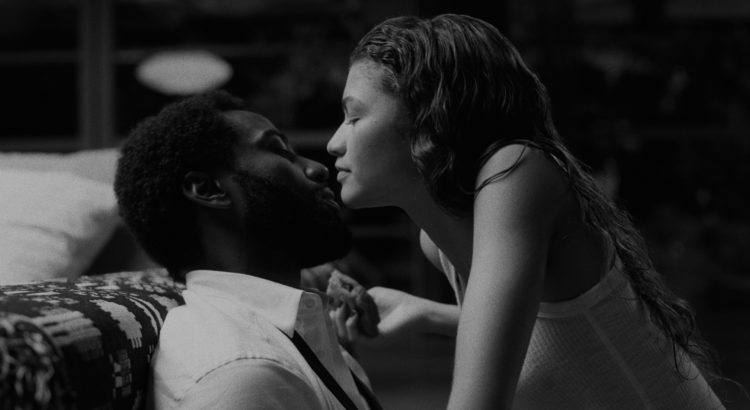
Many artists have attempted to utilize our current situation in order to inform the art that they create. Netflix’s new film Malcolm & Marie is notable for being the first Hollywood film written, financed, and produced during the pandemic. Written and directed by Euphoria creator, Sam Levinson, the story deals with an up-and-coming film director, Malcolm (John David Washington), and his girlfriend Marie (Zendaya) as they return home from Malcolm’s film premiere. Shot gorgeously in black and white by cinematographer Marcell Rév, the two characters go through one long and fraught night, with their large house in the middle of a California desert serving as the film’s only location. 


Coming into this film from my background in theatre, I was intrigued. Some of my personal favorite plays take place in a similar set-up; a small group of characters having interesting conversations within a singular setting. I was curious to see a writer and director whose work I had enjoyed in the past (including a similarly small-scale episode of Euphoria filmed during the pandemic) tackle this genre in the medium of film. Where I ended up being ultimately disappointed, however, was in Levinson’s screenplay.


At the core of the story, was the toxic relationship between the characters of Malcolm and Marie. The film’s strongest moments revolved around the cinematography, direction, and poignant music choices that highlighted this fraught relationship and where it stood at various points in the film. However, the film’s emotional core was often lost and obscured in Levinson’s long-winded rants about Hollywood filmmaking and film criticism delivered through the character of Malcolm. Throughout the film, Malcolm goes on a series of rants against a white female LA Times critic who had once given him a bad review. Other reviewers have been quick to point out, a similar occurrence in Levinson’s past where an LA Times film critic wrote a scathing review of Levinson’s 2018 film Assassination Nation. A similar situation is brought up in Malcolm & Marie, but Levinson decides to tie it to a discussion of black identity being reflected in filmmaking. This is an interesting point of conversation to be brought up, and if it were written better, it may be easier to excuse Levinson, a white writer, using Washington, a black actor, as a mouthpiece to his frustrations. Ultimately, however, Malcolm’s long tirades serve only to alienate Marie and the audience from his character further. Washington tries his best with the material, but his performance suffers heavily in these sections as the character is not allowed to have nuance and charm. 


It is Zendaya’s character, Marie, that is the most intriguing but feels the least developed by the time the movie is over. Early on in the film, we learn that she is unappreciated by Malcolm, yet he leans on her heavily for his creative inspiration. This is an interesting dynamic and Zendaya plays it well, however, due to the bluster of Malcolm’s character, Marie soon finds herself entangled in unwinnable screaming matches with him and it starts to get exhausting to watch as an audience member. The film does offer a few moments of reprieve, often accompanied by music, but these do not come often enough to get the audience emotionally invested in the characters again before their next argument comes.


Overall, this film was an interesting study of what could be done by a small, accomplished group of creators during the pandemic, but it failed to work for me as a film on its own merit. However, I do think that it is worth checking out if it is something that you were already interested in, as it evoked complicated feelings in me, and I could completely understand how it could be experienced differently by different individuals.