REVIEW: Fantastic Fungi

What a trip.

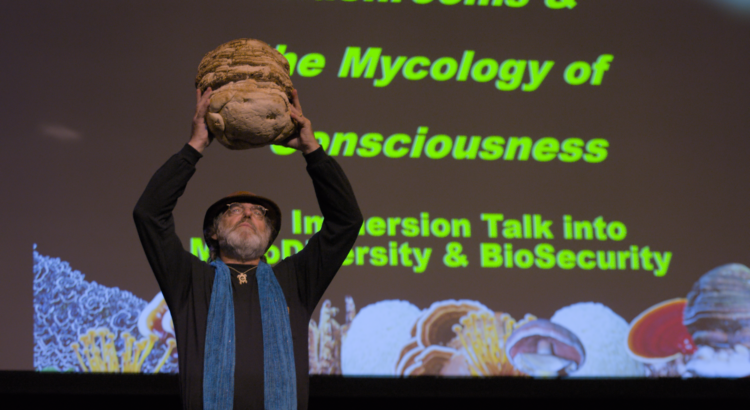
I liked this documentary film. Maybe not loved, but definitely liked. Mostly, I thought it looked pretty stunning. Shot after shot of colorful, dewey, exotic mushrooms made me feel like I was rolling around on forest floor. But that was really only the first half.

That part taught me a lot about how important fungi are for ecosystems. Smooth music and misty slo-mo was essential. I was lulled into understanding that fungi are the only decomposers that can break down the cellulose in plant cell walls, which I think is actually pretty incredible. My favorite part was when they described how fungi actually help plants communicate to each other: if there’s some kind of threat, like a disease, the fungi can alert the roots of a plant to grow in a direction away from the threat. And look how coolly they animated it!

Ok, onto the part I didn’t think was as successful: the second half of the movie was about fungus having helpful qualities as a drug. My problem isn’t with the idea; it’s with how imbalanced the exploration was into the medical benefits of it. The movie felt a little preachy about how promising that field was. Too heavy-handed. I kept waiting fort the producers to present a more cautious attitude toward using it for relief: there was none. Just, “here are a couple experimental studies of people taking a dose and describing how it helped with depression.” Not enough to convince me of a lot.

On top of that, the movie mostly followed (in the noneducational part) one man’s experience with fungi. But, the movie wasn’t a documentary just about this man; the movie’s called Fantastic Fungi. So this guy’s enchantment with fungi just doesn’t quite seem well-vetted enough to convince me of much more than his enthusiasm for it. Didn’t teach me much about fungi generally.

I’d say, watch this movie if you’re curious about fungi and don’t know much about it yet. Don’t expect to uproot your life and start a mushroom-growing business because of it.

PREVIEW: Fantastic Fungi

Michigan Theater is still showing “Fantastic Fungi,” one more showing! Tomorrow, Wednesday, January 15 at 9:55 pm. They have been showing it since before winter break, and I think I understand that people liked it so much that Michigan Theater brought it back to run a little longer than expected! It’s a documentary film about fungi, their roles on forest floors and potential to heal people. Check it out.

REVIEW: German Film Series: “Transit”

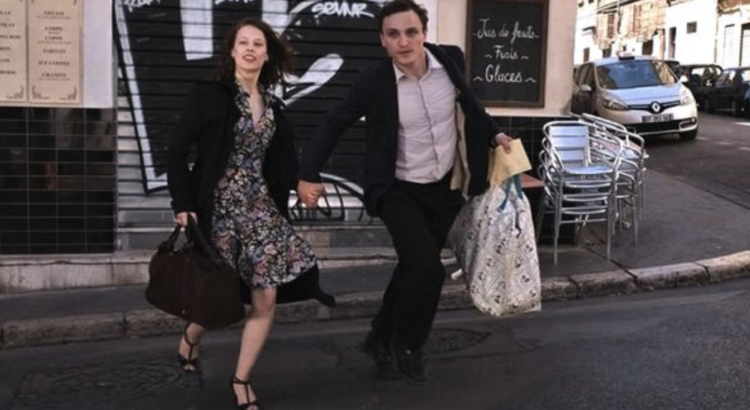
As soon as the credits roll I hightailed it out of the viewing room. I can’t stand the cold so I ran all the way home, and the scene was so terrible. There’s the harsh yellow of the streetlights reflecting all along the ice on the road, which is shining wetly like a giant tongue. I look back to check for headlights before I dash across the street to my block, and the wind takes the liberty of yanking through my hair so it flies in my face and mixes with the sickly lights.

So this might be my new favorite movie.

Georg’s expression at the last few frames was terrible. Forget Mona Lisa’s enigmatic smile, this guy creates a symphony with his painfully hopeful eyes and the gentle set of his lips, scarred from a childhood cleft palate surgery, only adding to the confused ambiance he creates. Throughout the film he occupies a character with infinite, though guarded, softness, while maintaining a fairly traditional father-figure posture. He is not completely any one thing, but I recognized a fragility in him I hoped wouldn’t prove to be dangerous for him. 

Marie is by contrast mostly flat, though her wishy-washy approach to everything still makes her a wild card. She is a ghost, pale and able to see through people. She reacts to conversation quietly, choosing subtlety over big outward expression, and in this way, she haunts.

Director Christian Petzold has made me the exact right kind of unsettled with Transit. There is so much casualness in this: a complete disregard for metaphors in the weather, the sun out even in times of keen distress; traumatic events regarded with little ceremony. Strangely it’s the smallest things that are amplified. Right off the sound seems wrong: the tiny tapping of a glass on a table rings out, a door sliding shut is like a jail cell clanging. All throughout I don’t quite understand what I’m feeling, unable to cry though I can sense sadness here.

The way Petzold plays with time works so well with the confusion of identities throughout the movie–cars and clothing and language are modern, but there are typewriters present, and historical architecture. Members of the Navy in Crackerjack-esque uniforms dine with our Georg in the local pizza shop; air travel is not mentioned, only by ship. The sleepy brightness of the seaside seems infinitely ancient in its sun-bleached scenery. Nazis are occupying countries all throughout Europe, but The traveling itself is another element, coming upon a new place full of strangers, trying to reach another, more obscure land across the ocean. It all collects together to blur any useful divide between the real and imagined.

Going back and forth to the hotel room and port and consulate did seem repetitive, without any discernible reasoning. Already there is a considerable amount of confusion present, so the redundancy of the dashings does nothing for the film’s emotional success. It only creates repeating, nearly identical cycles that do not move the plot forward.

Cycles are, however, the most important part of the movie, and may say something about the message Petzold was trying to convey. After Marie disappears back into the city at the end (as she does so well), Georg is left eternally waiting for her in the pizza shop, mournfully gazing out to meet the eyes again of the woman he had immediately fallen in love with. It seems she is free now, like he used to be, and he is stuck wandering looking for his lost love, the very sickness that had plagued her.

It’s interesting to drag a historical event out of its place comfortably in the past and out into the open modern era. It makes us nervous to consider whether political and military atrocities will really stay away from the present, or if we’re still capable of unbelievable things even after we have advanced as a society. Maybe they take different forms, but it is foolish to think we are any less evil than before, and thus we cannot pretend we live safely apart from those terrors.

PREVIEW: Weathering With You

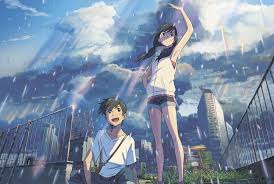
If you are fan of the famous film director Makoto Shinkai and his much beloved and critically acclaimed anime film, Your Name, I”m sure you’ve already heard of his new project, Weathering With You.

Weathering With You focuses on two young individuals: Hodaka, a boy who has run away to Tokyo to start a new life, and Hina, a mysterious, magical girl who is able to control the weather. Hodaka’s life quickly becomes bright and full of wonder due to Hina and her ability to chase away the rain and the two quickly fall in love. However, they must fight to stay together.

Michigan Theater is providing a fan preview screening of the film this Thursday, January 16th, at 8pm.

If you do not yet have tickets, now’s your chance!

There will even be an exclusive interview with the Makoto Shinkai along with the film.

I am very excited to experience Weathering With You. Makoto  Shinkai has such a unique imagination and an impressive ability to merge the mundane day to day of human life with magic in such a way that you could almost believe the events actually happened.


PREVIEW: Little Women


I don’t think I can describe the visceral sear of excitement I felt when I heard that Greta Gerwig was directing a Little Women remake. I do feel sorry for anyone who was in my immediate vicinity. There are noises that no human should bear witness to. My squawk-squeal was one of those. And that was before I found out that Saoirse Ronan (who starred in Greta’s previous film, Lady Bird) would be playing Jo March, one of my favorite characters in all of literature. Of course, she will be joined by other three March sisters: Meg (played by Emma Watson), Beth (Eliza Scanlen), and Amy (Florence Pugh). But mainly, Jo and her writing and her cool hats! Though, this will be the seventh film adaptation of the classic 1868 novel, I have no doubt that this star-studded cast along with their talented director will be able to create something altogether new and interesting. Little Women is currently showing at the Michigan Theatre. Tickets can be bought online or at the box office ($8.50 with a student ID).

REVIEW: Marriage Story

The beginning of marriages tends to be well documented. Professions of ever-lasting love on Facebook. Engagement photos on Instagram. Videographers and photographers at the meticulously planned wedding. No detail is too small to be forgotten. Everything must be remembered. The end of marriage, on the other hand, is swept carefully away, only referred to in a past tense long after it has occurred. No one live tweets their divorce. In many ways, then, divorce becomes more personal and less public than even marriage. An intensely shared experience between two people alone. Yet, Marriage Story brings this private process to the big screen without sacrificing any of the awkward, all-too touching intimacy.

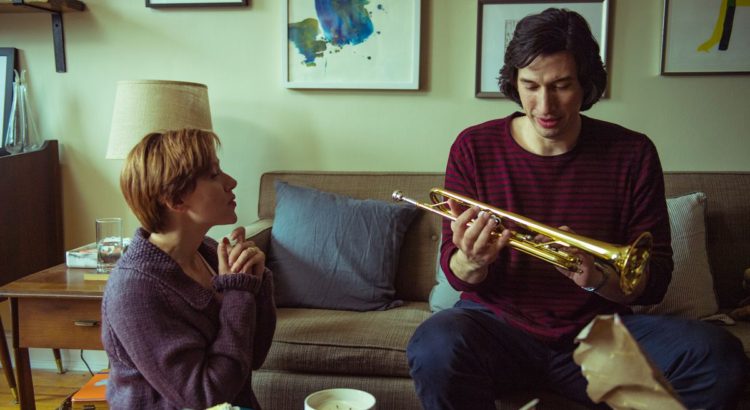
Image result for marriage story

When you marry someone, you know more than enough to love them. When you divorce someone, you know just enough to hurt them. Nicole (Scarlett Johansson) and Charlie (Adam Driver) obviously know a lot about each other. Years of accumulated knowledge spill out over the opening few minutes as each describes the other, noting many of the little quirks and characteristics that make up their partner. Each detail is the result of loving and being loved. Yet, all this knowledge is not enough to stay in love. For all of the things that Charlie and Nicole do notice about each other, there are other characteristics that they failed to acknowledge. Oversight breeds resentment and grievances overwhelm. Gradually, affection is paired with an equal amount of bitterness. What director Noah Baumbach does so well is portray both the lingering tenderness as well as the animosity. By avoiding depicting a truly hateful divorce, he achieves sympathy for both Nicole and Charlie. Neither want to hurt each other. Yet, the process of separation makes hurt inevitable. For, divorce means an entire disentangling of lives. It means taking separating all the things you once shared together. It means becoming selfish and a little bit petty despite your best intentions. Marriage Story doesn’t avoid depicting the inevitable clumsiness of the process, often in ways that aren’t typically acknowledged by separation stories. A particularly funny and insightful scene, for example, involves Nicole informing her mother and her sister that they can no longer be Charlie’s friends during the divorce. Even families must be disentangled. The process of divorce becomes imagining separate lives when you once could only see them together.

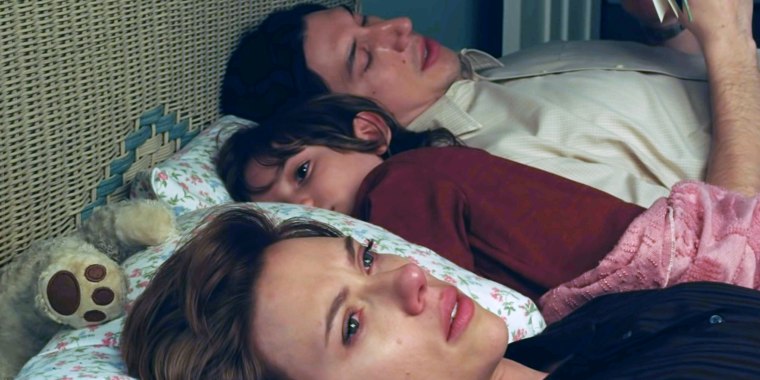
Image result for marriage story

To their credit, it is even more impossible to imagine the film without the collective brilliance of Johansson and Driver. Each, when given the moment to shine, take the light and reflect it a hundredfold. Johansson is particularly good at modulating her voice, going from a place of resignation and softness to fierce independence. Her face, too, expresses a thousand different feelings in the span of a monologue. It is a revelation after seeing Johansson stiffly emoting in so many Marvel movies. Driver, on the other hand, is most effective with his body. He uses every inch of his tall frame, his physicality always more humorous because of how large he is. Somehow, he depicts Charlie’s lack of self-awareness through slouches and hand gestures alone. The characters are brought to life both by these extraordinary performances and the thoughtful attentions of Baumbach, who wrote the screenplay as well. It is almost uncanny how natural the dialogue is, as if all were improvised or stolen directly from real life. Johansson and Driver deliver his words without a hint of performance, transforming memorized lines into something more honest. Thus, when Charlie and Nicole speak, we pay attention, unable to tear our eyes or ears away from the screen.

Marriage Story is all the moments that you typically cannot glimpse. It is about the messy moments that you don’t show others, for fear of exposing too much. But it is also about how those moments are ultimately necessary. There can be no omelet without first breaking a couple of eggs.