REVIEW: Frozen 2

Warning: mild spoilers for both Frozen 2 and Rise of Skywalker. This warning will make sense in context.

While I was buying the tickets for this movie, my friend said “Quick q. So you’re here. I’m here. And our other friend is here. Why aren’t we watching Uncut Gems?” And I found myself asking that question multiple times throughout or viewing of Frozen 2.

Frozen 2 was an unnecessary sequel and it was confusing, and it also had the same plot as Rise of Skywalker: a young woman with mysterious powers that nobody else has and that she cannot properly control finds out her grandfather is evil. She then embarks on a solo quest to understand both who she is and how to fully utilize her powers. A young man, while waiting for the young woman to come back from her solo quest, meets someone of a similar background as him and they talk about being sensitive to/having conversations with strange forces/reindeer – things that do not actually talk back to these individuals (a bit of a reach, I know, but hear me out on this next part). During the solo quest, the young woman crosses treacherous waters to reach an abandoned wreck from a previous film.

Now, you may be wondering, which movie was better? I preferred Star Wars because I found Frozen to be quite confusing at times. I did not understand a lot of basic plot points, which I don’t think is the mark of a good movie. The premise of the film is that Anna and Elsa have to free the Enchanted Forest, but they never made it entirely clear what they were freeing the Forest from. The Forest is closed off from the rest of the world by a force field that is never referred to again, even when the curse (?) is lifted. In fact, certain characters leave the forest area at some points during the movie even though the force field should be keeping them in the forest.

I felt like the movie was, in general, unnecessarily vague. It doesn’t really feel like there’s a point to Anna and Elsa’s quest – they’re chasing after a mysterious voice that only Elsa can hear, and when she stumbles upon the truth about her powers, the truth is kind of irrelevant. The truth about the origin of her powers is not significant at all when she and Anna finally save the day. The movie tries very hard to be mysterious to keep the audience engaged, but they never explain anything, and shrug off any plot holes by trying to distract the audience with Olaf and a cute fire-breathing lizard.

Maybe I thought the first film was leagues better than its sequel because I’m not exactly part of the target audience anymore. Judging by the squeals of joy and high-pitched laughter, the kids in the audience seemed to enjoy the movie. However, I did enjoy some aspects of the film. Elsa’s two new songs, “Into the Unknown” and “Show Yourself” showcase Idina Menzel’s incredible talent and vocal range, proving she always fails to disappoint Visually, this film has some stunning animation, especially the scene where Elsa is crossing turbulent waters, creating platforms of ice to run across. In another scene, Elsa is exploring a dark cave-like area which is actually supposed to be an ancient river, and her surroundings are black but contrasted with blue and purple geometric ice crystals. This scene was also reminiscent of the scene in The Last Jedi when Rey falls into the pit and goes through a series of visions, but I digress.

Overall, Frozen 2 is not a bad movie. The first one is 100% the better film and there was really no need for a sequel, but if you don’t take it seriously, it can be enjoyable. The music is great as expected, and it is a very visually appealing film. Still, I wouldn’t recommend you rush to the theater right this second to watch it.

REVIEW: Pain and Glory

We spend most of our life forgetting. We forget the countless minutes and hours that sandwich those few occasions of great importance. Out of those bits of time that are deemed memorable, a whole narrative of life is constructed. All the rest discarded as unimportant. That exhilarating summer afternoon, that moody day spent surfing YouTube, all is reduced to the same monotone muffling. It is a time that we know existed but can no longer prove. Left with only remnants, we can only stitch together a partial picture of what our lives were. Making such a fractured image cohesive is the particular talent of the filmmaker. In two hours or less, they must assemble enough of these pieces to create a character whose life can move believably. Intuitively knowing which piece is most important, knowing which space can be left intriguingly open is why some people are directors and I am relegated to mere critic. I have learned to appreciate the picture all the more, though, especially when it is as beautifully constructed as in Pain and Glory (Dolor y Gloria is the original title). In his latest film, Pedro Almodóvar assembles critical moments from both his character’s and his own life to create one vivid whole.

Image result for pain and glory

That feeling of artistic fulfillment has been missing from Salvador Mallo’s life for many years now. Mallo (Antonio Banderas) was formerly a critically successful film director. But time has left him with raging migraines, excruciating back pains, and a throat that will close up without warning. At least he still has a glorious shock of grey hair. Each encounter with bodily agony leaves Mallo bent over, literally breathless. Even in the moments where he is temporarily free, pain casts its dusky shadow over his life. It makes all of his movements careful and slow. Getting into a cab is a cautious unwinding of the body, each breath devoted to avoiding further aggravation. Natural movement is repressed out of fear. This physical repression has led to an artistic bridling as well. He cannot direct while being unable to move with his films. It is not only Mallo that instinctively relates his art to his physical state. Art has always been a bodily act as much as a mental one. Physical suffering from art. Michelangelo was afflicted by severe backaches after standing for hours painting the Sistine Chapel. Art from suffering. Frida Kahlo painted herself laying in a hospital hemorrhaging blood. The title of the film, then, refers to both of the binary aspects of art. We create glorious beauty even in the moments of greatest agony.

Related image

Almodóvar, thus, chooses to depict Mallo’s pain unconventionally. Instead of painful, tearing strokes, we see Mallo’s pain in a colorful swirl of animated color. The rest of the film is similarly bright even as it depicts the various indignities of aging. Almodóvar never lets his film get bogged down by the seeming darkness of the present, allowing for a constant light to shine through, especially when Mallo reflects upon his childhood. Loved and guarded by his mother (a brilliant Penelope Cruz), young Salvador discovers much of the inspiration that will fuel his artistic endeavors in the future. The problem becomes combining that young, beautiful idealism with the harsher realities of getting older. It is like drawing a cohesive picture using both crayons and oil paints. This is the problem that Mallo must truly confront, not simply pain, but the fracturing of self that the pain causes. His suffering proves that he is no longer that invincible young man. So, who is he now? Perhaps this film is Almodóvar’s answer to this question. He says it quite beautifully.

REVIEW: Uncut Gems

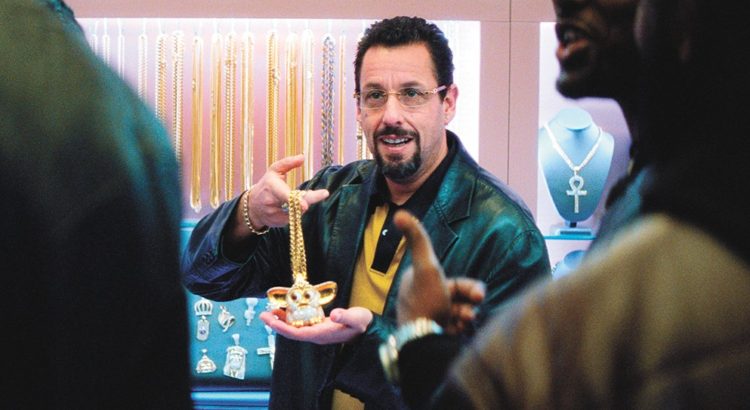
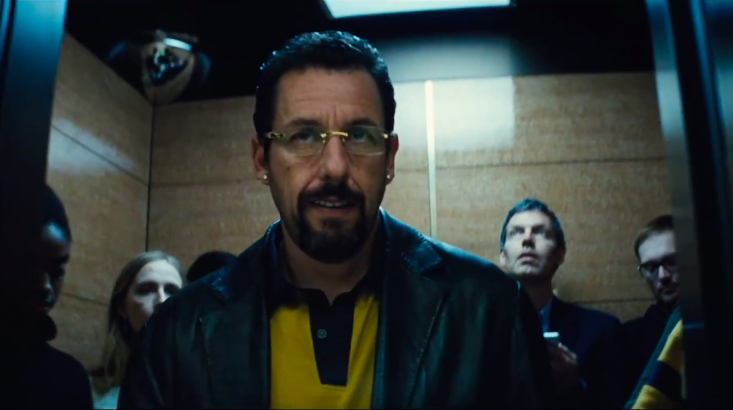
Watching Uncut Gems is like watching a car crash in slow motion. The film follows Howard, a relentless gambler played by Adam Sandler, as he races in, out, and around New York City to maintain his constant state of stress (and euphoria). As the stakes rise, we as an audience realize that this is no redemption story; it’s a realistic story.


The Safdie Brothers’ recent films have been experiences I am grateful for, but also experiences that I never want to have again. The film bears witness to Howard’s fatal flaw over and over, costing him his family, friends, and often dignity. Grisly imagery and unsavory settings are used to play off of Howard’s state of mind–and are portrayed in surprisingly beautiful and complex ways. I found myself in love with the visual and metaphorical concept of a shady jewelry shop, complete with fluorescent lighting and a glass double door requiring two buzzes for entry.


Adam Sandler, to me, has always double life when it comes to his career. Moving between thoughtful films like The Meyerowitz Stories and disquieting projects like Jack and Jill, Sandler puzzled me. Uncut Gems almost feels like the convergence of these two sides of his work–in the best way. His performance includes both his nuanced emotive skills and his somewhat slimy persona. He slides into character, donning the jewelry and slim sunglasses to become this larger-than-life yet pitiably weak figure. His work is amplified with equally impressive performances from Julia Fox, Idina Menzel, and Kevin Garnett(! An athlete in a film with Adam Sandler that has a purpose other than pulling tickets!).


Some stray thoughts include: 1. I loved being reminded intermittently that the film took place in 2012. The highly 2012-ish details (like an IPhone’s dated messaging design) were fun to watch. 2. I’m not sure why The Weeknd is in this other than maybe being friends with the Safdie Brothers? I suppose creating a fake celebrity would detract from stray thought #1, but it still felt off and not necessary in the same way Kevin Garnett playing himself was. 3. I won’t lie, I really could have done without watching a colonoscopy.


Uncut Gems is a heart attack worth having. I highly encourage both Adam Sandler fans and haters to see what is sure to be a contender this awards season.

PREVIEW: Uncut Gems

Uncut Gems, the latest work by the Safdie Brothers, came out this Christmas and is sure to add a little bit of excitement to your winter break. The trailer seems to point towards a film experience involving a game of stakes and highly stylized, eye-catching visuals. Good Time, a previous work by this sibling duo, proved to be a crazy ride of a movie and surely Uncut Gems will pick up and continue the kind of frenzied energy presented in the 2017 work. Adam Sandler at his smarmiest will be sure to entertain, too.


Uncut Gems is now showing at the State Theater, grab a pal and enjoy the end of an amazing year for film!!!

REVIEW: Little Women

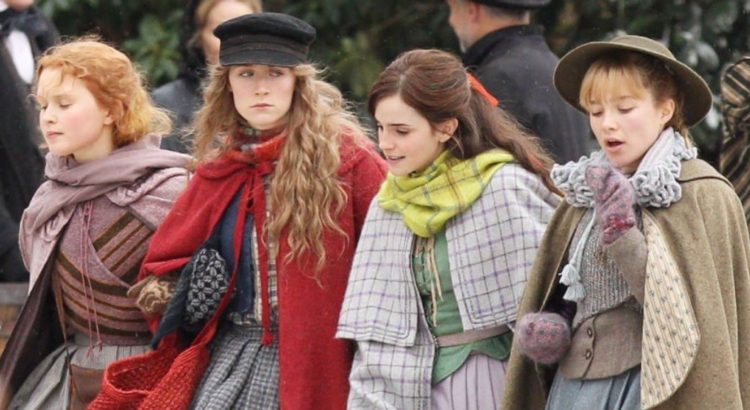
Little Women was a highly enjoyable (if somewhat saccharine) film. I wasn’t previously familiar with the novel, but after seeing this I looked into the source material and previous adaptations to contextualize what I saw. Ultimately, I think Greta Gerwig did a pretty good job at grounding and animating a PG story that has been told many times in many different ways.


Gerwig notably changes the plot structure in this version of Little Women, using the non-chronological order to reflect interesting parallels from the sisters’ childhood and adulthood. I found this be effective in conveying themes and character development, and with that, it also reflects Gerwig’s thorough understanding of the text. The ending, in its own meta way, acknowledged the fact that Alcott never wanted to marry off Jo’s character–in the same way the author herself never married. As much as I appreciate Louis Garrel’s work, I somewhat wish Gerwig took the final step of just eliminating his character and the convenient marriage ending for Jo. At the same time, though, I still can appreciate the awareness and nods to Alcott’s intentions reflected in Jo and her discussions with her editor.


There were many actors and actresses I like in this film, but I was surprised to find that Florence Pugh had the best performance of them all. This is the first time I’ve seen her work (to be fully transparent, I’m just too squeamish for Ari Aster’s movies), and I found her to inhabit Amy in a very believable and watchable way. Sometimes her performance honestly contrasted the others to their detriment. Maybe this is due to her character being more traditional, but Emma Watson’s Meg seemed a lot less three dimensional compared to Florence Pugh’s Amy. Lastly, I thought Bob Odenkirk as the father of the March family was an interesting casting choice. His comedic presence precedes him for me personally, so seeing him inserted into this drama felt like an act of satire. While that took me out of the story a little bit, I think it also created this meta-textual feeling that this adored father figure as a cornerstone of the family is a joke. The older March sisters and their mother are the ones actually sustaining the family, so at the end of the day, I think that choice (if it was an intentional choice) and that new meaning was smart and added another layer to this generation’s adaptation.


Little Women is an enjoyable film that makes you consider the nature of adaptation when one takes a look at the many, many other versions over the past 100 years. It’s interesting to use this text as a way of diagnosing society’s changing attitudes towards women and feminism, past simply its utility as a warm story of family and love. I highly recommend seeing this film and doing a little research into this culturally significant story and its implications through time.


REVIEW: Terrence Malick’s “A Hidden Life”

If we are given a free will, what we are responsible for? Terrence Malick’s A Hidden Life is a meditative narrative that journeys through such a question. The beauty of Malick’s work lies in his consistent demonstration of deep meaning  through intricate layering, stunning cinematography, and an eye for the simple and the remarkable.


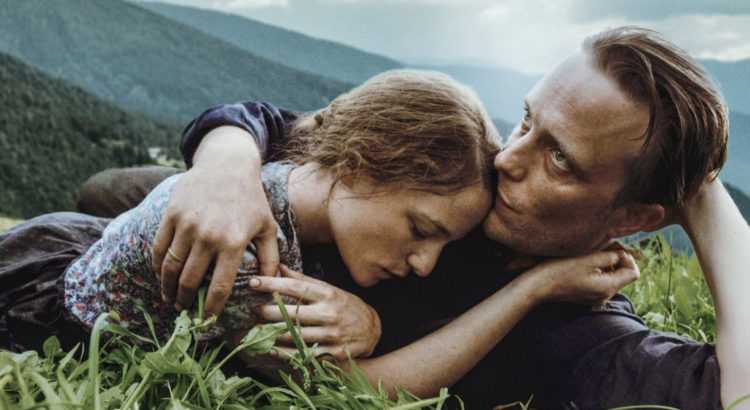
The true story of Franz Jägerstätter is of an Austrian farmer who conscientiously objects to joining Hitler’s fascist regime in World War II, undergoing bitter persecution and ultimately execution for such a stance. Throughout these trials, his deep faith in God and pure love for his family continually prompt an examination of conscience that progressively solidifies his inner call to honor the sanctity of all human life.

While this story of Franz Jägerstätter is considered to be Malick’s most sequential film to date, A Hidden Life goes deeper with what I would call a non-sequential analogous portrait of Christ’s Passion from the New Testament. As the audience follows Franz through his suffering that leads to execution, we are introduced to several characters that serve as representational figures of Jesus’s Passion: a judge as an interrogative Pontius Pilate-type, a taunting soldier, and Franz’s lawyer who acts as the Last Temptation of Christ, reminiscent of the Martin Scorsese film of the same title. Franz demonstrates that if we are given a free will and are capable of choosing the good, all actions, even controversial and solitary ones, have meaning. By refusing to swear any sort of public loyalty to Hitler, he sacrifices his life and the joys of home yet to come.


It is from this, however, that this film explores the dueling natures of freedom and captivity through juxtaposing sequences of Franz’s captivity with shots of his once-sublime home life. Malick captures leisure, family life, and earnest work to be simple and good, all in a truly atmospheric fashion that serves to encapsulate true freedom to live and love well. Having fought the good fight, Franz is executed. A final, long shot of him riding his beloved motorcycle home serves to represent the eternal resting place to which he journeys on. This film possessed an organic perfection that I have not encountered in a very long time. Suspended at the closing shot of our film, and still hanging in my mind, are George Eliot’s thoughtful remarks from Middlemarch:

“The growing good of the world is partly dependent on unhistoric acts; and that things are not so ill with you and me as they might have been, is half owing to the number who lived faithfully a hidden life, and rest in unvisited tombs.”