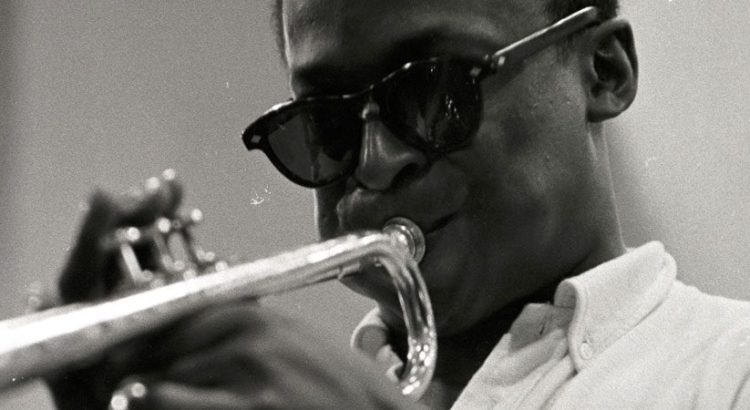
PREVIEW: Miles Davis: Birth of the Cool

Are you interested in learning more about Miles Davis, one of the most iconic and influential musicians in all of jazz? Miles Davis: Birth of the Cool is a documentary currently showing at the Michigan Theater that gives audiences a glimpse of the “man behind the music.” Featuring interviews with Jimmy Cobb, Lee Konitz, Herbie Hancock, Wayne Shorter, Ron Carter, Carlos Santana, The Roots, and Flea of the Red Hot Chili Peppers, the film also includes archival photos, manuscripts, and some of Miles Davis’s original paintings.

For showtimes and ticketing information, visit the Michigan Theater’s website. Even better, screenings on October 18 through October 24 are on the Passport to the Arts, meaning that you can redeem one of the vouchers, found at locations across campus, for a free ticket to the film!

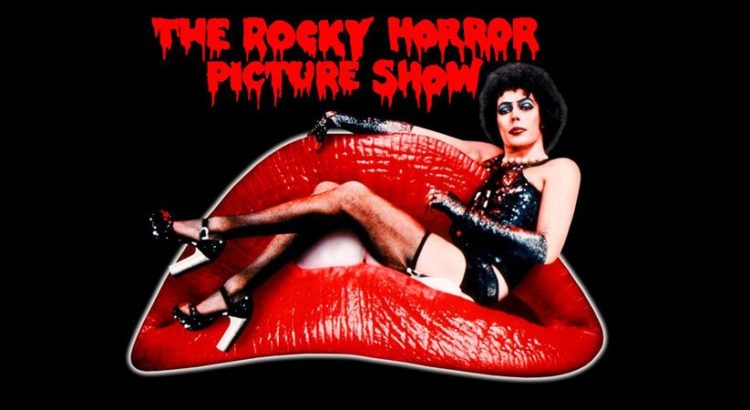
REVIEW: Rocky Horror Picture Show

This year marked my fourth year witnessing the Rocky Horror Picture show and my second time seeing the shadowcast at the Michigan Theater. The Leather Medusas, the group responsible for Ann Arbor’s contribution to the tradition of this cult classic, have again put on a great (sold out!) show that has gotten even louder and more rambunctious than before.


Beginning with an introduction from Penny Weiss (Janet’s cousin dressed in full Pennywise-chic drag, naturally), the show had energy through the roof. Doling out the rules, calling out the audience, and initiating the Rocky Horror Virgins in the most hilarious way, Penny Weiss was an undeniable icon that evening. She will be missed as it’s her last year performing, but she did go out with a wonderful performance as The Criminologist with a remarkable ensemble cast to match.


As soon as the curtains opened and the famous red lips appeared, people were not holding back with the call outs. At times there were so many people contributing to the cacophony that nothing was really heard but noise. It was amazing. Of course, where one sits determines the course of one’s night, and I had a pretty good spot. I was definitely getting a lot of noise, but every now and then a seasoned professional Rocky fan behind me would come out with some unexpected lines that caused the whole mezzanine to lose it. Central high points coming from the audience were the classics: an animated go at The Time Warp, a beautifully lit theater in There’s a Light (pictured), and plenty of playful oohs and cheers when the shadowcast got especially rowdy on stage.


Speaking of the actual stage work, the cast was fantastic. Sometimes I find it hard to not be mesmerized by Tim Curry’s amazing performance in the original, but throughout the movie I found myself watching and laughing at the little touches that made this student shadowcast special. Things like Eddie and Columbia’s impressive dance routine (complete with amazing, almost-gymnastic elements), Frankenfurter chasing Rocky up and down the theater aisles, and rampant, unabashed flossing brought something to the movie you just can’t get watching it on your laptop.


I highly encourage students to make Rocky a part of their Octobers next year (or next week– catch a showing that never fails to be hilarious at the Main Art Theater in Royal Oak if you missed this one)!!!

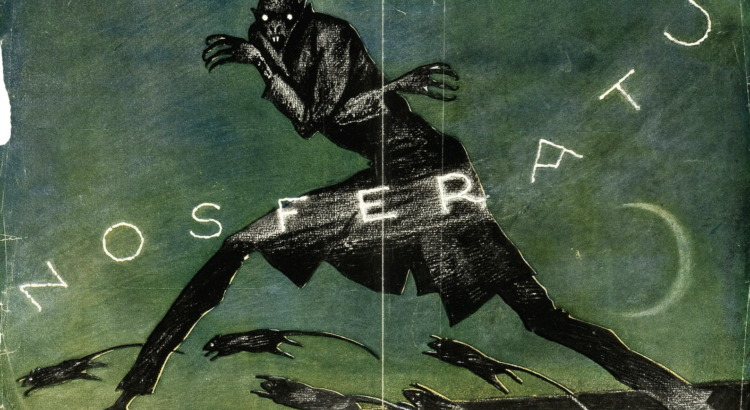
REVIEW: Nosferatu

Nosferatu is oddly enough a character who is easy to relate to. I, too, am looking for suitable housing (an impossible task in Ann Arbor), sleep at hours these mortals deem “strange,” and have an awkward gait. But more deeply than that is a common feeling between Nosferatu and I of a sensationalized otherness. Perhaps his placement as a social pariah is based in folklore more ancient than my own, but the results are the same, creating a clear boundary between ourselves and genteel society. But this is not a feeling I suspect is unique to myself; however much we interact with others there seems to lurk some lingering doubt of our place amongst humanity. It is exactly this relatability to the undisputed villain of a story that enriches and truly enthralls.

Besides the titular character, I am most struck by Ellen, the heroine who is married to the real estate agent that is saddled with the responsibility to sell Nosferatu a house. She is the epitome of 1920s silent film glamour, with her wide eyes, expressively drawn eyebrows, and impossibily pale complexion. She is similarly ghoulish in appearance to Nosferatu, looking perfectly skeletal in the strength of her jaw and the hollows of her orbital cavities. Although the lady in distress act is a terrifyingly misogynistic trope, I think she is still able to exhibit her character’s strength even while continuously fainting and falling all over her brave husband. She is the reason Nosferatu is defeated, even if she is not credited much for her bravery. And through all the distress this lady goes through, her ringlets remain immaculate.


The movie as a whole is simply so encapsulating to experience. The architecture is dominated by heavy stone and dense wood, underground cavernous spaces and grand buildings that feel claustrophic despite their massive size. Though created and set in a time after the gothic period, that sense of aesthetics is present in all aspects of the film, from the buildings to the formality in the characters’ behavior and clothing.

Furthermore, the great Andrew Rogers added to the ambiance and feeling of the movie through his greatly talented organ playing. After the show, he came on stage and answered questions about his work. Amazingly, though there is some composed music for Nosferatu’s organ accompaniment, Rogers chooses to play it freestyle, taking his love of the movie and his knowledge of the instrument and turning it into song that perfectly plays up emotional moments and adds tension. He spoke with such passion, and I could feel how much he cared for the organ and its preservation. Though the movie is an hour and a half long, he doesn’t feel so much time passing, equating the performance to ten minutes of playing. His commitment to keeping this art form alive is truly inspiring, and it was so nice to see how fully lost he got in what he loves.

Andrew Rogers speaking on his experience with the ancient organ (which has just been completely refurbished, a painstaking procedure that was long overdue!).
As promised, I dressed for the occasion.

If you have not seen Nosferatu, I’d recommend renting it, especially during this Halloween season. Watch it alone in a dank, dark basement (if you dare) or with a group of friends and family all dressed as your favorite characters. Though I have not had the pleasure of group Nosferatu costuming, I feel that applying and rocking a bald cap with the people you love is a fabulous bonding experience.

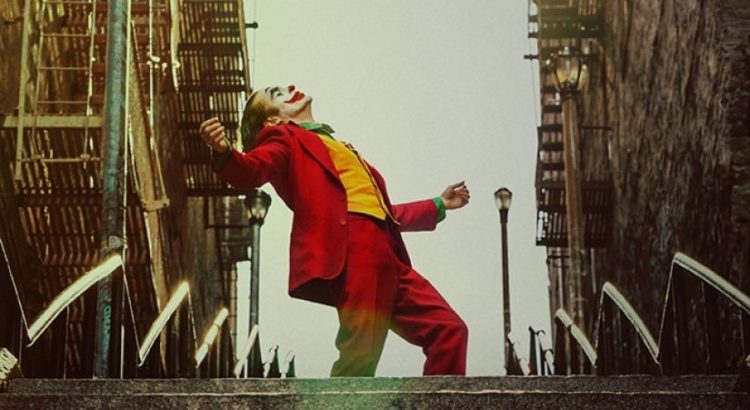
REVIEW: Joker

Joker is an oozing scab. It is the itching feeling at the back of your throat, the one that portends a particularly bad cold. It is raw and frustrating, petty and painful. It is a film that so much wants to be grand and ends up so very small. Much like the man at its center, Joker wants to be an exhibition, but not because it has any special message to send. Instead, it craves attention for its misery. It will slam heads into walls and then revel in its own unpleasantness. The entire film is an open wound, one that will not stop reopening itself.

From its very first scene, Joker kicks the audience with its grimy feet. Filmmakers have always used Gotham as an extension of their Batman’s psyche. In Christopher Nolan’s version, Gotham is sleekly modern, featuring a contemporary Batman who uses recognizable military tech. Then, there is Schumacher’s campy gothic Gotham with a Bruce Wayne who thought nipples on his suit were a good idea. This Gotham is another extension; this time a world as tightly twisted as Arthur Fleck. This city is wound up, ready to spring apart at the slightest touch. It has been a hot and smelly summer. The sanitation workers of Gotham have been on strike and there is no one to pay them. The prevailing smell of trash hangs over everybody as they trudge through garbage. The desperation is plainly obvious in their surroundings, but no one will admit that everything is collapsing around them. It is enough to break anyone.

Image result for arthur fleck

And Arthur Fleck (Joaquin Phoenix) is a man that is ready to be broken. He is alone in the world, taking care of his aging mother on a street clown’s salary. Society seems to take a glee in stepping on him, always ready with a kick or a punch to the stomach whenever Arthur gets even the slightest bit of hope. To make things worse, he has a particular condition that makes him laugh uncontrollably at inexplicable times. Joaquin Phoenix makes this helplessness chilling. At their most affecting, tears spring up in Arthur’s eyes as he tries to stop the laughter. At its most monstrous, the laugh becomes a slow chuckle. It is clear that Arthur has never been understood, and he is rarely cared for. Even his mother’s caresses seem possessive rather than loving. Arthur is seen not as a person, but as an object for disgust and ridicule. It is hard not to feel sympathy for this man who is always treated as less than one. But this is also the man who will become a mass murderer, a man who will take his suffering and spread it across the entire city. The film purposefully chooses to depict events from Arthur’s point of view. It makes him the punching bag, so that when he chooses to punch back, it is necessary to follow him to the bloody end. It leaves you with a feeling of complicity.

Image result for joker 2019

Understanding Arthur seems to be equivalent to supporting him. When does a film cross the line from creating a full-bodied villain to willfully supporting his actions? The separation between these two points of view is a thin boundary indeed, one that Joker never fully solves. The people who bully Arthur are cruel and vicious, yet they are protected from consequences by their upright societal standings. So, when Arthur splatters their blood across a subway platform, who are we supposed to feel sorry for? This is no victory. It is only violence, one that feels meaningless, a limp swing at a society that is too corrupt to care. Perhaps, this is the point. Perhaps Arthur’s violence is supposed to disgust us in its uselessness and depravity. But the film would dispute this too. For, within its boundaries, Arthur becomes a cult hero for other downtrodden people. They take his bloody acts as a symbol. It is when the film chooses to elevate Arthur that it clarifies its own message. The film suggests that many, an entire city, in fact, could be susceptible to falling to violence. This is a deep nihilism, one that suspects that there is a surge of destructive desire shallowly hidden within everyone. Rather than supposing the best, Joker assumes the worst about humanity. It is a film designed to make you feel vile about what you watched, about yourself even. Whether this is a meaningful sentiment to spread is debatable to say the least.

PREVIEW: Monos

As Halloween approaches, we are constantly confronted with all that scares us. Already, there have been plenty of creepy clowns and stabbing stalkers in theaters. However, there may be even more frightening things lurking out there in the world. For the eight children in Monos, that terrifying reality crashes down much more quickly than they would like. After all, their youth has not stopped them from carrying guns, from forming their own cult-like rituals, from taking drugs. But the situation becomes altogether more dangerous when they take a hostage. It is certainly a potent combination, ripe for cinematic drama. If you are looking for a different kind of fright this Halloween, Monos is currently showing at the State Theatre. Tickets can be bought online or at the box office ($8.50 with a student ID).

REVIEW: Ad Astra

In the near future, commercial flights take passengers to the moon, babies are born on Mars, and power surges have begun to wreak havoc across the solar system. Astronaut Roy McBride is sent to investigate these surges, and to discover the truth about his father, a famed and presumed dead astronaut. Ad Astra is an adventure film, with chase scenes on the moon and zero-gravity fight sequences. Although the action is exciting, the film’s strength lies in subverting the genre. Rather than being a film about a tough action hero racing against the clock to save the universe, Ad Astra is about a hero whose strength lies in his humility and emotion. He is a hero who does not consider himself a hero; he is just someone searching for human connection.


To a certain extent, Roy does fit the mold of a typical action hero: he always comes out on top in any impossible situation. But, Roy is better defined by how humble and gentle he is. He knows that Major Roy McBride is a highly esteemed public figure, but he does not view himself in that way, even though he proves again and again that he is worthy of the praise he receives. He even goes so far to call himself selfish for jumping at the possibility that his father might still be alive. Roy reacts in this way because he was never really allowed to express his emotions – he is praised for focusing on his missions and for never having a heart rate over 80 bpm regardless of how severe a situation is. Roy has a very gentle nature, but he has been repressing this side of himself his entire life. When he contemplates why he wanted to become an astronaut like his father in the first place, he realizes he never wanted to be famous. He was motivated by his desire for human connection: he saw becoming an astronaut as the only way he could reach his father, who was absent throughout his childhood and disappeared when Roy was sixteen. As Roy becomes more invested in his search for his father, he realizes he has been harboring bitterness and anger towards his father for leaving him. This prompts him to realize that his anger has been driving his search, pushing him away from a stable life on earth, where he will disappear into the stars like his father.


It is advantageous for the film to make Roy more human and therefore more relatable rather than the perfect model action hero. Anyone can connect with the idea of wanting to live and to love. This idea ties into Ad Astra’s central message: it is easy to look so hard for something that you can miss what is right in front of you. It is only after getting closure about his father that Roy realizes he had let himself be consumed by searching for his father, unknowingly pushing away his loved ones in the process. Ad Astra could have pushed Roy down a dark, obsessive path, but it guides him towards self-realization instead. Ultimately, Ad Astra is a surprisingly optimistic film about human connection, and it is a reminder that there is strength in emotion.


Image source: https://filmschoolrejects.com/ad-astra-imax-trailer/