PREVIEW: Brittany Runs a Marathon

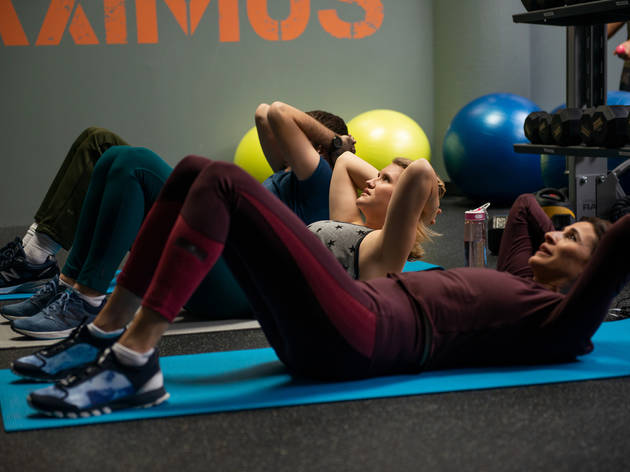
As the title suggests, Brittany Runs a Marathon is a movie about … Brittany running a marathon. In an attempt to get her life together and get healthy, Brittany (played by Jillian Bell), having just started running, sets the goal of running the New York City Marathon. The film, which is a comedy, follows her journey – both as a runner and a person – as she trains for the iconic race.

Brittany Runs a Marathon is now showing at the State Theatre, so if you need a study break, visit https://statetheatrea2.org/ for showtimes and ticket information!

REVIEW: CSEAS Film Screening–Thai Movie Night. Ploy / ‘พลอย’

I loved this movie, especially as I wandered into the screening room without thinking that I would.

Ploy follows the addition of a stranger (the titular character) into the lives of two troubled people making the mistake of languidly existing in a deeply flawed marriage, and doing nothing about it. She looks far younger than the nearly 19 years she claims to have lived; her doe-eyed youthfulness plays into the strength of the chaos she innocently unleashes. While unsettling given her childlike features, she holds a clear sexuality that serves to beckon forward the evil already within the couple’s complicated relationship.

Although the director fiercely guards his definition of the movie as a simple, commercial one (and certainly not of the art house variety, as many critics and fans have claimed), the entire time I was seeing metaphors in everything, appreciating his sense of aesthetics; the subtleties of object placement and camera angles and color and slight expression changes on the characters’ faces.

The intense scene with Dang trying to escape her armed captor at the abandoned warehouse was chillingly beautiful despite the typical artlessness of violence. The wind rustling through the ripped, translucent plastic created a feeling of being inside a kind of dust storm, the panic of the events coalescing with an uncertainty of direction and decreased visibility.

The hotel’s hallways were strikingly bare, though the inside of the rooms are lavishly modern suites with full kitchens and enormous beds. The bar has a lonely, electric feeling to it, part old-timey diner and part futuristic hangout. The lobby feels more like an empty airport, the back of the taxi a warm, wet cavern.

Some things were left mismatched, maybe as a nod to how the paranoid, lonely mind creates frantic stories when reality gives out less information than needed. The purpose of the thievery of the suit jacket and pants is never revealed, nor is the question of whether the hot-blooded romance between the maid and bartender is real or a dream of Ploy’s. Also, the identity of the boy she’s with in the beginning is never revealed. Rather than viewing these things as plot holes, I recognized their role in enriching the jarring feeling of love lost Ratanaruang was trying to create.

But whether or not the romance between the two young lovers was a fabrication of Ploy’s imagination is unimportant. Instead its significance lies in the sad hope they and we all have in new love. Placed next to (in all its beautifully erotic glory) the failing marriage Dang and Wit share, it both depresses and envigorates, causing us to question how we unfailingly fall into the ecstacy of novelty despite our knowledge that it may eventually end, or at least shift into something far less enticing.

It’s hard to say whether to take Ploy as a gift or an evilness. The way the movie ends, it seems we are supposed to conclude the former, but I didn’t feel satisfied with that. Her presence does exacerbate the couple’s arguments, which eventually leads to uncharacteristically bold actions that end up bringing the two closer together, but the pain she brings about is almost glazed over in this. Dang is the victim of violent sexual assault and (we are led to assume) she ends up killing her captor, but after the fact this is not mentioned, the enormous range of emotions created remaining unexplored and unexpressed. Having an ending where the couple comes back together, seeming to even happily glow in the backseat of the taxi, seems again a direct ignorance of the lesson in communication Ploy was meant to teach. But then, maybe this was the film’s vision, to show the cyclical nature of apathy to anger turning into self-fooling false happiness. Or maybe it’s meant as a truly happy ending, in which honesty is less important than intentionally appreciating one’s partner.

If you haven’t seen this movie yet, I would strongly urge you to watch it.

PREVIEW: CSEAS Film Screening–Thai Movie Night. Ploy / ‘พลอย’

It’s always good to break up the tedium of the school week with something a little more interesting than differential equations. Too often we get stuck in the poisonous mindset not just of continuous labor, but of reliance on the same tired relaxants–rewatching The Office for the twentieth time, stress-eating entire loaves of day-old bread from Jimmy Johns, compulsively list-making in your agenda.

This week, expose yourself to something a little different, and a little more mind-enriching: foreign film! As a part of CSEAS’s continuing Thai movie night series, Ploy (2007) will be shown in North Quadrangle’s Video Viewing Room in the Language Resources Center at 7PM this Thursday, September 26th.

The movie follows a couple trapped in a hotel room with a stranger, whose behavior begins to sneakily find cracks in their relationship. It’s a story of the fragility of trust inside the seemingly strong walls of love and marriage, and it leads viewers to wonder whether anything is built to last.

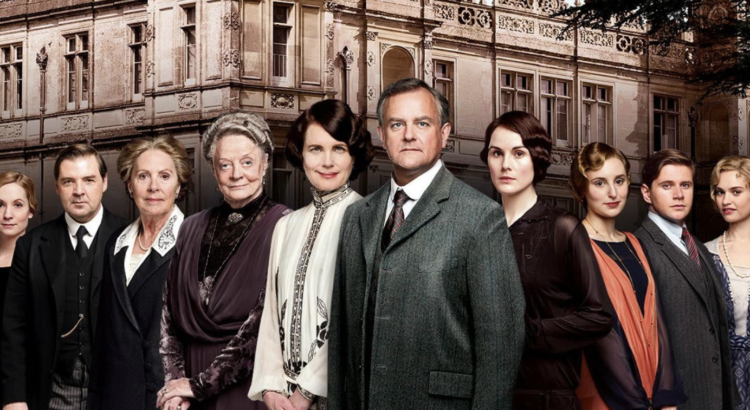
REVIEW: Downton Abbey

It is a difficult thing to leave behind one’s biases to write, especially when they are capable of making one want to projectile vomit on the movie screen for the joy of not having to watch it for another minute.

I try to keep an open mind, as most people do, especially when any form of art is involved. To truly absorb the work is to leave behind–or at least closely reflect upon–immediate assumptions and misgivings. So when my dear old friend Henry (who eats, sleeps, and breathes Downton Abbey–he’s seen the entire series at least three times over) asked if I wanted to see this movie with him, I said yes. Though I hadn’t seen the show, I had watched and enjoyed The Great British Bake Off with him, and that was probably the same thing. My love of art and my friendship with him, I had thought, would survive through anything, even the driest British drama.

But golly gee did I underestimate how throat-closingly sawdust-like this movie would be, even despite the gallons of tea the Crawley family guzzled over the course of the film. 

Never before have I encountered a story in which so much happens but I feel so little: royalty stay at the house! A family secret is revealed! Two actresses from Harry Potter were there! Yet there was little emotion. The humor was, I’m told, the subtle kind. So subtle, I guess, that it passed me right by. There are few breaks in formal tone, even when there are lines meant to be sarcastic or snide. Absolutely everyone has a stick up their a**. 

And I understand that this is a cultural difference between England and the United States, as well as the result of the time period the movie is set in, but these factors do not account for all the ways this movie was work to consume.

It seemed that there were only two or three scenes, with a dozen or two slightly different variations of each. Every two seconds a group of somber-faced Brits are in a circle sipping tea and talking about Troubles In The Family, or Troubles With The Royal Servants. In a word, this movie was…mild. A few more words I could use include: repressed. Unexciting. Bland. 

Meanwhile, Henry is leaning forward in his seat, barely blinking so as to assure he experiences the entire film. 

But given my loyalty to promoting artists, I did find some positive qualities worth mentioning.

Save for a few symbolically stormy weather scenes, the whole movie had a glow to it that should give the lighting crew much pride. Somehow they put a little life into the drabness of British landscapes and faces. 

The costumes were extravagant, glamorously gilded and suited for the characters’ level of sophistication. Costume designer Anna Robbins is a master in designing elaborate, multifaceted vintage styles. Working as the head of costuming for both the movie and tv show, she is tasked with adding the only flavor that exists in Downton Abbey. Despite the daunting nature of period wear, high-class styles, and several thousands of costume changes (how I wish for the sake of their budget that this was hyperbole), Robbins never falters. She thrives under the pressure of making countless extravagant patterns and layers, incorporating a great variety of fabrics and tones. 


I hold that Downton Abbey is a somehow worse version of Keeping Up With The Kardashians. Perhaps ‘worse’ is not the word, but rather ‘inverse.’ Rather than sensationalizing miniscule disagreements with scripted shouting matches played under suspenseful scores as KUWTK does, DA makes actual, often life-changing events seem unimportant by the sheer lack of excitement the characters seem to feel. Although visually appealing in some aspects, this movie was tiresome. Unless you are already a diehard Downtoner or otherwise enjoy movies that make you feel nothing, I would suggest passing on this one. 

PREVIEW: Ad Astra

There is, seemingly, always another space film. Limitless in both their number and in material, a space film can stretch across genres. They can be slashing horror thrillers or lingering existential debates about humanity. They can even be horrifying existential debates. It is surprising, then, that so many space films bleed into each other, becoming forgotten in the blackness of the movie theater. Hopefully, Ad Astra will not be another one of these easily disposable films. This is an unlikely outcome though, especially considering the man at the helm. James Gray, both the director and a co-writer of the film, has found success in critical circles before with his previous effort, The Lost City of Z, wherein he explores themes of exploration and isolation. Ad Astra returns to those subjects, as astronaut, Roy McBride (Brad Pitt) searches for his long-lost father, Clifford McBride (Tommy Lee Jones). Clifford went missing years before on a mission that, now, may be of critical importance. With a more-than-competent director and cast, it already seems that Ad Astra will outlast so many of its space film brethren. Ad Astra is currently showing at the State Theatre. Tickets can be bought online or at the box office ($8.50 with a student ID).

REVIEW: Brittany Runs a Marathon

Sometimes, you look up from your phone, from your laptop, from your life and realize that you are in exactly the right place. Or at least, you convince yourself that you are in the right place. For if you admitted to yourself that everything felt utterly wrong and your life was actually a directionless path with the only certainty being its end, well that, that would be simply devastating. So, you question yourself for two seconds, ten seconds at the most, before devoting your attention back to that phone, that laptop, that life. It is, thus, very easy to justify and even become enamored with a lifestyle that makes you miserable. True change, after all, requires a fundamental reevaluation of one’s motivations as well as a complete shifting of one’s perspective. It’s easier to be miserable. It’s easier to walk the same path, on and on without deviation. Brittany decides to run a marathon.

Image result for brittany runs a marathon

Before that decision though, Brittany Forgler (Jillian Bell) is simply existing in New York City. She floats from late-night party to late arrivals at work. She takes situations and makes people laugh, mostly at her, but why should that matter? She is used to being diminished and so she diminishes herself. It is seemingly the only way to survive in a world that is intent on reducing her to her body type. Thus, when Brittany visits a doctor to scam a prescription of Adderall and his instruction is, instead, to lead a healthier lifestyle, it seems just another indictment from a hostile society. It is the same refrain that she seems to hear from every closing subway door, from every condescending smile: “Brittany is not skinny enough to be worthwhile of respect, much less love.” Making matters worse is the constant reminders that others have achieved the level of esteem that is denied to her. Her roommate, Gretchen (Alice Lee) brags about her life for a living as a social media influencer, and her landlord, Catherine (Michaela Watkins) has several apartments and a successful marriage. It is all enough to make Brittany suspect any act of kindness as an act of pity instead, for everything and everyone is seemingly against her. It is this combative viewpoint that the film stops to examine most closely, prodding at both society’s unfair weight standards and Brittany’s internal obstacles.

It is also here that Jillian Bell shines the most. She brings a brightness that never becomes too saccharine. She has an energy and an enthusiasm that lifts instead of oppresses. Tempering the sweetness is an incredulous cynicism that lives on her upraised eyebrows, constantly questioning the ridiculous situations that she finds herself in. She is world weary without becoming apathetic. She is light-hearted without becoming resorting to empty banter. In her performance, Jillian Bell connects the pathos with the humor, understanding that much of Brittany’s pain informs her playfulness and vice versa. It is this balance that keeps the film from drifting into the all-too familiar territory of the motivational movie. Brittany Runs a Marathon, as its title might indicate, is much too specifically focused on one person to prescribe solutions for everyone else.

Image result for brittany runs a marathon jern

This solution, of course, has its own drawbacks, resulting in many of the side characters becoming conventional foils for Brittany to react against. Characters like Catherine, Gretchen, and even potential love interest, Jern (the delightful Utkarsh Ambudkar), have minimal inner lives of their own. Instead, they appear when Brittany needs someone to alternatively, grow closer to or push away. It is a shame, too, that the movie writes and casts a diverse set of characters only to let them languish. Side characters remain primary colors, easily getting lost in the film’s brightly vibrant sets.

Sometimes, you look up and realize that you are in exactly the right place. Or at least you realize that you are, at least, heading in the right direction. Brittany Runs a Marathon is an entertaining movie that never gets too self-important. Though the film certainly stumbles at points (especially with some poorly conceived visual flourishes towards the end), it finishes its runtime, arms raised up in triumph.