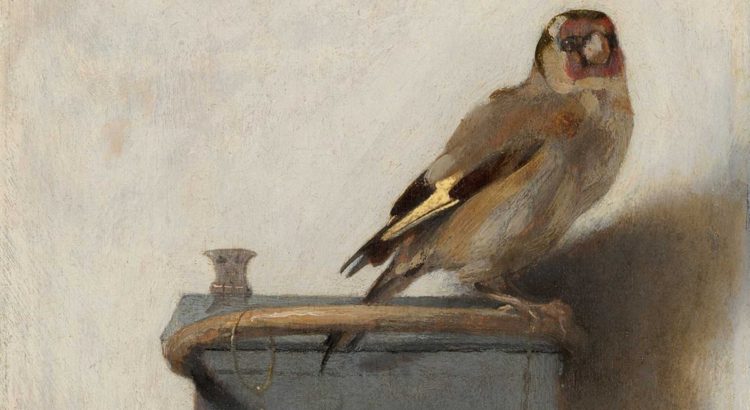
REVIEW: The Goldfinch.

There’s a layer of abstraction to any film that uses source material from a book, but The Goldfinch pulls the casing off the bullet. There is an idea of a great, inflicted pain, evidence that something significant has happened. And there is a tender wound, somewhere, because we’re holding the shell casing of that hurt. But none of it is palpable.

The film develops as a succession of events after Theodore Decker’s mother is killed in an explosion at the Metropolitan Museum of Art, dividing its narrative between his childhood and adulthood. We come back in iterations of clarity to significant scenes as the narrative expands, watching the dust settle in the aftermath of the bombing again and again. Some parts of the film are slow like this, dwelling on memory as Theo does over the course of his life. Other times, the movie plays out like a supercut, in a series of incidents that seem to be only tied together by voiceover and poor symbolism.

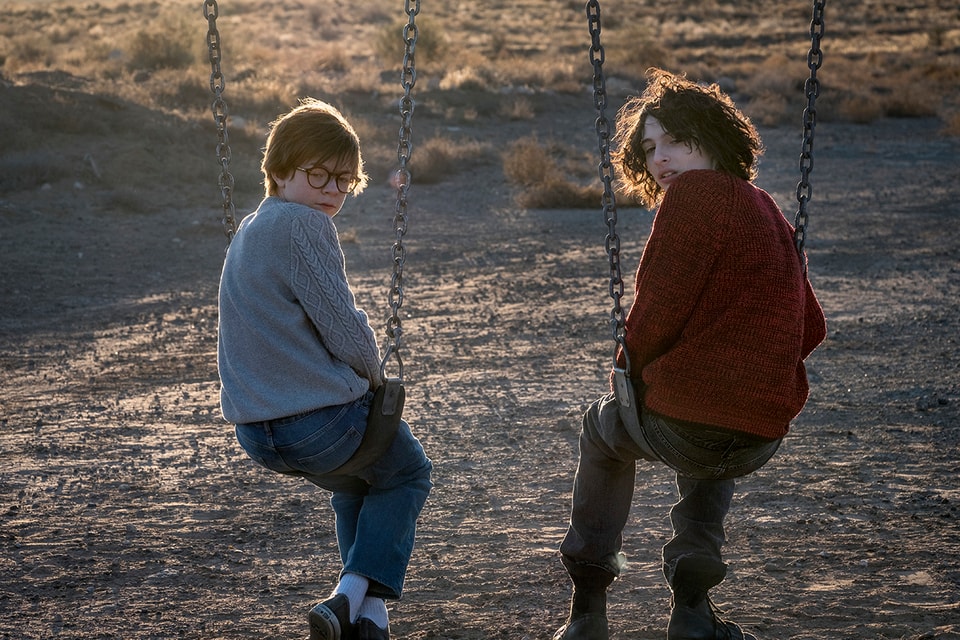
There are a few moments in The Goldfinch that seem purposely paced, slow, and beautiful. The sequence of Theo’s life idling in the deserted outskirts of Las Vegas feels more personal than the rest of the film. Here, his character is developing and growing, as static as his grief might be. And with little distraction from outside forces, we become more intimately attuned to the feelings of the young Theo. His unhappiness is apparent, his boredom is tangible, and the friendship he develops with Boris has a natural, fresh progression with a soft sincerity.

Aside from the plot, the cinematography is beautiful all around — detailed with a strangely opulent look to it, even when the are scenes removed from anything glamourous. The Goldfinch frames shots with elegance; it is pretty, but lacks substantial depth in Theo’s adulthood narrative. The characters present in his later life are underused and underdeveloped.

Towards the end of the movie, the more the plot unfolds with lofty revelations and supposed emotional intensity, the more absurd it begins to feel. And the more it tries to reach for catharsis in the last stretch of the film, the more it becomes another incomprehensible event. The significance is lost somewhere in the disconnect between what is happening and what we should be feeling. The Goldfinch is clean, pretty, but a letdown as it feels like a continuous waiting for something to finally work.

Just as the character Hobie had taught Theo to recognize fake antiques by running his hands along the wood, we can touch this film, feel it, and know what it lacks to make it genuine.

REVIEW: Amadeus

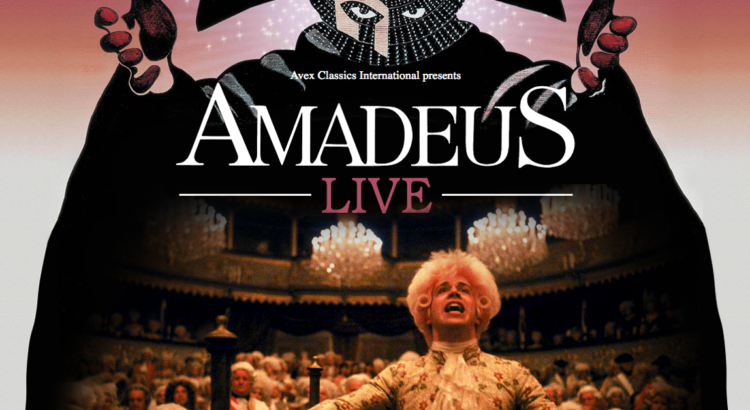
Having never seen the 1984 film Amadeus, I must admit that, despite its reputation for historical inaccuracies, it is certainly a gripping drama that portrays Mozart (played by Tom Hulce) as intensely human. That said, during the Sunday afternoon screening of the movie at Hill Auditorium with the Detroit Symphony Orchestra performing the soundtrack live, I had to keep reminding myself to watch the movie, not the orchestra.

In addition to being musically impressive, the DSO’s performance of the soundtrack live was fascinating because of the logistics involved with playing alongside a film. Conductor Jeffrey Schindler had a small screen in front of him, in addition to the scores, showing the film with overlays of the beat and musical cues. The precision necessary for such an undertaking is serious, when one stops to think about it. In certain parts of the movie, the live orchestra was accompanying soloists whose voices were recorded and part of the original movie – almost like reverse karaoke!

In terms of plot, the movie tells the story of the relationship between Wolfgang Amadeus Mozart, great composer but vulgar person, and mediocre court composer Antonio Salieri (portrayed by F. Murray Abraham, who won an Oscar for his role), whose jealousy of Mozart’s genius consumes him. To be honest, I never really figured out who I thought was the “good guy,” and who I thought was the “bad guy,” which is perhaps part of the movie’s point. Salieri had malicious intentions, while Mozart was just plain obnoxious. He behaved inappropriately, had an absurd laugh, a dirty sense of humor, and neglected to care for his family. His every action makes the audience cringe, but his music – oh, his music will soothe your soul. The juxtaposition of Mozart’s persona and his music is a stark one, and that is what irks Salieri. Despite his hatred of Mozart, the man, he cannot help but be drawn to Mozart’s music. One of my favorite scenes of the movie was when Salieri, as a mentally ill old man, describes hearing Mozart’s Gran Partita for the first time (If you’re not familiar with the piece, listen to the movement in question here). As the third movement plays in the background (which was performed live by the DSO winds), he gives voice to his recollections as if in a nostalgic trance:

“On the page it looked nothing, the beginning simple, almost comic. Just a pulse. Bassoons, basset horns, like a rusty squeezebox. And then, suddenly, high above it, an oboe. A single note hanging there unwavering, until, a clarinet took it over, sweetened it into a phrase of such delight. This was no composition by a performing monkey. This was a music I had never heard. Filled with such longing, such unfulfillable longing, it seemed as if I was hearing the voice of God.”

This scene, in my opinion, captures the underlying nuances of the movie’s plot.

While Amadeus may not be the film to watch if you’re seeking an accurate account of music history, it is a story that appeals to timeless themes and the complexities of the human condition, and the DSO’s live performance of the soundtrack only made it better!


PREVIEW: Amadeus

On September 15 at 2 pm, UMS will be screening the classic 1984 movie Amadeus in Hill Auditorium, with the Detroit Symphony Orchestra performing the soundtrack live! The movie, which was originally a play, tells the story of Mozart (Tom Hulce), and the jealous fascination of Vienna court composer Antonio Salieri (F. Murray Abraham, who won Best Actor for role) regarding Mozart’s musical gifts.

Best of all, the score contains some of Mozart’s greatest compositions, including excerpts from The Magic Flute, the Symphony No. 25, Don Giovanni, The Marriage of Figaro, and his Requiem – all live with the DSO!

For ticketing information, visit the Michigan League ticket office or go to https://ums.org/performance/amadeus/. As always, UMS student tickets are $12 or $20, depending on seat location.

REVIEW: The Farewell

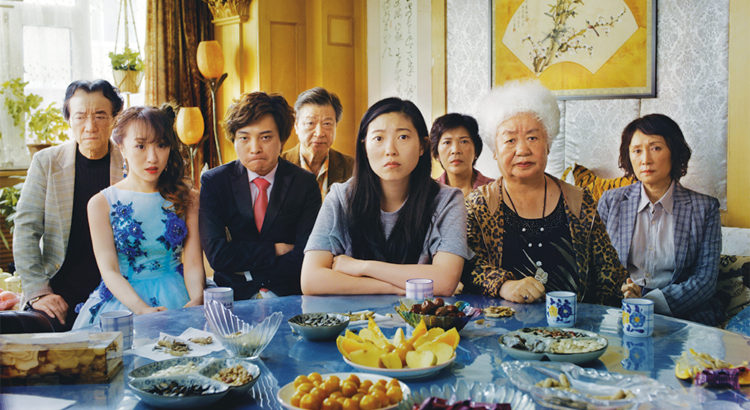
The Farewell is a movie about an ending coming suddenly into sight. Billi (Awkwafina) comes home to do laundry and comes away with the knowledge that her grandmother, Nai Nai (Zhao Shuzhen), has only a few months to live. With that fatal deadline looming, the entire family has decided to lie to Nai Nai, hoping to ease her mind by keeping the diagnosis of lung cancer a secret. Billi, though, has her doubts, complicated, in no small part, by her own need to say goodbye. But the rest of the family is insistent. They will gather together at Nai Nai’s apartment in China under the false pretense of a wedding. They will carry this secret so that Nai Nai won’t have to.

Much of the comedy comes from the fact that no one – not Billi, not her parents, not her uncles or cousins – can bear the weight of that secret entirely. The cracks widen with each barely mustered smile, with each nervous side-glance after a misplaced word. There is a palpable awkwardness to every interaction, as every member of the clan works to maintain a flailing façade. Even the shots are intentionally awkward. Frames are shot from the perspective of an individual in the scene, inserting the viewer first-hand into the lie. We are confronted by the knowing faces and a painful self-awareness. And we laugh as those faces contort into an expression resembling a smile. Because what else is there to do in a situation as dire as a coming death? So, the secret becomes an elaborate distraction, as much for the living’s sake as for the dying.

Together, the family help Nai Nai assemble the wedding. She attacks the tasks with a relentless zeal. There is no danger greater, after all, than a grandmother spurned. Of course, the wedding must have lobster instead of crab. Of course, the couple must be posed to indicate a perfect romance. Anything less would be unworthy of the family she has built. Nai Nia projects such familial fierceness that the false occasion takes on more than a tinge of truth. Feelings that were once faked become frighteningly real. Tensions buried for years bubble up and erupt. For as much as the family is united, they are also fractured in ways that only family can be. Billi’s father (played as a plodding gloom by Tzi Ma) and her uncle (Yongbo Jiang) are constantly at odds. They have been separated by long years and longer distances. While Billi’s father moved his small portion of the clan to the United States, his brother chose Japan. Now, they are brought together once again, back to where they came from. They share cigarettes at night while splitting a much heavier burden. They will have to be the pillars of the family from now on.

These poignant, lingering moments are sometimes interrupted by less poignant moments that linger even longer. The director, Lulu Wang, often uses slow-motion shots for emphasis but it comes off as syrupy instead. There is a sense of trying a bit too hard to romanticize the moment, as if the movie is memorializing this moment just as the characters are memorializing theirs. It is a good sentiment, executed less than perfectly. By, what feels like, the fiftieth poignant moment, you want the film to move on. But it can’t. The movie is stuck. The characters are stuck between celebrating life and mourning death, one that is still approaching. The film is premised on binaries. To tell or not to tell. Lobster or crab. Life or death. But as each character discovers, they reside in spaces that feel not quite right and not quite wrong. The Farewell meanders well, following the characters as they explore the mediums between the extremes. It is the static points where it struggles.

Billi, mainly drifts between the extremes of modernity and traditionally held values. It is also a question of how others perceive her, a young Chinese American living alone in New York City, and how she sees herself, a struggling writer searching for some of that childhood stability. She is, like many first-generation Americans, struggling to reconcile the alienation she feels from all sides. In herself, Billi embodies every influence throughout her life, from the gentle reproaches of Nai Nai and her parents, to the harsher financial admonishments of the American economy. The Farewell, then, is not only a film about moving in ambiguous places but also how those ambiguities can be incorporated within. The Farewell doesn’t much deal with resolute truths. It is more comfortable with lies and half-facts. We all are. And in death, as in life there really is no such thing as an absolute surety.

PREVIEW: Downton Abbey

If you were a fan of the British television series Downton Abbey, which aired on PBS as part of Masterpiece Classic, you won’t want to miss the new film featuring the formidable residence and its inhabitants.

The film, which is set in 1927, is centered around a visit from King George V and Queen Mary. It will mark the return of the many popular characters, including the Dowager Countess of Grantham (Maggie Smith), the Earl of Grantham (Hugh Bonneville), and the Countess of Grantham (Cora McGovern). Downstairs characters will also make their return to the screen, including cook Mrs. Patmore (Lesley Nicol), housekeeper Mrs. Hughes (Phyllis Logan), butler Mr. Carson (Jim Carter), and lady’s maid Anna Bates (Joanne Froggatt).

The film is set to be released in the United States on September 20, but the Michigan Theater is also hosting a special sneak peek screening at 7 pm on September 12! Tickets for the movie (both for sneak peek screening or showings after the release date) may be purchased at the Michigan Theater or online at https://www.michtheater.org/show/downton-abbey/

PREVIEW: The Farewell

Most secrets, we keep without a second of consideration. Instinctively, we slide away from the full truth, allowing for the slightest vagary to creep into our words. Secrets are a shield, but who are we protecting? The Farewell asks this question of Billi (Awkwafina) and her family as they confront the looming death of their matriarch, Nai Nai (Zhao Shuzhen). Nai Nai only has a few weeks to live and she is the only one who doesn’t know it. Billi’s parents, at least, think it is for the best, allowing Nai Nai to enjoy her last days without having to worry about the world she will soon be leaving behind. Secrets are a shield and The Farewell begins to ask what protection means to those of different cultural backgrounds even as they are part of the same family. The Farewell is a comedy-drama, currently showing at the State Theatre. Tickets can be bought online or at the box office ($8.50 with a student ID). Some showings feature Mandarin subtitles.