REVIEW: Shazam

Fun fact: Shazam is technically a Christmas movie.

But it is also an incredibly sweet movie that generates a loving origin story surrounding the main character and his family, creating a narrative that refreshing, humorous, and incredibly, incredibly fun to watch.

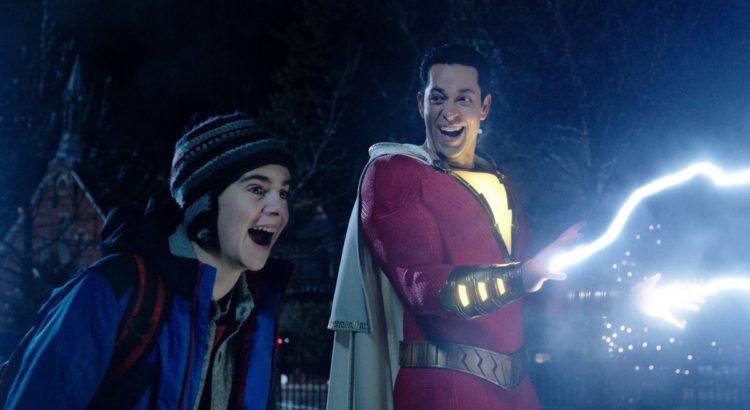
Asher Angel pays Billy Batson, a young runaway teen on the lookout for his mother who he was accidentally separated from when he was a child. He is placed in a large— and nice— foster family but is not having any of their sweet dinner rituals and found family antics. This is derailed anyways when a dying wizard bestows Billy with the collective powers of multiple famed godly beings throughout history, turning him into the hero that we know as Shazam.

(Or Captain Marvel in the comics but Marvel Comics snagged the old name from them. Copyright is hilarious sometimes).

Anyways, whenever Billy uses these powers, he turns in Chuck’s Zachary Levi— a man in his late-30s.

Angel is an engaging actor, endearingly sympathetic as a clearly heartbroken child even when Billy is being a bit of a brat. (He is also a near duplicate of Maisie “Arya Stark” Williams.) There was a quick concern that we will loose Billy in Levi’s antics and forget the kid behind the mask (or, ah, adult-man-body). This is the case for a lot of movies— see Big or switched up in 18 Again or any film that partakes in the popular trope of “child gets zapped into something else for a day”, but the film consistently reaffirms Angel into the film during the emotional beats of the film.

Levi has always been a goofy, physical actor and it was a throwback for me to see him back as a fun-loving centerpiece again. He took the pre-teen angle and ran with it— always fun while getting Billy’s own personal hang-ups through his actions. They are definitely two sides of the same coin— while Angel getting more of the dramatic scenes and Levi getting some of the more goofy, maybe a little less cool ones. And the latter makes sense— a rough kid still is going to be kind of silly when you see his actions in a man’s body. (Cue first-taste-of-beer spit take.)

The wizard deemed Billy as “pure of heart”, but it takes a while for our protagonist to get there— he is actively selfish, impulsive, and kind of mean. But he is also fourteen and the natural growth of Billy’s character development was packed well into the high-concept of his powers. There’s something kind of surprising to see your kid-hero actually being kind of terrified by being hunted down by an grown-man-villain with zapping powers.

The supporting cast was fantastic as well— Billy’s fellow foster child Freddy (Jack Dylan Grazer) takes up the other third of the film as a supportive fanboy and rare “friend-in-the-know” who actually participates in the hero scene. Billy’s youngest foster sister Darla was absolutely adorable. Shazam deal with themes of found family in ways that feel jarringly realistic, while keeping an idealistic base that gives it a distinct superhero feel.

And in case you are wondering, Shazam is a little divorced for the larger narrative of the DC Cinematic Universe. (And that’s all I will say about that!)

I liked Shazam the way I liked Spider-Man: Homecoming and Spider-Man: Into the Spider-Verse— a movie that tackles a young adult’s life as they move on to the next stage of their life. Movies that can approach mature, maybe even dark, subjects with a wide-eye type of kindness that is needed for all audiences. The final battle scene of Shazam causes a thrilled gasp throughout the theater and I believe it earned it completely with how it built its story.

If you are the type of person deeply exhausted by the slew of superhero movies (and I sure am glad I am not you, sounds rough), Shazam would probably be the movie for you. The coming-of-age feel and separation from a larger narrative allows it to be a contained story that focuses on the fun, wild growth of its cultivated characters.

REVIEW: Us

Spoilers for the movie will be alluded to. The reviewer highly suggests you watch the movie without reading reviews and essays!

Cheeks stained with tears, the Wilson family is pushed onto the coach and forced to face the intruders that broke into their home.  

When asked who they ask, the leader— Adelaide’s doppelgänger— says in a voice hoarse from apparent disuse, “We are Americans.”

It feels like a bizarre thing to say in the moment, almost out of place in the rest of her story, but the Jordan Peele cultivates a heart-wrenching universe that forces the viewer to evaluate their place within the world and where their empathy (and efforts) are lent.

Us is a beautifully-made film, both in visuals and story. It is crafted with love and laced with horror (both immediately apparent and fridge, the best kind!). It follows Adelaide Wilson, played by the stunning Lupita Nyong’o, and her family during a summer vacation to their beach house. Adelaide is plagued by memories of a short, but traumatic event as a child that hangs over her during the trip. Before she can cut their time in Santa Cruz short, the family is threatened by their almost-exact clones. 

My favorite horror movies tend to make me more sad than scared— personally, this usually chalks up to whether or not the characters where given the chance to be a part of the narrative rather than just becoming the bloody punchline. Adelaide’s motivations and background center this story— Nyong’o switches from the skeptical and vulnerable Adelaide to the menacing and collected doppelgänger Red. Nyong’o adopts difference voices, facial expressions, movement to demonstrate the constrat of these two characters– both equally complex and mysterious.

The rest of the Wilsons are absolutely lovable. Winston Duke (Black Panther) plays the sweet, dorky father— he dabs in front of his daughter and spins his tiny motorboat in efforts to impress his family. Zora (Shahadi Wright Joseph) and Jason (Evan Alex) play Adelaide and Gabe’s children— an apathetic teenage daughter and a strange little brother that capture enough of their own personal uniqueness to keep the character types fresh and likable. The family’s interactions allow them to be the perfect supporting cast for Adelaide and her character arc, which deviates far from expectations. Peele’s natural comedic talent shines through their bickering affection for each other.

What leaves you feeling gutted is the constant question of the motive of your villain. Not the doppelgängers– it is somewhat obvious. It is Red and her seemingly omniscient sense of Adelaide and her family. The climax is raw, orchestrated act between the two players, a switch of roles that shows how the movie played with your perceptions. Your hero is only as good as your villain, etc. 

Everyone and their neighbor already dropped the analytical essays about the movies and its dozens and dozens of references/Easter eggs. I am definitely the type to sit down and read them all (The shirt! Her voice! Pluto! Chemicals in the water!), because it just makes you excited as a viewer. Peele and his cast/crew put so much thought and dedication in framing ever single aspect of this film.

Some of the criticism of the movie I heard seems to take issue with the logic of the movie– an argument I disagree with a bit. I do not think movies and their message need to fit immediately with one, and only one, perfect allegory— and I don’t think movies need to lay out their details in a step-by-step guide. Trying to nitpick the world that Us has created takes away the atmosphere it has shaped to bring Adelaide and Red face-to-face.

After all, what we see in Us feels pretty real.   

REVIEW: Free Spirit


As I entered the Emagine Theater located in Novi, MI, I wasn’t prepared to experience a visual and musical presentation that would change my attitude and outlook on my life going forward. This experience consisted of watching the short film created by R&B artist, Khalid, called Free Spirit and listening to his newest album titled Free Spirit that played afterwards. With that being said, I would like to comment on the experience as a whole.

As the visual presentation began, the lights dimmed and the screen primarily showed Khalid himself giving an introduction to his show. He welcomed the fans that had attended the event and thanked us all for coming to experience the short film he had made. Ultimately, his comforting presence was consistent throughout the presentation and I felt glad that he was taking the time to connect with the audience in this way.

Shortly after this introduction, the short film, Free Spirit, began. It opened up with a montage of scenes depicting the vast desert-like countryside of an unsaid Southern state, the calm, small-town essence of a neighborhood on the outskirts of a big city, a high school gym with senior prom decorations, and the teenage hangout places of modern suburbia. Meanwhile, one of the songs from his album played in the background, fitting the nostalgic, emotional, and free-spirited essence of the montage perfectly. The film was constructed around these scenes and told the story of a group of teenagers who were on the brink of seizing the freedoms of true adulthood.

The story mainly follows a girl who goes by Ladybug and who joins her group of friends on a road trip after being kicked out of her intoxicated mother’s house. All the while, the group emulates the essence of teenage freedom: feeling the open air while standing outside the sunroof of the van that they stole, drinking alcohol and smoking weed, and proving themselves unstoppable against the world. Eventually, things begin to fall apart as apparent romances between some of the friends divide the group completely, and the film ends with a devastating consequence for one of the friends as a result. The ended proved to be my favorite part of the film because of how emotional it was and how unresolved it was. I believe it portrayed the struggle that young adults have to find themselves and to make it in this world as adults, and how it seems that we will constantly struggle to find ourselves completely even as we get older.

After the short film ended, Khalid played his new album, Free Spirit, before its worldwide release with visuals and commentary accompanying it. Overall, I really enjoyed this experience and felt that visuals accompanied by the music allowed me to enjoy the meaning behind the music in a better way. Ultimately, I very much appreciated how this short film portrayed the lives of young individuals. As the film showed, anyone from any background essentially experiences the same struggles as a young adult and I felt that it validated the truth about how youthful questioning exploration doesn’t quite end with our childhood.

REVIEW: Transit

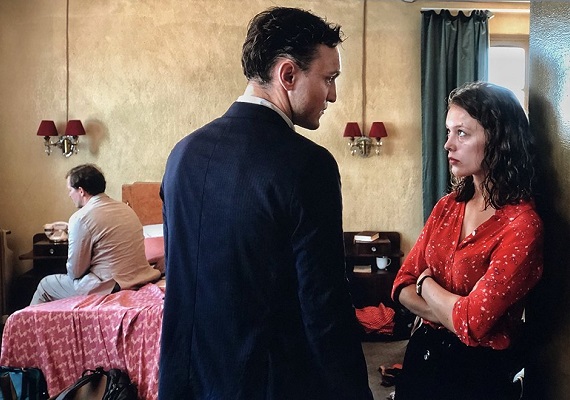
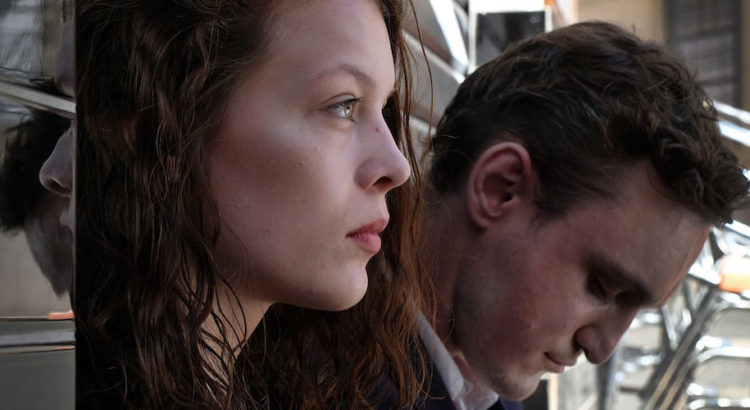
Christian’s Petzold’s Transit is a sprawling, moral adventure that examines questions of loyalty, morality, and the modern global order in the face of fascism. Set primarily in the French seaside town of Marseille, the background to the drama is a façade of gorgeous pastel storefronts that police vans race past in a flurry of sound and light. The setting is noticeably modern; the outfits chosen by the characters, the ships in the harbor, the vehicles in the streets all clearly belong to the modern era, and it’s also clear that Petzold wants it that way. The ambiguity of eras is only one part of the ambiguity that Petzold has carefully constructed for his film, as he places grand amounts of trust in the viewer to think critically about and understand the messages he wants to send.

The ambiguous setting contains both undertones of the Nazi occupation of France, and the modern rise of fascism in Europe. Most of the characters in Marseille trying to flee are German, and although the identity of those occupying the country goes unsaid, references to Jews, “the occupation” and “cleansings” evokes strong similarities to the Nazi occupation of France during WWII. Yet there is also a modern twist. A family of African descent that the protagonist, Georg, befriends is described as “illegal”, living a careful life in avoidance of the authorities. Their entire apartment complex is revealed to be a haven for cautious, illegal families largely of African or Middle Eastern descent, mirroring the current refugee crisis in Europe. Petzold carefully draws the comparison between the historical threats we have learned to fear and the more modern ones we may have not.

The ambiguity stretches into the exposition of the characters and the choices they make. The narrator, who appears partway into the story, goes deliberately unnamed and largely unidentified for much of the saga, but he is identifiable as an outside observer, someone witnessing the events but not privy to the inner thoughts of the main characters themselves. Petzold also avoids the potential easy moralizing of his characters. They act in unpredictable and frequently selfish ways, given opportunities to act in a clear, ethical manner, they abstain for sometimes selfish reasons, and sometimes reasons wholly unclear and never explained. Petzold’s characters are constructed as complex, whole people, with rich, unexplained inner lives. And that is what makes Transitultimately worth seeing. The characters are rich, real people, with real, complex desires, who refuse to fall into the mold of action heroes or love interests. The film artfully touches on serious modern issues while simultaneously immersing the viewer in a carefully constructed world of drama and tension, the one the unexpected ending ultimately topples.

PREVIEW: Transit

Transit, a film directed by Christian Petzold and based on the 1940s novel by Anna Seghers, opens at the Michigan Theatre April 1st. Ms. Seghers’ novel is a depiction of a German in Paris desperately trying to escape the country during the Nazi occupation in the 1940s, by assuming the identity of a dead writer and seeking a ship to take out of the port city of Marseilles. Petzold takes this World War II drama and puts a unique spin on it, transporting it to the present where the threat isn’t as clearly defined as the Nazi occupation, but is something more modern and ambiguous. The film’s plot offers a tantalizing array of elements, from the dramatic action of a wartime saga, to a complex accidental love interest that jeopardizes the lead character’s plans, to a more philosophical look at the mirror 1940s Nazi France can hold up to today’s society. Transit is being shown in German, with English subtitles.

Two people dancing the yonna

REVIEW: Birds of Passage

The beginning of Ciro Guerra and Cristina Gallego’s Birds of Passage opens with a symbolism-laden new beginning: a young girl’s transition into adulthood. The Wayuu people at the center of the film celebrate this occasion with a festival of family, friends and dancing. But it is the dancing that provides the clearest window into the future of this sprawling clan. The daughter on the brink of womanhood, Zaida, is dancing the Yonna, a fast-paced give-and-take between her and another man. She is dressed in a flowing red garment, racing back and forth to the beat of a drum, the camera closely following their faces and imparting the dramatic feeling that you too are being chased in the circle, racing around and around in the ambiguous fear of what might happen if you stop. Her first partner, a young boy named Leonidas, eventually trips and falls to the ground. The dance stops, but not for long, as an outsider to the clan named Rapayet steps up and enters the fray, outlasting the drum, and making his first mark on the clan he will eventually join.

The clan is led by a powerful matriarch, Úrsula, who makes clear from the start that her power lies in her willingness to do anything to protect her family. Rapayet, a suitor intent on marrying Zaida, strikes Úrsula as a danger, but possibly even she does not realize the depth to which he will uproot her family and her culture. The Wayuu of northern Colombia had persevered through the rise of the modern nation by their adherence to their traditional practices that Úrsula is determined to protect. As Rapayet ventures into the marijuana trade to finance his dowry for Zaida, he finds himself sucked into a whirlpool of greed and desperation despite his best efforts to preserve the culture of honor. It is only a matter of time before the consequences manifest themselves.

Rapayet, Zaida, and their two children eventually move into a grand stucco villa in the middle of the barren desert, a visual metaphor for the isolation their wealth has granted them. The film is a deliberate exploration of the fine line between providing for your family and sacrificing them in pursuit of these provisions. It showcases the delicate tension between the traditional ways and the allure of 20thcentury wealth and luxury, and the mythic power of the dollar, propelling business and violence across the Colombian desert in an ancient blue Jeep.

Now showing at the State Theatre. In Wayuu, Spanish, and Wiwa with English subtitles.