PREVIEW: CatVideoFest 2019

Are you tired of manually scouring the internet for feline entertainment? Do you have an insatiable thirst for the more beloved, graceful, and heavily worshipped four-legged domesticated companions that don’t bark or beg to be walked on the daily?

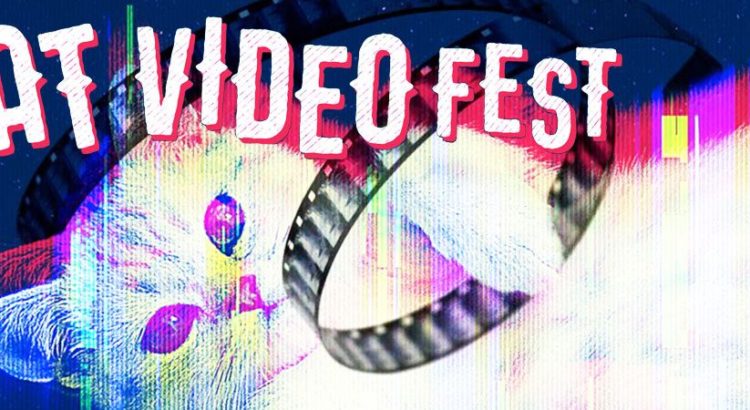
The annual CatVideoFest, playing this Sunday at the Michigan Theater, may be the purr-fect solution to your cat-video-shortage woes! Be prepared for 70 minutes of an adorable audiovisual experience of a lifetime- back by popular demand, the CatVideoFest is an artistic curation of the world’s most prized, individualistic cat videos- ranging from music videos to animations. Not only is this a beautiful communal experience with fellow cat-lovers, but also a fantastic way to support local shelters and animal organizations, joining them in their battle to mitigate the suffering of cats all around the world. Join us in this gleeful celebration of the beauty and hilarity of our feline friends Sunday, March 10, at 4 pm in the Michigan Theater!

Tickets may be obtained here:  https://secure.michtheater.org/websales/pages/info.aspx?evtinfo=431337~c76be4f4-22b5-4bed-a89c-7def863b8c53&_ga=2.34390305.1264812886.1552026665-1233648933.1551894674 


REVIEW: Isn’t It Romantic

Isn’t It Romantic was a charming movie that incorporated satire and witty quotes. It made fun of a lot of motifs in the genre of romantic comedy, like the gay best friend, the attractive guy who turns out to be a jerk, being blind to your ‘true love’ being right in front of you, etc.

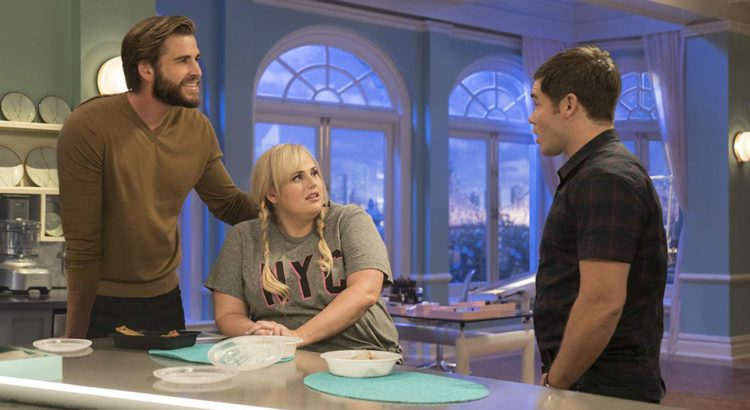
Here’s a more specific recurring scene in the genre: have you ever noticed in rom-coms when the characters set up a date but never mention the date or location? One of my favorite scenes in the movie made fun of this: Blake (played by Liam Hemsworth) wrote each digit of his phone number on a different rose petal, and gave the jumbled petals to Natalie (played by Rebel Wilson). I got a good laugh from the ridiculous scene.

Was Isn’t It Romantic the best movie ever? No. Was it a good rom-com? I would say so. I don’t know if I would ever consider a rom-com a film classic bearing in mind the genre’s reputation. People like romantic comedies because they are feel-good movies—albeit sodden with logical fallacies and tiresome cliches. Of course, Isn’t It Romantic had the obligatory storyline of the budding couple having to overcome an obstacle to be together. Originality is not generally the goal of the genre (although nor is it for most genres, like action movies for example, there’s a bad guy and a good guy, the bad guy is defeated and the good guy gets the woman, with exceptions of course. But still, cringe.)

Since the 90s or early 00’s, there has been a decline of rom-coms. With the drop in rom-com production in major film studios, there’s been a rise of budget sources like Netflix originals, Hallmark movies, ABC Family originals, etc. The five rom-coms with the highest lifetime gross were produced from 1990-2005. Number six on the list is Crazy Rich Asians, released in 2018.

Rom-coms aren’t ‘dead’ necessarily, although they are less successful and have had to change over the decades to reflect evolving gender norms and views on premarital sex and matrimony. There’s a scene in the movie where Natalie bursts into a wedding uninvited (another common rom-com trope). But, originally planning on stopping it an professing her love to the groom, she ultimately realizes that she loves herself and doesn’t need anyone else to complete her. This new twist on crashing a wedding crashing is consistent with fourth-wave feminism in regard to promoting self-love and self-sufficiency.

But reflecting new gender norms supposedly isn’t enough for a rom-com to do well, that’s why the movie also has a satirical twist. Similarly, Crazy Rich Asians is not just a rom-com about Singaporean billionaires, it is the first Hollywood movie in 25 years to have an all Asian cast. If new rom-coms want to break the record for highest profit, they need to think of new ways to spice up stale formulas.


REVIEW: 2019 Oscar® Shorts: Animation

With the exception of Bao, the Oscar-winning Pixar short that was released with Incredibles 2 this past year, chances are you may not have heard of any of the other nominees for best animated short. However, despite the fact that most of the shorts were relatively unknown until their Oscar nomination, they are still well worth the 75 minutes it takes to watch them!


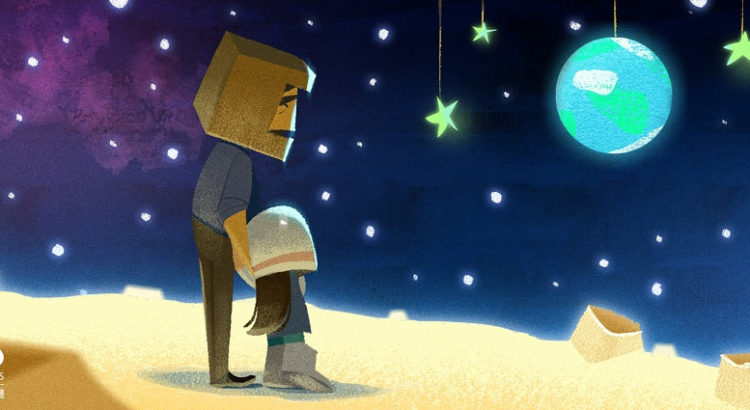
Interestingly, three of the four shorts explored similar themes of parent-child relationships (with the exception of Animal Behavior, a hilarious, if not mildly crude, film about a group of animals in a therapy session). However, what I appreciated was the aesthetic differences of the animation style. While Bao, which follows a mother’s dream about taking care of a baozi (steamed bun) that comes to life as a boy, is in the sleek animation style typical of Disney shorts, the other films differed in texture and style. Late Afternoon, which explores the mind and memories of a parent with Alzheimer’s disease, invokes the illustrations of a children’s picture book. Weekends depicts the story of a child of divorced parents, and the back-and-forth between houses, and the film is both confusing and disturbing at times. Its animation was probably my favorite in terms if its style; it was sketchy and rich in color and shading. I felt as if I was watching a film come to life off of an artist’s pad of paper. The last of the nominees, One Small Step, followed a young girl, the child of a single parent father, with the dream of becoming an astronaut. The animation was two-dimensional, but with clean lines and elaborate detail. With its dream-big plotline, and also emotional complexity, One Small Step ranked among my favorites of the collection of shorts.


My most favorite of the films was, ironically, not actually a nominee for the Oscar. Tweet Tweet, which featured a small bird leading a girl (whose feet is all we ever see) across a tightrope symbolizing life, was Highly Commended by the Academy, but I think that it deserved more. The concept of the bird on a rope is mildly reminiscent of Pixar’s 2000 short For the Birds, but the story in Tweet Tweet is much more complex. The girl’s feet progress to those of a woman, are joined by another pair of feet, and then by a pair of child’s feet, and then her feet age to those of an old woman. The entire time, the small bird is a guide, and it is up to viewers to decide the meaning of this. Furthermore, there are clear references to Russian history, including, most clearly, World War II (the film was directed by Russian animator Zhanna Bekmambetova). The film was artistic, visually pleasing, and rich with symbolism.


If you haven’t yet had the chance to see the film collection 2019 Oscar® Shorts: Animation, it is still showing at the Michigan Theatre!

REVIEW: Icons of Anime: Cowboy Bebop: Knockin’ On Heaven’s Door

Every time I see a movie, I have a particular feeling afterwords, where I take on some of the characters’ attitudes, style, or mannerisms. Depending on how good the movie was, this can last for quite some time. For instance, I watched Billy Madison weeks ago and I still straighten into first position when I feel myself slouching. And though I have neither the time nor money to get into ballet lessons, my heart yearns to sign up for a beginner’s class.

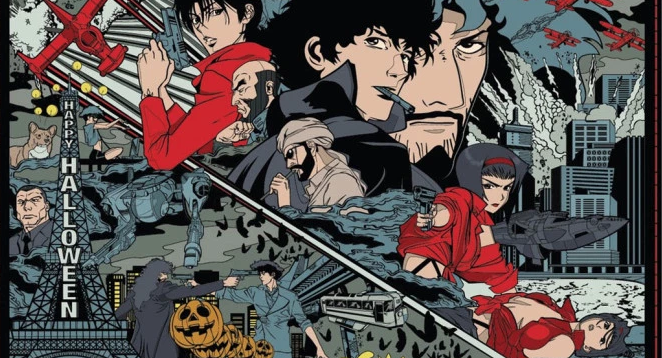
The mood of absolute coolness is overpowering in Knockin’ On Heaven’s Door. I regret forgetting to wear a shirt with a poppable collar; I felt beyond out of place amongst Spike Spiegel, Electra Ovilo, and Faye Valentine, lightyears behind them, fashion-wise (and name-wise of course). The landscape of the city made me feel small, but the characters walked through it with confidence: they owned the streets, moving in long strides, self-assuredly occupying space.

Image result for spike spiegel   Image result for cowboy bebop knockin on heavens door characters Image result for Faye Valentine

The variety of color schemes was greatly influential in making the movie’s aesthetic unique. The different settings (Moroccan Street, the bounty hunter crew’s home, the warehouse, downtown, etcetera) were distinct in tone, the characters’ clothing standing out enough within these spaces but also blending in well. The omnipresence of shades of earthy brown is representative of the 1990s and early 2000s, but still allowed for a futuristic feeling. Though many of the colors were muted, they worked well in accentuating the artists’ highly contrasted shading technique.

Image result for cowboy bebop knockin on heavens door Image result for cowboy bebop knockin on heavens door Image result for cowboy bebop knockin on heavens door train

In terms of the movie’s concept, its originality brought new life to what could have easily been a standard, unremarkable action flick. The focus on fight scenes was thankfully minimal (for me at least, there is no greater sleeping pill than any of the Jason Bourne movies), instead there was more emphasis on the nature of the bioterrorism device. They actively developed the idea, including scientific details that fleshed it out more than I expected. It was a bit unrealistic that the researchers attempting to find out more about the biological agent came up with absolutely nothing, while the cowboy gang figured it all out so quickly. It would have been less distractingly odd had the scientists started to gain more understanding. This choice could have made the agent more complex, more terrifying in a more real way.

Throughout the movie, I found these places where small occurrences slyly slipped by. In the first hospital scene, a woman lies on a bed, reaching up at nothing, most likely in the process of dying. The shootout on the trains traveling over water has a moment where two trains pass each other just so, drawing darkness in and out so smoothly.

Also, the soundtrack was great. The music was as widely varied as the settings, and some of the song titles are as out there as the characters’ names. The whole soundtrack is by one music group (Seatbelts) on the album Cowboy Bebop: Knockin’ on Heaven’s Door: O.S.T. Future Blues. This would be the perfect album to listen to while cooking a fancy, complicated dessert, or an enormous bowl of homemade ramen.

The U of M Center for Japanese Studies is continuing this film series Wednesdays at 7PM at the Michigan Theater. The next movie is on March 13: Ghost in the Shell (1995). Be sure to mark your calendars!

REVIEW: Pioneers: First Women Filmmakers

Despite the passing of decades, our sense of humor has not changed so much since the silent film era. The fundamentals of what elicits laughter have stayed the same despite social, economical, and cultural change. The exaggerated facial expressions and body movements that are characteristic of silent film, theater, and modern movies and television work as well then as they do now. While the lack of sound is much of what necessitates the overacting, the introduction of audio later on did not make this style obsolete.

The six films presented Tuesday evening were a good mix of lighthearted comedy, poignant drama, and exciting action. While the ones that leaned heavily toward the comedy side (Mixed Pets, Mabel’s Blunder, That Ice Ticket) were at times a bit lacking in greater substance, they were well balanced by the others, forming a cohesive set of films.

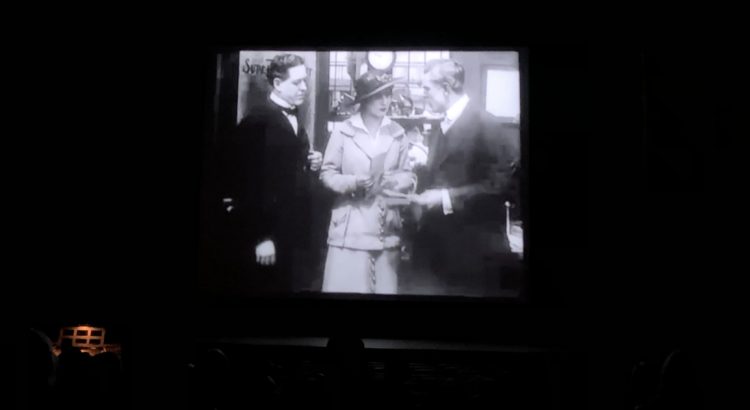
I found A Fool and His Money somewhat problematic. Though it broke new ground in being the first film to feature an all-Black cast, in some aspects the characters were caricaturish. Also, though created by a woman (Alice Guy Blanche), the female lead was made out to be a flighty gold-digger with no additional substance.

Behind the scenes: the filming of A Fool and His Money (1912)

Perhaps it is due to my romanticization of the wild, wild west (despite my having never been to the western half of the United States, save for California) that my favorite of the bunch was A Daughter of ‘The Law’, made by Grace Cunard. It featured a smart, charming police chief with a plan to bust a ring of whiskey makers (as Prohibition was in effect at the time) living in a remote mountain community. Disguising herself as a wandering artist, she snoops around for clues. She uncovers the group of troublemakers, but in the process she falls in love with their leader! After her true identity is discovered, the townspeople set out to kill her, but her beau proves to be handy as a getaway driver. She doesn’t report him, and he sees the error of his ways, and leaves behind his life of crime. Though the themes of male saviorism and putting romance ahead of all else (here, major career success) are a little unsavory, the fact that the ex-whiskeyman is influenced by a strong female lead still places the movie ahead of its time.

Image result for grace cunard a daughter of the law

And of course, the show would not have been possible without our resident organist Andrew Rogers accompanying the films. For about two hours straight he played, creating the mood of each scene, adding drama, suspense, surprise. His timing remained impeccable, a crescendo growing just as the peak of the action hit, a cheerful staccato bouncing as a comedic scene arose. Rogers absolutely made the night!

If you are interested in seeing more features of women filmmakers, check out the lineup at the State Theater. On Tuesdays in March, they will be screening a great movie made by a female visionary. The schedule is posted at https://statetheatrea2.org/women-filmmakers/. Don’t miss it!

REVIEW: Happy Death Day 2U

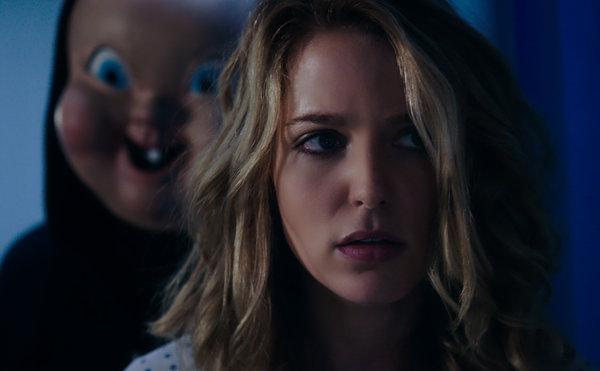
I watched Happy Death Day and Happy Death Day 2U in somewhat close conjunction with one another, which made for a somewhat bizarre and disorienting (or weirdly orienting?) viewing experience. A large part of this is due to the eerie, albeit absolutely deliberate, similarities between the structures of the two movies. At their very heart, the central problem is almost the same: Theresa “Tree” Gelbman (Jessica Rothe, La La Land) is stuck reliving the same day.

Anyone who has seen Happy Death Day (2017) is familiar with this conceit and with the problems it spells for Tree, a college student. There are the typical Groundhog’s Day-style frustrations of retaining her memories of previous days — falling in love, for instance — while everyone around her forgets. And then there’s the somewhat more distressing problem of the killer in a baby mask, who stalks Tree and murders her every time on the night of her birthday.

The sequel, Happy Death Day 2U, directed by Christopher Landon and released recently through Blumhouse Productions, presents a new complication. Not only is Tree stuck reliving the same day—it’s now the wrong day. In the completely wrong universe.
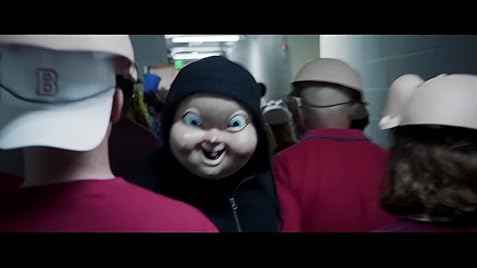
Image result for happy death day 2u stills

The film sets itself up in an interesting way, holding a close focus on Ryan Phan (Phi Vu), who had a marginal role in the first movie as the roommate of Tree’s love interest, Carter Davis (Israel Broussard, To All the Boys I’ve Loved Before). It seems at the beginning like the focus of this movie is going to be on Ryan, but this remains the case just long enough to explain to the viewers that Ryan and his science friends are responsible for the strange time-looping that Tree has experienced. After a strange altercation involving multiple Ryan’s and the panicked pressing of Ryan’s student-made quantum reactor, Tree wakes up back at the beginning of the previous day. Only this time, she’s been thrown into another dimension, and things are a little different: The original Babyface culprit, Tree’s roommate Lori Spengler (Ruby Modine, Shameless), is no longer the killer, and Carter is now dating Tree’s sorority nemesis, Danielle Bouseman (Rachel Matthews). Perhaps most significantly, while Tree’s mother (Missy Yager) was dead in her original timeline, she is now alive and well.

Tree’s transplantation into this new world kicks off a wild journey, as she is confronted by the simultaneous problems of learning how to navigate the changes to her life in this new world and the implications of those changes, figuring out how to get back to her home dimension (and indeed, whether she even wants to), and solving the Babyface killer mystery all over again. Although interestingly, the latter of these winds up taking something of a backseat. While the original Happy Death Day was a black comedy slasher film, working largely within the sphere of horror, its sequel ditches the horror almost entirely in favor of comedy, emotional drama, and adventurous science fiction. The segues into hallway-creeping and killer-unmasking don’t feel out of place at all, but they also don’t feel particularly haunting or scary, especially not in comparison to some of the emotional scares that Tree must deal with instead.

Image result for happy death day 2u stills

On the whole, Happy Death Day 2U is a success not because it delivers scares, but because it recognizes and builds on the elements that worked so well in its predecessor: comedy, irony, and a real sense of heart that carries emotional resonance. A great deal of this is concentrated in Tree’s character, actualized by Rothe’s wonderful acting; we spend almost the entire movie in Tree’s head, and we’re along for the ride as she finds herself forced to tackle conflict after conflict, eventually having to choose between a life that’s not hers that would mean reuniting with her mother (albeit under somewhat false pretenses) and the world she knows, where her real friends and loved ones are back waiting for her, but her mother is not. The implication that her choice is as simple as her mother versus her boyfriend is a bit of a red herring, and the film tries to stay attentive to this, stressing how the memories everyone else has of Tree in this new dimension don’t align at all with her own. Ultimately, Happy Death Day 2U is an adventurous and captivating success, demonstrating how the continuation of Tree’s story can again have more profound and intriguing implications — not only for her, but, in the end, for the people around her as well.