REVIEW: CMENAS Film Screening: “Rachel”

“Rachel” is a documentary piecing together the nuances and injustices of the death of an American activist in Palestine named Rachel Corrie. Twenty-four year-old Rachel was on a trip to Palestine as a trained activist with a group of other activists in their twenties. At this time in the early two-thousands, the tension in the Israeli-Palestinian conflict was gaining a new wave of intensity with the beginning of the Second Intifada. Rachel and her team were helping Palestinian civilians whose homes were most in danger of being destroyed by Israeli occupation. In an attempt to prevent the destruction of one such house, Rachel stood in front of a bulldozer to obstruct their moving forward; however, the driver of the bulldozer claimed to not see her– though the eye-witnesses to the case speculate otherwise– and ran her over; in a matter of seconds, her body was mangled beneath a mound of dirt and crushed by the metal. Rachel died. Though there seems to be evidence that there was criminal intent by the driver of the bulldozer, the case gained a momentary spark of media attention, only to die down with the injustice of Rachel’s death never to receive due legal attention. This documentary is an exploration of the testimonies of the activists who she travelled with, Israeli soldiers, and many others who were knew her or were related to her death.

The simple, straightforward style of the documentary makes it easy to follow all the intricacies of the evidence presented: testimonies of colleagues and family members, on-site videos and photographs, Rachel’s diary entries. By the end of the film, I felt fully educated about the facts of Rachel’s death– and the thing about the documentary is that it doesn’t ever once say outright that what happened to Rachel unfair or unjust. It just keeps building evidence, slowly but surely, until you’re painfully aware of all the wrong that was done to her. The driver of the bulldozer claimed that he couldn’t see her over the mound of dirt while her team says the mound was hardly a few feet tall; the US embassy failed to send an American to oversee her autopsy even though her parents requested it, probably because the US didn’t want to entangle itself politically; the general of the Israeli forces claimed that there was not enough eyewitness testimony or video evidence, only two opposing viewpoints, which seemed essentially inconclusive. No real legal action could be taken to prove that the driver of the bulldozer had criminal intent.

The documentary works to show that there was a system of injustice present that lead to Rachel’s death. The documentary illuminates the cracks of legality and excuses that Rachel slipped between. The documentary itself works as a bulwark against injustice. The film is modest in its cinematography and aesthetics, but it is large in its meaning and purpose. Rachel was one American activist whose life and injustice has been filmed and commemorated, but it’s a powerful reminder that there are people suffering from crises around the world who won’t get any attention. But there is a small line of hope, perhaps– as we keep talking about these injustices, as long as we make art and conversation about it– we can create a bulwark against it.

I’ll end this post with a beautiful letter that Rachel wrote during her time in Palestine: “You can always hear the tanks and bulldozers passing by, but all of these people are genuinely cheerful with each other, and with me. When I am with Palestinian friends I tend to be somewhat less horrified than when I am trying to act in a role of human rights observer, documenter, or direct-action resistor. They are a good example of how to be in it for the long haul. I know that the situation gets to them (and may ultimately get them) on all kinds of levels, but I am nevertheless amazed at their strength in being able to defend such a large degree of their humanity – laughter, generosity, family time – against the incredible horror occurring in their lives and against the constant presence of death. I felt much better after this morning. I spent a lot of time writing about the disappointment of discovering, somewhat first-hand, the degree of evil of which we are still capable. I should at least mention that I am also discovering a degree of strength and the basic ability for humans to remain human in the direst of circumstances – which I also haven’t seen before. I think the word is dignity. I wish you could meet these people. Maybe, hopefully, someday you will.”

(You can find more of her letters and diary entries here: https://www.theguardian.com/books/2008/mar/02/shopping.extract. I would seriously recommend checking them out– they’re gorgeously written and she’s so wise.)

PREVIEW: Icons of Anime: Your Name

The Center for Japanese Studies presents the next installment of their Icons of Anime lineup: Your Name! Come see it at 7 PM Wednesday, January 30 at the Michigan Theater (if you can stand the cold!).

The film tells a tale of two highschoolers who have the magical ability to switch bodies with each other. Complications inevitably arise, and we follow the two on a deeply emotional journey to meet eachother. Your Name  is beautifully animated and deservedly critically acclaimed, earning an impressive 97% on Rotten Tomatoes.

Student tickets are $8.50, and 10.50 for adults. Please make sure to dress in lots of layers, as temperatures will be far below zero, especially in the evening. Be sure to limit exposed skin, including your face and hands.


Related image

PREVIEW: NT Live: Hamlet

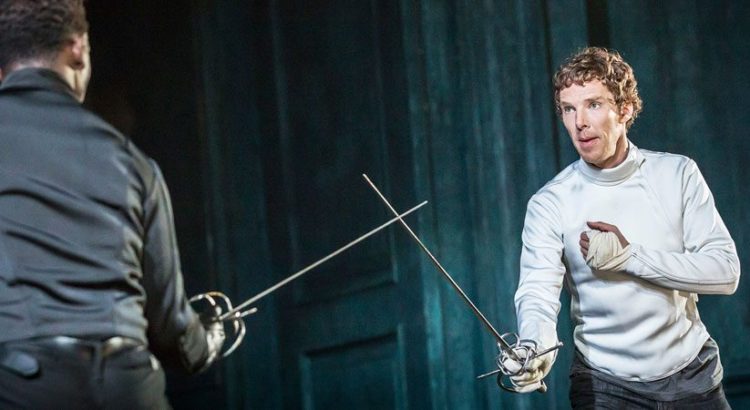
“To be, or not to be, that is the question.” These iconic lines from the classic Shakespeare play are going to echo through the Michigan Theater as it shows the National Theatre 2015 broadcast of Hamlet. Catch the stunning Benedict Cumberbatch as the title prince struggling to keep his sanity while protecting his country. The production plays on Sunday, January 27 at 7pm, and tickets can be bought at the League Ticket Office for $12 with a student ID.

PREVIEW: Spirited Away

I’m thrilled to be attending my first Studio Ghibli movie on the big screen! Spirited Away will be screened on Wednesday, Jan 23 at 7 p.m. in the Michigan Theatre. It is part of a larger film series, Icons of Anime, curated by the Center for Japanese Studies. Directed by the acclaimed Japanese director Hayao Miyazaki, the movie follows ten-year-old Chihiro as her family stumbles upon a supernatural theme park. The movie has gorgeous, magical animations and is a captivating fantasy.

REVIEW: If Beale Street Could Talk

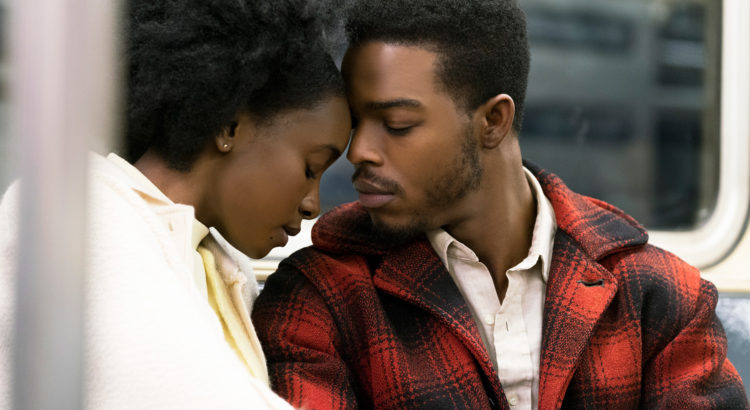
The Oscar nominations came out today, and as always, such an occurrence is bound to spark a fire of controversy about such-and-such films being snubbed while other films enjoyed perhaps more than their due of appreciation. Yet it does not feel like a reaching statement to say that If Beale Street Could Talk was indeed snubbed. The romantic drama, directed by Moonlight‘s Barry Jenkins and based on the 1974 novel of the same name by James Baldwin, received only three nominations: Best Supporting Actress (for Regina King), Best Adapted Screenplay, and Best Original Score. Three is a startling dearth of recognition for a film that succeeds in terms of acting, visual efficacy, and overall emotional impact.

If Beale Street Could Talk tells the love story of Tish Rivers (KiKi Layne, Chicago Med) and Fonny Hunt (Stephan James, Race), a young couple in New York City who are falling in love while also dealing with racism and racial tension. This culminates in Fonny’s wrongful arrest for rape, which coincides with Tish’s learning that she is pregnant. Much of the movie is concerned with the ripple effect that Fonny’s arrest produces throughout both their lives, as individuals and as a couple, and the lives of their families and friends. Tish and her mother, Sharon (King, Seven Seconds), fight for Fonny’s freedom, while Fonny struggles through the experience of incarceration and tries to retain both his sense of self and his relationship with Tish. The storytelling is accomplished in part through alternating timelines, which switch between the development of Tish and Fonny’s relationship prior to Fonny’s arrest and the fallout that occurs afterward.

One of the film’s most masterful accomplishments lies in its very careful attention to each character as an individual. A particularly telling scene occurs when Tish first visits Fonny in jail and they get into an argument; it is clear that the argument is borne not from anything lacking in their relationship itself, but from their own individual frustrations and respective inabilities to completely understand the other’s situation. Tish feels helpless and scared because she cannot help Fonny and is facing the prospect of pregnancy while he is in jail; Fonny is frustrated because he has been wrongfully imprisoned and is unable to be there for Tish. The fact that even in this scene, they come around from their respective frustrations and reaffirm their love and support for each other, only strengthens the sense of the gravity and wholeness of their love. Another standout is of course Regina King’s performance as Sharon, whose visit to Puerto Rico in order to plead with the rape survivor Victoria (Emily Rios, Breaking Bad) to admit Fonny’s innocence is perhaps the most finely crafted and emotionally resonant scene of the entire film.

If Beale Street Could Talk is a masterpiece on a visual and tonal level, echoing much of the slow-burn pacing and colorful cohesion that Jenkins trademarked two years ago with Moonlight. From the brief and bemusing appearance of Dave Franco as a Jewish realtor to the haunting, wholly incredible monologue of Fonny’s friend Daniel (Brian Tyree Henry, Widows), it is a film packed with rich feeling and timeliness. It speaks to the careful attentiveness and thought of everyone involved in creating it, and one can only hope that audiences respond to it with similar attention.

REVIEW: The Favourite

I don’t know quite what I was expecting when I walked into a screening of The Favourite at The Michigan Theatre. I had heard it described as a dark comedy, while other people had told me definitively that it wasn’t a comedy. I knew it involved queer relationships, but people had also told me not to think of it as a gay love story. Emma Stone was the only actress with whom I was very familiar, and her own past filmography has been so varied that it was hard to predict what type of role she was going to play.

As a result, it’s saying something that even throughout the length of The Favourite, I still struggled to pinpoint exactly what type of a movie it was. This isn’t meant as a slight. The movie is of course a historical drama, set during the reign of Queen Anne in Britain during the early 18th century. The comedic elements, although dry and often subtle, were often at the forefront of the screen, from the petty arguments and witty bickering between Sarah Churchill (Rachel Weisz, The Lobster) and Robert Harley (Nicholas Hoult, Mad Max: Fury Road) to visual jokes, like Robert Harley pushing Abigail Masham (Stone) into a muddy ditch. The romance took a backseat to the drama, to be sure, and The Favourite could not quite be classified as a romance film. However, a major element of the emotional weight of the end of the film was the factor of Queen Anne’s (Olivia Colman) discarding of Sarah, which only landed in the way that it did due to these characters’ romantic history.

The Favourite is a difficult film to characterize, but this lack of definitiveness is done purposefully and well. At its core, The Favourite is about manipulation, which is why it feels fitting that even as the three central characters — primarily Sarah and Abigail — manipulate each other, the film is also manipulating its viewers. It is tempting to side with Abigail for much of the first half of the movie, as she is constantly undercut and underestimated by the other characters. Abigail seems kind and relatable, bringing Anne medicine for her pained legs and shrugging off the advances of Samuel Masham (Joe Alwyn, Billy Lynn’s Long Halftime Walk). She is also in competition with Sarah for Anne’s attention, and Sarah, while at times genuinely funny and surprisingly endearing, can also come across as intimidating (especially to a new servant like Abigail), vindictive, and callous.

In the end, though, the film makes a point about the tremendous bearing that wealth and stature can have upon the way that a person acts. When Abigail ultimately succeeds in becoming Anne’s “favourite” and edging Sarah out of the queen’s inner circle, it becomes clear that she was truly the vindictive one all along, motivated by material gain and greed rather than by any real attraction to or interest in Anne. When Sarah is distanced from the queen and then exiled, she comes across as emotionally closer and more attached to Anne than ever before. Anne herself, as the queen, is in a position to take her wealth and status more for granted than the other characters, and therefore exerts the bulk of her emotional energy on her own profound loneliness and despair.

The Favourite ends with an incredibly sad, grave, loneliness-oriented scene, far from the comedic and more lighthearted elements that punctuated the film earlier on. And yet, despite some of the seeming tonal shifts, it feels apparent that this gravity was what characterized the film from the very beginning. On the one end, this movie is about three women possessing varying degrees of power, each able and willing to do various things — some of them outrageous things — in order to gain and maintain this power. On the other hand, it simultaneously perfectly captures the notion of desperation, of seeking all of the material promises of a good life — wealth, power, beautiful objects, political sway — only to be crestfallen upon the realization that these gains have come at the cost of forsaking true and meaningful companionship. Each of the three characters embodies some angle of this concept by the end of the film, completing a trifecta of powerful acting and storytelling. The Favourite is currently playing at local theaters such as the Quality 16 and the Ann Arbor 20 IMAX.